Politics almost always operates under maximum pressure. The Prime Minister is facing one of his most serious crises at the worst possible moment, on the doorstep of a general election that could be in a few months if he finally brings it forward so that the general elections are held before the regional and municipal ones, as some presidents and mayors are asking him. The sudden arrival of 72,000 immigrants in Ceuta and a highly disputed subsequent management have left the Government very shaken.
Read more The visit of Pope Leo XIV to Argentina: possible scenarios for receiving the pontiff in November
Sources from La Moncloa admit that Pedro Sánchez knows that the majority of the Spanish population, including the left and many PSOE voters, blame Morocco. He insists that he cannot do so without evidence, because he is not responsible for unleashing a diplomatic or even military conflict with uncontrollable consequences without having clear proof that Rabat organized, promoted, or directed the crossing on July 30 and 31.
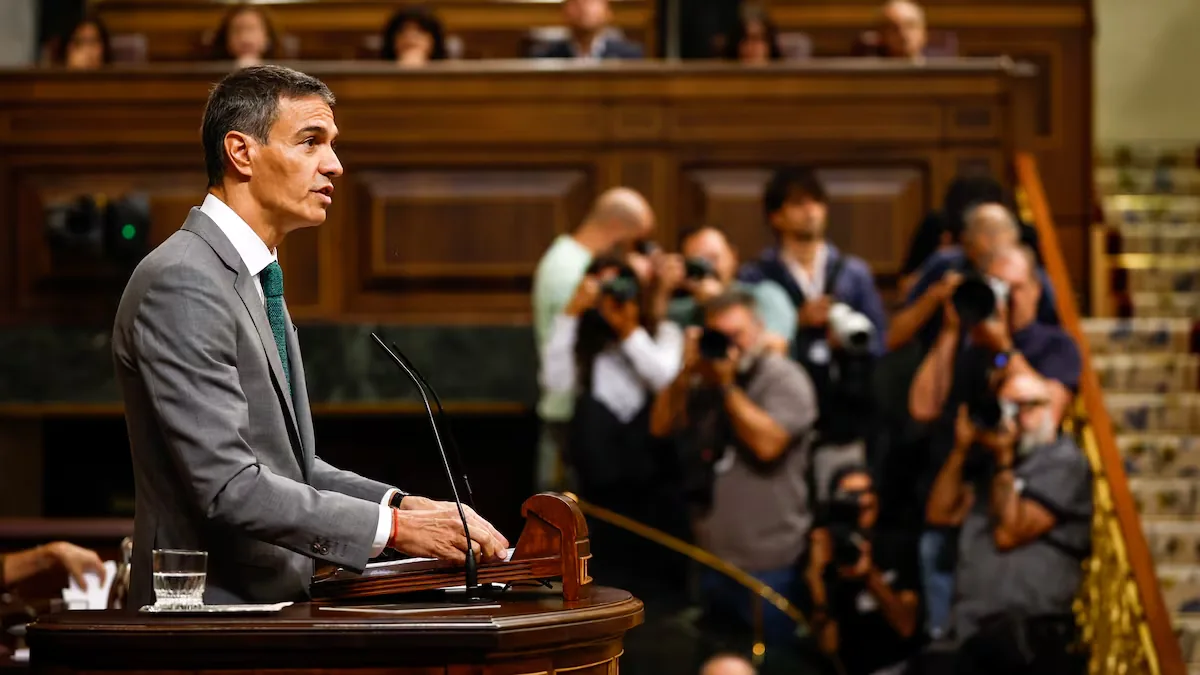
But this Thursday in Congress, facing that enormous pressure, Sánchez made a clear shift in the tone he had used on Monday in the interview on Cadena SER. And in the chamber, for the first time, he opened the door to blaming Morocco and, in that case, taking serious decisions. Facing an opposition that accuses him of being “blackmailed” by Rabat ―because, according to Feijóo without evidence, the secret services of that country would have found something unconfessable on the president’s phone when it was spied on― Sánchez went to the Lower House to try to prove the opposite: that he fears no one, and that just as he has confronted the United States or Israel ―two of the most influential countries in the world, especially because of the massacre in Gaza or their refusal to raise defense spending to 5%― he does not fear a clash with Morocco if that is what suits national interests.
With this idea, the promise to declassify all secret reports from the National Intelligence Center (CNI) and other agencies about this tragedy that caused the death of 141 people, the news that the Moroccan ambassador was summoned on August 21, and a promise that cooperation with Rabat will be reconsidered because it is evident that something has failed spectacularly, Sánchez tried in Congress to reduce the enormous pressure; and not only that coming from the opposition, but from the left and his own voters, or at least from the part of them that does not quite understand why the president still has kind words for Morocco after the inaction of its police, whether due to incapacity or decision, has generated a humanitarian, social, and political problem of the highest magnitude in Ceuta and throughout the country, and has completely discredited his rapprochement to Rabat in 2021.
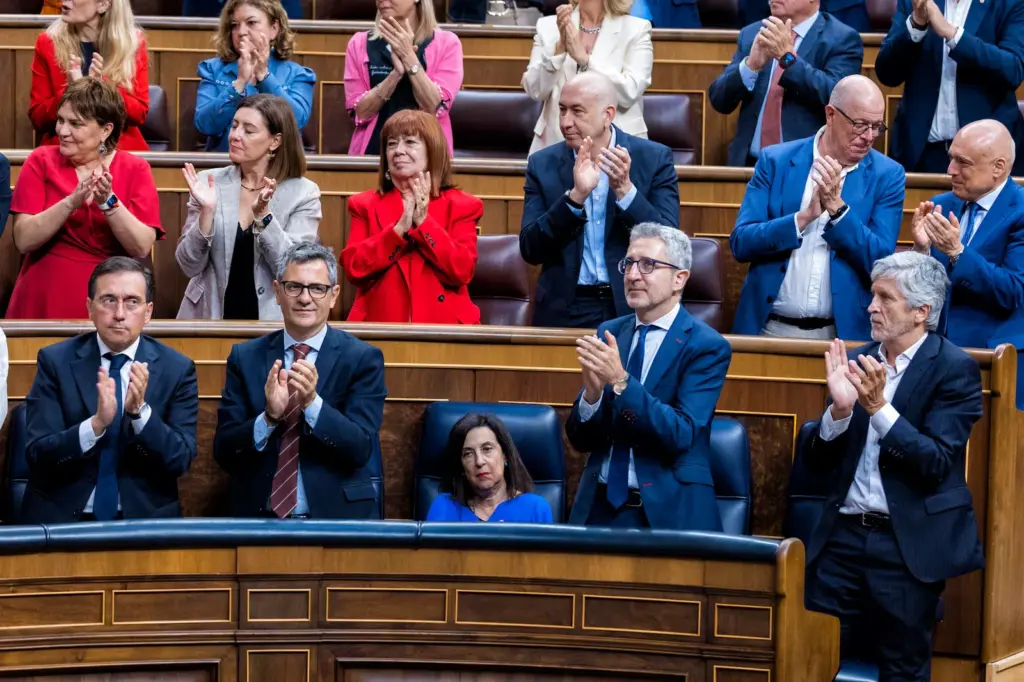
“Sánchez gave up the traditional PSOE position on the Sahara in exchange for something like this massive crossing not happening. He did it so that 10,000 people would never enter again, which was what happened in 2021, and now we have had an entry eight times greater. Something has to change, and the president knows it,” says a member of the Sumar Government. In this group, very critical of Sánchez’s closeness to Rabat, they trust that this Thursday a shift has begun that will lead the head of government to a greater distance from the neighboring regime.
At La Moncloa, however, they explain that what Sánchez is doing is not a shift away from Rabat, but a reasonable explanation of his cautious position. This step involves waiting for the secret services to finish the ongoing investigation to determine with some certainty whether it was Rabat or not. For now, the president insists that the serious reports on his desk do not clearly point to Morocco’s authorship.
The Government has disavowed the report that the National Immigration and Borders Center (CENIF) of the National Police sent to a judge of the National Court, because it believes that without information on the ground no solid conclusions can be reached, and considers that only the CNI has it with its spies in Morocco. And, in any case, it did not categorically attribute intellectual authorship to Rabat, only collaboration from some agents.
Tone change
The truth is that the president’s tone has changed. He still says he has no proof pointing to the Alaouite kingdom, but he is increasingly open to that happening in the future. “If there were proof [of Rabat’s involvement], we would act accordingly. This Government is not afraid to confront other foreign powers. But we are going to work loaded with proven facts,” the president insists. And he also takes another step that the Government had not taken in recent days. He admits that he knows that the majority of citizens suspect Morocco, and clearly points out that this country left the border unattended. “We know that on July 30 the gendarmerie allowed the border crossing. And that afterwards it controlled it. What caused the lack of control? Was there incapacity or inaction? Our intelligence services will find all the keys. We will make all the reports public. For now, none of these institutions has provided solid evidence that Morocco planned or executed this episode,” Sánchez stated.
The president is opening the door to a definitive report from the secret services that causes a radical change in the situation. But for now, he wants to avoid conflict at all costs because it seems very risky to him. And he also believes that this is what anyone in La Moncloa would do. Sánchez recalled that when they were presidents, both José María Aznar and Mariano Rajoy were very careful not to antagonize Morocco and neither of them officially visited Ceuta and Melilla —he has done so four times— nor allowed the King to go to the autonomous cities, something only José Luis Rodríguez Zapatero did in 2007 and he will do “in a few weeks.” That visit could open the door to an escalation with Morocco, which in 2007 already withdrew its ambassador because of the presence of the head of state in a territory in Africa that it does not recognize as Spanish.
The most established analysis in government circles is that Sánchez is defending the only responsible option, that of avoiding a conflict with Morocco, which is also essential for the return of the thousands of immigrants still in Ceuta, both adults and minors, but at the same time it is a very weak position because most of society does not understand or share it, and holds Rabat responsible for this disaster. The Government admits the weakness of the moment but trusts to see the light at the end of the tunnel in the coming weeks, when all the immigrants leave the streets because they have a decent place to sleep, returns begin, economic aid arrives, classes start, and a certain normality returns to Ceuta.
The opposition, on the other hand, will try to stretch this crisis to the maximum and believes it has finally found the blow that will finish off Sánchez. The wear and tear of an impossible crisis that the Government has not been able to manage well seems inevitable, but only time will determine its dimension. Of course, this time there is not much time left, because the elections are already on the horizon.