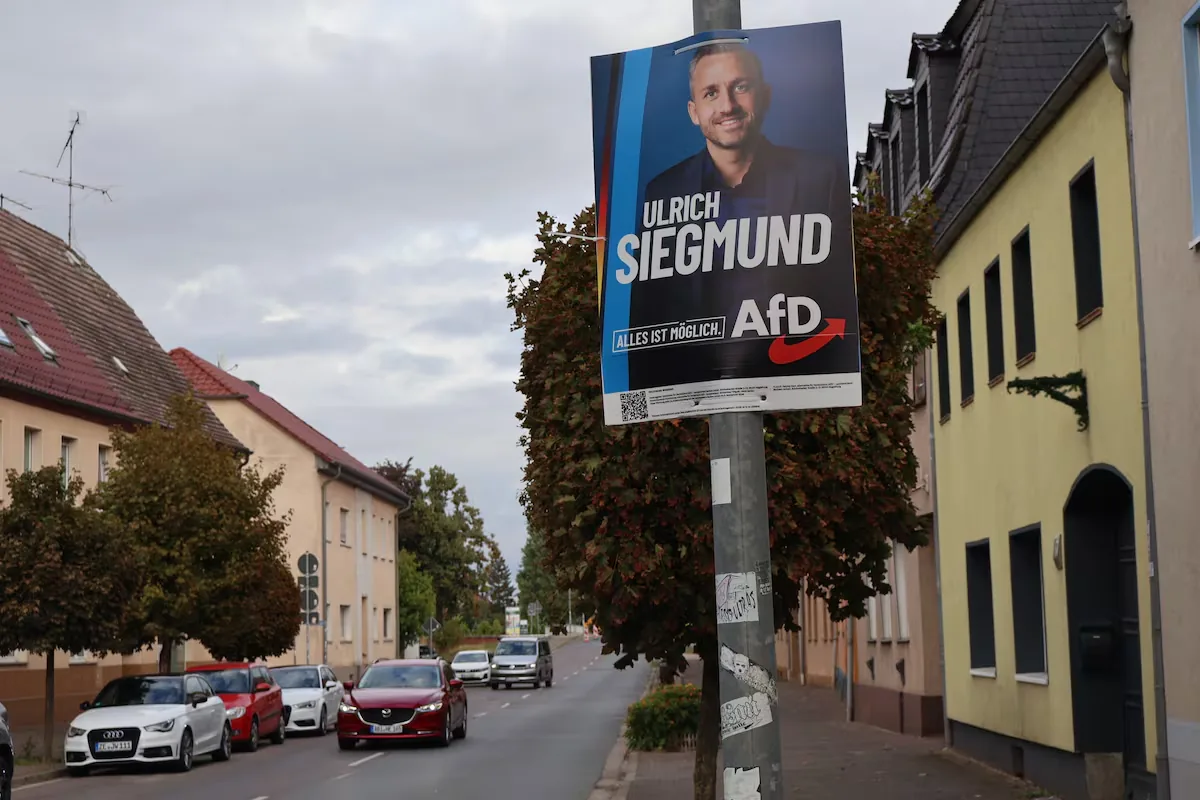
At the Star hair salon in Raguhn-Jessnitz, they believe that at least 80% of the neighbors will vote for AfD, the far right, on Sunday in the elections of the German state of Saxony-Anhalt. The owner and his employee are Syrians; they do not want to give their names despite insisting that their clientele treats them well. About the mayor, Hannes Loth, also a regular, they say he “is a very nice guy.” Loth became the first AfD mayor in Germany in 2023. There are now four. He received 51% electoral support. “The customers are AfD supporters and are nice to us, but all foreigners are afraid of what will happen on Sunday, let’s not fool ourselves.”
Read more The pressure from the PP complicates the transfer of 500 immigrant girls from Ceuta to the Peninsula
What could happen on Sunday is that AfD wins the Saxony-Anhalt elections with a sufficient majority to break the cordon sanitaire isolating it from the other parties. This way, it could obtain its first government in Germany. “Foreigners who do not have a job will suffer because they will be left without aid, and those who are not regularized, worse,” they say at the Star hair salon.
Saxony-Anhalt has one of the lowest foreign population rates in the country, 7.9% of the total compared to the German average of 15%. But this does not prevent AfD from focusing much of its strategy on attacking the supposed privileges of migrants.
Privileges for migrants
And their message resonates. Anke Meier is 60 years old and a pharmacist in Raguhn-Jessnitz. The town has 9,000 inhabitants and everyone knows each other. She greets customers by name, knows what they will ask for, and also knows their weaknesses. She is convinced that AfD will sweep the municipality on Sunday, above the 50% achieved in the 2025 federal elections.
Meier says she does not vote for the far right; on the contrary, she abhors it. The topic cannot be discussed in her family because many do opt for AfD, and meetings end in arguments. She especially laments the nostalgia for the extinct German Democratic Republic (GDR), from which AfD is gaining so much political profit: “People think of that stability and security but forget the bad too quickly. You and I in the GDR would be in prison.” But she agrees with AfD on the idea that foreigners have more privileges than nationals: “It’s a fact, someone from outside is kept on aid no matter what, and Germans have theirs cut.”
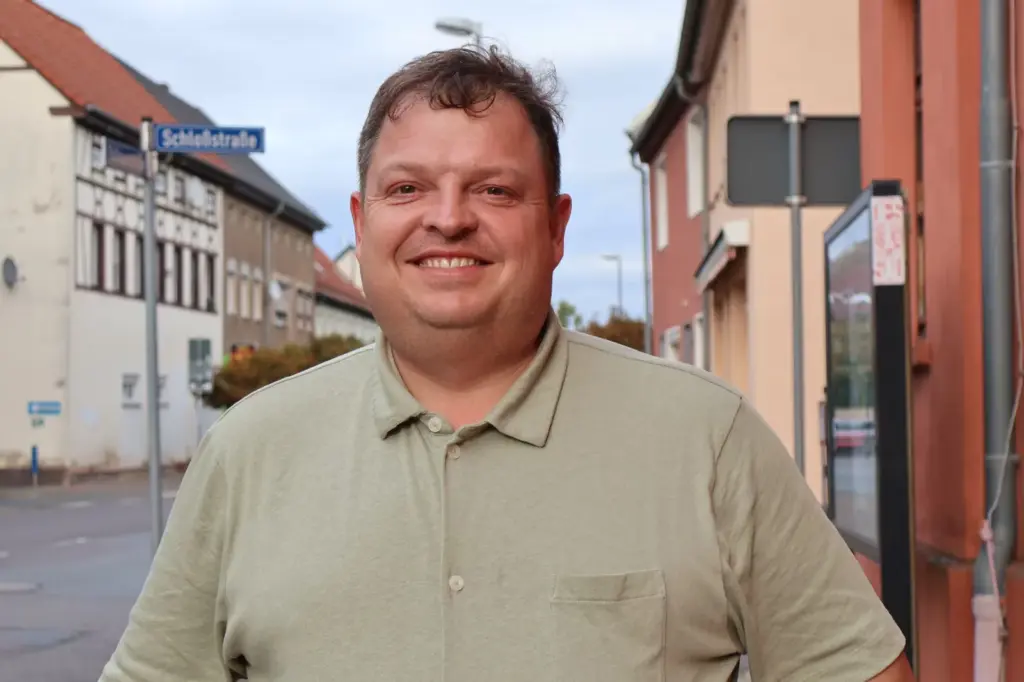
Loth represents the moderate wing of the party. He has received warnings from his superiors for defending renewable energies and fighting climate change, something his party opposes. Regarding Nazism, unlike AfD figures who relativize it, Loth does not hesitate to describe it as “the darkest period in European history and for which Germany must take responsibility.”
So, what does Loth do in AfD? This 45-year-old agronomist explains that he joined in 2013 (the party’s founding year) for two reasons: first, because it is the only German political party that wants to end the power of the European Union, which he considers undemocratic and in which Germany is underrepresented; second, because it is the only truly conservative force: “Everyone, even the CDU youth, defends left-wing ideas that people are already tired of.”
Being conservative for Loth means “protecting what works well and correcting what works badly.” His priority is to defend the traditional family: “The basis of a society, of a culture, is the family formed by a man, a woman, and their children.” He does not believe that same-sex marriage should be banned (nor would the German Constitution allow it), but all public projects that “promote or justify it as something normal” should be eliminated.
Loth also agrees with his party regarding restrictions for the foreign population. “This country depends on migration, and because of policies like family policy, we don’t have children.” His solution is to allow residence in Germany only to foreigners who arrive with a job, money, and higher education. “It’s nothing new; Switzerland already applies this,” he adds.
“The problem is that the state does not encourage these people to look for a job, especially those who have applied for asylum receive subsidies, a house, and so on for years without working until their case is decided,” emphasizes the mayor of Raguhn-Jessnitz.
Voters are happy with Loth, according to his opponents. He has done things well and they have even forgiven him for promising that daycare places would be completely free and, upon becoming mayor, doing the opposite by raising fees. “AfD will not solve anything, it will not even fulfill its promises [one of them, in Saxony-Anhalt, is completely free education], but I vote for them because they push in the direction Germany needs,” explains Franziska Abel, an employee in a furniture store. Abel supports AfD because she says she is tired of barely making ends meet, due to the rising cost of living caused largely, according to her, by the war in Ukraine and the end of cheap Russian energy: “I don’t want war with Russia, I have two children, and this government is pushing us towards it.”
Read more Betis stops Madrid happy with Mourinho
The weekly Der Spiegel put Loth in August as a paradigm of the strategy “to break the cordon sanitaire from below, in small towns and cities”: “They want to sedate people and convince them that they are a perfectly normal party.” Loth partly shares the diagnosis: “We periodically organize all kinds of activities, meetings, protests, and invite the whole town. No other party practices this closeness with the people.”
“We also speak without thinking about political correctness,” reflects the mayor, “they say ours are aggressive, irreverent ways, but that’s how people talk.”
A businessman of Turkish origin, 30 years in Saxony-Anhalt, owner along with his family of four hotels, argues without revealing his name: “They are the wolf in sheep’s clothing. In front of you, they are nice, but behind your back, they are something very dark, I know how they are because I have seen them grow.” This entrepreneur employs dozens of people and assures that most of his German workers vote for AfD: “They say they do it because it’s something new, they don’t understand that these people will sink Germany if they accumulate power, they will end what this country is, multicultural.” His prediction is that they will obtain an absolute majority in Saxony-Anhalt.
The icing and the cake
AfD denies being a radical party. The German domestic intelligence services, the Office for the Protection of the Constitution (BfV), concluded in 2025 in a report that the party is indeed a far-right extremist organization seeking to break democracy and the Constitution. The report was meant to receive the approval of the executive and legislative powers to monitor the party. A court ruled last February that the intelligence services could not classify AfD as such because, although there are members who may have engaged in anti-democratic manifestations, there was no evidence that the party as an organization wanted to overthrow democracy.
“The far-right label is an invention of the CDU, the Office for the Protection of the Constitution is politicized by the government,” says Loth. “The CDU has never allowed another right-wing party, that’s why they slander us.” He does admit that there are radical people in his party, but he will not stop believing in the project because of them: “Just because I don’t like the icing doesn’t mean I won’t eat the cake.”
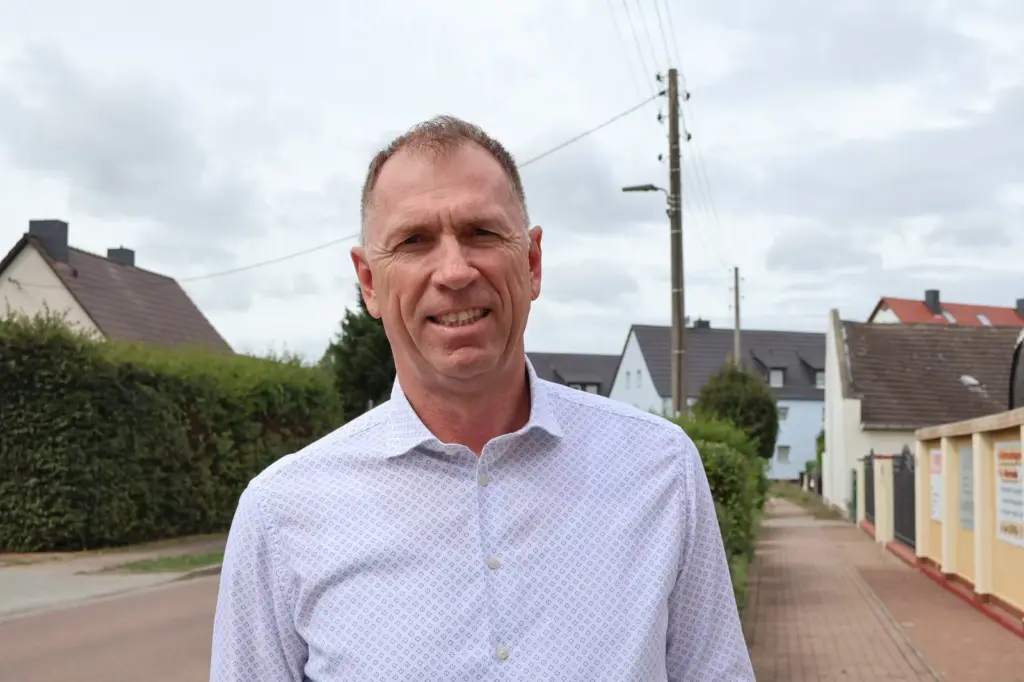
“What Mr. Loth should ask himself is why all parties, not just the Office for the Protection of the Constitution, consider AfD an extremist force,” replies Tilo Hörtzsch, head of the CDU municipal group. Hörtzsch warns that one of AfD’s dangers is its populism towards state institutions. “AfD feeds on protest votes, from people who feel mistreated,” says this Christian Democrat politician and electrician: “The price of fuel, for example, in Germany is much higher than in other European countries, and people know this.”
Hörtzsch also admits that Loth is doing a good job: “Fortunately, he is a person who acts outside the party doctrine.”
Reinhard W. (who also does not want to reveal his last name) lives at the entrance of Raguhn. A small Ukrainian flag flies on the roof of his house. “I suppose I am an anomaly here, but being supportive of Ukraine is the least.” Reinhard says he knows the far-right voter well. In the last gasps of the GDR, he protested every week in Leipzig against the dictatorship and says he was tortured during arrests. “The population said nothing, they grew up in this lack of values. From the SED (the party that ruled the GDR) have come the votes for AfD and Die Linke (a left-wing party largely made up of former SED cadres).”
Loth’s prediction is that 60% of his fellow citizens will vote for AfD. Reinhard W. believes it will be more.