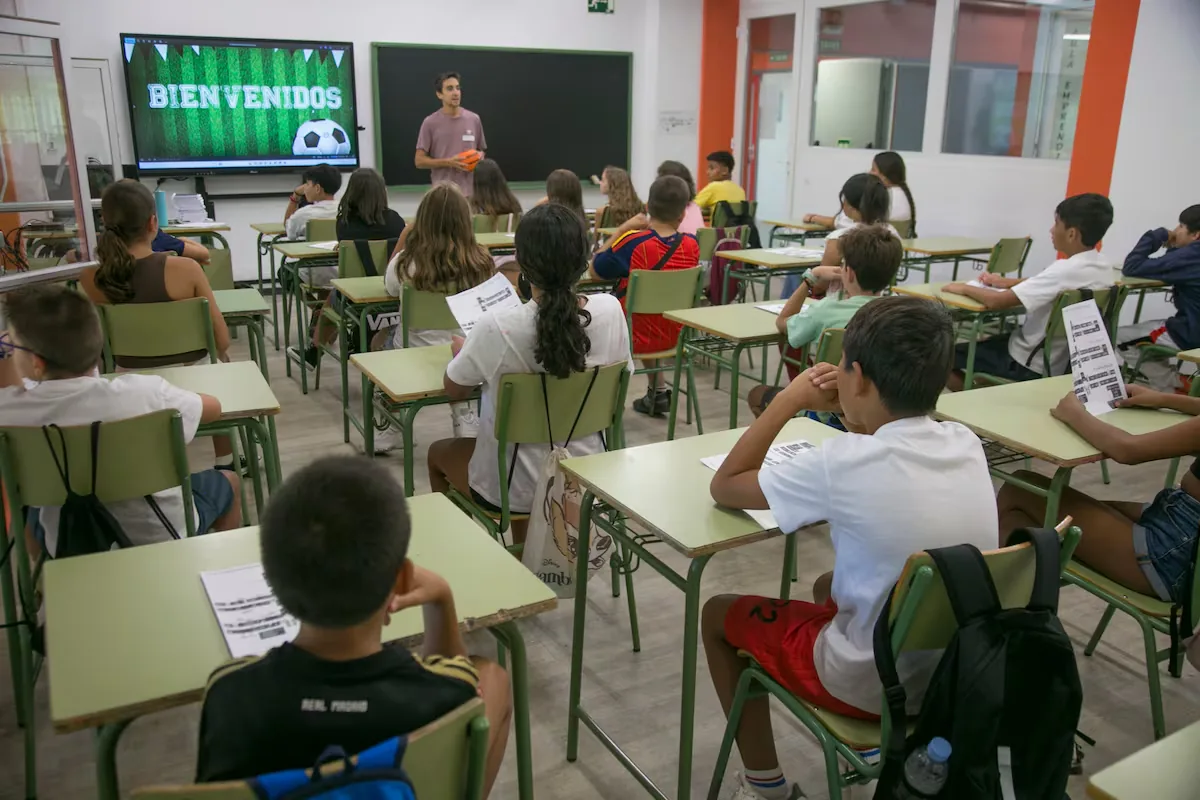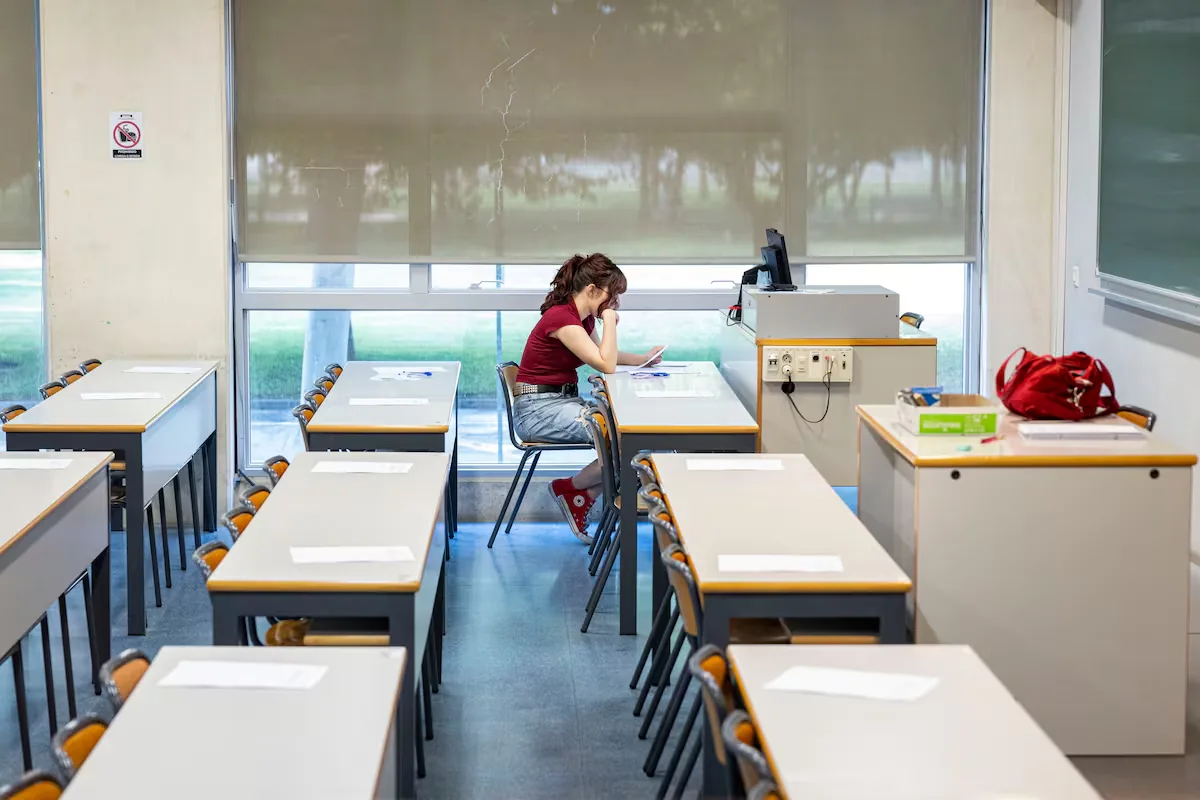
This Tuesday the PISA Report, the most influential international assessment, will be published. It is criticized by many teachers and other experts for simplifying learning in school, but it is capable of causing tremors in the offices of educational authorities around the world and driving reforms in education systems, as happened in Germany or Denmark in the past. The assessment will not be public until this Tuesday at 9:30, but various educational sources admit their concern about the evolution of the results, given that Spanish performance has been declining for two consecutive editions and the school context has become even more complex since then. These are the main points.
Read more Brussels responds to Trump’s threats with more investments in Greenland
What is PISA
The PISA Report evaluates 15-year-old students in reading comprehension, mathematics, and science. The study, prepared by the Organisation for Economic Co-operation and Development (OECD), an institution mainly formed by developed countries, began to be published in 2000 and has been released every three years since then except in 2022, when it was delayed by a year due to the pandemic. The test has expanded its scope and in this edition 760,000 students from 90 countries and smaller territorial units, which participate independently of the state to which they belong, such as Hong Kong or Macau, took part. In Spain, 30,000 students were examined.
The test aims, according to the OECD, to check whether adolescents in a country have, at the time they normally complete compulsory education, “the essential knowledge and skills to fully participate in social and economic life.” Its critics argue that by focusing on a few competencies (which the OECD is trying to expand), PISA simplifies the analysis of learning and guides reforms that overlook, for example, the role of the school as a center for citizenship education.
Unlike other assessments, such as the Selectividad in Spain, PISA exams do not ask students about a specific syllabus but test what they know by measuring their reading comprehension and problem-solving ability. PISA questions are structured by difficulty levels. The first correspond to competencies usually learned at the end of primary school, while the more complex ones require the type of knowledge and maturity that are reached, hopefully, in the last years of secondary education.
The exams contain anchor questions, which are repeated from one edition to another, allowing comparison of student performance not only between countries but also with the past.
In addition to the exams, students fill out context questionnaires with personal information, their family environment, and their mindset, which the report cross-references with their results. The principals of their educational centers, which in Spain number almost 1,000 among public, charter, and private schools, also answer questionnaires about the social composition of their students, the school climate, and the technological resources they have.
The 17 Spanish autonomous communities participate with their own samples, which adds internal interest to the competition between countries. Castilla y León has led the last editions. In this edition, data from Catalonia will not be used for comparison with other territories or years, because the Generalitat excluded 23.2% of the initially selected students from the test. The OECD generally allows excluding 5% of students for reasons such as intellectual disability or very poor language proficiency. In 2022, Catalonia’s PISA results were very poor, which has increased suspicions. Last week, the Generalitat dismissed the number two of the Department of Education and opened proceedings against two officials and another former senior official.
What to watch out for
Results from Spain and most countries have shown declines for two consecutive editions. This happened in 2018 and even more dramatically in 2022, which was attributed to the pandemic. The 2025 results (the edition is named after the year the exams are taken, not when the report is presented) will show whether what happened in recent years was a temporary issue or a more structural educational crisis.
The signals from the two previous editions are especially worrying in the West. Japan and Korea, the two Asian countries that are part of the OECD, have maintained more stability and have even improved slightly. They top the PISA ranking among the 43 countries that are part of the OECD or the EU. That is, excluding Singapore and Taiwan, which if included would rank first and second (tied with Japan), respectively. The Western country with the best results in 2022 was Estonia.
Spain did poorly in that edition but did not collapse as much as the rest, which was attributed to the quick reopening of schools during COVID. This allowed it to match the OECD average results for the first time.
What to expect
Experts are not optimistic. The test’s creator and OECD education director, Andreas Schleicher, said a year ago that he did not believe the 2022 drop was solely due to the pandemic, because some signs came from before. Schleicher pointed to probable factors for the decline including the amount of time adolescents spend on screens but admitted more information was needed.
Since 2022, Spain and much of the developed world have seen an increase in the proportion of students of migrant origin, who according to PISA have, on average, significantly lower performance than natives due to factors such as poorer language proficiency, coming from weaker educational systems, and belonging to families with lower socioeconomic profiles. And this last factor is the external one that, according to educational research, most influences educational performance.
Read more Pamela Anderson talks about how her hepatitis C diagnosis affected her: “It was a death sentence”