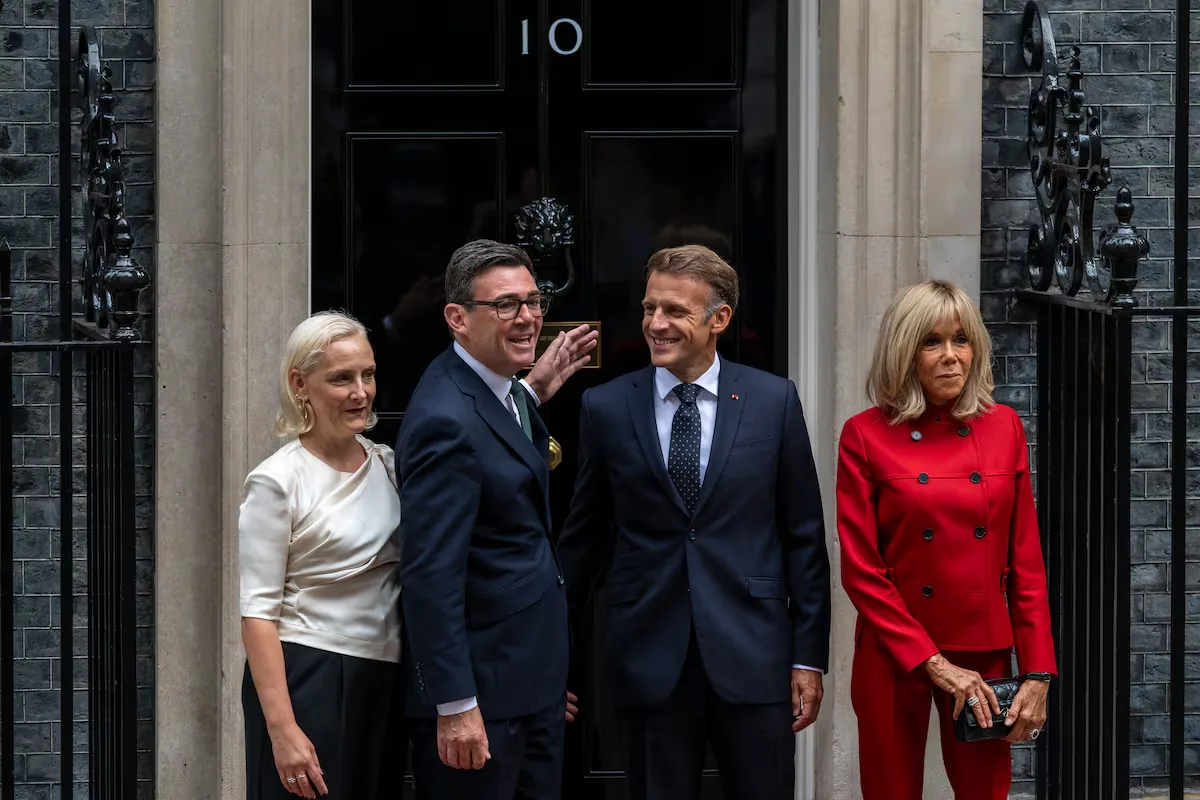
Diplomatic relations bear a surprising resemblance to the painstaking art of embroidery: both require meticulous attention to detail, each individual action has a purpose in the final whole, and the ultimate goal must be constantly present during execution. The Bayeux Tapestry, the historic piece nearly 70 meters long and weighing 350 kilos made 1,000 years ago to commemorate the Norman conquest of England, confirms this unusual comparison this autumn in London. After almost a century of British pleas for its return, France has loaned it for 10 months to the British Museum following a clever maneuver by the French president, Emmanuel Macron, to strengthen the Anglo-French alliance, which shines again once the wounds of Brexit have healed.
Read more Keys | The PISA Report tests Spain’s education
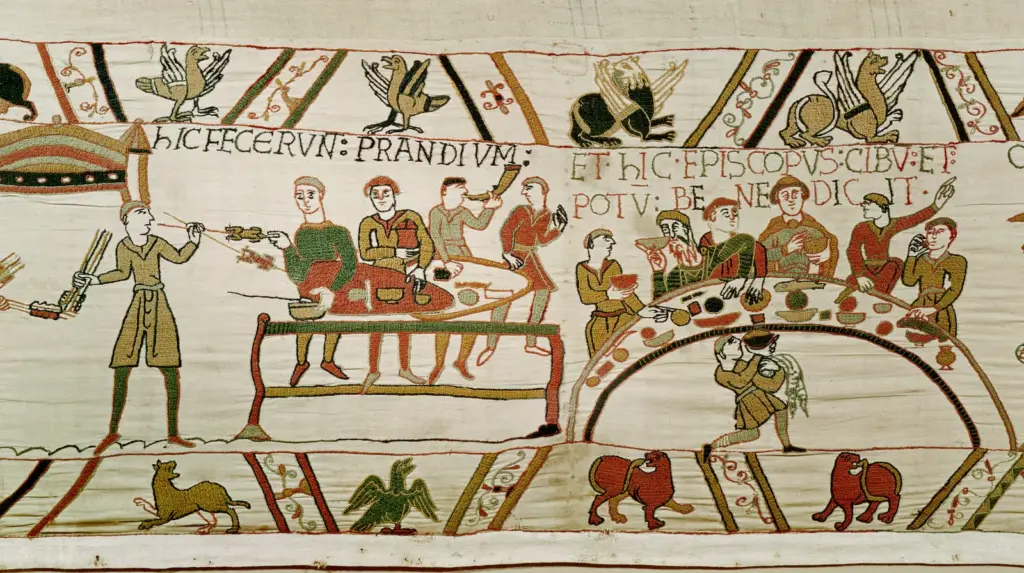
The exhibition, which opens to the public on September 10, has generated interest only comparable to the Tutankhamun treasures exhibition in 1972. Tickets for this year are sold out and more than 100,000 were sold in the first 24 hours, a milestone for a work whose origin remains a mystery. During the official inauguration last Wednesday — attended by Macron, the King of England, and the British Prime Minister, Charles III — the most widespread theory was accepted, which considers that the tapestry, which features 626 characters (only six women), 737 animals, 37 buildings, and more than 40 boats, was made in Canterbury (southwest England), before being moved to France, although the first record of its existence dates from 1476.
The monarch joked that the name is a mistake, since technically it is not a tapestry but a linen cloth, nor was it made in Bayeux. Although it is unlikely that his proposal to rename it the Canterbury Embroidery will prevail, for the British it represents a return home.
The French, meanwhile, consider the loan a diplomatic triumph, a display of soft power in an era of post-Brexit geopolitical realignment. By lending it, they score a valuable political point and, in passing, solve the dilemma of what to do with the work while its home since 1982, the Bayeux Museum, remains closed for two years, until autumn 2027, for a major renovation.
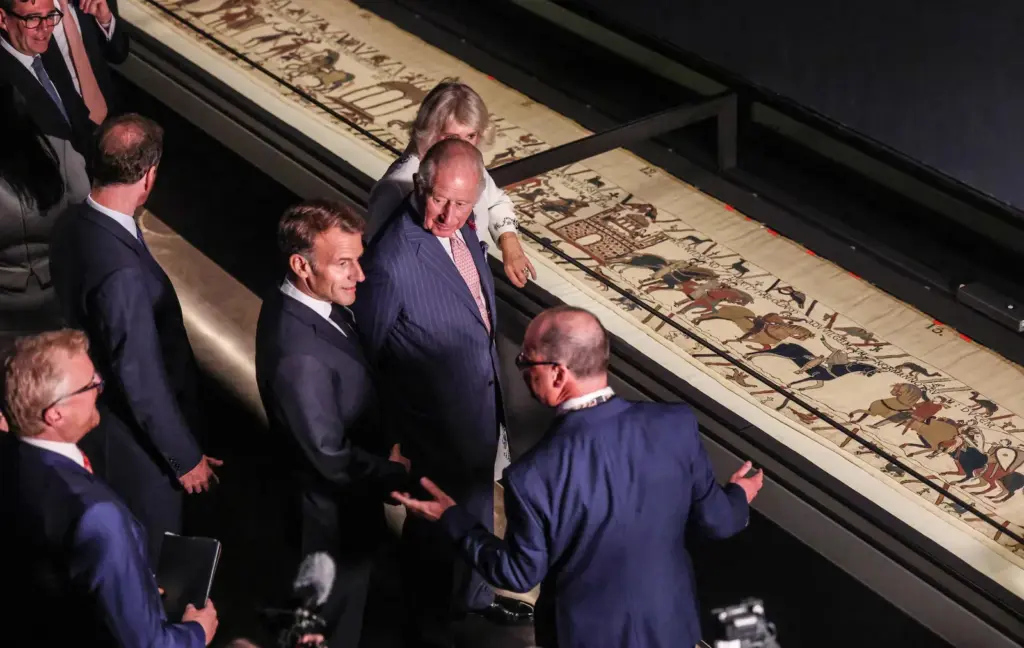
Despite concerns about the risk of transport, given the fragile preservation of a thousand-year-old cloth (a 2020 analysis recorded more than 24,000 stains, almost 9,700 holes, and about thirty tears) and criticism for using cultural heritage for political purposes, the Anglo-French axis has capitalized on the loan. Both countries are aware of the symbolic weight of the loan, which has an insurance of 800 million pounds (about 930 million euros), assumed by the British government, for eventualities such as earthquakes, fires, and even a plane collision.
The French see it as a historical duty, a moral debt, after the British contribution during World War II, without which, they admit, the work might have been permanently lost to the country. Used by the Nazis as a propaganda tool in their desire to invade England, as Napoleon had done in the 19th century, British experts at Bletchley Park, the codebreaking center where Alan Turing worked, sabotaged the attempt to take it to Germany near the end of the conflict.
The United Kingdom had requested the tapestry for the first time in 1931, later in 1953 to mark the coronation of Elizabeth II, and in 1966 to commemorate the 900th anniversary of the Battle of Hastings, the epic confrontation in which William The Bastard (The Conqueror, north of the English Channel) defeated the English king Harold, ushering in a new dynasty that would shape Europe’s future. The battle is depicted in detailed brutality in the final section of the tapestry, which would have acted as Norman propaganda after the conquest.
Read more Brussels responds to Trump’s threats with more investments in Greenland
The most accepted hypothesis attributes the creation to Anglo-Saxon women, possibly nuns, by order of Bishop Odo of Bayeux, William’s half-brother, to display it after the consecration of the city’s cathedral in 1077. Against swords, infantry, and the arrow lodged in the eye that would end King Harold’s life, graphically depicted in one of the 58 scenes of the tapestry (although experts believe the arrow was added centuries later), the heritage legacy of a saga considered the British equivalent of The Odyssey acts in the 21st century as a mortar of concord.
Alongside the silent and publicly invisible work of historians, diplomats, and senior officials, Charles III and Macron have been key to the return of the cloth, which will generate about three million euros in ticket sales for the British Museum, a record in its 273-year history. The French leader first hinted at the possibility of lending it at an Anglo-French summit in 2018, but disputes over Brexit and the 2020 pandemic cooled the dream of seeing the work back on English soil. During Charles III’s state visit to France, the desire gained traction again, and last year, with the king hosting Macron, the French president confirmed the loan would become a reality.
The harmony between the two has been a diplomatic asset for two traditionally aligned countries, whose closeness was marred by the first divorce in community history. The English monarch, a descendant of William The Conqueror, has described the loan of the Bayeux Tapestry as “the best possible symbol” of the “entente amicale,” a sort of unofficial update of the Entente Cordiale that in 1904 ended centuries of rivalry and laid the foundations of their alliance in the 20th century.
On Wednesday, Charles III showed Macron with laughter his “favorite part” of the tapestry, a scene in which a group of Normans push a cart: “They are carrying an enormous amount of wine.” “The French have always had a clear sense of priorities,” the French president replied during the subsequent speeches.
After tickets for this year sold out, the second visiting period, from January to April, goes on sale on October 21, while the third and last, between April and July, will be in January. The regular price is 33 pounds (38.5 euros), although it is free for those under 16. The lucky ones who get a ticket will be able to see in a practically dark room, for the first time horizontally and in a straight line (at the Bayeux Museum it was vertical and curved), one of the few historical sources on the conquest of England, the last time the territory was successfully invaded by a foreign army.
The tapestry, woven in wool thread, spares no detail, but the ending is left to the imagination. The last part, assumed to depict William’s coronation at Westminster Abbey, has not survived to this day, something that led the British prime minister to joke: “Made in England, they couldn’t bear to show the ending, too difficult.” Macron, for his part, has his own reading: “It’s a happy ending, we are here,” 1,000 years later.