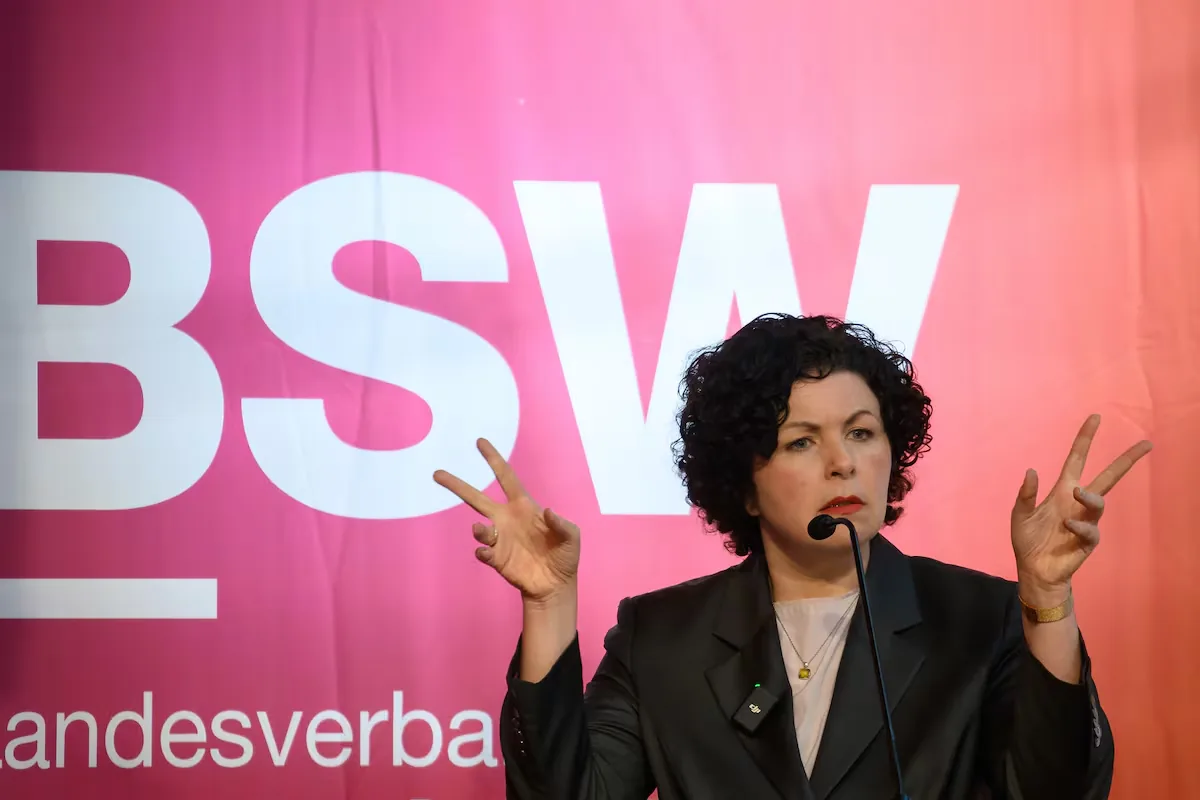
The good vibes between Claudia Wittig and Alice Weidel were one of the most striking moments of the electoral night on Sunday in Magdeburg. They exchanged smiles, mutual compliments, and a willingness to cooperate in a joint interview on public television. Wittig was a candidate for the nationalist and populist left-wing party BSW in the elections in the German state of Saxony-Anhalt; Weidel is the charismatic leader of AfD, the far-right party that swept the polls on Sunday. BSW and AfD are two parties that might seem like polar opposites but, as Wittig and Weidel made clear, there are many things that unite them. The main one is to overturn the German democratic system.
Read more How the Bayeux Tapestry, a jewel of medieval art, stitched up the post-Brexit wounds
BSW stands for the German acronym Alliance for Sahra Wagenknecht. She is the founding president of the party, in 2024, after causing a split with her previous party, the post-communists of Die Linke. Wagenknecht presented BSW as a party of “conservative left.” Her ideas are reactionary and fall into what is disparagingly called a red-brown force, that is, an ideology between socialism and the radical right. One of its founding pillars is drastically restricting migration. Another point they agree on with AfD is breaking traditional international alliances with Western powers in favor of Russia. BSW and AfD are two of the Western European parties closest to the Kremlin.
Wittig highlighted on election night that with AfD they share the same strategy to curb rising energy costs, that is, reopening the purchase of Russian gas. In fact, German support for Ukraine and the country’s rearmament are the main points of BSW’s electoral campaign in Saxony-Anhalt and in the other two states holding elections in September, Mecklenburg-Western Pomerania and Berlin.
The other programmatic point that BSW sees as important as rapprochement with Russia is migration containment. Self-described as “conservative left,” they demand drastic limits on the entry of foreigners into the country, to thus provide more benefits to German families. “The society’s capacity to welcome and integrate refugees is limited. It is essential to protect the local population,” says BSW’s program in Saxony-Anhalt. “The state’s capacity to act must be credible and visible. This includes systematic deportation when there is no right to asylum, when asylum abuse is suspected, or when migrants commit crimes.”
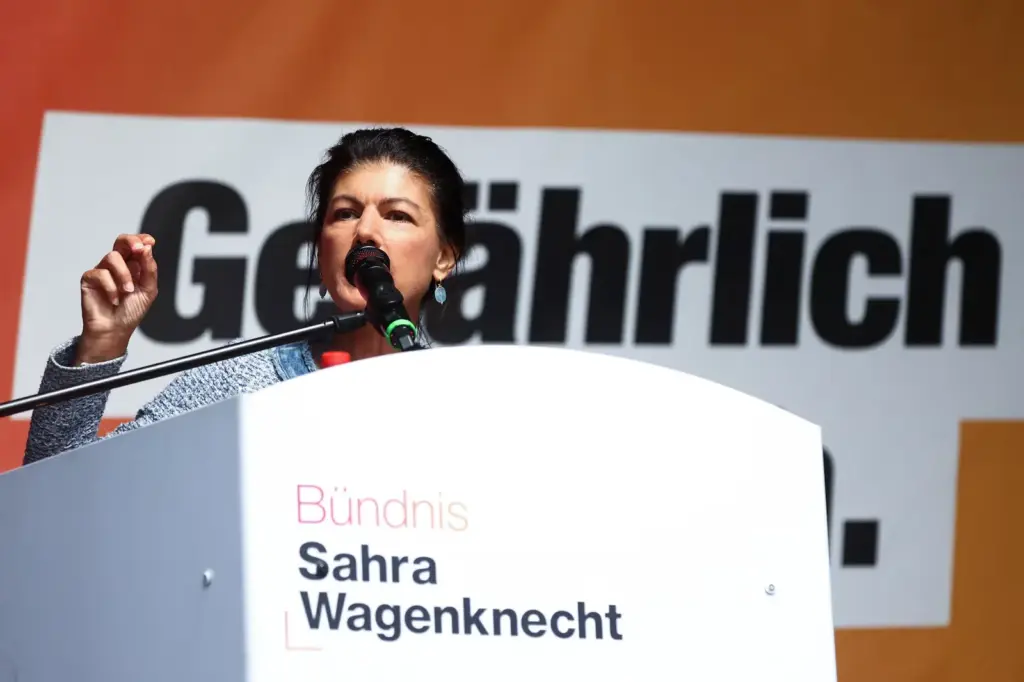
BSW debuted in 2024 with good results in Saxony and Thuringia, two states in East Germany, the area where Wagenknecht’s discourse has taken root the most. Not only because she comes from there and was a proud member of the SED, the party that ruled the communist regime. Also because social unrest in the former East Germany is favoring anti-system forces.
Read more Keys | The PISA Report tests Spain’s education
Die Linke, Wagenknecht’s former party, also had a solid social base in the regions of the former GDR. Many cadres of the SED —and its democratic successor force, the PDS— ended up in it. But these have evolved towards a more open left with appeal among the new urban youth that is capable of governing with the SPD, the Greens, and even cooperating with the CDU to apply a cordon sanitaire against the far right.
Pride in coming from the GDR is fundamental in BSW’s electoral program in elections like those in Saxony-Anhalt. For example, in education: “In the GDR’s education system, children learned together for longer periods and, thanks to support from companies, had a more practical application of their learning. We want to recover the advantages of this model,” reads their program. It does not, however, at any point mention that the GDR was a dictatorship where the learning of democratic values was absent.
Serious crisis
BSW has precisely wanted to capture the reactionary and anti-system vote that Die Linke is losing, and entering the Thuringia government with the CDU and SPD has taken its toll. That is why it is immersed in a serious crisis in Thuringia. Most of its regional deputies left the party ranks last week to be able to continue in government. Wagenknecht wanted to break the coalition to be able to enter the Saxony-Anhalt parliament, according to the now former BSW leader in Thuringia, Katja Wolf.
The truth is that the experience in that state almost cost BSW being left out of the parliament in Saxony-Anhalt: it only surpassed the 5% vote threshold to have presence in the legislative chamber by three tenths. Wagenknecht has learned the lesson and during the electoral campaign already warned that if AfD achieved results like those it has obtained, her party would support the investiture of the far-right candidate, Ulrich Siegmund. Thomas Schulze, another BSW candidate in Saxony-Anhalt, reiterated this Monday that they are willing to abstain so that, in the third parliamentary vote, Siegmund can be invested president with a simple majority.
Read more Brussels responds to Trump’s threats with more investments in Greenland