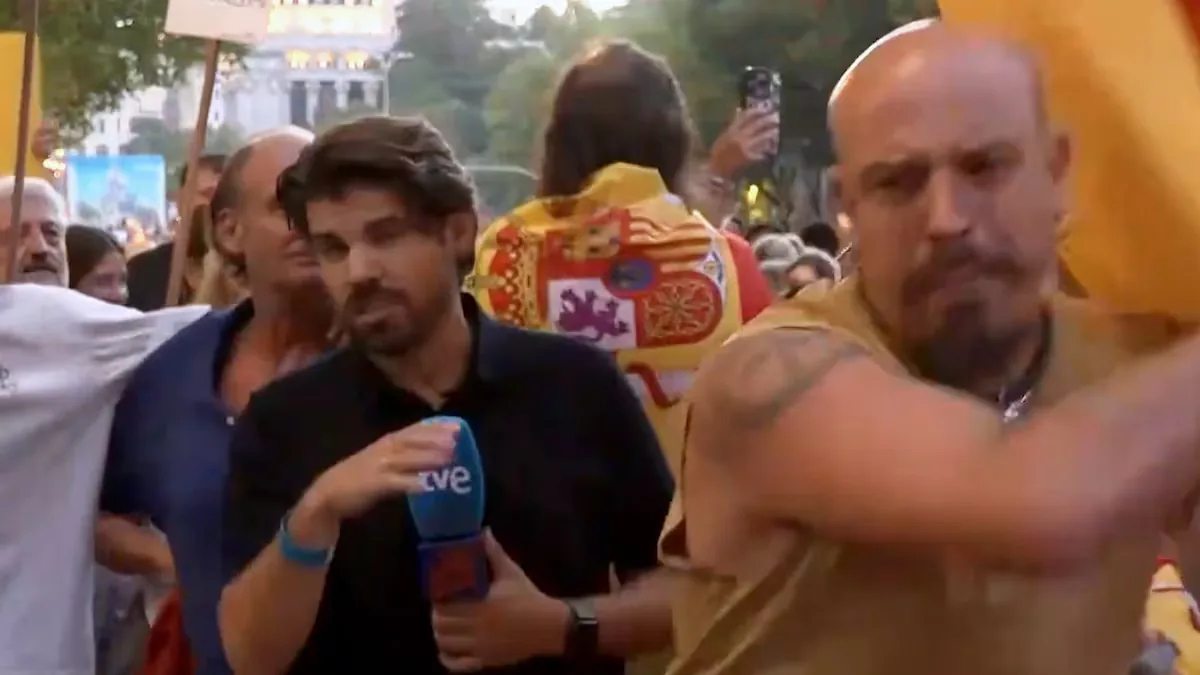
Sometimes it is for reporting for a specific media outlet, other times because of skin color, also for carrying a camera and sometimes for not carrying one. There are blows, insults, and intimidation. Attacks on journalists reporting on the situation in Ceuta occur daily, particularly during the many demonstrations the autonomous city has experienced since the massive influx of migrants. Some of these have been recorded by the reporters themselves because they happened while they were live on television and the protesters interrupted the camera to prevent them from doing their job. The neighbors protesting in the streets accuse journalists of being “manipulators” or “sellouts,” claiming that, in their view, they are not reflecting the reality of Ceuta.
Read more Morena municipal president and eight others arrested in Puebla for cargo transport theft
It was not like this from the beginning. These attacks have worsened and multiplied over the days, as the discontent of the people of Ceuta grew due to the lack of measures taken to respond to the emergency. Although incidents have been recorded in which a specific media outlet or network was targeted, they are usually directed at journalists because they are unhappy with the media coverage in general. This is evidenced by the wide range of media, from different ideological perspectives, that are heckled or shaken daily at the demonstrations: Cadena SER, Telecinco, TVE, El Pueblo de Ceuta, or the AFP agency.
“The first time I was attacked was in July, I was working for Telemadrid and they hit the cameraman and me,” says Paloma Fernández Coleto. On that occasion, the freelance journalist ended up with her arm covered in bruises caused by the protesting neighbors who hit her to prevent her from filming them. “On top of that, I am from here, from Ceuta, many neighbors know me, but it doesn’t matter. It’s all very surreal,” she adds.
Other times these attacks do have very specific reasons. “Fucking Moor journalist” is the insult that Soraya Aybar Laafou, a freelance journalist who collaborates with various media, says she receives the most: “I write, they don’t know which media I’m from because I don’t go with foam on the microphone like other colleagues, but they use my Moroccan origins to attack me,” she explains. Aybar Laafou points out one of the recurring trends in these attacks: the neighbors accuse journalists of not paying attention to them and the problems arising from the massive flow, and of giving space to migrants to the detriment of the people of Ceuta. “The other day, at one of the demonstrations, they saw me talking to some boys who were waiting to return at the border and they flared up again. They heckled me, told me not to be a liar and to tell the truth, they asked why I was talking to them,” she explains.
A similar situation happened last Saturday, September 5, when Gabriela Sánchez (Eldiario.es) and EL PAÍS attended one of the protests called by the Ceuta neighbors rejecting the construction of a new migrant location in the Port. Throughout the route, several of them shouted insults and heckled, convinced they were not journalists but “NGO workers,” constantly recording them with their mobile phones and threatening them with physical violence. Nearby but unrelated to the demonstration, three young migrants and a Ceuta girl were sitting by the sea, and some of the protesters also began to insult them without any provocation. “If you are from Ceuta, what are you doing with them?; then you say they rape you,” they spat at the girl. An escalation of tension that ended with the same threats to the journalists, whom they called “traitors” and wished to be sexually attacked by the migrants they were interviewing.
Read more The Prosecutor’s Office finds customs and weapons documentation in a Farías Laguna warehouse
The next day another demonstration was held in front of the Government Delegation, to demand the resignation of the delegate and the expulsion. On this occasion, the neighbors tried to prevent the press from working by chanting slogans like “sons of bitches,” images that were recorded by Cadena SER of Ceuta. EL PAÍS left the coverage of the protest after being heckled by the same protesters as the day before.
These are not isolated incidents, but a routine that repeats day after day in Ceuta. The city lives in a frenzy of demonstration calls, protests that address the different problems caused by the reception of migrants: from the construction of new reception centers, to the return to schools, to more general ones demanding immediate expulsion to Morocco. When journalists attend these events to report on them, some neighbors react angrily, unleashing tension and preventing reporters from interviewing the rest of the neighbors who peacefully seek microphones to express their feelings.
The escalation of attacks has led the Journalists’ Union of Andalusia Ceuta and Melilla and Reporters Without Borders to issue a statement last week warning of the serious risk to freedom of information. “Reporting is not provoking. Reporting is a right,” they emphasized, urging institutional leaders and political parties to “act responsibly and avoid speeches that single out, stigmatize, or discredit professionals,” considering that such messages may contribute to creating a climate of hostility towards the hundreds of journalists deployed in the city.