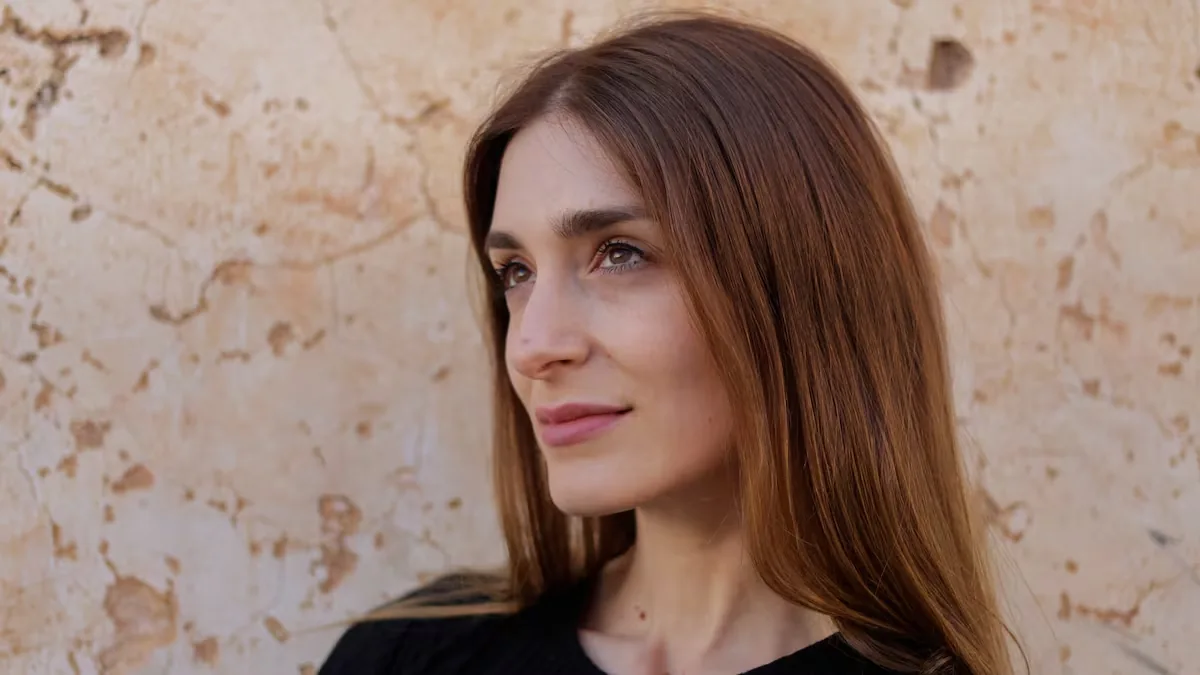
My father often told me that, when he was a child, going to the doctor cost nothing (…) At twelve or thirteen years old, I listened to these anecdotes from my father with fascination. They were like science fiction stories inspired by real events,” says Rai, Lisa’s partner, the two protagonists of The Price of Being Born, the new novel by Laura Gost (sa Pobla, Mallorca, 1993) after winning the 2023 Proa prize with The Ashes in the Pool. Before being published, the book has already sold the rights for seven translations and an audiovisual adaptation.
Read more Josep Lluís Trapero resigns as general director of the Catalonia police
The present where the characters live resembles ours quite a bit: they arrive late to a dinner with some friends because a demonstration forces the taxi to take a longer route, the deterioration of climate change is so noticeable that they have to collect rainwater in barrels, hospital care is no longer public and “the fees you had to pay after each visit could amount to a fifth of a standard monthly salary”; but since Laura Gost’s goal was to build a dystopian society, and one of the mandatory conditions since Huxley and Orwell, passing through Zamiatin, to carry forward the obsession with imagining the apocalyptic catastrophes of these worlds is to fabricate the domination of the individual by the State, she chooses to set The Price of Being Born around how the rulers react to the main evil with which Aldous Huxley, in A New Visit to Brave New World, headed the dark threats humanity would have to face in the near future: overpopulation.
It is a subgenre that Andreu Domingo, in Literary Descent into Demographic Hells: Dystopia and Population (Anagrama, 2008), calls demodystopia, and here it is worth recalling that not long ago we read Mammalia (Males Herbes, 2024), a novel in which Elisenda Solsona imagined a society where intimate relationships were maintained thanks to technology and where birth rates were under strict state surveillance: the wombs of different mammals had deteriorated; getting pregnant naturally was so dangerous that it was strictly forbidden; and candidates to gestate healthy embryos had to pass a series of tests at specialized clinics. In The Price of Being Born, Laura Gost aligns with the line started by Harry Harrison in Make Room! Make Room! (1966) — the rather watered-down film version was directed by Michael Anderson in 1976 under the title Logan’s Run — but instead of having citizens, after living happily for thirty years, disintegrate during a bloody celebration known as The Carousel — it is a society where life and death are artificially programmed — here a different circular dynamic is chosen: no one can be born if another person does not agree to die in their place, an act of substitution called “the relay” that serves as a drastic measure to maintain zero growth and the planet’s balance.
Read more The Red Bull generation: how energy drinks became the fuel of an accelerated society
Fortunately for the reader, Laura Gost sets aside discursive speculations about eugenics and euthanasia and other issues linked to demographic explosion — for pregnancies not guaranteed with a “relay,” the State imposes mandatory abortion — and prefers to focus on calmly and coldly developing a rather elementary literary suspense that, despite some narrative ups and downs that hold up thanks to the naive honesty with which they are presented, manages to arouse enough interest or sympathy: since neither Rai nor Lisa have the economic resources necessary to access the black markets where “the relay” is traded, what we follow are the adventures with which he tries to surprise his wife — his love — with the good news that they will indeed be able to become parents. Needless to say, none of the options he thinks of is valid and he has to discard them one after another — if it were otherwise, there would be no story — but it is worth noting that in the end Laura Gost grants them the realization of their desire to be parents, and twins at that, with all the problems this represents in circumstances where only one is allowed to live, and if both are to live, one of the parents will have to sacrifice themselves. We will not reveal the implausibility of the twist that resolves the intrigue — will it be him or her, the victim? — but we will applaud the aplomb with which Laura Gost concludes The Price of Being Born in an unlikely way, cheating a little.
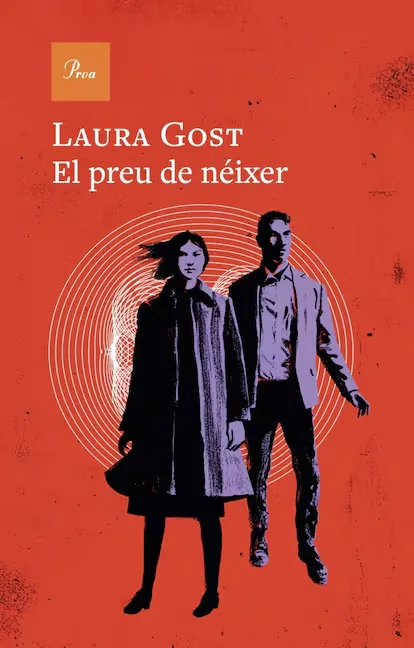
The Price of Being Born
Proa
194 pages. 19.90 euros