







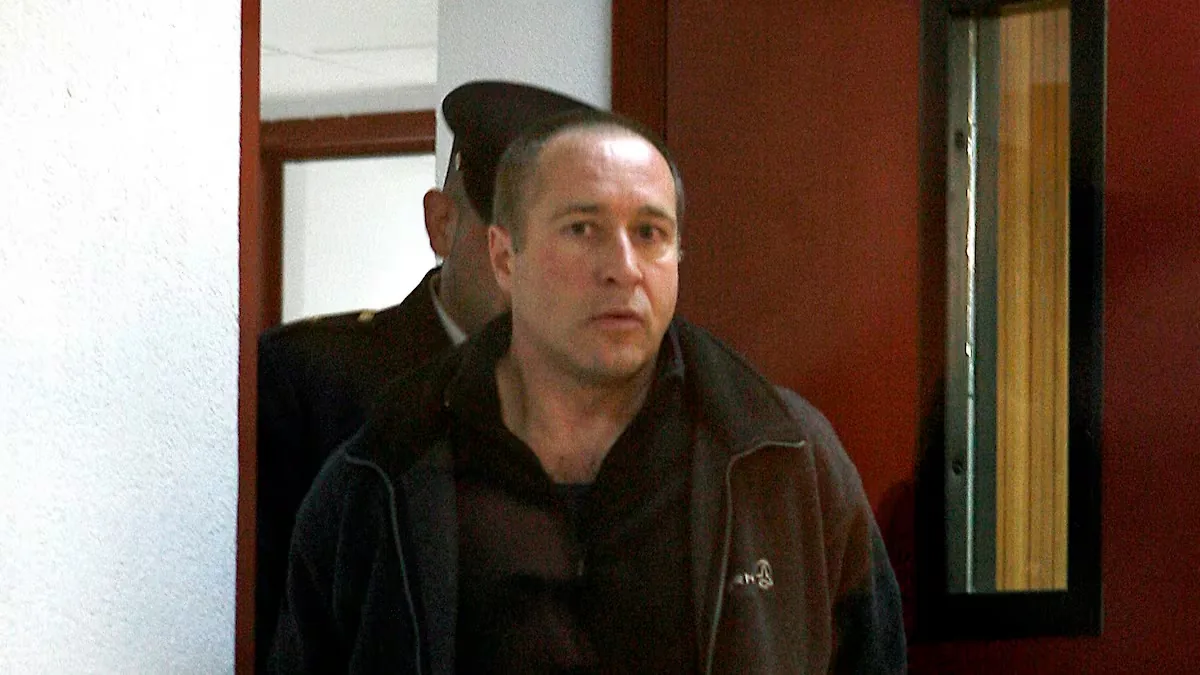
The Basque Government has granted the third degree of imprisonment to the historic former ETA leader Henri Parot- Fuentes from the Basque Department of Justice, headed by the socialist María Jesús San José, who have confirmed to this newspaper that the measure was adopted based on the report of the Prison Treatment Board. The Prosecutor’s Office will have to study the case and decide whether or not to appeal this decision before the penitentiary surveillance court of the National Court. Parot was imprisoned in 1990 and is serving a cumulative sentence of 40 years for 33 murders committed between 1978 and 1999, 10 of them in the attack on the Zaragoza barracks in 1987.
Parot was transferred to the Basque Country in 2022 and is serving his sentence in the Guipuzcoan prison of Zubieta. He had already enjoyed a semi-liberty regime since last year under the application of article 100.2 of the Prison Regulations granted by the Basque Government, which allowed him during this period to leave prison from Monday to Friday to carry out volunteer work with the obligation to return to sleep in prison, sources from the Department of Justice explained.
The former ETA leader also enjoyed a six-day prison leave last year endorsed by the surveillance judge of the National Court, who took into account a letter from the prisoner addressed to the Treatment Board in which he reiterated his rejection of “all violence” and stated that at 67 years old, 35 of them imprisoned, he considered it necessary “to recognize the suffering caused and try as much as possible to repair it.”
“I believe it is necessary to recognize the suffering caused by my former membership in ETA and to try, as much as possible, to repair it,” wrote the ETA member, as reflected in the order of the penitentiary surveillance judge of the National Court dated June 19, 2025, which endorsed the decision unanimously adopted by the Treatment Board of the San Sebastián prison in March. The judge then highlighted that the prisoner had served more than three quarters of his sentence, had a favorable evolution with no recorded sanctions, participated in scheduled penitentiary activities, had previously enjoyed two two-day leaves without any incidents, and assessed that the risk of escape was very low.
His arrest in Seville in 1990 was a significant blow in the fight against ETA because he held the leadership of the itinerant commands or Argala, which had been active for 12 years and had committed about twenty attacks with nearly 40 deaths and more than 200 injuries. Additionally, in 2006, he gave his name to the so-called ‘Parot doctrine’, with which the Supreme Court responded to an appeal by this prisoner that resulted in the extension of terrorists’ prison stays. Seven years later, in October 2013, European justice annulled it and 63 ETA members were released.
Victims, against the measure
After the granting of the third degree became known, the Victims of Terrorism Collective (Covite) denounced the application of this penitentiary regime to “one of the most bloodthirsty terrorists in ETA’s history convicted of the murder of 39 people and dozens of attempted attacks.”
Read more Sílvia Catà, the first chief commissioner of Mossos and defender of community policing
Covite recalled in a statement that Parot was a member of the so-called Argala command, responsible for “some of the most brutal attacks carried out by ETA, including the massacre at the Civil Guard barracks in Zaragoza in 1987, in which 11 people were killed, including five children, and another 88 were injured.
COVITE denounces the granting of a “fraudulent” third degree to Henri Parot, one of ETA’s most bloodthirsty murderers.
It warns that third degrees granted under article 83 end, very shortly, in the application of article 86, which allows the prisoner… pic.twitter.com/te2SuHeFkS
— COVITE (@CovitePV) September 9, 2026
This victims’ collective has considered it “unacceptable” that with that criminal record Parot “now sees his sentence relaxed by the Basque Government through a third degree again based on private writings and generic statements against violence.”
“Henri Parot has not publicly shown sincere remorse for his crimes nor has he made a clear, unequivocal, and verifiable break with ETA and the political and social environment that justified and legitimized his murders,” said Covite president Consuelo Ordóñez, who again denounced the penitentiary policy followed by the Basque Government “at the service of the abertzale left.”
Read more The President of Serbia calls early elections after nearly two years of student protests