









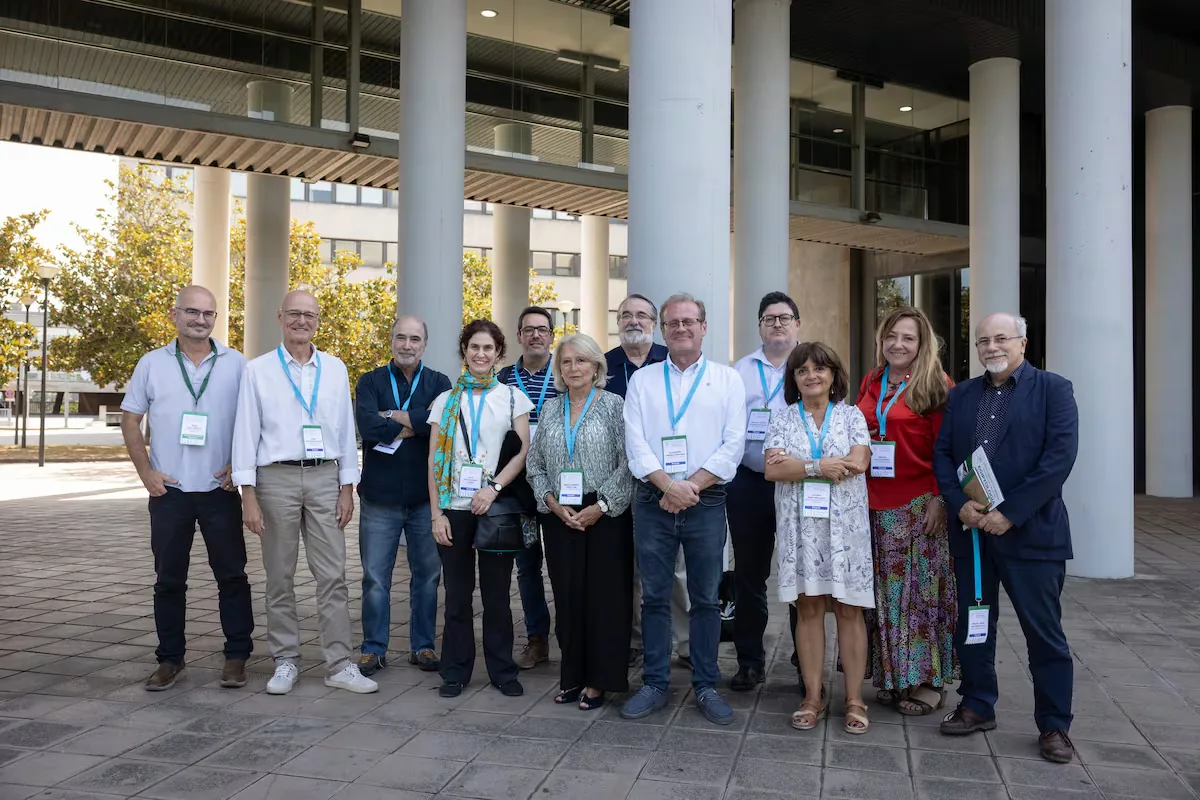
With the concrete buildings of the Autonomous University of Barcelona (UAB) instead of the terraces of the temple of Hatshepsut as a backdrop and pines and magnolias instead of palm trees and sycamores, the VIII Ibero-American Congress of Egyptology has been held since Monday, bringing together at the UAB practically all of the most renowned Spanish Egyptologists, including most of the directors of our archaeological missions in the land of the Nile, many of them well-known names and faces from television reports and documentaries. In total, more than 300 participants and 120 presentations in three intense days.
Read more Niubó advocates for expanding places in special education centers in Catalonia
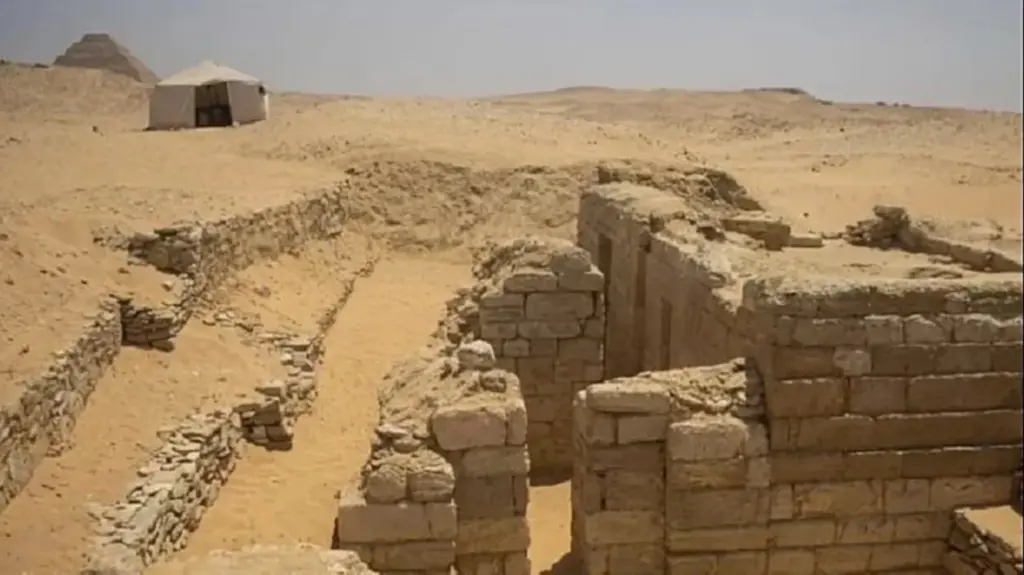
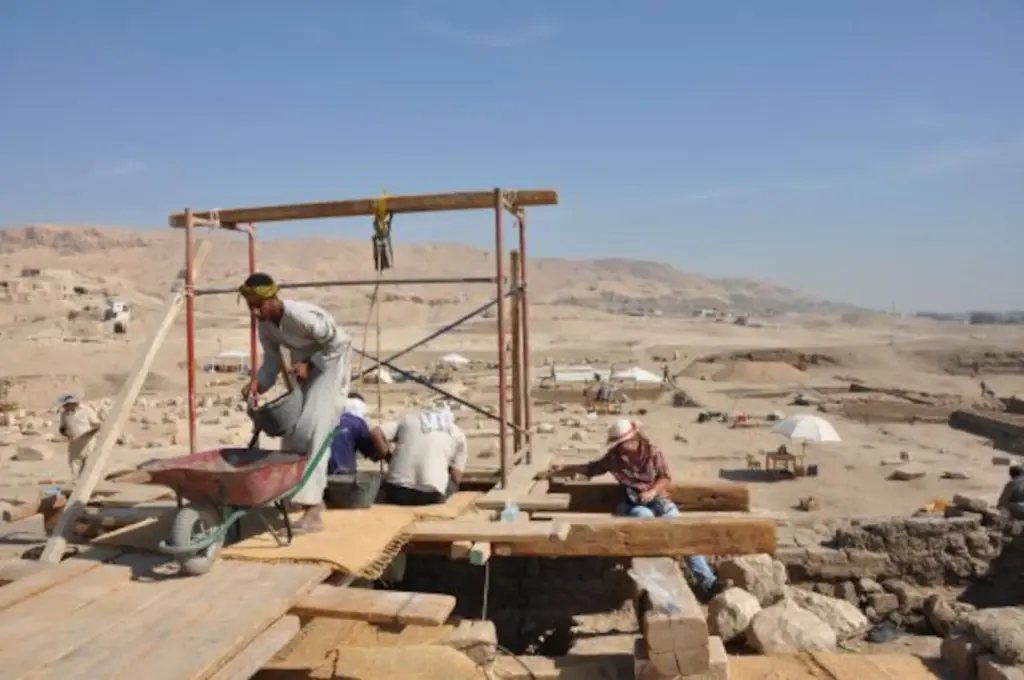
Among the news already provided by the meeting, which showcases the entire scientific and vital adventure of a consolidated and thriving discipline in the country and throughout the Ibero-American sphere, is the announcement of the discovery in the so-called Mariette cemetery, in Saqqara, north of the step pyramid, by the mission led by the Catalan Josep Cervelló, of the extraordinary mastaba — a characteristic tomb in the shape of a truncated pyramid — of a high official from 4,300 years ago. The burial, literally torn from the desert sand, unprecedented and of atypical structure, was built for Yunnen, an important figure in the administration of Pharaoh Djedkare Isesi of the late Fifth Dynasty, and his father Iti.
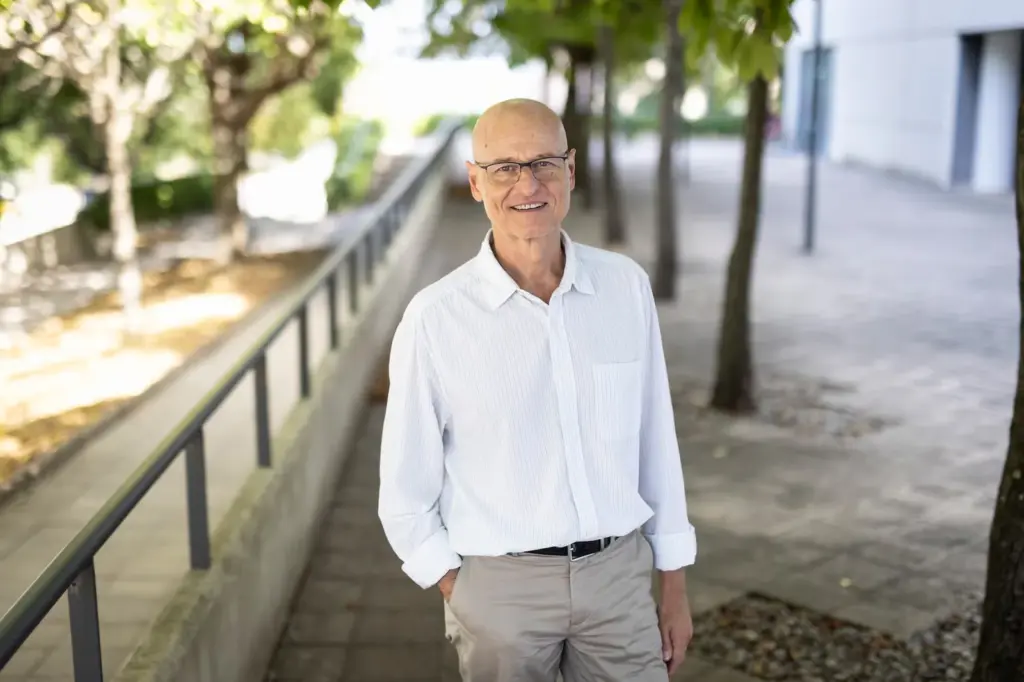
To give an idea of the vastness of the topics being addressed at the event — which coincidentally coincides with two events: the 65th birthday of the seasoned Cervelló, a man of adamantine appearance who would not look out of place as a chariot chief of Ramses II and who was warmly honored, and the start of filming of the fourth installment of The Mummy, starring Brendan Fraser and again Rachel Weitz (it is not yet clear, alas, whether Patricia Velásquez will reprise her role as Anck-su-namun) — it is worth noting that the congress includes sections on international relations of Ancient Egypt, archaeology (between sessions there was lamentation over the impediment caused by the inability to use drones to investigate the terrain in Egypt as their use is restricted to the military), history, art, gender, economy, museology and archival science, religion, funerary practices and embalming, historiography, and language and texts. There was even a presentation on the formation of the first Egyptological collection in Venezuela.
At one moment, one can go from a lecture by the Sevillian Myriam Seco on the latest findings in a very disturbed tomb in the funerary temple of Thutmose III, which she has been excavating for 18 years (magical hands and a fascinating collection of 25 paddle dolls have emerged, female figures shaped like paddles or rackets that are not toys but funerary objects and perhaps represent concubines for the deceased or are symbols of female power), to a talk by the Portuguese Cláudia Barros on the Amarna letters; from the analysis of hairdressing scenes in funerary iconography by the Argentine María Belén Castro to the meticulous (almost blushing) and novel description of the erotic papyrus of Turin by the Catalan Marc Orriols. Nothing is left unexplained, explored, or dissected, whether it is the origin of the ancient Egyptian state or the making of bread and beer, the daily economy of women or the emerald mines of Wadi Sikait (the mission of Joan Oller), the tombs or the stars: a beautiful presentation by astrophysicist Juan Antonio Belmonte and Egyptologist José Lull, authors of Astronomy of Ancient Egypt: a cultural perspective (Dilema, 2025), dealt with the identification of Betelgeuse with the pharaonic Sah and revealed the enthusiastic plan to start naming stars of Ancient Egypt (Apdu, Tepiamenit) by baptizing those that do not yet have their own assigned name. Noteworthy is the poster on Ancient Egypt in Spanish theater or the one dedicated to the brain removal process of mummies in the necropolis of Qubbet el-Hawa (Aswan), conveniently next to the restaurant.
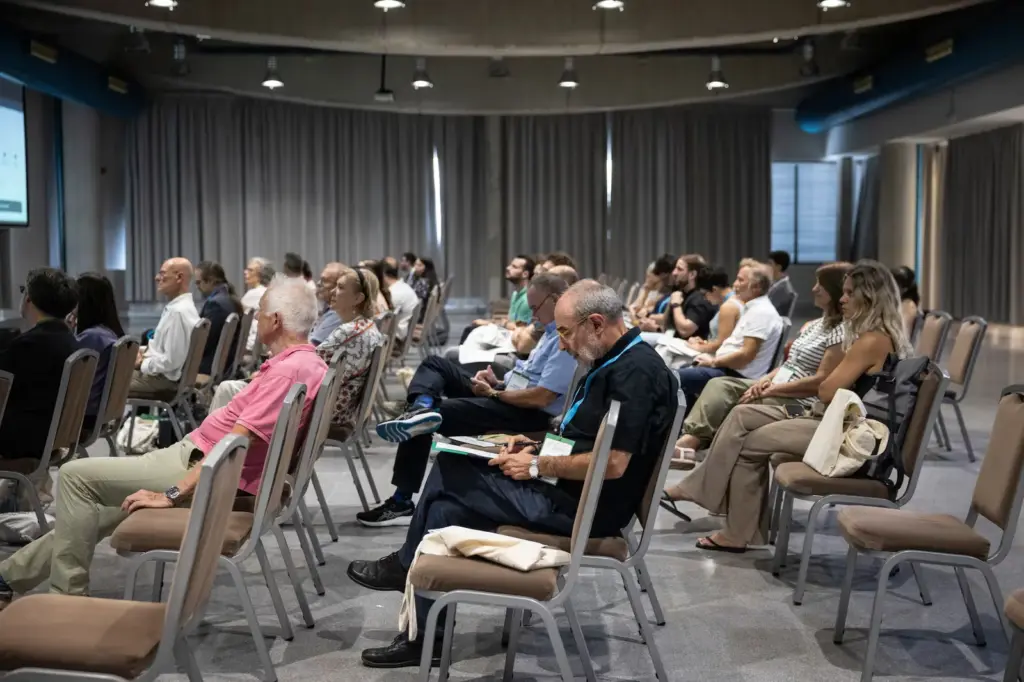
Among the most interesting are the updates offered by some mission directors, such as Cervelló, Seco, José Manuel Galán (Djehuty Project), who explained his almost detective-like search for the small pyramids that crowned the tombs of the Theban necropolis he excavates and how the place was organized; or José Ramón Pérez-Accino (Project C2), who spoke about the exciting results of investigations in the Valley of the Hideout of the Royal Mummies (also in Luxor), where he proposes the existence of a sacred public space with surprising anthropic structures (such as an effigy carved into the mountain itself). Antonio Morales (University of Alcalá) spoke about the tomb near Deir el Bahari he has been working on for ten years, that of Djari (TT366), a noble with the titles of “unique friend of the king” and more sinisterly “director of prisons and labor camps”; the dean of Egyptologists, Mari Carmen Pérez-Dié, offered an overview of Heracleopolis Magna, excavated by a Spanish mission since 1968 and directed by her since 1984 (currently, after retiring, she is drafting the final excavation report and waiting to see how her succession is resolved). Meanwhile, Mariàngela Taulé and Luis Manuel Gonzálvez took us to the temple of Ptolemy I in Sharuna.
Among the delicatessen, the lecture by Francesc Bosch, curator of the Griffith Institute archive in Oxford, on the decoration of the much battered tomb of Amenemwesekhet (which will be the name), also in the Theban necropolis (TT62), a true recovery of a lost tomb, with the addition of delightful anecdotes from pioneering Egyptologists. And that of Maite Mascort and Esther Pons, co-directors of the mission in Oxyrhynchus, about their discovery of the beautiful Ptolemaic tomb of the priest Unnefer, with wonderful paintings, including friezes of Anubis, an exceptional astronomical ceiling with the goddess Nut, from whose marked pubis the sun is born, and solar boats, one unusually towed by two jackals and another with the scene of the sun’s birth from an egg. Of course, everyone asked them about the discovery of the papyrus with a fragment of the Iliad — the famous list of ships from the second canto — which appeared on the abdomen of a mummy and which they hope to be authorized to take to Germany, where there are suitable facilities, to be able to read it in full, as it is folded and compacted. Mascort highlighted that it is the first time a text other than magical formulas has been found on a mummified body.
All missions have ended their interventions with team photos featuring Egyptian colleagues and workers, as a way to acknowledge their essential work.
Read more García-Page accuses Sánchez of «living on his knees to the bloodiest minorities» of Junts and Bildu
At the opening on Monday of the VIII congress, held at the same site as the one in 2001, the second, and which has had its curses, such as the audio of the Spanish ambassador to Egypt, Sergio Román Carranza (a passionate Egyptologist), not working, or today’s forecast of heavy rains, the exponential increase of Spanish missions (in 1992 there were only 2 and today there are 14, 5 in Luxor) and their dynamism, the consolidation of the discipline on the ground and in studies, and the prestige that now surrounds Ibero-American Egyptology in general when in the past it was considered inferior to Anglo-Saxon and Central European Egyptology were highlighted. Complaints, however, always about the difficulty of obtaining funding, a calvary even in the most accredited research, and the continuous demand for a specific area of knowledge in universities, for which pressure on Education continues (for now there is the highly sought Master’s degree in the specialty at the UAB). The harmony currently reigning in the profession was also highlighted, in which there have historically been some notable disputes and a recent disastrous case.
Cervelló, who as a promoter of Egyptology in our country was in charge of the inaugural lecture, was surprised by the tribute — pure Maat — paid to him in the form of an academic book with various contributions and the scholarly heading Wd3 ib=k, “may you be happy.” It was moving to see tears welling up in the Egyptologist’s eyes, who had touching words about the beauty of his profession and highlighted its human aspect. An anecdote was that Cervelló announced in his lecture the discovery of the mastaba (and two others of high priests that they are studying in the area) before he had authorization to do so from the Egyptian authorities (which he received the same day). This caused an individual with the appearance of a Medjai, the tough bodyguards of the pharaohs and defenders of the secret of Hamunaptra, to promptly order this special envoy to the congress not to say a word. And it seemed that only war journalism was risky…
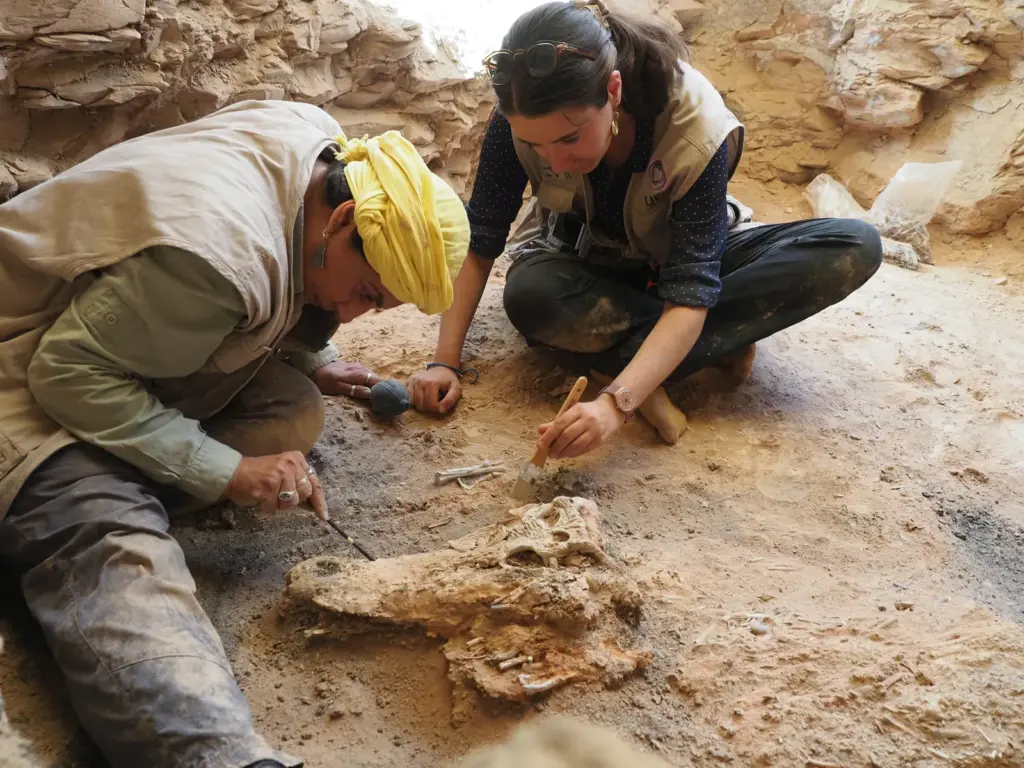
As usual on these occasions, information has also flowed outside the rooms. Galán, who is releasing a new book at the end of the month with Espasa, On the Other Side of the Nile, and preparing an exhibition on the Djehuty Project at the National Archaeological Museum (November 30), said during a coffee break that a hole has appeared in the ground of the site in these months when they are not excavating, probably caused by looters, and the energetic foreman Alí Faruk urged him to travel there, go in together, and catch the intruders red-handed. Galán has his doubts about going to catch tomb robbers. He also explained that in the last campaign they found two crocodile heads, a real surprise at the site, with linen remains (they were mummified) and some amulets. Even stranger is the finding of osteoderms, the bumps on the skin of those reptiles, made by Pérez-Accino and his team, which belonged to a creature over seven meters long. Crocodiles were also present in Morales’s talk: two that almost lick their lips at a swimmer in the paintings of Djari’s tomb, one of which the Egyptologist left us staring at unsettlingly on the screen at the end of his talk. And for crocodiles, the ten mummified ones found by the University of Jaén mission in Qubbet el-Hawa, opposite Aswan, where provincial governors were buried, one of whom brought back a pygmy — the first accredited by history — from his travels to Nubia.
Snakes could not be missing; there have been painted ones, like the protective Mehen of Unnefer’s tomb, and also real ones: Maixaxa Taulé has told in the corridors how snakes seem to chase her. After the invasion of snakes they had in Sharuna, she had to deal with one in Empordà this summer that entered her house through a cat flap while she was practicing yoga (it turned out to be a harmless horseshoe snake but recalling the cobras of the Egyptian site gave her a good scare). Galán also saw snakes this year, but in Australia where he taught a course, including a potentially lethal brown snake (pseudonaja, an elapid).
Among the anecdotes of the congress, the stall with Egyptology-themed t-shirts where many participants bought some as funny as the one featuring the icon of The Sopranos but with the name of the Ptolemies, the one showing the legend “Keep calm, I’m an archeologist” or the one playing with the famous phrase from The Princess Bride mixed with Egyptian mythology: “I am Horus, you killed my father, prepare to die.”
Read more The Xunta de Galicia is looking for experienced lawyers to take on the «diaper cartel»