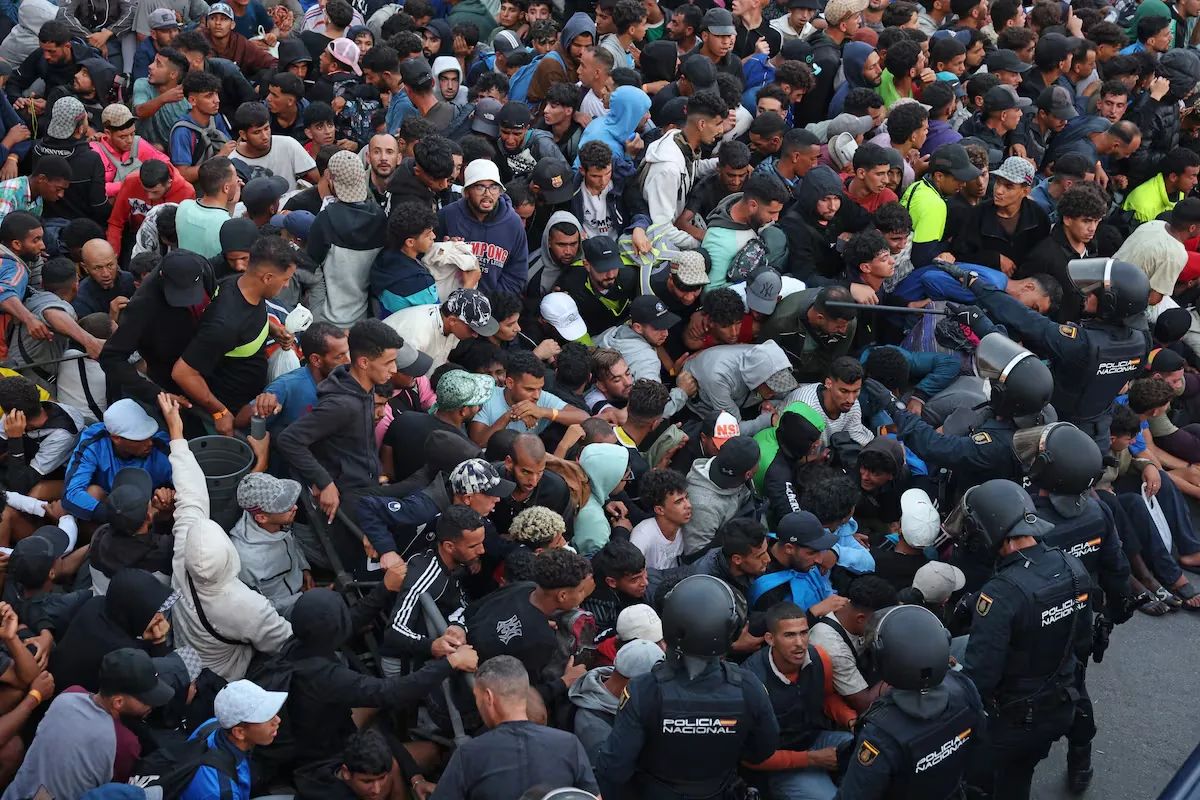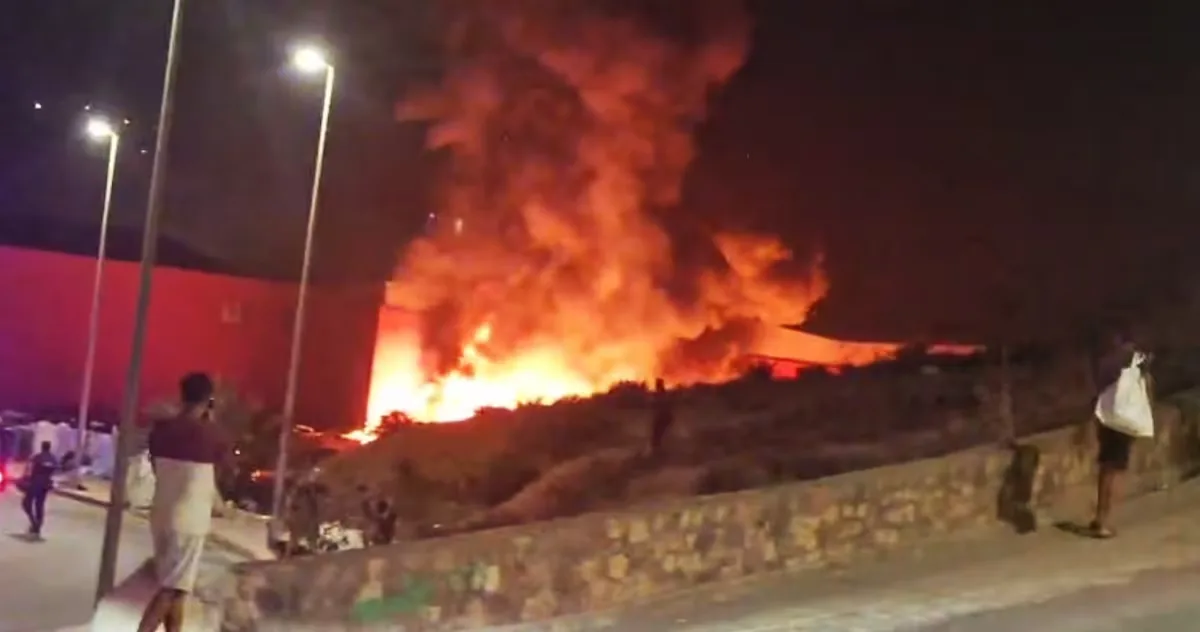
Shortly before midnight, the migrant settlement of Naves del Tarajal suffered a fire that affected several of the migrants’ shacks. The flames devoured several of the tents where families with children lived, right at the entrance of the industrial estate that has housed migrants since their arrival in the city. More than 40 of them were affected. Firefighters and emergency personnel arrived at the settlement, and the fire took almost two hours to be controlled, but there were no injuries. The families sleeping there were evacuated, but they were not relocated to any other settlement. The neighbors in the area did not see their homes affected, nor did the nearby Príncipe Felipe school. This is the second fire declared in the city on the same day; around six in the afternoon, another smaller fire was declared near the Trampolín beach, close to the CETI, in the mountain area. This was controlled in a few minutes, and like the one in El Tarajal, the authorities have not yet revealed who they attribute its authorship to. Meanwhile, the Popular Party has issued a statement in response to the one Rabat published this Thursday, in which the Alawite kingdom subtly accuses the PP of falling into an “irrational and populist quagmire.” The Popular Party insists today on blaming Morocco for the massive entry into Ceuta on July 30. “Morocco is responsible for what happened by action or omission,” says the PP, emphasizing that “we are facing a serious violation of Spain’s territorial integrity and, by extension, Europe’s. It is a hybrid attack with the instrumentalization of irregular immigration.” Génova also demands that the judicial procedure investigating the mass crossing be preserved. “No statement, internal or external, should interfere with, condition, or delegitimize this procedure,” stresses the PP, which concludes by advocating that Spain and Morocco maintain a “loyal and stable” relationship, but underscores: “Ceuta and Melilla are Spain.”
EL PAÍS offers the latest on the migration crisis for free. If you want to support our journalism, subscribe.

The PP responds to Rabat: “Morocco is responsible for what happened by action or omission”
The Popular Party issued a statement this morning in response to the one Rabat published this Thursday, in which the Alawite kingdom subtly accuses the PP of falling into an “irrational and populist quagmire.” The Popular Party insists today on blaming Morocco for the massive entry into Ceuta on July 30.
“Morocco is responsible for what happened by action or omission,” says the PP, emphasizing that “we are facing a serious violation of Spain’s territorial integrity and, by extension, Europe’s. It is a hybrid attack with the instrumentalization of irregular immigration.” Génova also demands that the judicial procedure investigating the mass crossing be preserved. “No statement, internal or external, should interfere with, condition, or delegitimize this procedure,” stresses the PP, which concludes by advocating that Spain and Morocco maintain a “loyal and stable” relationship, but underscores: “Ceuta and Melilla are Spain.”

At least 40 migrant tents burned in Naves del Tarajal
Shortly before midnight, the migrant settlement of Naves del Tarajal suffered a fire that affected several of the migrants’ shacks. The flames devoured several of the tents where families with children lived, right at the entrance of the industrial estate that has housed migrants since their arrival in the city. More than 40 of them were affected. Firefighters and emergency personnel arrived at the settlement, and the fire took almost two hours to be controlled, but there were no injuries. The families sleeping there were evacuated, but they were not relocated to any other settlement. The neighbors in the area did not see their homes affected, nor did the nearby Príncipe Felipe school.
This is the second fire declared in the city on the same day; around six in the afternoon, another smaller fire was declared near the Trampolín beach, close to the CETI, in the mountain area. This was controlled in a few minutes, and like the one in El Tarajal, the authorities have not yet revealed who they attribute its authorship to.

MIGRATION CRISIS
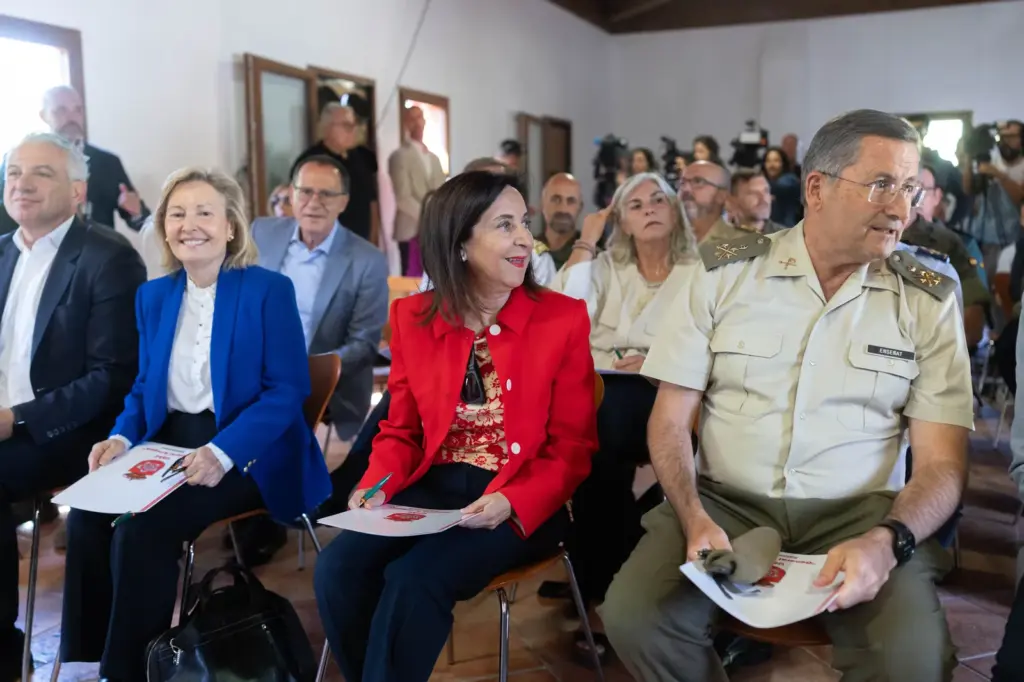
La Moncloa and Robles agreed on the official position of the CNI to try to stop criticism of the Government for ignoring warnings
Wednesday afternoon was very intense at La Moncloa. Pedro Sánchez’s Cabinet had prepared for days the execution of an unprecedented decision: to declassify and publish dozens of secret or reserved documents about the management by the Executive, the police, the Civil Guard, and the secret services in the hours prior to the largest border crossing in Ceuta’s history, about 72,000 people at once.
You can read the full information here

MIGRATION CRISIS
Confusion within the PSOE ranks after the political management of the Ceuta crisis: “If we tried to get out of this, we have gotten more stuck”
The official discourse from La Moncloa in the umpteenth Government crisis runs once again parallel to the downcast atmosphere felt among many PSOE leaders who are not in the Executive. The declassification of intelligence reports prior to the unprecedented entry of about 80,000 people irregularly into Ceuta at the end of July has not had the expected effect within the socialist ranks. The decision, far from calming internal waters, has stirred them even more, fueling the confusion reigning in the party just as six weeks pass since the border crossing. “The feeling is chaos,” sums up a regional secretary general “perplexed” by the content of the reports, which Pedro Sánchez committed to making public to prove that the Government did not have information about the threat to territorial integrity.
You can read the full information here
COLUMN
Ceuta and the idea of politics
What is good about writers is their ability to convey to words the ideas, feelings, and emotions that the rest of us mortals cannot express in any way, or do so very poorly, trivially, dwelling on clichés. This comes to mind regarding the Ceuta crisis and what politics means. Richard Ford deals with the latter in a brief book recently published, In Plain Words (Feltrinelli), where he wonders if he is “a political writer” and does so considering his early novels. The quote that opens the volume is from Stendhal: “Politics in the middle of a literary work is a gunshot in the middle of a concert, a coarseness that, however, cannot be ignored.”
You can read the full column here
Good morning. We start the live narration of the latest on the Ceuta crisis, this Friday, September 11. Today marks the end of the first week of school in the autonomous city, and it ends with the same problems it started with: parents continue to claim they do not feel safe letting their children go to class alone. Meanwhile, the political class continues to throw accusations at each other, especially after the publication this Wednesday of the declassified reports from the Civil Guard, Police, and CNI — among other agencies — by the Government.
Read more How it presents itself before the European nobility