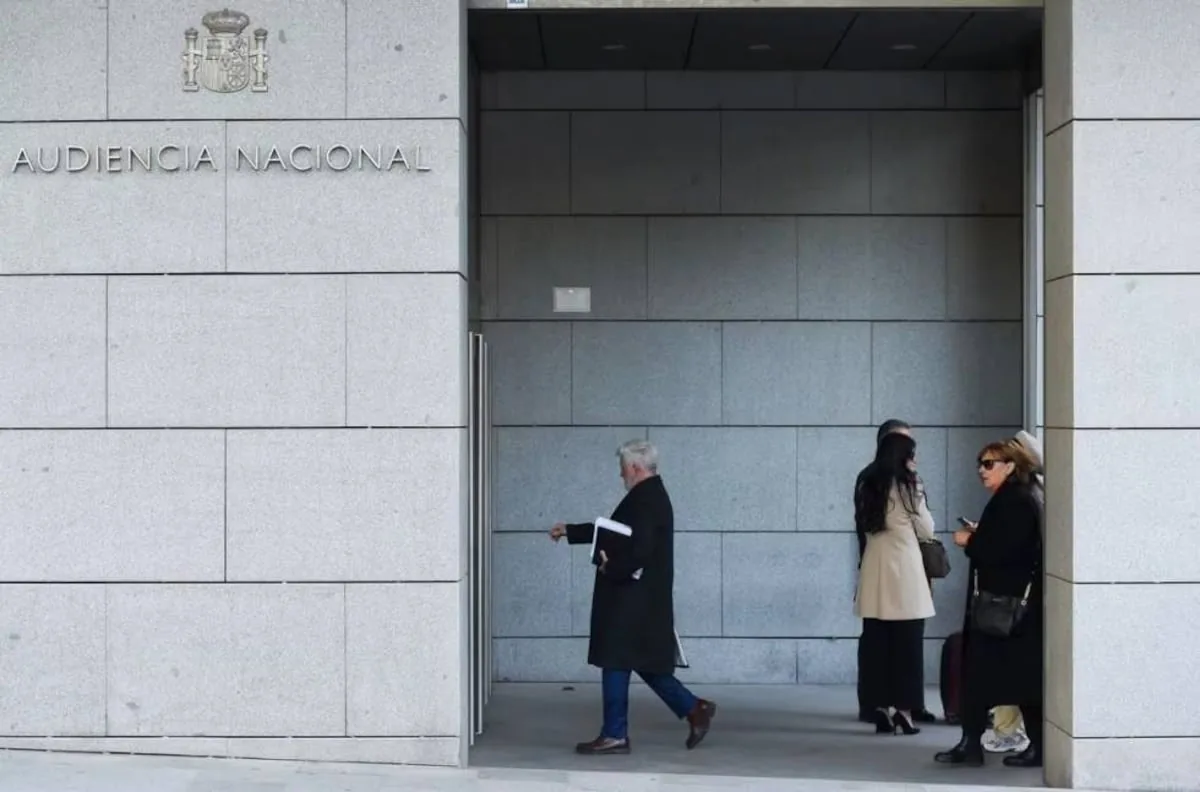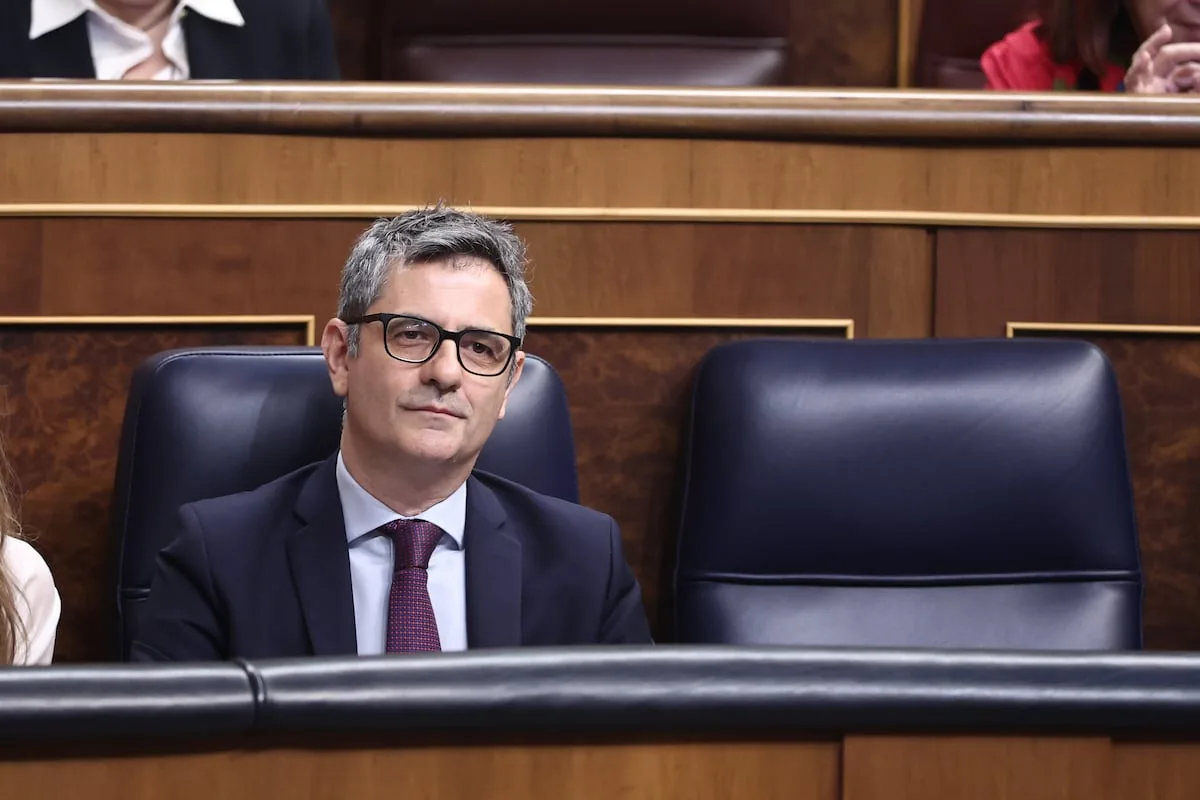









The Minister of the Presidency, Justice and Relations with the Courts, Félix Bolaños, continues with his determination that the actions of Judge Juan Carlos Peinado do not go unpunished. Between March 2025 and April 2026, Bolaños filed a series of complaints before the General Council of the Judiciary (CGPJ) — the body responsible for sanctioning judges — regarding various behaviors of the magistrate, ranging from the controversial interrogation Peinado conducted in the minister’s office to the attempt to indict Bolaños, which was outright rejected by the Supreme Court, as well as the limitation of the Prosecutor’s role in the case and the leaking of documents to the press before they were notified to the parties. After 427 days since the first complaint, the person responsible for disciplinary action against judges decided not to sanction Peinado, according to the resolution notified this August, because it was understood that all of this is part of judicial action. The Minister of Justice has filed the latest appeal in this regard, accusing the Judiciary of “corporatism” and being “incapable” of “restoring” the “reputation” of the body, and has announced his intention to take the matter to the Supreme Court.
Read more Ayuso is open to negotiating a career path for teachers with «up to 350 euros more per month»
In a document accessed by EL PAÍS, Bolaños addresses the Permanent Commission of the Judiciary — the closest core to the president of the body, Isabel Perelló — and asserts that its actions “can hardly be considered representative of the standards of agility, rigor, and defense of the general interest” that citizens expect from the only power with disciplinary authority over judges and magistrates. He explains that Peinado’s investigation has caused “notorious and irreparable damage to the good name of justice” and adds that “unfortunately, the CGPJ has been unable, either due to conservatism” or “due to corporatism, to correct them and thus restore the prestige and reputation of the Judiciary.”
This appeal is filed, the document adds, “not because he trusts” that the Judiciary will change its stance and revoke its own decision to dismiss the procedure against Peinado, who retires this September 27, but because he claims to have “the conviction” that the Third Chamber of the Supreme Court, the next instance to appeal to, will “do the work that corresponded to the CGPJ: defend and protect the good name of the judiciary,” he emphasizes.
On June 4, 2025, Bolaños filed the first of a series of complaints against the judge, after in April he had been questioned in a tense interrogation held in the offices of the Ministry of the Presidency in the La Moncloa complex. There, Peinado had an “objectively intimidating and unjustifiably hostile attitude,” incompatible with the position of a judge, the minister’s statement holds. Shortly after the interrogation began, the investigator warned him that he “could change his procedural status from witness to suspect” at any moment. Bolaños insists that “the disciplinary relevance of this episode” lies not only “in the legal incorrectness of the warning,” but in the intimidating effect inherent in its formulation. He recalls that witnesses must testify “freely about the facts they know.”
The minister added a series of episodes such as Peinado reprimanding him for “smiling faintly” or requesting a platform to position himself higher than him when, as he explains, this is something not legally provided for and was not even done when the Prime Minister himself was questioned. The judge also paused the testimony for thirty minutes so that Bolaños could go ask and gather information about a series of questions he was being asked and was not answering precisely because he did not remember. “The witness is called to testify about the facts they know […] it is not the witness’s function to conduct investigations, gather information from third parties, make inquiries, or carry out investigative actions aimed at completing the investigation of a criminal case,” the minister states.
Following his testimony, Bolaños added another series of complaints to the CGPJ in the following months, for example, when the investigator sought to investigate him with a reasoned submission to the Supreme Court, which dismissed this possibility “due to the absolute absence of any minimally founded indication” against the minister. Moreover, this attempt to indict occurred shortly after Bolaños had first reported him to the Judiciary, which makes the minister suspect it may have been related. “The sequence of events,” he says, “undoubtedly affects the appearance of impartiality of the magistrate, who decides to submit a reasoned report against someone who previously reported him for possible irregularities.”
Read more Spanish exchange student murdered in Morelos
The Minister of Justice had also pointed to leaks allegedly made by Peinado (with news published at ten in the morning in a newspaper, while the order had not been notified until after nine at night) or to the fact that the Prosecutor’s function was curtailed, as they were not even asked about the indictment of a minister.
Although Bolaños has insisted on knowing exactly when the investigator was notified of the opening of an informative file for this complaint, the promoter of disciplinary action at the CGPJ has not provided him with the case documentation because it is considered unnecessary. The person responsible for proposing sanctions to judges argues the impossibility of penalizing the judge based on the fact that everything occurs within the judicial sphere, that is, within the framework of a criminal process, and emphasizes that any correction corresponds to the judge’s superior instance, in this case, the Provincial Court. The dismissal of this procedure was approved with the vote of the four conservative members and Carlos Hugo Preciado, proposed by Sumar, while the other two progressives, Argelia Queralt and Bernardo Fernández, voted against.
Bolaños considers that his fundamental rights have been violated by not being given the documentation of this procedure to clarify whether his indictment was really a consequence of the judge knowing he had been reported by him, and reproaches the Judiciary for not having “carried out a complete and effective investigation” regarding, for example, the reported leaks, since the dismissal, he says, rests on the testimony of the magistrate himself. “The function of the promoter of disciplinary action is not exhausted by asking the possible responsible party if they committed the reported acts and accepting their answer as true, but in objectively verifying whether such acts occurred,” he emphasizes.
Furthermore, the minister denies the argument of the impossibility of sanction because what happened is within the framework of criminal action. “We are not facing a case of interpretation or application of the law that could be protected by judicial independence,” he states, but from the moment Peinado makes decisions “lacking objective foundation” and shows “arbitrariness” in his way of investigating, “disciplinary control” must intervene, he concludes.