








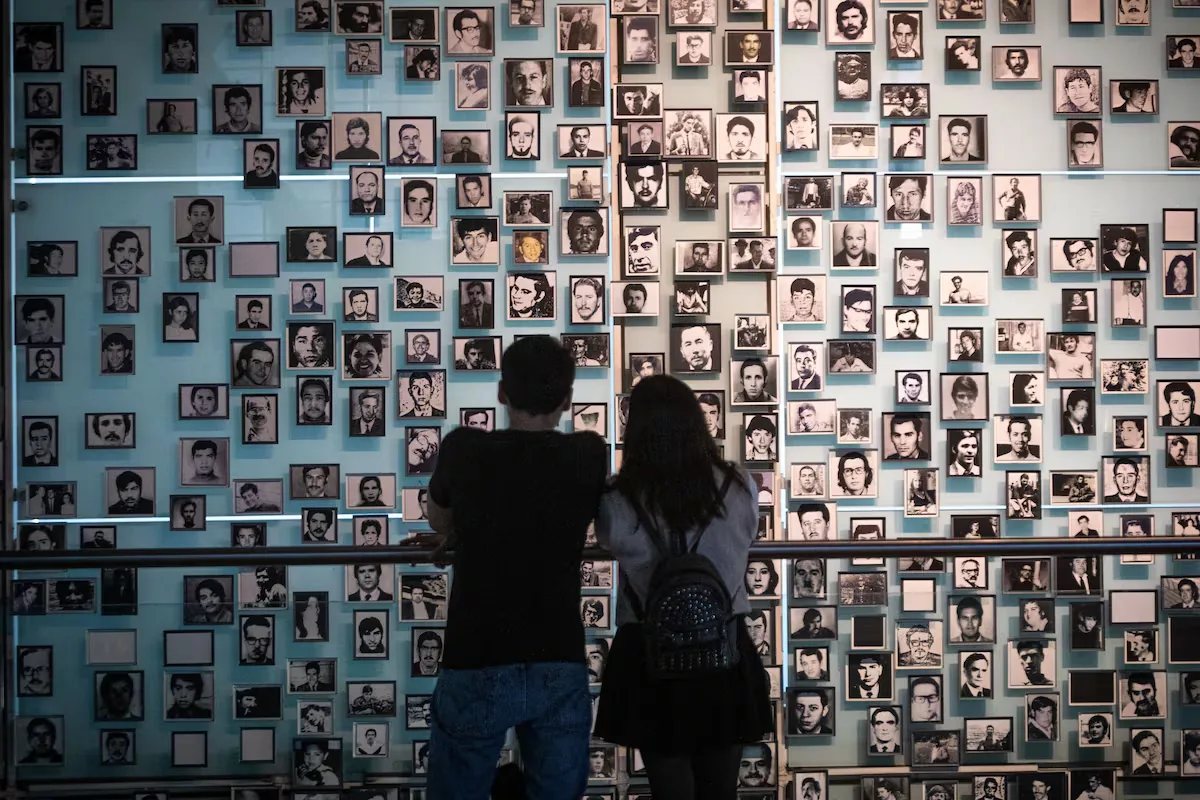
During his first six months in office, President José Antonio Kast has received more than 100 pardon requests, most of which correspond to former agents of Augusto Pinochet’s dictatorship (1973-1990) who are serving sentences for human rights violations in the Punta Peuco prison: homicides, disappearances, and torture. The information was disclosed this Sunday by Justice Minister Fernando Rabat, who told Canal 13 that the requests, which are sent to his ministry for processing, mostly correspond to “events that occurred in 1973” and “very few” to former police officers who were sentenced for acts of violence during the 2019 social outbreak.
Read more Europe reclaims the Solheim Cup golf crown by winning 15-13 against the USA
Rabat explained that there is “no deadline established by law” for the resolution of pardons, and that he himself does not have “a self-imposed deadline” because “many times what must be done is a very careful study always, and that study must lead to a conviction.” He added that “acquiring that conviction is always a slow process both for those cases where it is appropriate to rule affirmatively or negatively on the request.”
Presidential pardons for human rights violators during the dictatorship is an issue that has followed Kast since his campaign, especially because he is the first Chilean president, since the return to democracy, to support the September 11, 1973 coup d’état, which was just commemorated 53 years ago. His government decided not to hold an official event, a decision that has generated much controversy since in 36 years no administration had ever omitted the date. Regarding this, Kast said: “Just as I cannot erase history, I also cannot ask our compatriots to be condemned by our history and unable to look to the future.”
Rabat was also asked about the government’s stance on not commemorating the date: “It has been 53 years since the events of 1973 and what is appropriate is to convey to the country that it has a government working every day of the year (…) today Chileans have countless needs and need a government dedicated to finding ways to solve them.”
The Criteria survey released this Sunday measured, precisely, some aspects of the commemoration of the coup d’état. 47% of those surveyed considered that Kast has contributed to increasing political division, followed by former president Gabriel Boric (2022-2026), with 44%.
On the other hand, 58% consider that the former president from the traditional right, Sebastián Piñera (2010-2014, 2018-2022), is the one who most contributed to reducing political division. Unlike Kast, Piñera was an opponent of Pinochet, always condemned human rights violations, and in 2013 commemorated the 40th anniversary of the coup d’état. “Unfortunately, we cannot resurrect the dead nor recover the disappeared. But we must do everything within our reach to advance in truth and reconciliation,” he said then.
Read more At least 6 dead and 129 missing after an Indonesian passenger boat capsizes
Criteria also asked about pardons for former military personnel convicted of human rights violations during the dictatorship: 59% were against, while 30% were in favor.
“We will respect case by case”
The Minister of Justice explained that the hundred pardon requests are on his desk, so they have not yet reached the president’s hands. He added that they have adopted a criterion: “Whenever a request is made to the President of the Republic, it must end with a reasoned resolution,” which means that “there must be a procedure that complies with the law.”
“What we have discussed with the President of the Republic is that we will respect case by case based on the background provided by the administrative files” and that later “a statement will be issued according to the conviction we reach,” said the minister.
So far, just as Kast has not resolved any pardon, he has also not stated whether he agrees or not with granting them to former Pinochet agents: usually his response is general and he states, like Rabat, that it will be seen case by case. However, what he has made clear, on several occasions, is that he is in favor of opening a national debate, which could take place in Congress, regarding whether inmates with terminal illnesses or who are no longer aware of their situation should remain in prison until they die. This is what Kast calls “humanitarian issues” because “no one deserves to die in prison without knowing they are in prison.” However, he has not said whether that benefit would also extend to human rights violators, which raises a question since most of the convicts, who are held in Punta Peuco, are between 70 and 80 years old and several suffer from illnesses.