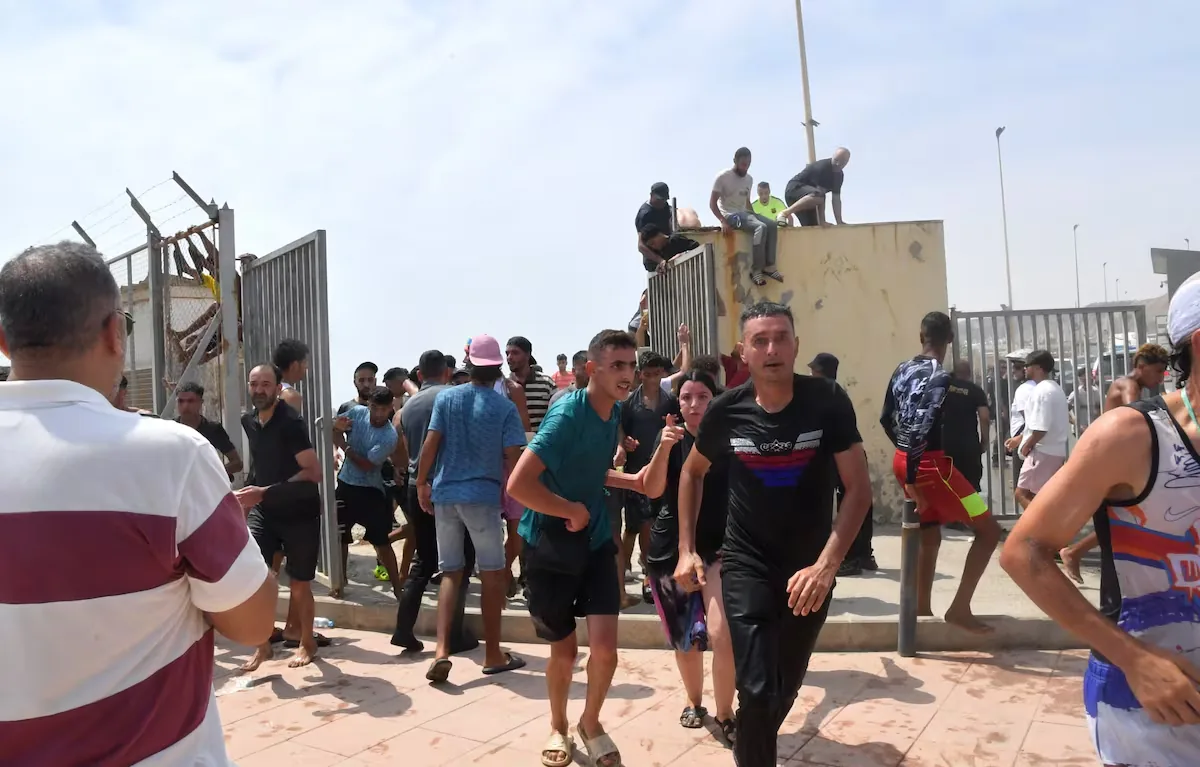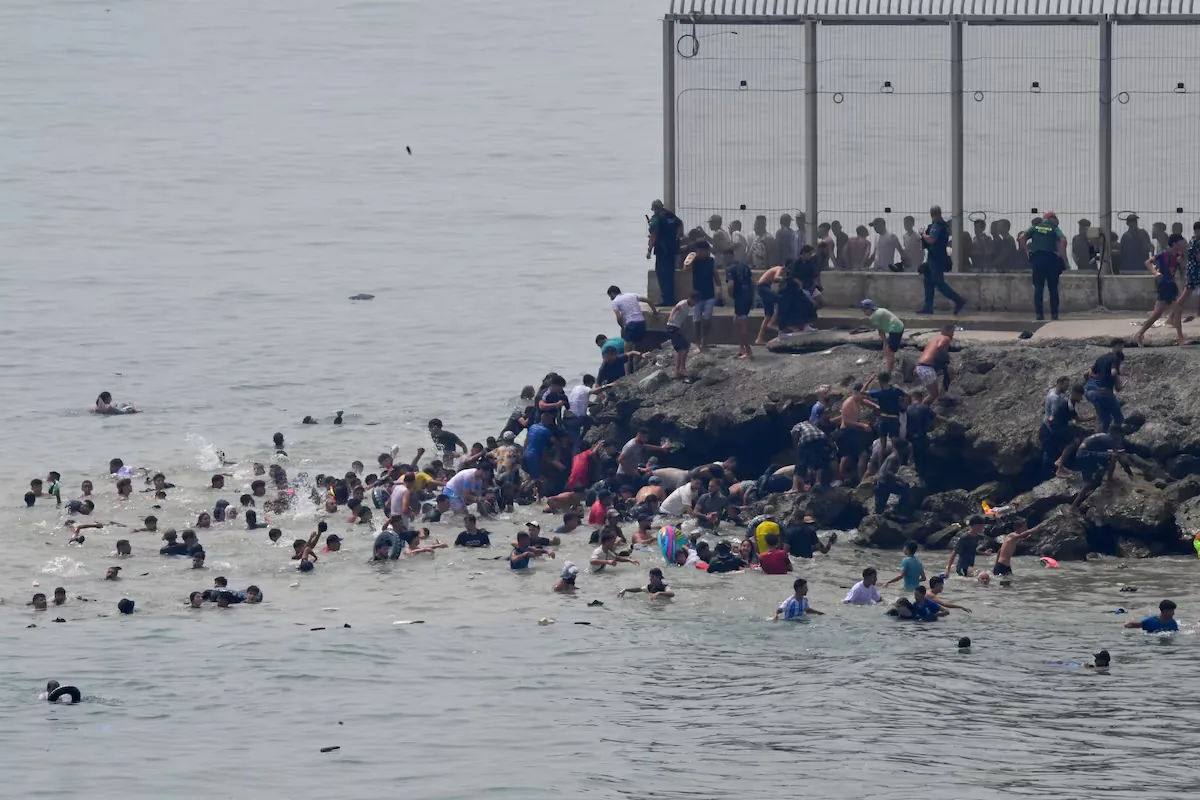









The nationalist fervor raised by the issue of Ceuta and Melilla in the middle of the election campaign is mixed in Morocco with the concern of civil society about the treatment given to the thousands of irregular migrants who have remained in Ceuta without exit for more than a month. While the claim of sovereignty over the autonomous cities has been fading as the legislative elections on the 23rd approach, the humanitarian consequences of the migratory conflict have been silenced in the political debate.
Read more A hundred human rights violators during Pinochet’s dictatorship ask Kast for pardons
Even football has been infected by the claim of the so-called “historical right” of Morocco over the Spanish autonomous cities. Supporters of the Maghreb Association Sports Club, from Fez, current champion of the Moroccan football league, displayed a large banner a week ago during an international match to claim sovereignty. “Ceuta and Melilla, two cities, one homeland: Morocco,” read the message written in Spanish.
In addition to the government parties Authenticity and Modernity, of the Minister of Justice, Abdelatif Uahbi, and Istiqlal Party, of the Minister of Public Equipment and Water, Nizar Baraka, other parliamentary opposition forces have explicitly claimed Morocco’s sovereignty over Ceuta and Melilla in the pre-campaign phase.
The Secretary General of the Party of Progress and Socialism (PPS, ex-communist), Nabil Benabdela, defined both Spanish North African plazas as “occupied Moroccan cities,” according to the Efe agency. Benabdela also condemned the destruction of a Moroccan flag in a protest organized by the far-right group National Democracy in front of the Congress of Deputies headquarters in Madrid.
Shortly after the official start of the campaign, the statement issued on Thursday by the Ministry of Foreign Affairs, which depends directly on the Royal Palace, to reject accusations pointing to Morocco as responsible for the crisis, did not include any explicit mention of the so-called “occupied presidios” of Ceuta and Melilla in the Maghreb country. The sovereignty issue seems to have been sidelined from the electoral political debate.
“Hostility towards migrants”
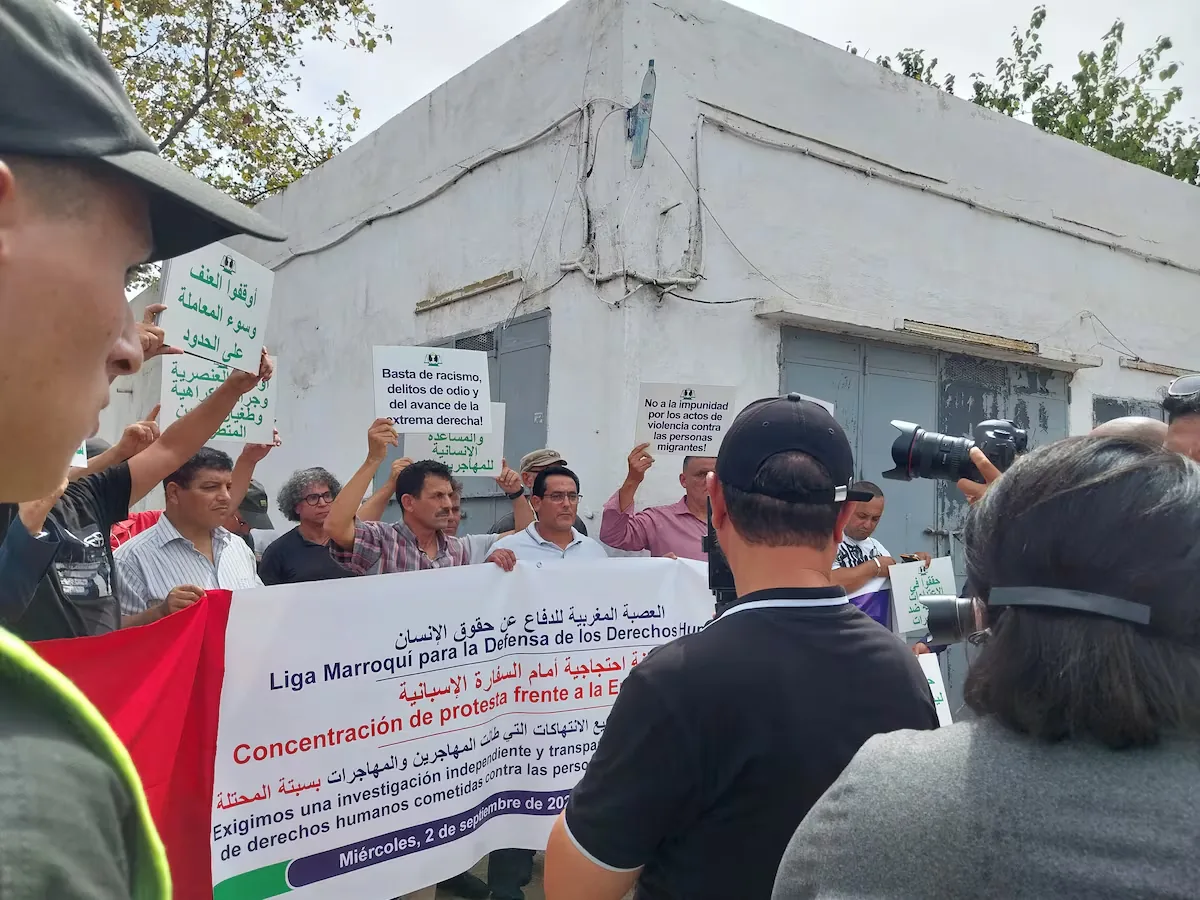
Organizations such as the Moroccan League for the Defense of Human Rights – linked to the Istiqlal Party, conservative and nationalist – have meanwhile warned of what they call a growing discourse of hate, xenophobia, and hostility towards Moroccan migrants in Spanish society, where one million people originating from the Maghreb country are hosted.
A protest gathering in front of the Spanish Embassy in Rabat symbolized on the 2nd the first demonstration on Moroccan soil since the beginning of the crisis. Barely a dozen people supported the march, called by the Moroccan League for the Defense of Human Rights, which had presented a report on the migratory crisis a few hours earlier. Its pages accused the Spanish authorities of having ignored attacks on Moroccan migrants in Ceuta and having given shelter to extremist groups that perpetrated them and to radical politicians who incited them.
The National Council of Human Rights, an official Moroccan body, has also accused the Spanish security forces of having mistreated migrants who arrived en masse in Ceuta on July 30 and 31, as well as having provided them with insufficient care.
The CNDH depends on the Moroccan Administration and was the author of the report that attributed responsibility to the Spanish police for at least 23 deaths recorded in the massive jump of sub-Saharan migrants over the Melilla fence in 2022.
Read more Europe reclaims the Solheim Cup golf crown by winning 15-13 against the USA
Amid the nationalist political tension in the Moroccan campaign, hundreds of families are still looking for their missing children who tried to swim from Morocco to Ceuta, where at least 200 complaints have been filed with the Civil Guard to find out the whereabouts of Moroccan youths with whom contact has been lost.
Desperation also strikes the relatives of already identified mortal victims who have been buried in the Spanish autonomous city (in many cases without identification) after the Rabat authorities refused to accept the delivery of the bodies at the border.
They demand that more than 2,000 Moroccan minors who have already been registered in Ceuta be returned to their country first, a request that clashes head-on with Spanish and European child and adolescent protection laws.
“Without a place to shelter”
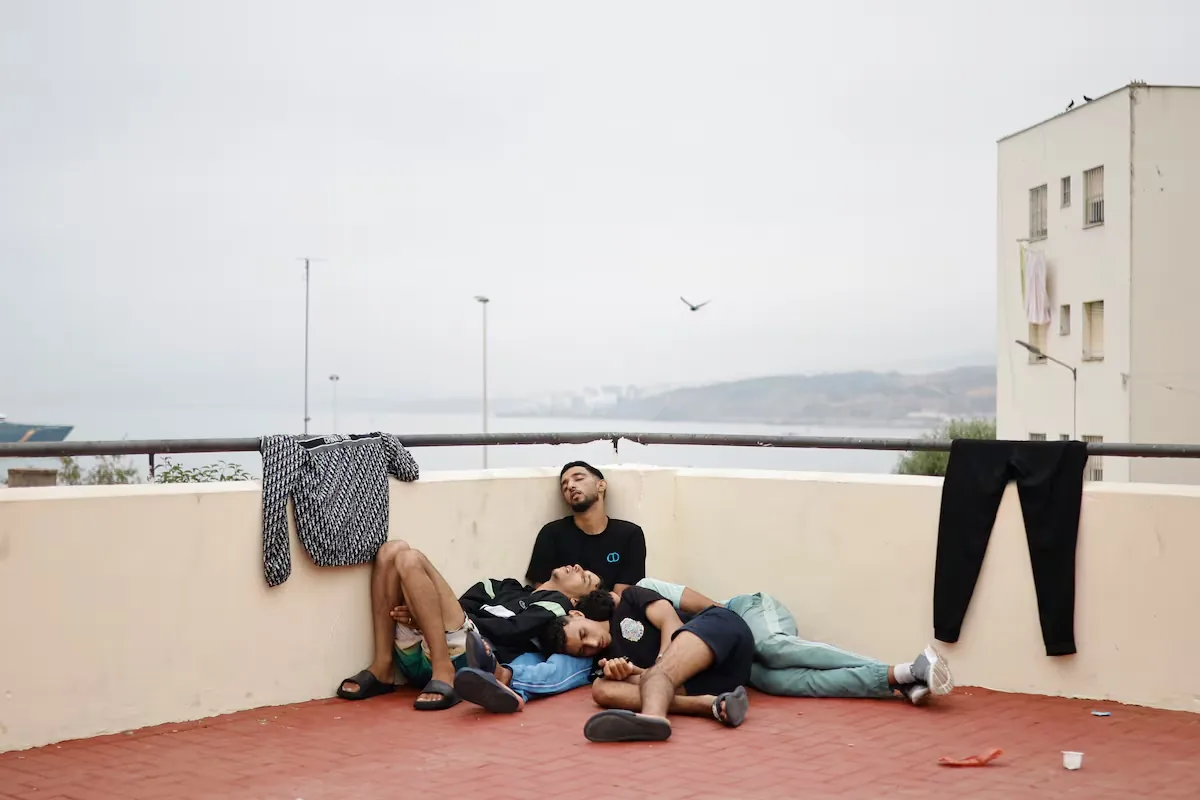
For Jadiya Inani, head of the migration area of the Moroccan Association for Human Rights (AMDH), violations of migrants’ rights are absent from the electoral campaign, while the anguish of families of the dead and missing in the Ceuta crisis is ignored. “The situation of most migrants who arrived in the city more than a month ago remains deplorable, without a stable place to shelter,” she warns.
Almost none want to return to Morocco, according to Inani, where police interrogations and judicial processes await them. She emphasizes that the socioeconomic situation that pushed them to migrate irregularly has not changed. “Many are being judged upon return for having aired on social networks testimonies about the violence they have suffered,” assures the humanitarian activist.
The view that reaches Moroccans about their compatriots in Ceuta is condensed in a wide report published on Friday by the weekly Tel Quel. It describes improvised camps where migrants are crowded among decomposing garbage. Young people showing open wounds, bad pimples, and insect bites on their bare torsos offer testimonies about the autonomous city as “a giant prison” or “an open-air waiting room” to access Europe.
A 36-year-old migrant who arrived from Fez to the Ceuta beach of Trampolín advises those who intend to enter Ceuta without papers: “Better not to come. The situation here is terrible: there is hunger, violence, mistreatment…”. While Moroccan politicians offer “unlikely figures” in the campaign, such as the promise to raise the minimum wage to 5,000 dirhams (460 euros) per month, a third more than currently, the editorial of the mentioned magazine concludes that “those who leave the country by swimming do so because they have stopped expecting anything from it.”
Read more At least 6 dead and 129 missing after an Indonesian passenger boat capsizes