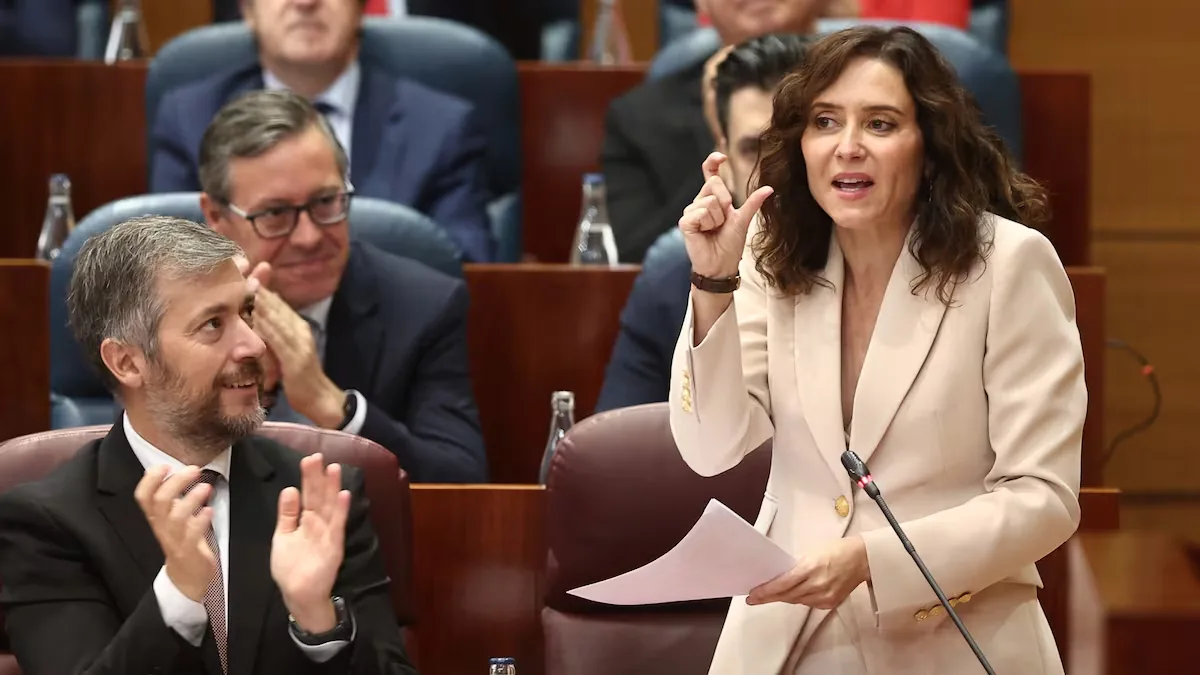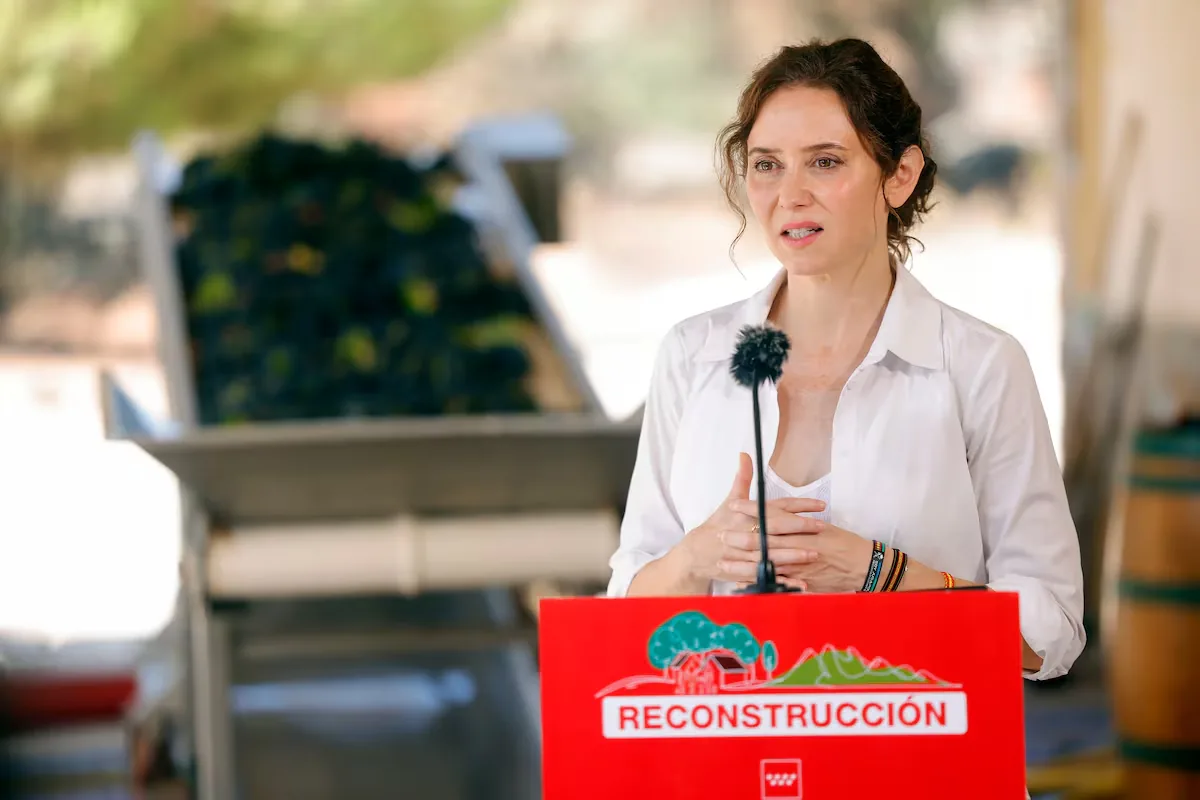





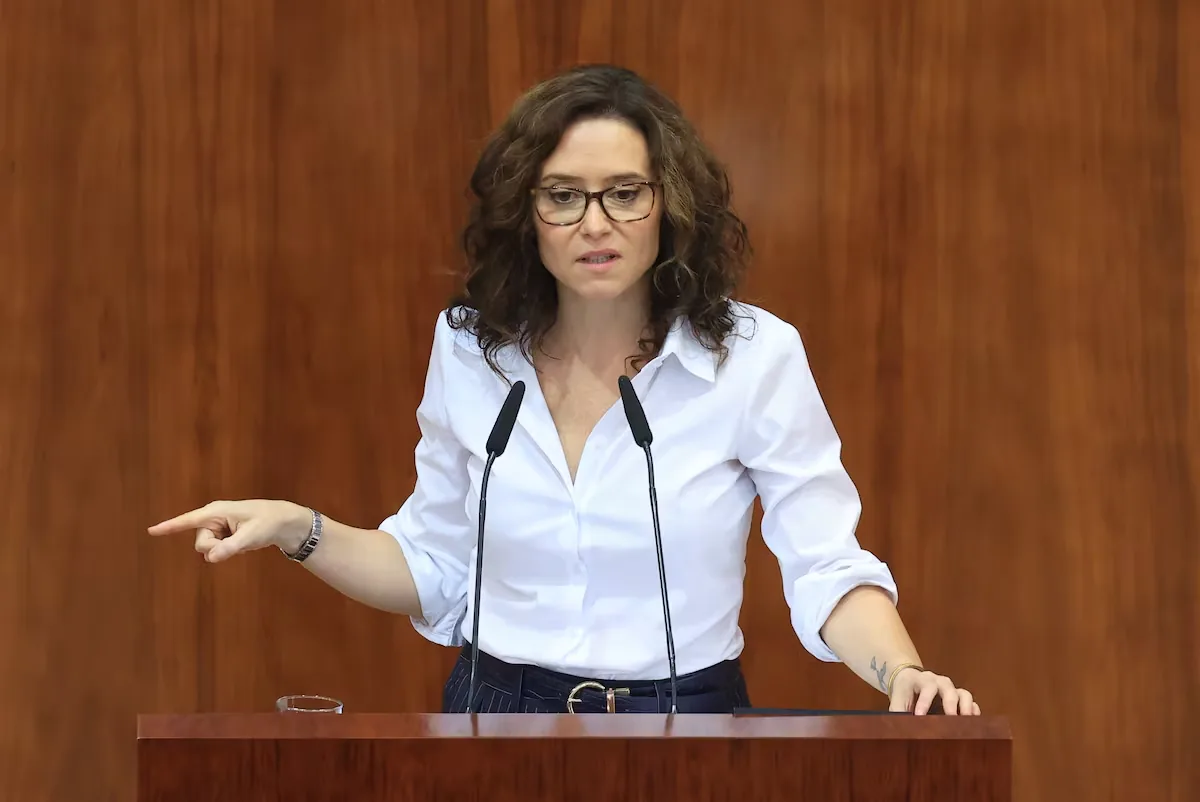
Of the more than 13,000 words spoken by the president of Madrid, Isabel Díaz Ayuso, during the first day of the regional state debate on Thursday, 45 were enough to stir the WhatsApp chats of the teaching staff. A brief announcement — one more of the hundred she made — in the midst of an apocalyptic speech about Spain, caused something to stir in the heart of Madrid’s education system, which was called to an indefinite strike starting October 14. One of the historic demands of education in Madrid was back on the table. “The Ministry of Education will open negotiations to implement the horizontal professional career for teachers, which aims to socially and economically recognize the dedication and commitment of teachers who work in the region’s schools and institutes,” she declared. The next day, on the second day of the debate, she went further: “The professional career will mean an increase of up to 350 euros in monthly salaries.”
Read more Spanish exchange student murdered in Morelos
The professional career is one of the long-standing desires of teachers in Madrid, which consists of giving teachers at any stage a growth perspective throughout their entire career, something that, unlike other public service sectors such as Health, does not exist in Education.
This is not the first time the issue has been discussed. Although Madrid has never formally addressed it, in 2007 and 2016 there were dialogue tables with the Ministry of Education that did not come to fruition. However, the professional career does exist in other communities such as La Rioja, Murcia, Asturias, Castilla y León — where it is not compatible with six-year increments — and the Balearic Islands. The sector welcomes the announcement but remains quite skeptical due to precedents and because they know Ayuso is already in “electoral mode.”
The question is the “model” that is to be implemented. Francisco Imbernon, a teacher, doctor in Philosophy and Educational Sciences, and emeritus professor of Didactics and Educational Organization at the University of Barcelona, argues that “it is positive and necessary,” but it cannot be “a career of individual merits, bureaucratic or competitive.” “It should not consist of accumulating courses, degrees, six-year increments, or merits to move up in category or earn more. That would be an administrative career, not a professional one. It remains to be seen what the promises will concretely entail.”
Teachers will be able to improve their salary by up to 350 euros per month with the new professional teaching career.
We will recognize their dedication, innovation, projects, and responsibilities they take on in their centers.#DERMadrid2026 pic.twitter.com/PluKgnP4w8
— Isabel Díaz Ayuso (@IdiazAyuso) September 11, 2026
One of the sine qua non conditions for the professor and the great expectation of the teaching staff is that “teachers are allowed to grow without leaving the classroom.” “For too long we have built a kind of career in which, to progress, you have to become a director, inspector, advisor, or leave direct teaching. That is a mistake,” points out Imbernon. “The professional career cannot be based on bureaucratic merits. A good teacher should not have to stop teaching to be professionally recognized,” he adds. In his opinion, “a teacher cannot be evaluated solely by seniority, courses, degrees, and much less by the results” of their students. “If we turn the professional career into a supervisory, individual evaluation based on easily measurable indicators, we will end up rewarding the teacher who knows how to produce evidence and paperwork, not the one who teaches best,” concludes the expert.
María Vega, 58 years old, is a teacher at a Nursery and Primary school in Carabanchel. Specialized in English, she also works as a tutor. “The professional career is very necessary because in all public service sectors people get salary increases not only for seniority but for good performance, and here that does not happen,” she comments. “We are highly qualified personnel. To earn six-year increments, for example, we have to have 100 hours of training outside our working hours. Also, we launch many educational projects, now mainly related to coexistence, reading support, or robotics. These are things that appear on the curriculum but that the administration has never recognized,” she laments.
“After the president’s announcement, we are expectant, especially to know exactly what is to be negotiated. The professional career must be something feasible and possible for any teacher, not a series of practically unattainable merits. It must be taken into account that each teacher works in a very different context and with very different resources,” she says. “As of today, it is just an announcement, and we already know how the president’s announcements are. We could spend years until they materialize, as with student ratios,” Vega concludes.
The Community’s proposal is to establish “six levels that will be surpassed as the teacher accumulates merits and years of service.” The next step will be to convene the Sectoral Table, formed by CC OO, UGT, CSIF, and ANPE. Aída San Millán, general secretary of Education at CC OO, warns that Ayuso’s words “sound quite” like informal conversations they had with the ministry, something they “did not agree with” even before summer.
“For example, we were told that the professional career would have to be endorsed by a report from the management team, with the danger that this entails. Your career cannot be conditioned by your affinities at work. On the other hand, it is said that having received a disciplinary file would also disqualify you from the professional career. And finally, the worst is that they wanted it to be applied to those teachers who take on more responsibilities in the center. If we are already overwhelmed because they do not send administrative staff to the centers, imagine. We will not accept that,” she reflects. “Maybe they want to calm us down ahead of the strike but, if the model they propose is this, it may have the opposite effect,” she warns.
Miguel Ángel González, head of CSIF Education Madrid, considers that Ayuso has gone “into electoral mode.” “The announcement comes as no surprise, we were warned. Our impression is that they want to keep us entertained with the negotiation until the elections, but they should not count on us for that. The figure of 350 euros per month in a 35-year professional career is pure posturing, smoke. If they raised it today, it would equalize our salary with that of the Valencian Community or the Basque Country. That is not enough for us; we are far from any euphoria,” he states. “When they call us to negotiate, we will go. But we will not forget that salaries must be raised now and staff reinforced now,” he concludes.
For her part, Carolina Fernández del Pino, president of ANPE-Madrid, assures that if the professional career is not urgently resolved, teachers “will leave Madrid because they will not be able to live here.” “This is something we have already seen in the last General Transfer Competition, in which more have left than arrived. Cases of people leaving the profession are beginning to appear, something I had never seen before,” she points out.
The opposition does not give it much credit. María Pastor, spokesperson for Más Madrid, assures that “it is a promise that does not respond to the reality of Madrid’s teachers.” “What they need is not to work for free for years on projects in their schools as they intend with this announcement, but for the Community to recognize the responsibility and work they already do and pay them for it from the start. It is an attempt to respond to the call for an indefinite educational strike,” she adds.
For the PSOE, what Ayuso has announced is not a 350-euro raise, but “a horizontal professional career of six levels and only at the highest level could it reach 350”. Also, early childhood educators “are left out, who are the ones currently in conflict.” “It is necessary to know who gets paid, how much they get paid, and when they start getting paid. That is what is still missing,” the party adds.
Read more A hundred human rights violators during Pinochet’s dictatorship ask Kast for pardons