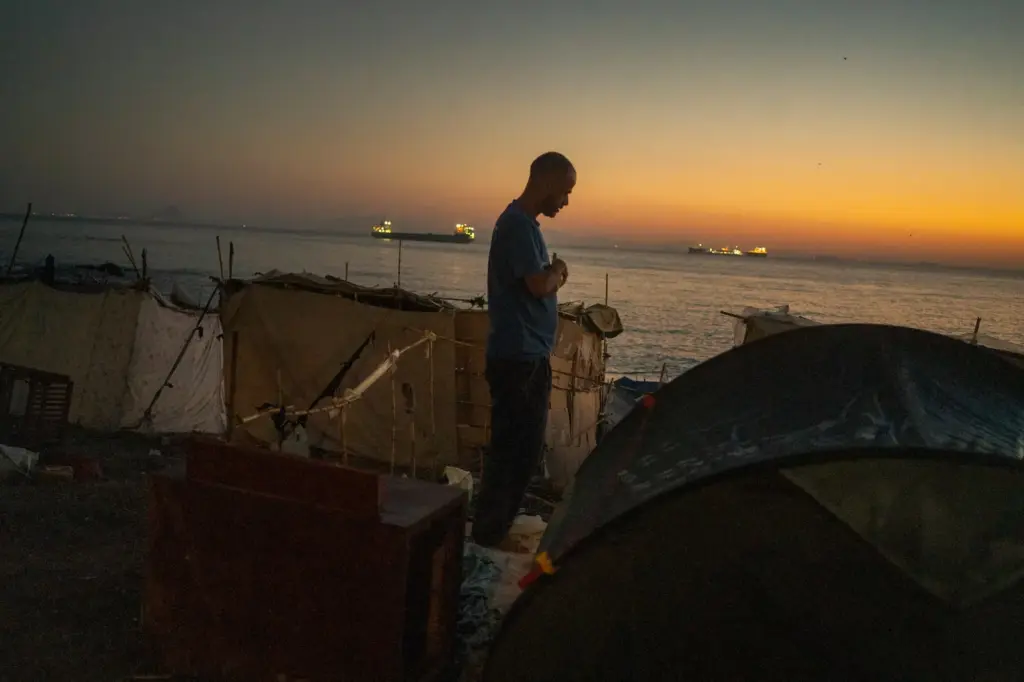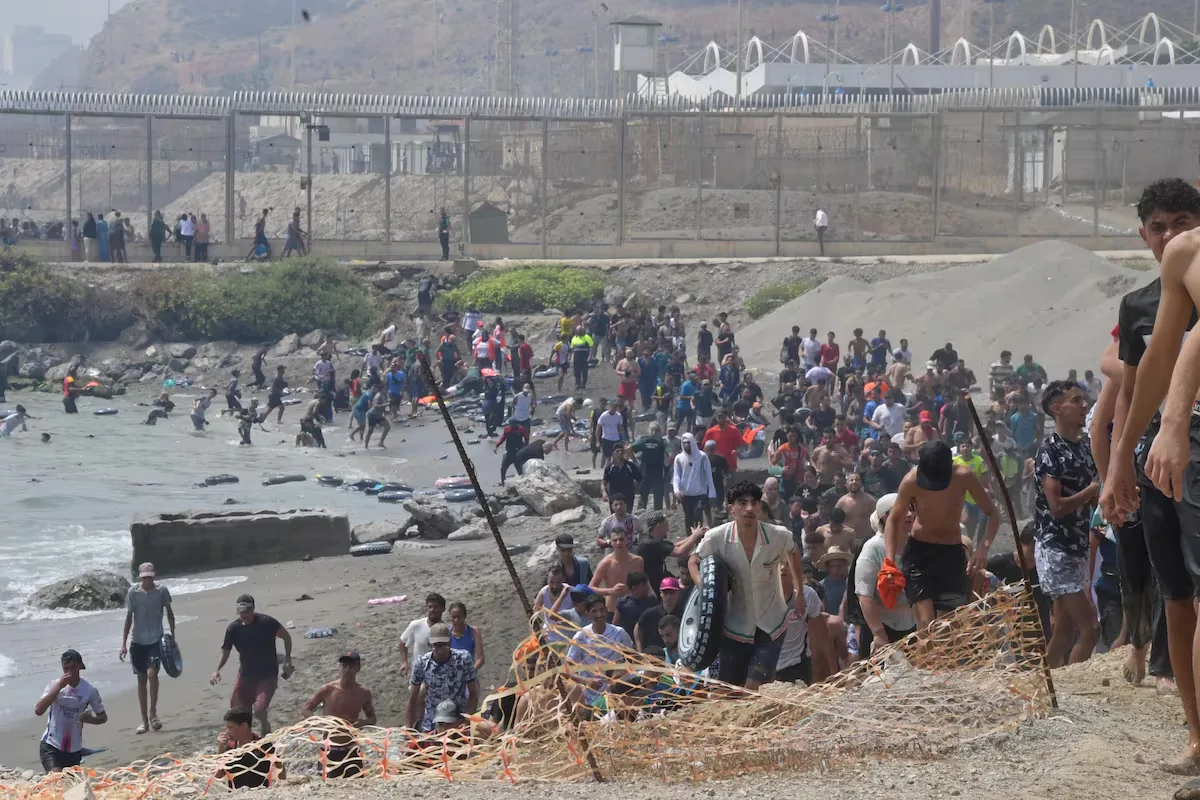









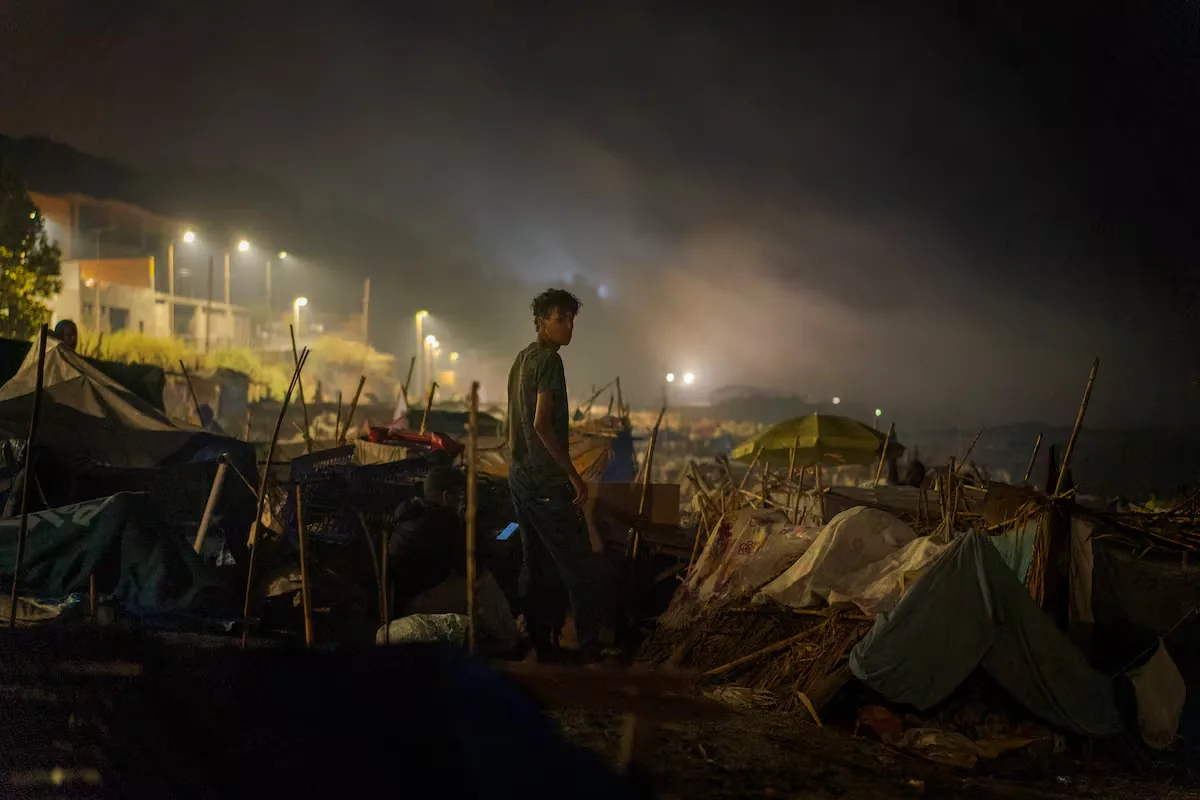
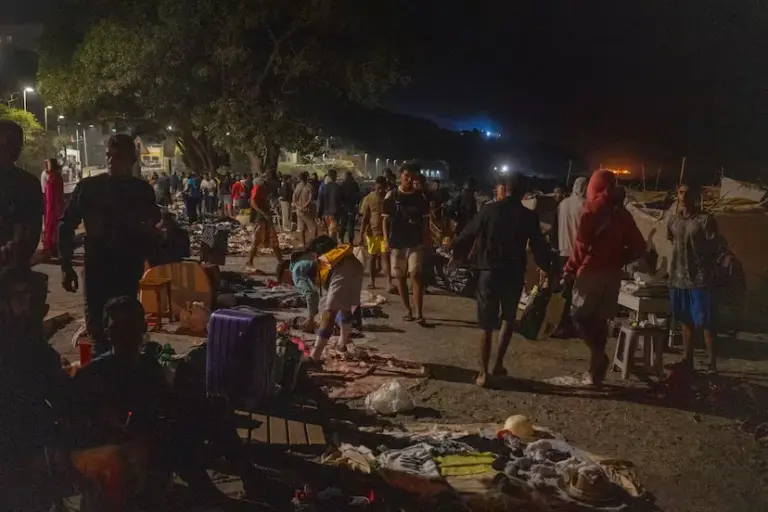
There is only one certainty tonight on the Trampolín beach: no one wants to be here and no one wants others to be here. Everything else on this stretch of coast is speculation, a buzz of questions that drowns out the sound of the sea in this early morning a month and a half later. It is not clear how many migrants inhabit it – the latest estimates place it at 4,000 – nor if this is the chronicle of the last night they will sleep on the shore.
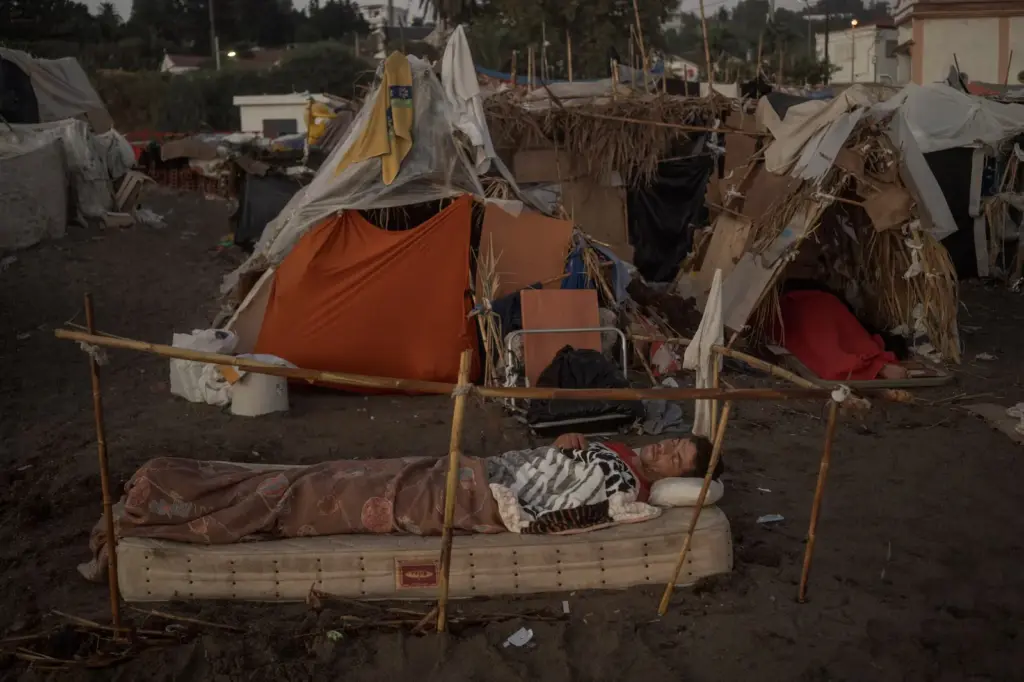
Although everything in the future is a rumor, the migrants already know they will be relocated, as happened days ago with those who lived outdoors outside Loma Colmenar. Many go daily to the center being finalized in the Port and spread the word about its progress. On Tuesday, one tent was still to be installed on the West Dock, the bunk beds had already arrived, but not the mattresses. Given the imminence, any detail that breaks the usual flow of the long nights is enough as a clue, as an optimistic hint to guess the date of the end: “Are you coming because they will take us when daylight comes?” they ask. They distrust the denial, so some smile and go pack their things in case the Police wake them in a few hours and they can be first in line. Maybe not tomorrow, but they know there won’t be room for everyone, there are just over a thousand places.
The others wait. They finish the menu that the Red Cross distributes daily, and barter bananas, juice boxes, and sandwiches with a high bread content. The food bags abandoned on the ground mark the start of another night at Trampolín. Ahead, twelve hours of darkness until at 9 in the morning four masked women from the city cleaning service collect them.
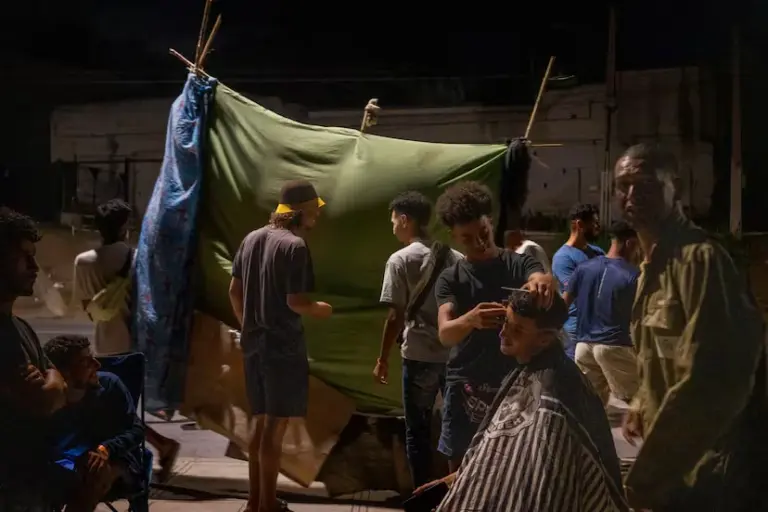
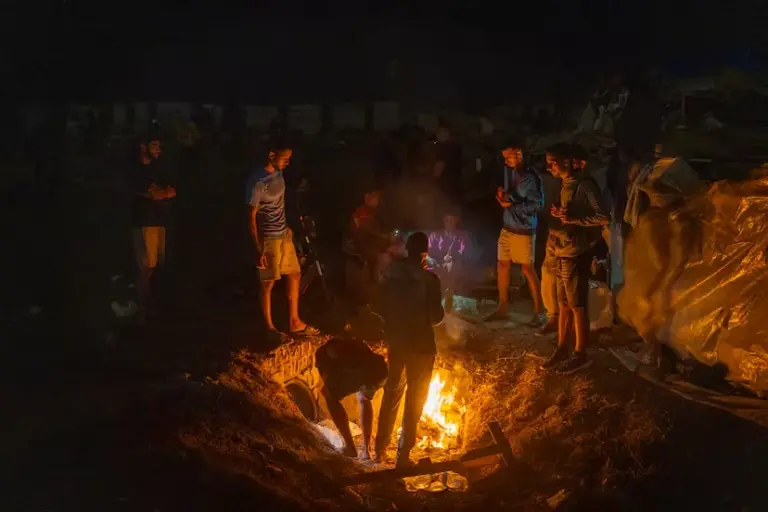
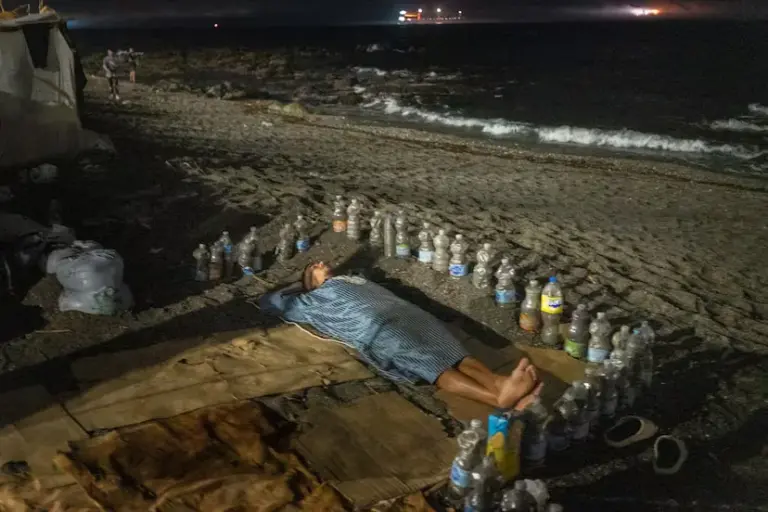
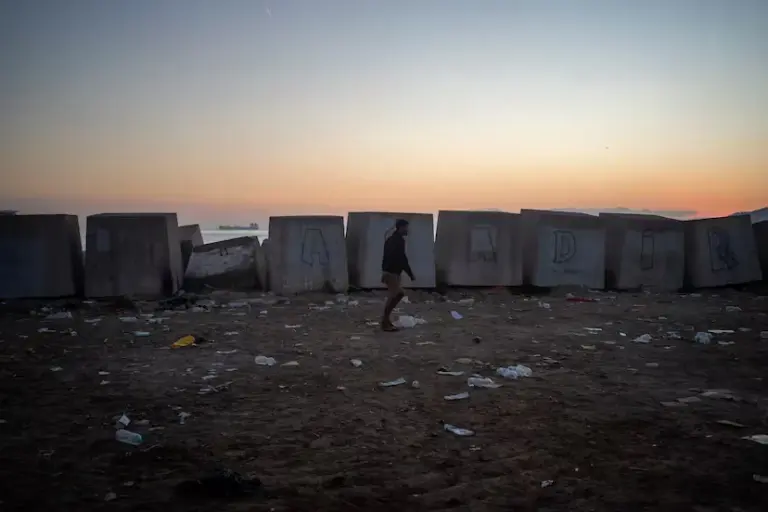
“I think they will move us on Saturday, because it will be 50 days since we entered,” says Karim, with a strange confidence in the roundness of things. He is 23 years old, from Meknes, and no longer has a shack in Trampolín. He spends the day and early morning here, but sleeps in some hideout among the hills. “It’s impossible to sleep, the noise, the fights… Even if you try to isolate yourself, sometimes stones fall on you,” says Hicham, 19, who has moved to the neighboring Benítez beach, where another small camp grows in blinks, built by the most fed up.
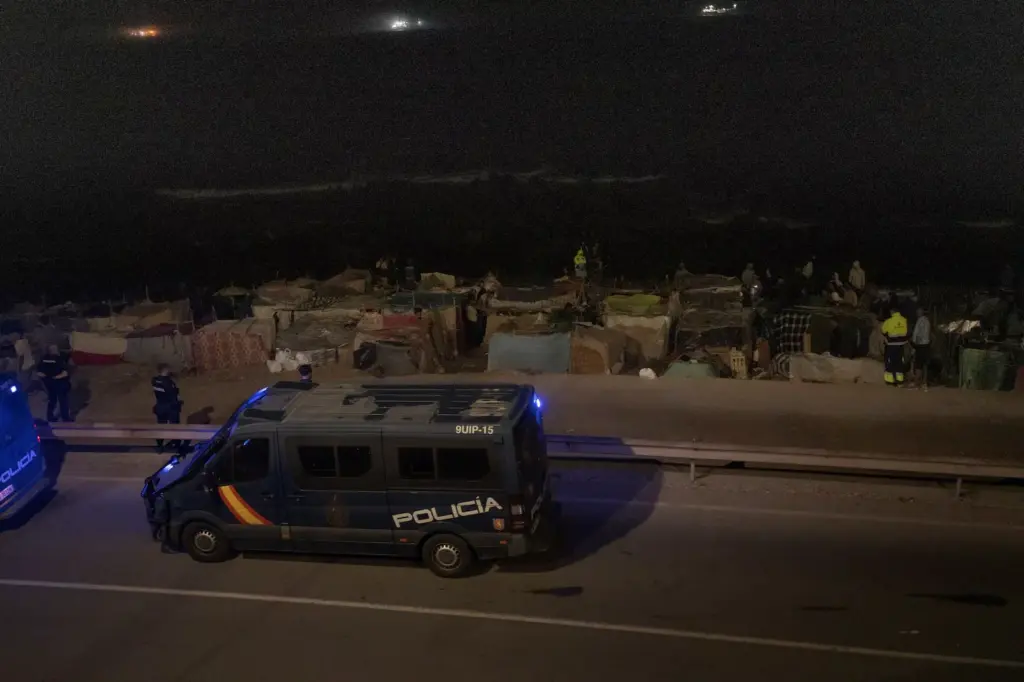
Although the first hours pass calmly, past midnight the first brawl breaks out at the western end of the camp, and the awake migrants slowly scatter in the opposite direction. “We are the laughingstock of the world, they are making us all look violent, it’s unbearable,” Bilal tells the tip of his toes, all embarrassed. He rests on a plastic chair without legs, his unstable throne on a pile of garbage. “I read a lot of what they say about us out there, and look, after so long, I’m starting to agree with them. That they throw us all back to Morocco,” he proclaims. His weariness infects the group, which gets tangled in a more exhaustive than bitter debate: “No, listen to me, here there is 30% of people who deserve nothing, who drink and do drugs and start those fights, but look at most of us, we have nothing to do with that,” excuses Beladi, who with his over six feet tall has arrived with cigarettes and controversy for everyone. They get stuck in the discussion about the percentage: for some the “good” are the majority, for others it is exactly the opposite. They collect the reasons for the latest brawls, a record of trifles and entrenched hatreds: a piece of land, food, pills or hostile origins. It is already two in the morning when a riot police team enters the beach, flashlights in hand. Another fight howls, and the agents vanish into the maze of huts in search of the origin. They are not seen leaving.
Ismail observes everything from a distance, the ontological discussion about good and evil, and also the scuffle. He is about three physical meters and mental kilometers away, pondering. He wears a fluorescent yellow cleaning company jacket, which he bought for two euros at one of the stalls set up inside the camp. “They’re not going to give asylum to any of us, right?” he finally bursts out. A dark silence emerges, no one answers. “I shouldn’t have crossed, I wouldn’t do it knowing this was going to happen. But now, what do I do? If I go back through the border, will they arrest me?” he inquires. In Trampolín a month and a half later there are no answers, so Ismail lists options. “They say I should stay, wait to be transferred to the center and there they study the asylum case. But if they deny it, I can’t try to enter again. And I can’t live in Morocco anymore, that’s not life,” he explains. This piece of land holds more stories than Scheherazade, all particular, incomplete, all with an initial something in common: the future not there, maybe here.
Read more Valencia comes back to life in Mendizorroza and earns its first win of the season
Hicham waves his hand toward something specific in the middle of the sea, it is still dark, but he seems to see it: “I’ve dreamed all my life of being able to get there to Spain, if this doesn’t work, I’ll try again. I don’t know if I’ll go to the center or try to get on a boat to arrive,” he says. They clarify that this is already Spain, and he corrects: “Yes, but to the other one, not the small Spain, the big one,” he says, drawing the Peninsula with his index fingers. Something starts moving abruptly in a blue tent nearby, and shouts and bangs are heard. The hemp from the roof falls off, and the group disperses.
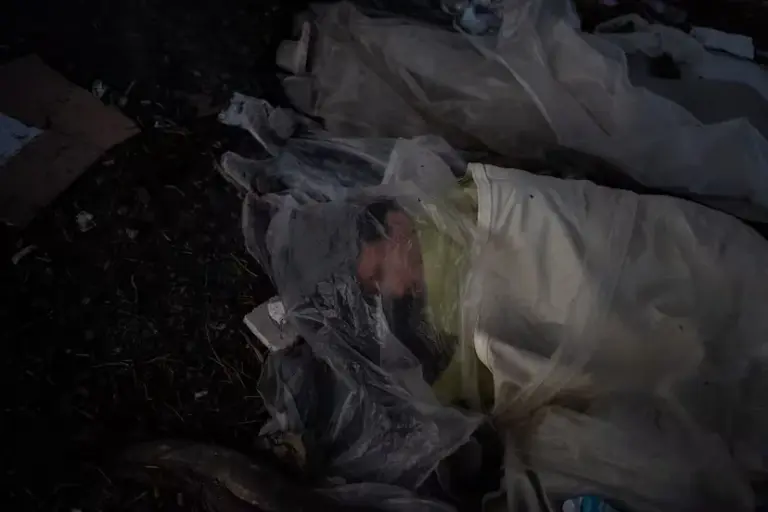
In the background, bordering the desalination plant, about ten small bodies covered with blankets tremble. Huddled, they seek warmth pressed against the wall. They are minors, startled by a presence: “They’re not military,” the smallest announces to the rest, and they curl up again. Youness gets up and asks if there are more coats. He is 16 years old, wearing a long-sleeved shirt that says in English “New beginnings” and explains that they haven’t tried to enter the city’s youth centers for days because they are always told there is no room. “Please, go to sleep already,” is heard, far away, a policeman shouting.
At half past six the call to prayer sounds. Trampolín has a mosque with the improvised character that the beach has adopted as its own, but some prefer to go to the one across the street. Mohamed chats at the exit with others, who mock his red cap. It says “Maruja” in white letters and those who speak Spanish explain the dariya the joking nuance. He laughs toothlessly, clarifies that the name is from a chocolate brand. “But you can call me Mohamed Maruja, I don’t mind,” he concedes. He shows the bag he carries across his chest, from the Disney Princesses: “I wear whatever I find, it’s okay. All this will pass,” he says. And the when remains floating in the air.
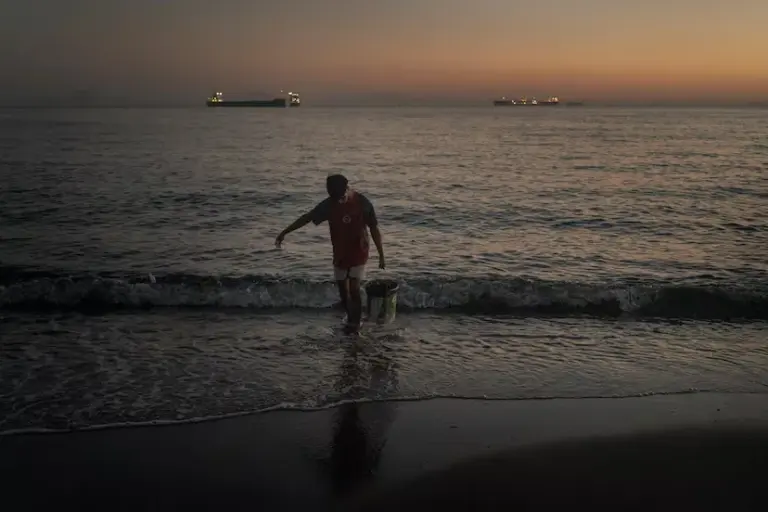
At daybreak, Larbi goes out to get buckets of seawater and try to wash. He is one of the oldest, 56 years old and Riffian. He crossed with his 25-year-old son, who still sleeps inside a precarious square structure. “I reinforced it with more cardboard, but it’s going to collapse, because many nights stones fly. I feel a deep shame about what is happening here,” he explains. His excellent Spanish falters. He was a taxi driver.
At eight, those who also long for the end join the routine: One of the neighbors of the hill chalets goes out to contemplate the immense camp. Two runners dodge the food stalls. The road traffic clears of police and Larbi helps the cleaning service women pick up the trash. The white bags disappear, everyone wishes they were the last of Trampolín.
Read more Independence Day 2026: concerts in municipalities, breathalyzer tests, and Dry Law