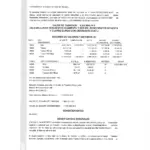









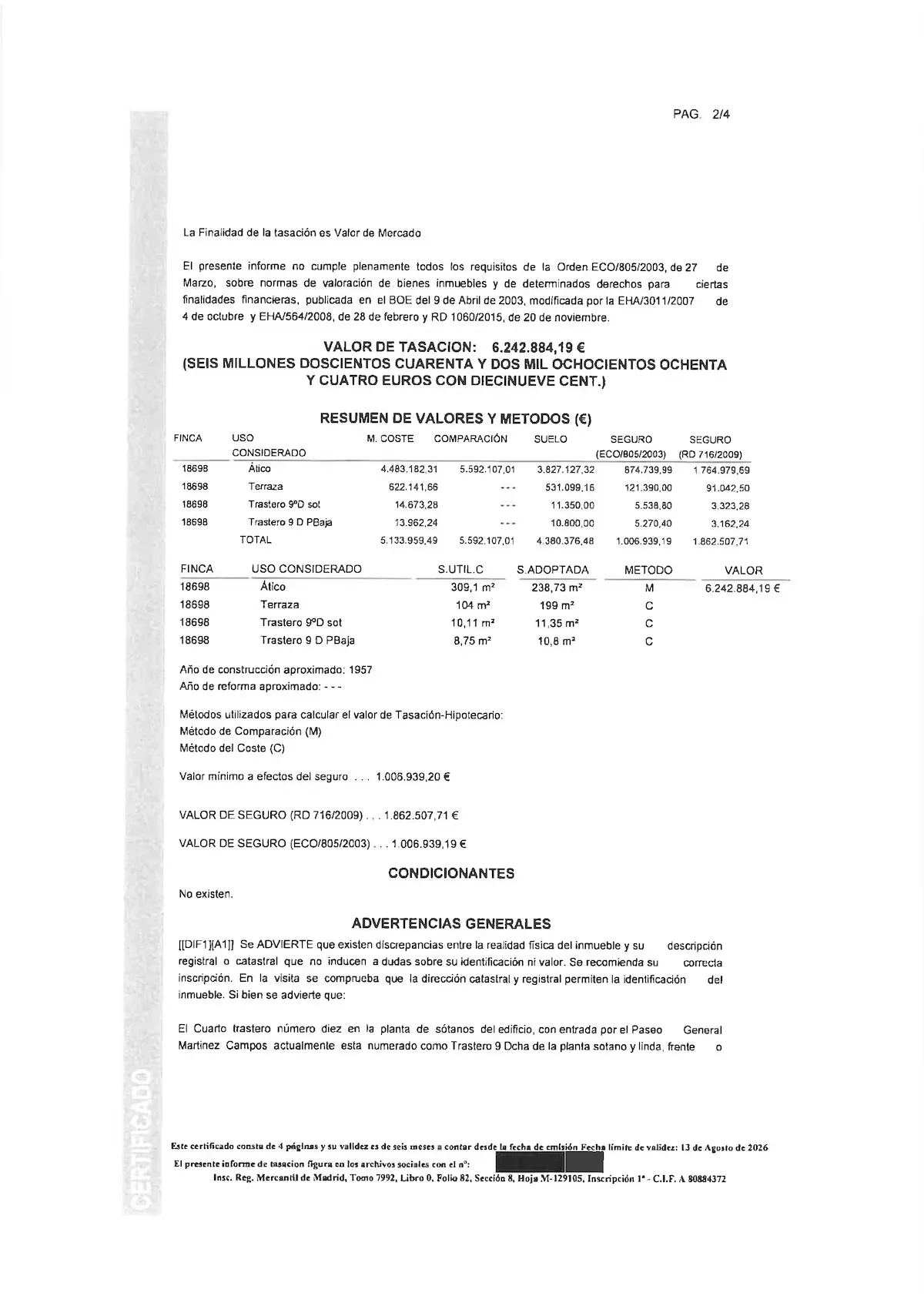
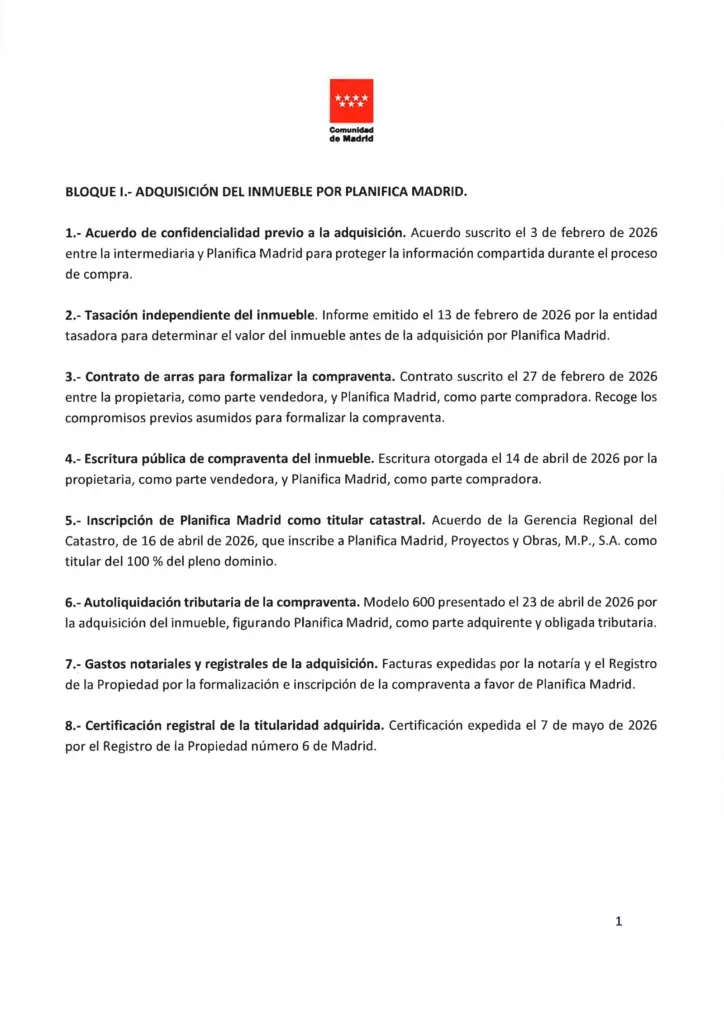
The Planifica Madrid report on the penthouse it bought in the Chamberí neighborhood for 6.3 million euros contains 224 pages, but it does not answer the fundamental questions surrounding this case. The document begins with the confidentiality agreement that the real estate company proposes to the seller, the aristocrat Astrid Gil Casares, and ends with the auction of the property, which was declared void. Seven months and seven days have passed. Along the way, it does not reveal who or why ordered its purchase, nor does it justify the reasons that led Isabel Díaz Ayuso’s Government to use the public company to carry out this operation.
Read more This is how the Community of Madrid manipulated the waiting lists in Public Healthcare
The most revealing parts, those that shed the most light on the nature of the acquisition, appear when the Presidency Department justifies the reason why it proposes to rent the residence to Planifica for 36,000 euros per year. The report reads that the Government needs to have an “institutional property” intended as a workplace, a rest area, and “occasional accommodation” for visiting authorities or “for the authorities of the Community of Madrid themselves,” which grants Ayuso the authority to use it. It also refers to the possibility that, in the event of a pandemic, it could be used as an institutional headquarters “in crisis management contexts.”
Finally, Ayuso’s Government signed the lease contract on July 27, two days before EL PAÍS revealed the purchase of the penthouse. The lease was to start on August 1, but it never took place. On July 30, the same day the regional government announced it would sell the apartment, the Presidency Department informed the Economy and Finance Department ― responsible for formalizing this operation ― of the “disappearance of the need that motivated the lease request,” and it was canceled.
The file is divided into three blocks: the purchase, the rental, and the sale. The first is titled “Acquisition of the property by Planifica Madrid.” However, this section does not answer a key question: if someone requested to buy a 485 square meter apartment, who was it? Official explanations oscillate between it being an initiative of Planifica, which tracks properties potentially includable in the regional heritage, and that the order came from the Presidency Department. The Government has never clarified whether the president was behind the operation, although it has acknowledged that she visited it in person once the purchase was formalized before a notary.
This information, key to understanding the chronology of events, does not appear in the file. The first document, signed before the apartment was appraised, is the confidentiality agreement between the seller and the buyer. It was signed on February 3, during the negotiation process, and lasts for 10 years. This is followed by the earnest money contract, dated February 27, the appraisal, and the deed.
It is signed by a representative of Planifica Madrid, although it is unknown who, because the names of those involved are redacted in all documents. The public company owns other properties in the region, mostly offices, but none with the characteristics of the Chamberí penthouse. It is still unknown whether the company acquired it out of its own interest or if the Presidency Department, on which it depends, requested the purchase.
If so, other questions arise, such as what need was claimed or how the regional Government learned that a luxury real estate company in La Moraleja was selling a penthouse. Sources close to the operation confirmed to this newspaper that Ayuso’s Government was looking between January and February for apartments with two very specific characteristics: “Between 250 and 400 square meters and a large terrace.” The real estate company Promora, which managed the sale, showed them, in addition to the penthouse, another property, the same sources indicate. The file does not refer to this entire process and does not resolve the doubts it raises.
It is also unknown whether anyone from Planifica or the Community of Madrid went to see the two apartments, nor why the one at number 35 General Martínez Campos promenade, right in front of the president’s mother’s house, was finally chosen. Two weeks ago, Ayuso’s circle acknowledged to EL PAÍS for the first time that Ayuso did visit the luxury penthouse, but she did so after the purchase was executed.
Read more Merz and the German Government stake their future in Sunday’s regional elections
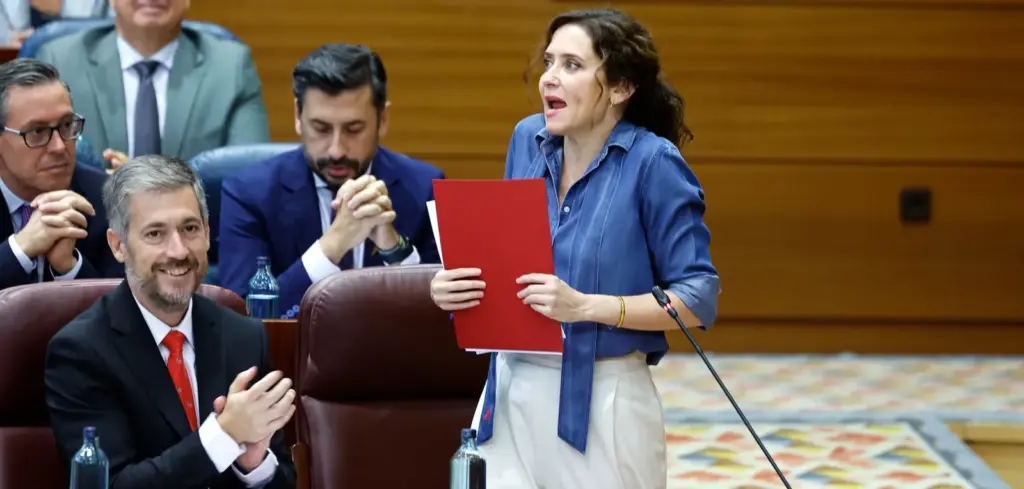
The report published this Thursday, a couple of hours after the Presidency Minister, Miguel Ángel García Martín, appeared before the Assembly, also includes the report justifying the rental. García Martín cited it in his speech, and the document, dated July 2, adds another twist to the string of reasons given by Ayuso’s Government about why the penthouse was purchased.
The first explanation was that it would serve as the president’s office during some works at the Royal House of the Post Office, a renovation that the report does not mention at any time. Then it was assured that it would not be used as an official residence. And now the door is opened to it serving as temporary accommodation for authorities visiting the community or the regional Government itself. “It is a common practice at the state, regional, or even local level to have an institutional property of a residential nature,” reads the first sentence of the document. And that is when the paragraph explaining that the penthouse will have an institutional work area, a workplace, and “occasional” accommodation for visits or the authorities of the Community of Madrid themselves comes in.
Therefore, in July, weeks before EL PAÍS revealed it, the regional Government had already justified in writing that this house could be used as a workplace or accommodation, among others, by the president. It was not just a temporary office, as was explained later.
There is another argumentative gap from the Madrid authorities as the pages go by. Ayuso’s team assured this newspaper that the president went to see the penthouse and left the decision to convert it into her office during the remodeling of her current office “for the end of October.” If that was the case and she had not yet decided anything, why had a lease contract already been signed in July?
The first explanations from Ayuso’s circle did not convince the public, not even PP voters, as polls have shown. It did not seem justified to buy a penthouse at that price to house her office for only a few months, when Planifica Madrid itself has other unused properties. The opposition suspects that they wanted to keep it secret (until this newspaper published its existence, it was untraceable) and announce it as her presidential residence after winning the elections next May.
Ayuso has denied again and again that this was her plan, but at the same time defends that Madrid presidents have their own housing, like other regional leaders. At this point, the penthouse is neither an office, nor a presidential residence, nor an office, nor a usual meeting place for the Government.
Read more Arrested ‘El Trompas’, alleged killer of Spanish student Claudia Tacoronte in Mexico