






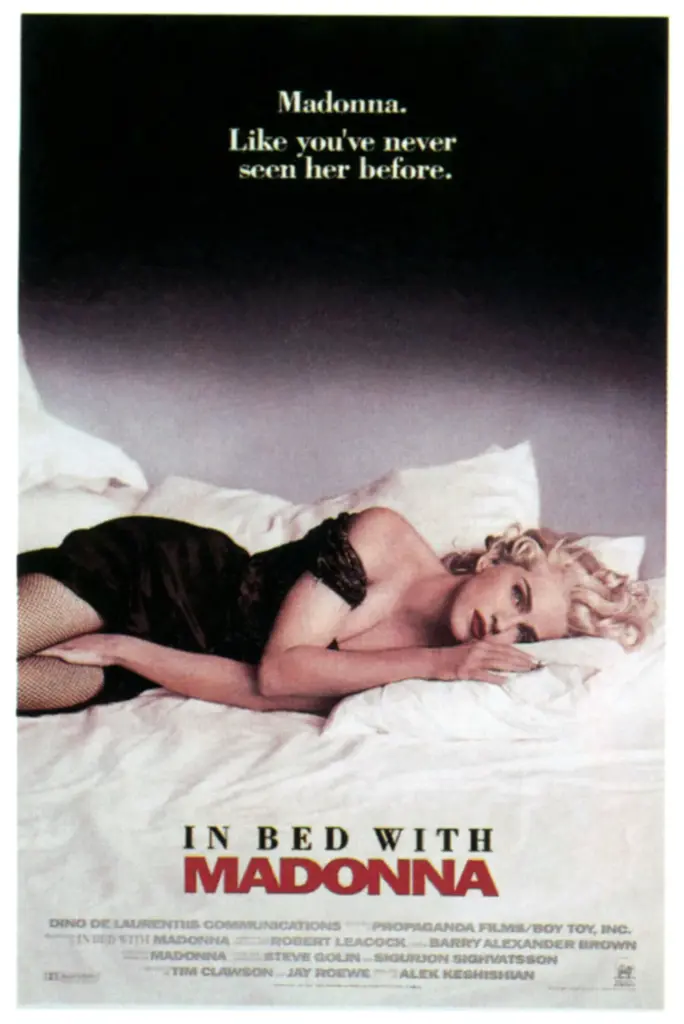
In 1990, before Big Brother, The Osbournes or Instagram live streams, Madonna and director Alek Keshishian unknowingly laid the groundwork for reality TV. Filmed during the 1990 Blond Ambition tour and screened out of competition the following year at the Cannes Film Festival, In Bed with Madonna blurred the line between the public (the concert) and the private (behind the scenes). Not even when the singer consulted a doctor to examine her throat, worn out from months of performances, did the filming stop. When the doctor asked if she wanted to say something off-camera, Warren Beatty, her partner at the time, answered for her: “She doesn’t want to live off-camera.” Thirty-five years later, that jest describes the present.
Madonna was not the first to record a documentary exposing intimate moments and showing its protagonist in unflattering situations. The series An American Family (1973) was a milestone in reality TV by showing the real life of a family disintegrating before the cameras on American public television. And before that, in Don’t Look Back, D. A. Pennebaker filmed Bob Dylan during his British tour, portraying him as a genius as magnetic as he was arrogant. Five years later, Gimme Shelter, by Albert and David Maysles and Charlotte Zwerin, followed the Rolling Stones to their free concert at Altamont, where an 18-year-old African American was stabbed to death by a member of the Hells Angels.
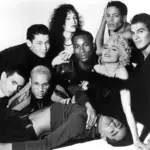
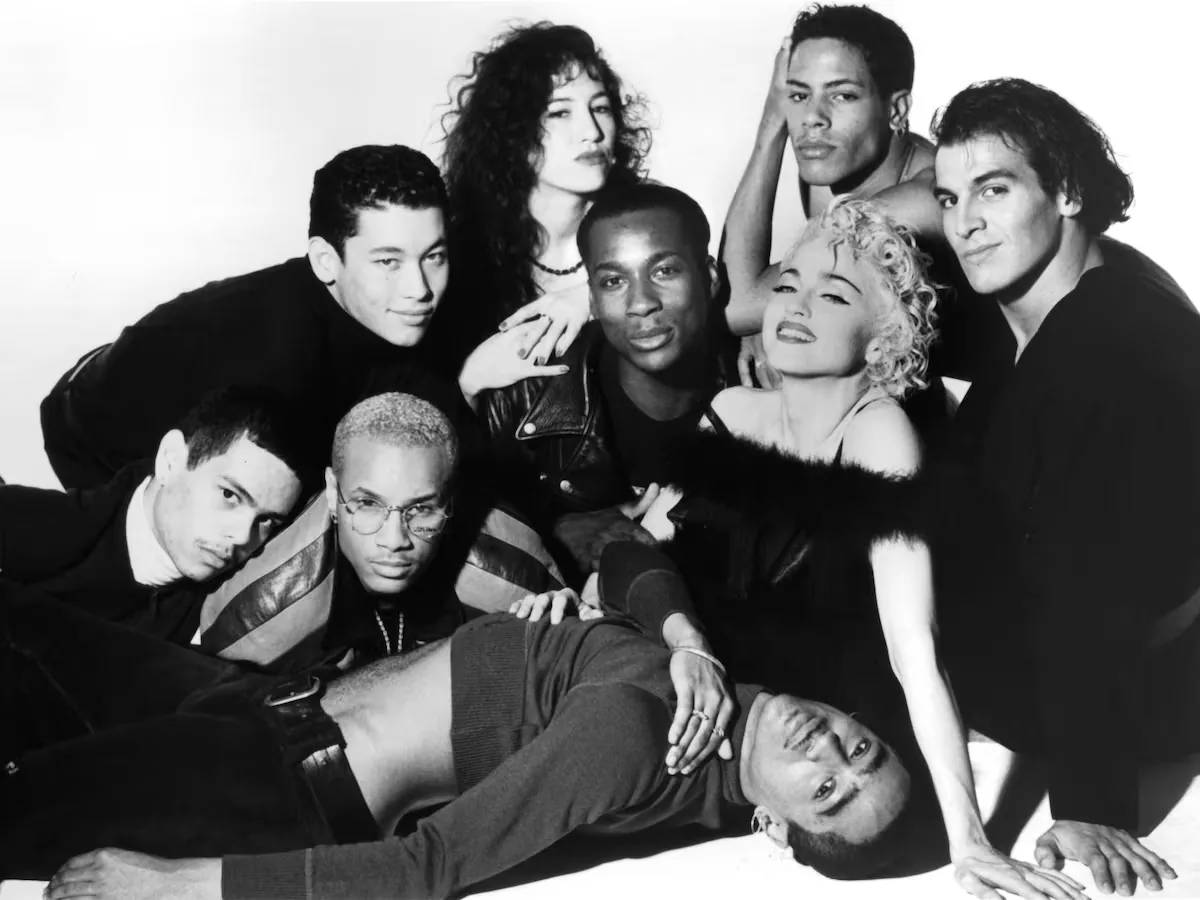
Despite their differences, both titles and An American Family shared the intention to intervene as little as possible in what they recorded, a starting point that In Bed with Madonna only partially preserved, because its protagonist made the old fiction of invisibility impossible. Aware she was being filmed, she looked at the camera, seduced it, and challenged it until the filming itself became part of the story. Around her, dancers, backup singers, assistants, and guest stars formed a traveling family whose coexistence sparked conflicts and complicities. The result was not yet a reality show, but it already spoke its language.
The film no one had commissioned
The Blond Ambition tour was going to be filmed to become a television special. David Fincher, responsible for some of her best videos (Express Yourself, Oh Father or Vogue), dropped out of directing when offered to direct Alien³ and was replaced by a 25-year-old unknown, born in Beirut, who had barely directed a few music videos for Bobby Brown or Elton John. Alek Keshishian was not on anyone’s shortlist except Madonna’s, who had been following his work for some time. As Keshishian confessed to Queerty years later, their visions were very different. “I think she wanted me to just film her getting off the plane, with her fans and light stuff like that. But I told her: ‘You have to give me free rein to film whatever I want.’” Madonna agreed but set two limits: business meetings had to be off-limits, and she was not willing to repeat an action to facilitate another take. With the conditions set, she ordered the members of her small crew — a 16mm camera operator, a sound technician with a boom mic, and occasionally a production assistant — not to talk to the artist and to wear only black so as not to attract her attention.
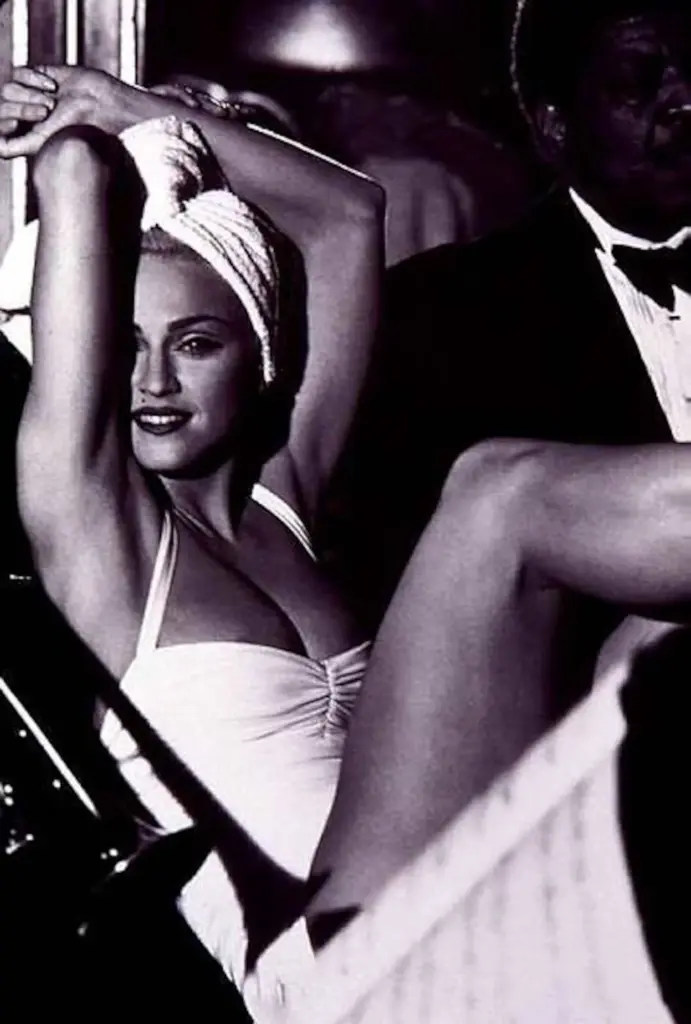
Keshishian ended up discovering that Madonna’s entourage was as entertaining as she was. In a kind of preview of the confessional that reality shows would popularize years later, Keshishian turned the camera towards those who almost never occupied the center of the frame and asked about their private lives. For example, the dancers. “In Japan, I started interviewing them in bed. I was curious to know who those guys were,” he told Vulture. Although most of those conversations were left out of the final cut, the filmmaker had a hunch: “I told Madonna: ‘The movie isn’t what happens on stage. The movie is what happens offstage, with you as the mother figure of this group of Felliniesque characters.’”
“When I started watching the footage, I thought: ‘This interests me a lot. Here’s a movie. Here’s something,’” Madonna told Entertainment Weekly in 1991. Confident in its commercial potential, she contributed four million dollars out of her own pocket and took on executive production of the project.
Half-truths and a contested narrative
Keshishian had found his film, but not everyone in Madonna’s circle shared his enthusiasm. The closest precedent was not encouraging either. In 1988, U2’s documentary Rattle and Hum underperformed at the box office and fueled the still-current caricature of Bono and company as solemn and egocentric messiahs. For Liz Rosenberg, Madonna’s press and public relations chief from 1983 to 2015, that was the risk. “I was totally against it because I don’t think the world needs to see what happens behind the scenes,” she admitted decades later to Vulture.
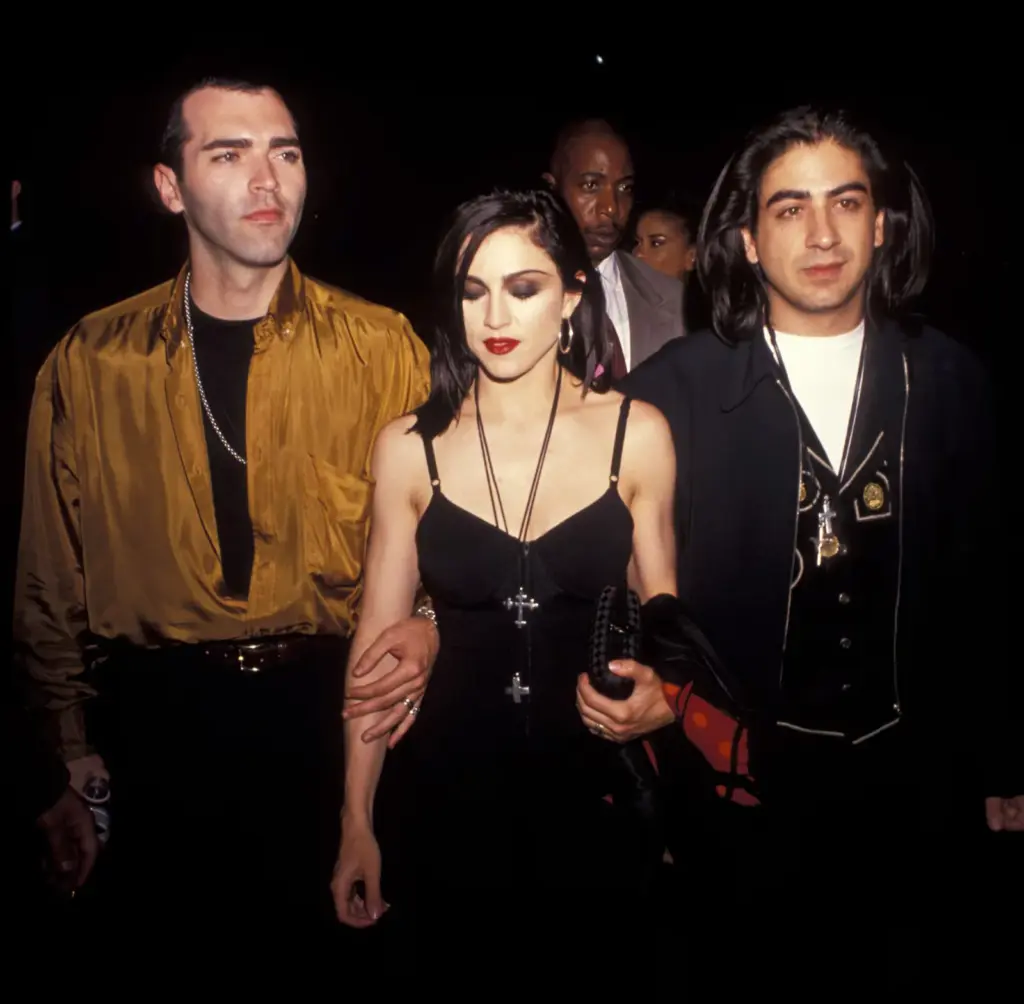
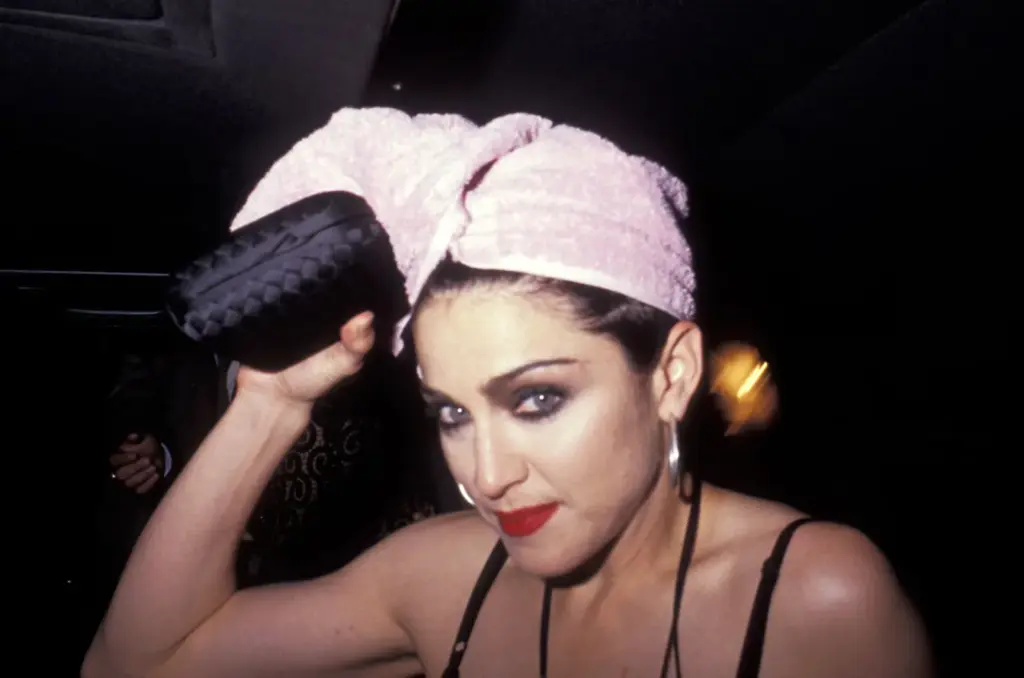
The musical numbers, filmed with 22 color 35mm cameras, preserved the full stage spectacle of the Blond Ambition tour, while the black-and-white 16mm footage showed a much less polished backstage version. Madonna could be foul-mouthed, capricious, controlling, and somewhat mean, but also maternal, funny, protective, and approachable. She didn’t even seem too concerned about being likable. When Kevin Costner came to her dressing room after a concert in Los Angeles and described the show as neat — something like “proper” in English — she waited for him to turn around to fake a gagging gesture.
Read more Shakira spreads joy in Madrid in a fun concert that lacked depth
Seeing her like that, with little interest in protecting her image, reinforced the feeling of authenticity. But she knew it wasn’t that simple. In the April 1991 issue of Vanity Fair, a few weeks before its Cannes screening, she anticipated an idea intrinsic to reality TV. “People will say: ‘She knows the camera is on, she’s just acting.’ But even if I’m acting, there’s a truth in my performance. It’s like when you go to a psychiatrist’s office and you don’t really tell them what you’ve done. You lie, but even the lie you choose to tell is revealing.”
Keshishian described In Bed with Madonna to Entertainment Weekly as “an emotional documentary” and admitted there was “a very fine line between letting reality happen as it had to and pushing it to the limit, to the point where sometimes you try to manipulate the confrontation between people.” There appeared another common reality TV device: introducing a trigger and waiting for conflict. Sometimes, he only needed to set the stage. During the visit to her mother’s grave, the cameras waited behind the trees and a microphone hidden in the ground captured the sound without her knowing. In other cases, he went further. The singer had told him in Japan about Moira McFarland, a childhood friend, the first girl she kissed, and who taught her to pad her bra and use a tampon. The director found her and, when the tour stopped in Washington, took her to the hotel without telling Madonna. Moira ended up reproaching her for not answering her letters and asking her to be the godmother of her expected child. “It caught me by surprise. And you can see it, I don’t know what to do at all. I probably come across as cold,” she admitted in the same publication.
All that material ended up becoming a lucrative business. In Bed with Madonna grossed 29 million dollars (with a budget under 5) and for more than a decade (until the 2002 release of Bowling for Columbine) was the highest-grossing documentary in history. The success, however, also anticipated one of the most uncomfortable rules of reality TV: not everyone is part of the story on equal terms. Pedro Almodóvar experienced this in Madrid, where he organized a private party in his honor at the Palace. When asked why the cameras were there, she said it was “to have a memory.” Months later, the memory was in theaters. “Madonna treated us like suckers,” the Manchegan recalled in 2020 in El Diario.
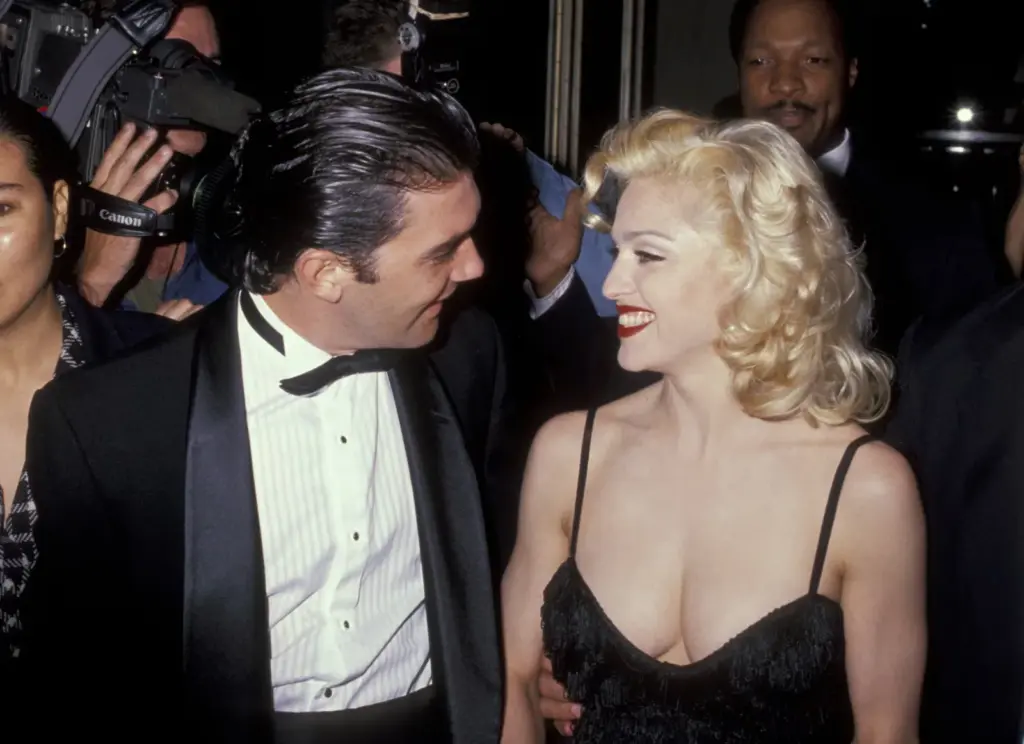
For the dancers, anonymous until then, the consequences were much less kind. From the start of the tour, they knew they were being filmed, but not how much screen time they would have. And on top of that, they didn’t receive a penny. Three of them, Kevin Stea, Oliver Crumes, and Gabriel Trupin, filed a lawsuit in January 1992 against Madonna and her company Boy Toy Inc., the production company Propaganda Films, and the distributor Miramax. According to the complaint, they had been promised they could veto any scene they considered invasive, although each had their own grievances. Stea claimed his contract included a clause for payment if a film was made; Crumes argued he had not signed anything authorizing his appearance; Trupin, for his part, had a more delicate reason: he had requested the removal of his kiss with fellow dancer Salim Gauwloos because his family did not know he was gay. The request was ignored. In 1994, they reached a confidential out-of-court settlement, but it wasn’t until 2016 that the documentary Strike a Pose, by Ester Gould and Reijer Zwaan, finally gave them their voice back. Trupin, who died in 1995 from AIDS-related complications, could not recover his.
That inequality soon became formulaic. MTV, the same channel that catapulted Madonna in the eighties, understood in 1992 that to manufacture a celebrity, you didn’t even need to start with one. In May of that year, The Real World brought together seven strangers in a SoHo loft in New York and made their coexistence the show. A decade later, the channel reversed the premise and opened the stars’ living rooms to the public. First came The Osbournes, then Newlyweds: Nick & Jessica, and so on until Alaska y Mario. By then, that overexposure Rosenberg had feared for Madonna already supported an entire lineup.
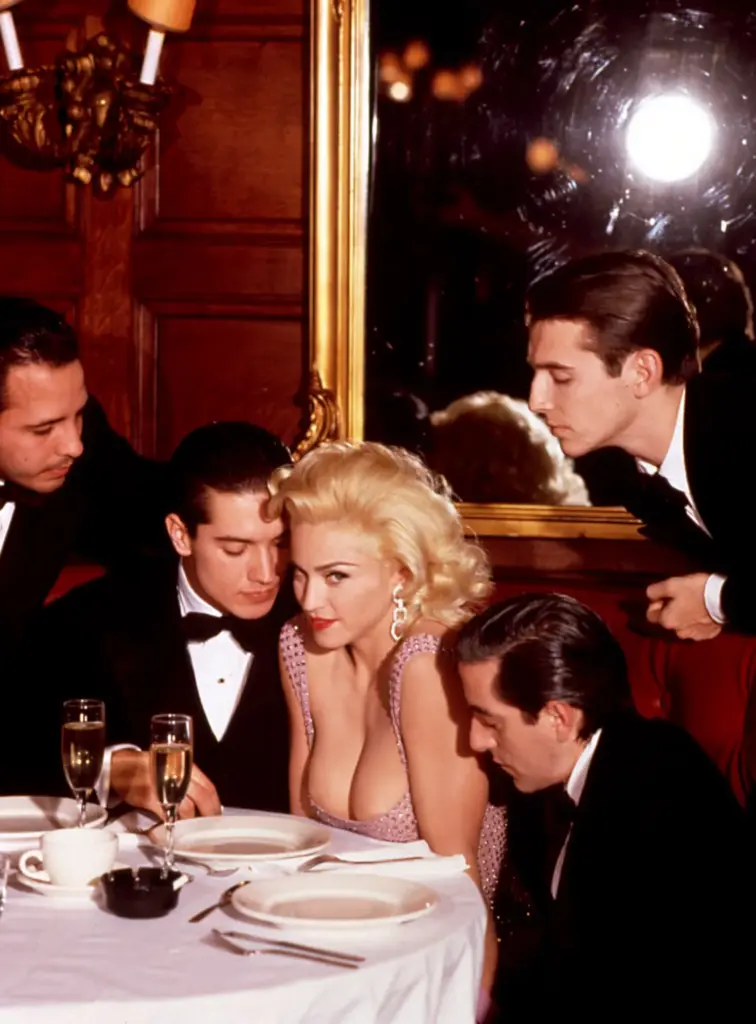
Today, the musical star documentary showing its protagonist as fragile, that thing they call human, is a rite of passage and a promotional strategy. Everyone has one, from international stars (Lady Gaga, Beyoncé, Kylie Minogue, Céline Dion) to major national figures (Aitana, Alejandro Sanz, Bad Gyal). Despite its impact, Madonna does not have fond memories of In Bed with Madonna. “I’m afraid to watch it. I think I’m an unbearable brat,” she admitted in an interview with Andy Cohen for Entertainment Weekly. When, 13 years later, married to Guy Ritchie and mother of two, she tried a sort of sequel with I’m Going to Tell You a Secret, filmed during the 2004 Re-Invention World Tour and released the following year, she was no longer willing to give so much of herself. She wanted to work with Keshishian again to direct it, but he politely declined when she explained she wanted to focus on her humanitarian work in Malawi and her studies of the Kabbalah. “The problem is that’s not a movie,” he told her. “It’s an essay.”