









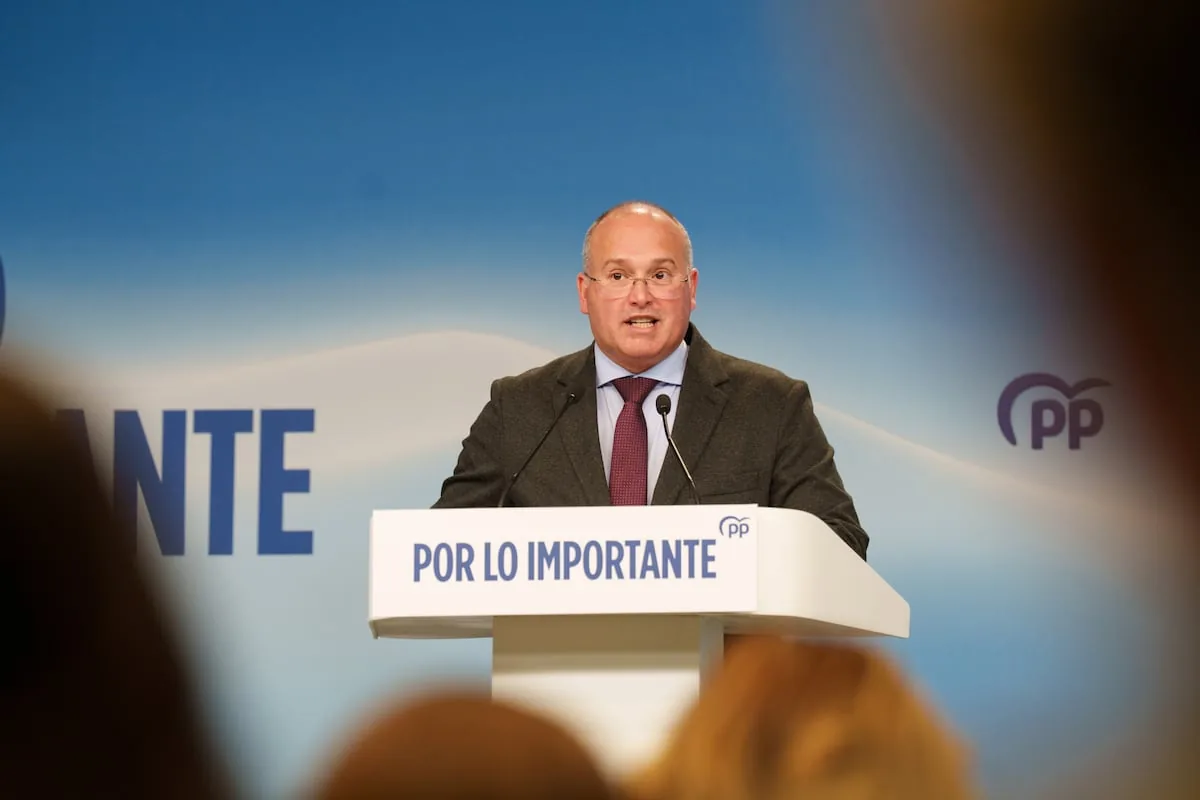
Just four days after the signing of the PP-Vox agreement for the Government of Extremadura, the partners are already clashing over how to apply it. The first discrepancy has arisen over Cáritas, the Church organization that shelters irregular immigrants and receives public subsidies in Extremadura. The PP and Vox pact to invest María Guardiola establishes that the Extremaduran regional government “will suppress all subsidies, aid, agreements, and contracts with NGOs that participate directly or indirectly in the promotion, facilitation, or sustenance of illegal immigration, or that act as necessary collaborators of human trafficking mafias,” which, for Vox negotiators José María Figaredo and Carlos Hernández Quero, makes it clear that Cáritas will be excluded from public aid for its work with immigrants, as they stated in an interview with EL PAÍS. In contrast, the general secretary of the PP, Miguel Tellado, defended this Monday that Cáritas will maintain its agreements with the Guardiola Government. “Organizations like Cáritas, which are dedicated to helping, can be completely calm with this agreement, because it will not affect them,” Tellado remarked at a press conference in Genoa.
Read more Primary school teacher arrested in Santa Coloma for child pornography
“Total suppression of subsidies to NGOs that favor illegal immigration,” insists the PP and Vox agreement in Extremadura, which emphasizes that “the Junta de Extremadura will not allocate a single public euro to structures that incentivize the pull effect.” Vox negotiators argue that this implies suppressing the subsidy received by Cáritas, which shelters irregular immigrants in that autonomous community. “You said ‘shelters,’ don’t say ‘will shelter,’” remarked Vox leader Carlos Hernández Quero in the EL PAÍS interview. “We value the social action of the Church, but we cannot accept taxpayer money going to promote invasion and mass migration,” argued the Vox negotiator.
However, the general secretary of the PP, who was also one of the agreement’s negotiators, maintains that Cáritas will keep its public subsidies. “The text speaks of eliminating aid to NGOs that promote illegal immigration,” Tellado defended today, clarifying that this is “a crime.” “The text of the agreement refers to NGOs that collaborate with illegal immigration. That is collaborating with mafias that traffic people. It must be proven by a court ruling,” insisted the general secretary of the PP, although the text of the agreement does not specify that it must be proven by a court ruling.
Tellado also specified that a similar measure was also agreed with Vox in 2023 in Aragon and the Balearic Islands “and in none of these cases has collaboration with these organizations ceased.”
Feijóo’s number two has also toned down another central point of the agreement, that of the so-called “national priority” of Spaniards over foreigners in access to all types of public aid and housing, which Vox also extends to healthcare. “Access to all public aid, subsidies, and benefits will be inspired by the principle of national priority, which seeks the preferential allocation of public resources to those who maintain a real, lasting, and verifiable connection with the territory,” states the text of the agreement.
“No foreigner is discriminated against. It must be understood in those terms,” Tellado defended today. The general secretary of the PP affirms that the so-called national priority “is not an eliminatory criterion, it is one more factor when granting aid” and that “it is reasonable that the connection with the territory, the real rootedness, carries weight” for accessing public services. In contrast, Vox maintains that this precept implies “that the services of the Extremaduran Administration are primarily provided to nationals, certainly to those who reside legally.” “National priority will not be a dead letter. The agreement itself outlines the path of requirements, evaluation criteria, and the final goal, with the reform of the Immigration Law,” Abascal’s negotiators specified to EL PAÍS.