








Labor conflict in Spain in 2025 was similar to that of 2024, at least in global terms. The number of strikes fell slightly (from 707 to 648) and the number of days lost due to them grew a little (from 703,200 to 709,800). However, by delving into the details of this statistic —published by the Ministry of Labor at the end of March—, some notable trends are discovered. Among them, the difference between conflict in the public and private sectors: those lost days soared in 2025 among civil servants due to educational stoppages and fell sharply in private companies, contracting in the manufacturing industry.

Provisional Labor data, which radiographs the situation up to the last month of 2025, show that throughout the year there were 374,700 strike days in the public sector, a sharp increase compared to 223,200 a year earlier. This represents a jump of 68%, a very different trend from that seen in the private sector. In 2024, 432,800 days were lost due to strikes, compared to 307,000 in 2025, a 29% drop.
Thus, in 2025 there were more strike days in the public sector than in the private sector, despite the fact that in Spain there are many more salaried employees working for private companies (15.39 million) than for public institutions (3.55 million). The former account for 81% and the latter 19%, but in terms of strike days, the private sector accounts for 43% and the public sector 53% (with 4% being joint). It is common for the public sector to be overrepresented in strike statistics, with a greater weight than would correspond to the volume of salaried employees, but it is not so frequent for it to even surpass the private sector, as happened in 2025. Since 2014 —when this historical series from Labor began— it had only happened in 2023, a year heavily influenced by stoppages in justice and healthcare.
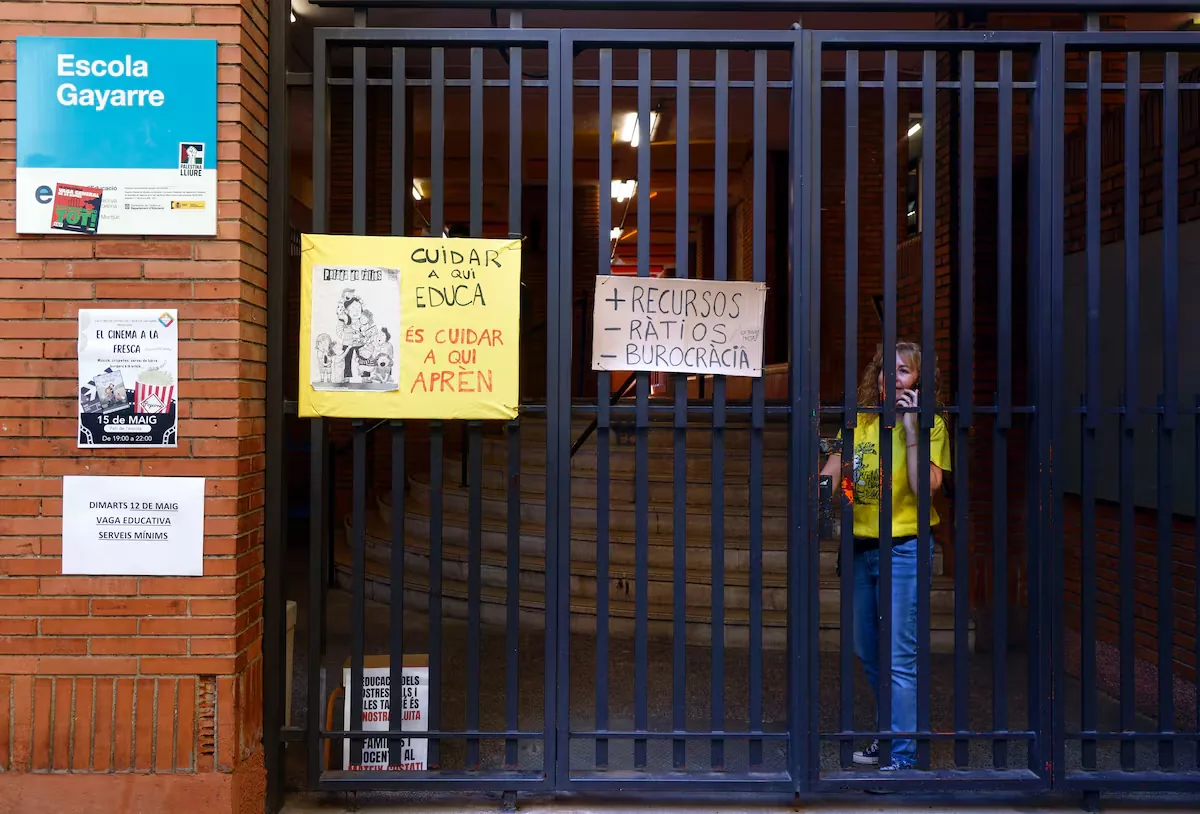
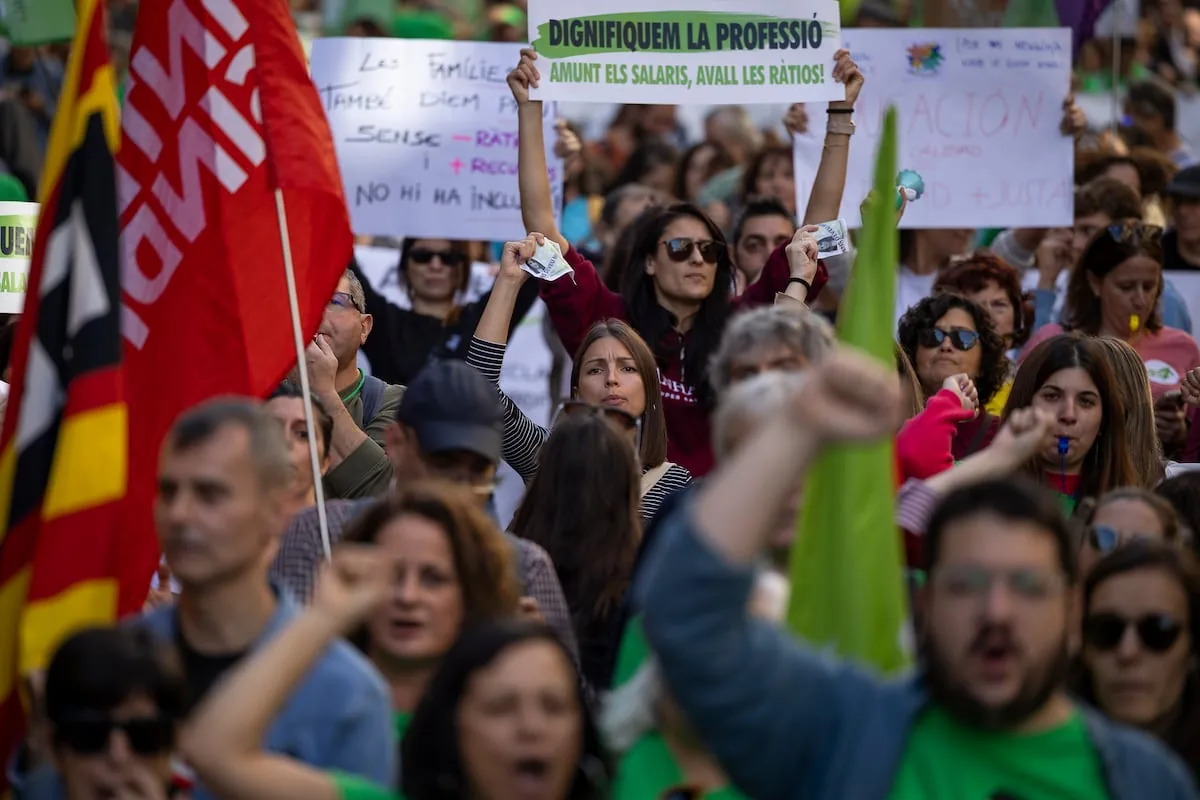
In the last fiscal year, the sector that most explains labor conflict in the public sector is education, with 202,000 days lost due to strikes, an increase of 137,500 days compared to the previous year. The Community of Madrid was particularly relevant, hosting the first general education strike in 12 years under the slogan Let’s save public education. There was also a stoppage of these characteristics in the Valencian Community. “The education sector was the one with the greatest capacity for mobilization,” says the Secretary of Trade Union Action of CC OO, Javier Pacheco.

The CSIF union, specialized in civil servants, agrees in pointing to the education sector as the one that concentrated the most stoppages, connected with multiple demands to regional administrations: “For salary increases, reduction of ratios, bureaucratic burden, development of LOMLOE…”. In addition to the stoppages in Madrid and the Valencian Community, CSIF highlights educational strikes in Extremadura, Andalusia, Catalonia, and Asturias. The latter, the union recalls, involved large mobilizations in the streets and even led to the removal of the then Asturian Minister of Education.
After education, public administration stands out in the statistics, grouping (generally) civil servants who are not part of healthcare and classrooms. This branch of activity accumulated 110,000 strike days, 12,300 fewer than in 2024. CSIF believes that the lack of a salary agreement for most of the year (it was not signed until November) plays a key role in the prominence of the public sector in strike statistics.
The Deputy Secretary General of Trade Union Policy of UGT, Fernando Luján, emphasizes that civil servants have had “plenty of reasons” to mobilize throughout 2025: “The 35 hours for the General State Administration have been demanded, which have finally been promulgated, there are problems with partial retirements, salary designs…”. A CSIF spokesperson adds: “There wasn’t one big single strike, but there is a common complaint in all sectoral conflicts in public service: lack of staff, investment, workload, remuneration, professional career…”
Read more The shooting in the archaeological jewel of Teotihuacán strikes Mexico’s image again
In the private sector, one of the sectors with the strongest union presence and larger workplaces stands out: the manufacturing industry. In this sector, there were 257,500 strike days, far ahead of the 57,900 in administrative activities. “In the metal industry, there have been very important strikes, in provinces like Barcelona or Ciudad Real,” says Luján. Nevertheless, the industry reported 56,000 fewer strike days than a year earlier. The only significant increase in the private sector was in healthcare, with 12,000 more strike days.
More strikes in the north
The sectoral analysis delves into a dynamic that is observed with each edition of this statistic: sectors and territories with greater union strength (at the same time, where they usually have better working conditions and more protected jobs) hold more strikes. Hence, there is such a volume of stoppages in the public sector and the manufacturing industry stands out in the private sector. Private activities with longer working hours and worse wages hardly ever go on strike: in 2025, 367 strike days were reported in agriculture, 150 days in hospitality, and zero in domestic employment.
Following the same logic, in Andalusia (with a strong primary sector) there are hardly any strikes, while in Euskadi (where manufacturing predominates) there are many. The Andalusian community concentrated 16% of the employed in 2025, but only accounted for 5.3% of strike days, while the Basque Country employs 4.5% of the employed and accounted for 23.3% of stoppages. This dynamic is even more pronounced in territories with a tourism monoculture, such as the Canary Islands (0.1% of strike days, 4.6% of the employed).

Beyond the differences by sectors and institutional scope (public or private), 2025 was a year of “moderate” labor mobilizations, in Pacheco’s words. “This is normal in a time of job creation and salary increases,” says the CC OO representative, who at the same time urges not to fall into “complacency.” “Salaries have not yet recovered the lost purchasing power [during the price crisis due to the war in Ukraine] and people see that there is money in companies [business margins],” Pacheco believes.
His union, together with UGT, CEOE, and Cepyme, is in negotiations to reach a new Agreement for Employment and Collective Bargaining (AENC), the salary pact between the major unions and employers’ associations to guide collective bargaining. The one that came into force in 2023 expired last December. Precisely that year was the last with more strikes in Spain, stemming from the then surge in inflation. Now, three years later, another war is raising energy prices.
“My forecast is that conflict will increase this year, given the end of the AENC’s validity, coupled with the pressure of rising prices and high business margins,” adds Luján. “Without an agreement with the employers’ associations, I foresee that we could have a rather incendiary autumn.” In the first two months of the year, according to the statistics of members on strike, the number of stoppage days has decreased from 87,900 in 2025 to 64,600 in 2026.
Read more The pitfalls of a debate amidst distrust