









“I’m not spending 50,000 dollars on flowers,” Nate (Jacob Elordi’s character) tells Cassie (Sydney Sweeney) in the first episode of the new season of Euphoria. So far, nothing strange. In fact, it’s probably one of the most normal things Nate has ever said. Except for one detail. If he wants to be so reasonable with his wedding floral budget, why does he wear a 7,000-dollar plaid shirt in his daily life?
The garment in question, from the Italian brand Bottega Veneta – a light blue plaid shirt made of leather imitating flannel, worn by Kate Moss on the Spring/Summer 2026 runway – championed by the Australian actor, has caused havoc online due to its semiotics: what early-twenties kid can afford such a piece in their wardrobe? Why did the series’ costume designers choose precisely that shirt?
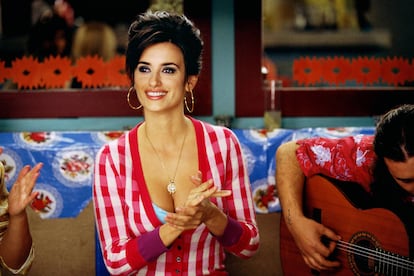
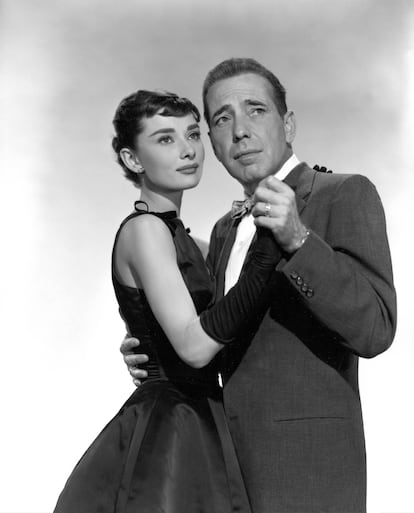
It may seem like an inconsistent decision, but it falls within a long tradition of fictional characters – from both series and films – dressed in ways that do not at all match their budget or lifestyle. Examples abound: in 1930s musical comedies where chorus girls, victims of the depression, are forced to steal milk from their neighbors, yet are dressed head-to-toe in silk satins by designer Adrian. In Billy Wilder’s film Sabrina, where Audrey Hepburn’s character – the daughter of a wealthy family’s chauffeur who studies to be a chef – is dressed exclusively by Hubert de Givenchy. In Penélope Cruz’s Marc Jacobs and Dolce & Gabbana outfits in Volver, where Cruz is a mother from a depressed neighborhood in Madrid who juggles jobs to feed her family. In the tank top worn by the marginalized character Renton (Ewan McGregor) in Trainspotting, none other than a Helmut Lang piece. And, of course, in Carrie Bradshaw’s wardrobe, overflowing with Atelier Versace dresses and Manolo Blahnik shoes despite her job consisting of writing one (one!) column a week for a minor New York newspaper.
“These are creative licenses that have always existed in cinema and series, which costume designers, production designers, and directors have taken,” comments Miguel Apresa, a costume designer. “The costume design for a character is a playful process, where the character’s personality and the costume designer’s personality count. A supposedly poor character can wear expensive clothes, just as a supposedly rich character can wear Zara, for many reasons. Pure rigor is boring, especially when each series wants to create its own atmosphere and distinguish itself by its style. After all, the same reality can be told with totally different filters.”
Something with which Pepe Reyes, also a costume designer for series such as Los Secretos de la Cortesana and En el Círculo del Asesino, agrees. “Decades ago, I was a costume designer for Al Salir de Clase, a series about teenagers from normal families where supposedly humble characters could wear Donna Karan or the most expensive Quicksilver sweatshirt. Why? Because those brands lent me everything, as what appeared on television generated a lot of interest,” he explains.
View this post on Instagram
According to him, rigor or lack thereof comes and goes in the industry. “There have been times in film history when everything was expected to be believable. But now we are at a moment, with streaming platforms, where there are many productions and everything arrives very quickly. If a character stands out or arouses curiosity because of a garment, a pair of shoes, or their style in general, that helps position the series or film.”
“Also, the way costume designers take creative liberties changes over time,” adds Miguel Apresa. If in classic Hollywood, an almost destitute Marlene Dietrich was nevertheless wrapped in velvets and feathers, that was simply a way for MGM, her studio, to protect its investment by maximizing the actress’s look, regardless of her character’s circumstances. Later came collaborations between fashion designers and actors, such as Audrey Hepburn and Givenchy, but also Baz Luhrmann and Miuccia Prada or even Takeshi Kitano and Yohji Yamamoto.
However, in recent years these collaborations have shed their personal character to become much more corporate, with contracts between luxury brands and actors directly permeating cultural production. This is the case of Margot Robbie and Chanel in Greta Gerwig’s film Barbie, or, now, Jacob Elordi and Bottega Veneta with Euphoria. Although, according to Miguel Apresa, there doesn’t have to be a specific contract regarding the use of garments from these brands in films and series. “The relationship between actors and brands means more access to them for costume designers. Even Jacob Elordi’s mother wears Bottega Veneta on the red carpet, so what could be more natural than including pieces from the current collection in the series?”
Nowadays, the goal is for every cultural product to be aspirational. “What advertising used to do, cinema and television now do,” explains Miguel Apresa. “Producers want everyone to desire everything about a character: the house they live in, their physique, and, of course, what they wear, regardless of their social reality.” Perhaps it’s not surprising, in these times when luxury brands are breaking into all aspects of society while economic inequalities grow, that these same brands want to “customize” humble characters in their own way. After all, the collections of many of these brands are “inspired” by the working class, often sparking controversy and criticism. This is the case of Georgian designer Demna, who took workers from southern Italy as the starting point for his latest collection for Gucci. Or Raf Simons and Miuccia Prada, who imitated the effects of dampness, dirt, and worn-out clothes in Prada’s most recent collection. Or, to a lesser extent, Bottega Veneta.
After all, a flannel plaid shirt and jeans are an outfit within reach of the vast majority. Not so in the leather version offered by the Italian brand. Returning to the case of Euphoria, Miguel Apresa says: “For the series, the shirt is objectively a good choice. It fits perfectly within the color palette and the look of the series. Besides, I don’t think most viewers know it’s a Bottega Veneta leather shirt. Finally, the madness isn’t the plaid shirt itself in those scenes… but the exorbitant prices of Bottega Veneta clothes today.”