


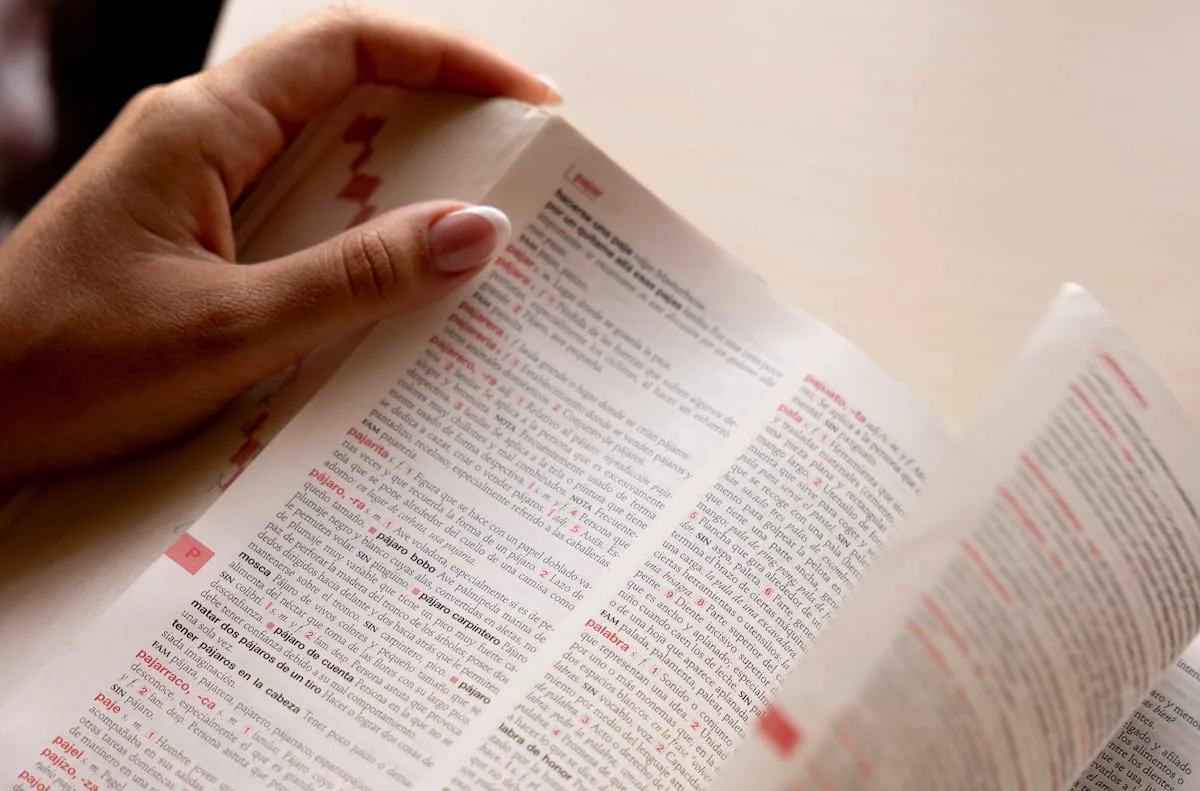
After a booming spring, summer will soon arrive with its metallic blue light. The world renews itself every second, but what about language? Beyond dictionary updates, which officially stamp terms like “farlopa,” “milenial,” or “hashtag,” many books about words have been published recently. These are works of different kinds, but they share a common thread: they offer reflections on the current need to refresh language. As Pier Paolo Pasolini said, the world that words must build is the world we live in.
Read more Peridis: explosive artifact
These include publications such as The Word That Conquers Death, by Rob Riemen (Taurus); You Shall Not Speak. Empire, Identity and the Politics of Language, by James Griffiths (Alianza); Dictionary of Obscure Sorrows, by John Koenig (Capitán Swing); The Names of the World, by Ewan Clayton (Siruela); 20 Reasons to Love Linguistics, by Lorena Pérez Hernández (Plataforma); What Language Hides, by various authors (Filosofía&Co); The Word That Builds the World, by Pier Paolo Pasolini (Altamarea), or the re-edition of Michel Foucault’s classic The Order of Things (Siglo XXI).
“Language does not create reality. It does not create matter. But it does create a halo of visibility around certain elements or events in the world and removes others from our field of attention, thus helping us to coordinate in a specific direction to influence our environment both positively and negatively. One only has to analyze the recent speeches of international leaders to confirm this. Saturating headlines with hyperbolic threats, such as ‘An entire civilization will die tonight,’ clearly does not improve the world. Creating linguistic frameworks for negotiation, cooperation, and mediation, does,” reflects Lorena Pérez Hernández, professor of English Philology and doctor in Cognitive Linguistics at the University of La Rioja.
Foucault already warned that power produces truths and silences things. We must be attentive to the danger that official discourse — or what is now called “narrative” — identifies with an absolute social fact, as if current events were exclusively defined by the word cruelty: in Trump’s rhetoric, some of the most used verbs are annihilate, crush, destroy, and win. “One of the biggest casualties of the Trump administration has not been, as the old saying goes, truth — which is the first casualty of war. It has been words,” historian Mary Beard recently denounced on the BBC.
Given the current corruption of words like freedom or greatness, Rob Riemen advocates for moral and cultural resistance. “Protecting the meaning of words is fundamental. The danger arises when words lose their meaning, and people don’t truly know what is being talked about. That’s when politics transforms into voices that only offer propaganda and more propaganda,” he reflects in a phone conversation.
Against this, the Dutch thinker advocates for a grammar of life, for the use of words like forgiveness, which in one stroke “manages to bend death, breathing life into the person who receives it,” he states.
Of your tongue and mine
To utter or hear terms like forgiveness or thank you, if from the heart, can imply a transformation between one person and another. It’s not that strange. Human beings are eminently linguistic, and a word can save or hurt us.
And when words that fit what one wants to express cannot be found, one must resort to imagination. This is the case of writer John Koenig, who decided to create and share concepts he devised, upon realizing that many things he felt had no faithful reflection in the language in circulation. Thus, first in a blog and, later, in his book Dictionary of Obscure Sorrows, Koenig invented, for example, the term sonder —the feeling that every person you pass on the street has their own life and is the protagonist of their own story—; anemoia —when you look at old photos and feel a pang of nostalgia for a time you’ve never lived—; or ellipsism —the sadness of not knowing how the History of humanity will end—. In several interviews, Koenig has confessed that the driving force behind his dictionary was his fascination with expressions like duende in Spanish, saudade in Portuguese, or hygge in Danish, which do not exist in English.
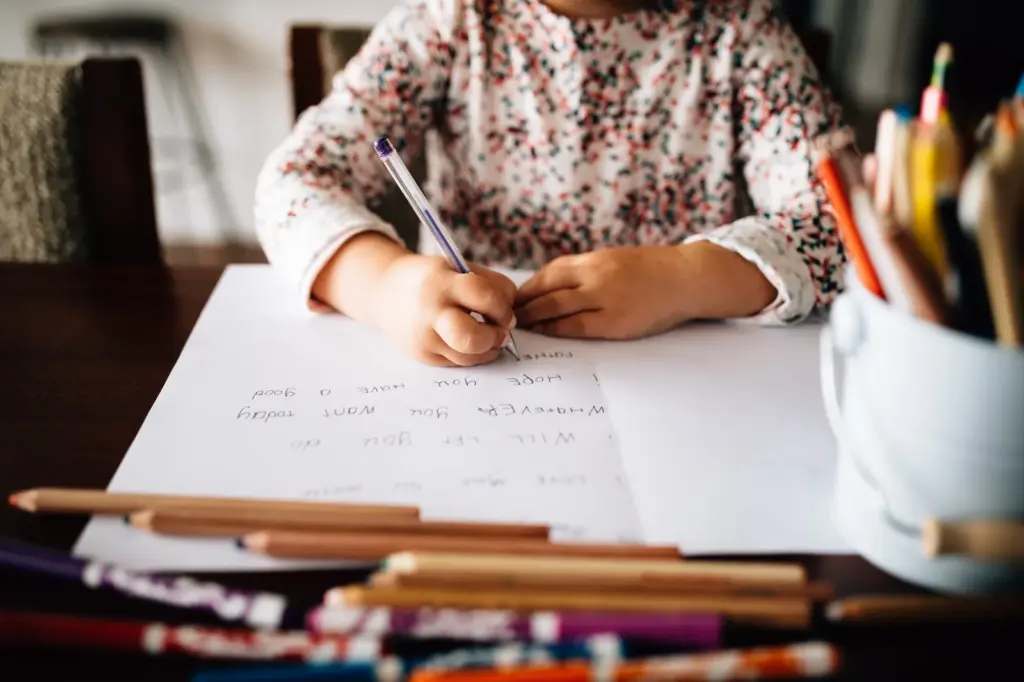
Over time, Koenig’s word sonder took on a life of its own on the internet, where it is estimated that more than 251 million emails and 18 million text messages are sent every sixty seconds. This astonishing network that connects us to each other represents a systemic change in writing, which implies a certain reordering of thought, according to Ewan Clayton, author of The Names of the World. But he is optimistic, and does not believe that handwriting will ever disappear, nor conversation. Probably, everything adds up. “Written text reproduces speech; it is both less and more than speech: it does not record intonation, speed, volume, gestures, or facial expressions, elements that help us interpret the nuances of spoken word meaning,” reflects Clayton.
From ‘fardialedra’ to ‘AI-zofia’
Words, as we know, come and go. The RAE has withdrawn more than 2,700 words from circulation that reflected an era that has passed. These are terms like demoñejo —of the devil—, palacra —gold nugget—, or fardialedra —loose change—. At the same time, other fiercely contemporary words are already circulating on the street, such as eco-anxiety, AI-zofia, and viral.
When it comes to using one or the other, it’s not foolish to consider which linguistic paths are chosen to travel. Because writing and speaking build —and also destroy— worlds. Language as a communication mechanism “is useful and at the same time dangerous.” “But where it truly excels is as an instrument of conceptualization, coordination, and action and, therefore, as a means to exert influence, power, and change,” indicates Lorena Pérez.
The Russian language has the word skloka, which means despicable hostility, the personification of an evil spirit of one group against another, dragged down by moral baseness. As things stand today, perhaps it is good to identify that feeling and monitor it, before we drown in mountains of skloka. We will have to reflect on the words we use. It is a tremendous power. In their freedom, each person has the capacity to think for themselves. Nothing and no one else does that. And least of all, machines.
Read more Spain has more missing persons due to terrorism than Northern Ireland