



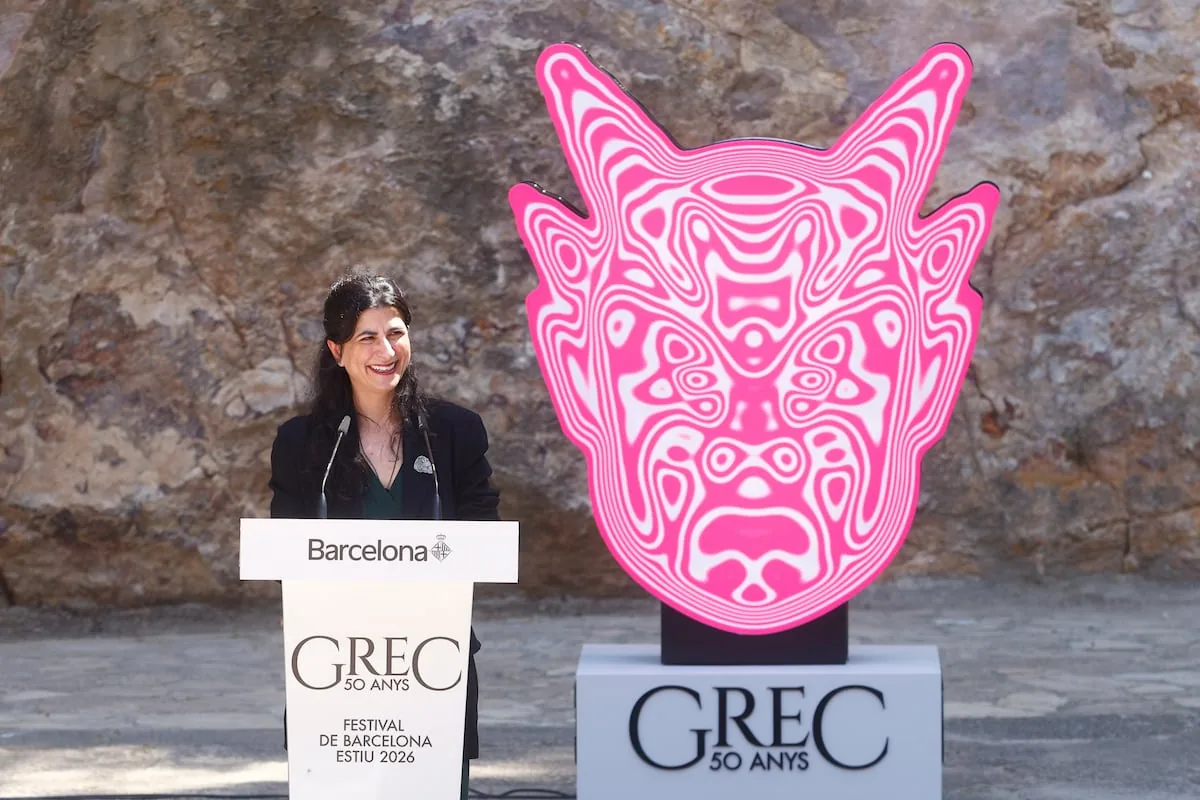
The 50th anniversary Grec, which will open on June 29 in the amphitheater with L’òpera de tres rals, a production that will later open the Lliure season (which celebrates the same years), will offer 99 shows, 38 of them co-productions, with names of creators such as Calixto Bieito, Àlex Rigola, Angélica Liddell or Anne Teresa de Keersmaeker. The program of Barcelona’s great summer event, presented today in the amphitheater under a scorching sun and with a complimentary cap for attendees, by mayor Jaume Collboní, the Culture councilor Xavier Marcé and the festival director, Leticia Martín, includes a documentary about the spirit of the Grec that started in 1976 by four film directors, Sílvia Munt, Núria Giménez, Jaume Claret and Mar Salicrú and in which voices of veterans from that first initiative such as Mario Gas can be heard. Grec 50 also includes an unprecedented collaboration with the Sagrada Familia: the concert titled Arrels de llum, the result of another anniversary synergy like that of the Lliure, Gaudí’s centenary. In total, there will be 43 theater shows, 19 music shows, 22 dance shows, 7 circus shows, 4 film screenings and 4 artistic installations, for which 197,344 tickets will be put on sale, 36,706 for the Teatre Grec, the epicenter of the festival and one of its 58 venues. The image of the faun, the festival’s icon, this year is an abstract psychedelic mask that connects with the aesthetics of the seventies.
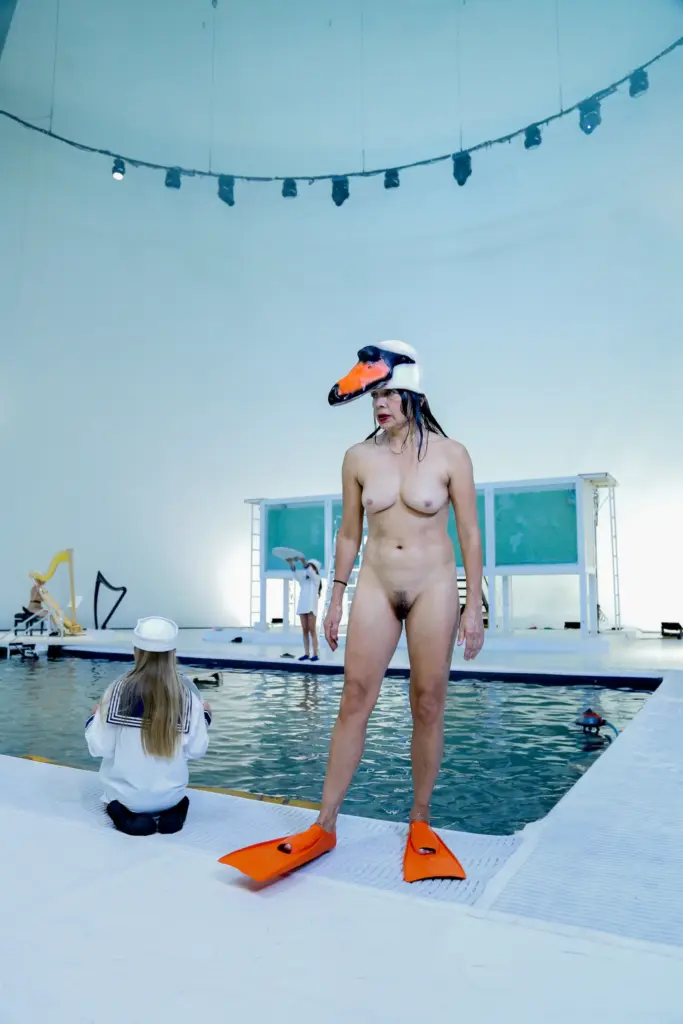
Among the most notable shows in the enormous and joyful potpourri of the program, apart from the inaugural one which is a revision by Marta Pazos of Brecht/Kurt Weill’s classic musical with Nao Albert leading the cast and musical direction by Dani Espasa, are La verdadera historia de Ricardo III, Shakespeare adapted by Calixto Bieito by the Teatro San Martín of Buenos Aires, with dramaturgy by Adrià Reixach and with Joaquín Furriel as the deformed and evil protagonist (in the amphitheater, July 10 and 11); another Shakespeare, this one by Rigola, who adapts Somni d’una nit d’estiu (what better work by the Bard for the summer festival) mixing it with Andy Warhol’s factory and moving the Elizabethan forests to the sixties (Heartbreak Hotel theater, all July); Brel, by Belgian choreographer Anne Teresa de Keersmaeker and her company Rosas, based on Jacques Brel’s songs (July 16 and 17, amphitheater); Liddell with her piece on Mishima, Seppuku, which will be performed at the Lliure de Montjuïc on July 24, 25 and 26 at 4:45 in the morning; or the suggestive mix of “dance, acrobatics and extreme actions” to explore the myths of water and femininity with obvious references to mermaids and the drowned Ophelia from Hamlet titled Ophelia’s got talent, by Austrian director, choreographer and performer Florentina Holzinger (July 2 and 3, Lliure Montjuïc).
Also, Mal Pelo, which revives its choreography Inventions to dance for the first time in the amphitheater, the Tao Dance Theater, the flamenco fusion of Yerai Cortés’s new album, the mix of Arab and Western poetry in Ghazal (poema d’amor) with Refree and Ben Selim Moon, Cançons del Grec (selection of songs heard in the amphitheater throughout the festival’s years) or La nit del musical alt, a revision of the history of musicals and democracy that returns after the success of the last edition, all in the same amphitheater, as well as the proposal Les flors prohibides, a musical project to help Palestine; or the concerts by Sébastien Tellier and Roger Mas with the Cobla Sant Jordi Ciutat de Barcelona.
Other interesting proposals are Wasted Land, by South African Ntando Cele based on T. S. Eliot’s poem, which explores with theater, video and poetry waste management in a world in climate crisis where the poet’s wasteland resonates (Lliure Montjuïc), Muljil, by the South Korean collective Elephants Laught, a show about resistance and fragility inspired by the traditional Korean divers haenyeo from Jeju Island and which presents the performers submerged in water tanks (Lliure) or, without leaving South Korea, 1 degree Celsius, by choreographer Sung Im Her, which also reflects on the climate emergency (Mercat de les Flors). Also at the Mercat, Cameroonian choreographer and dancer Zora Snake with Combat des lianes, and the Hofesh Shechter Company with Theatre of dreams.
Two internationally renowned names will be present at the Grec: Christiane Jatahy, with Un julgamento, based on Ibsen’s An Enemy of the People and for which each performance will create a jury of eleven spectators, and Romeo Castellucci, of whom a small installation will be offered at the CCCB, Creure en les màsqueres. Also at the CCCB, La mateixa diferencia, an approach to what dance can contribute to gender and sexual discomforts, with sociologist Miquel Missé, playwright Jose Troncoso and creator Leo Castro under the direction of choreographer Pau Aran. At the Teatre Romea, a unique proposal, El retrat de Dorian Gray with Àngels Gonyalons playing all the roles. And at the TNC, Flaubert’s Madame Bovary transformed into a contemporary opera by Carme Portaceli, with a libretto by Michael De Cock and music by Harold Noben. At the Poliorama, Emma Vilarasau in La truita, a comedy about a family meal directed by Ferran Utzet.
Open-air cinema returns to Sala Montjuïc (Flores para Antonio, Sirat) and there will be no shortage of circus (La gran plantada, by Circ d’Hivern under the direction of Escarlata, Ceramic Circus, or the Finnish Portmanteau) or shows for family audiences (especially at SAT!). The Apolo theater incorporates a Japanese taiko drum show into its program. Linking with the history of the Grec and the fight for freedoms, Macba and the La Model memory space present a work that revisits a clandestine action by Carles Santos and Pere Portabella during Franco’s regime, Asia-heavy metal (July 16 and 17) created and performed by international violinist and performer Asia Jiménez.
At the presentation, Jaume Collboní emphasized that the festival wants to preserve the nonconformist and transformative spirit of the first Grec, which “was the battering ram that shook everything,” and recalled that year 1976 of so many airs of freedom. “Counterculture was demanding its place and demanding access to culture for all,” he recalled, “while actresses and actors, directors were conspiring to blow up the billboard of the Franco era.” He recalled the motto “teatre al servei del poble”, the seven hours of rock and the police arrests and that amphitheater without cushions where one had to sit directly on the stone steps. He also recalled that the Lliure was born then, “which remains a benchmark,” and wanted to thank those who made those initiatives possible. Of this year’s program, he pointed out that it mirrors previous editions and revolves around great scenic names, the voice of emerging artists, co-productions from venues and the city’s cultural fabric, and the interrelation with other major institutions. He highlighted the great moment theater is experiencing in Catalonia with more than three million spectators (“the Grec expresses the love Barcelona feels for theater”), the emergence of new venues and, in general, the growth and cultural effervescence that manifests itself in museums, cinema “and in that Sant Jordi that is already perceived in the atmosphere.”
The mayor compared the times of the first Grec with the current ones, with the caveat that the festival came from dark times and fought in an advanced way to leave them behind; today’s battle is one of resistance so that the darkness looming “over the world and our home” does not prevail. In that sense, he expressed hope for culture as a generator of spaces of freedom.
For her part, the director of the Grec urged not to fall into nostalgia for the 1976 Grec but to turn it into an incentive and a tool to look to the future.