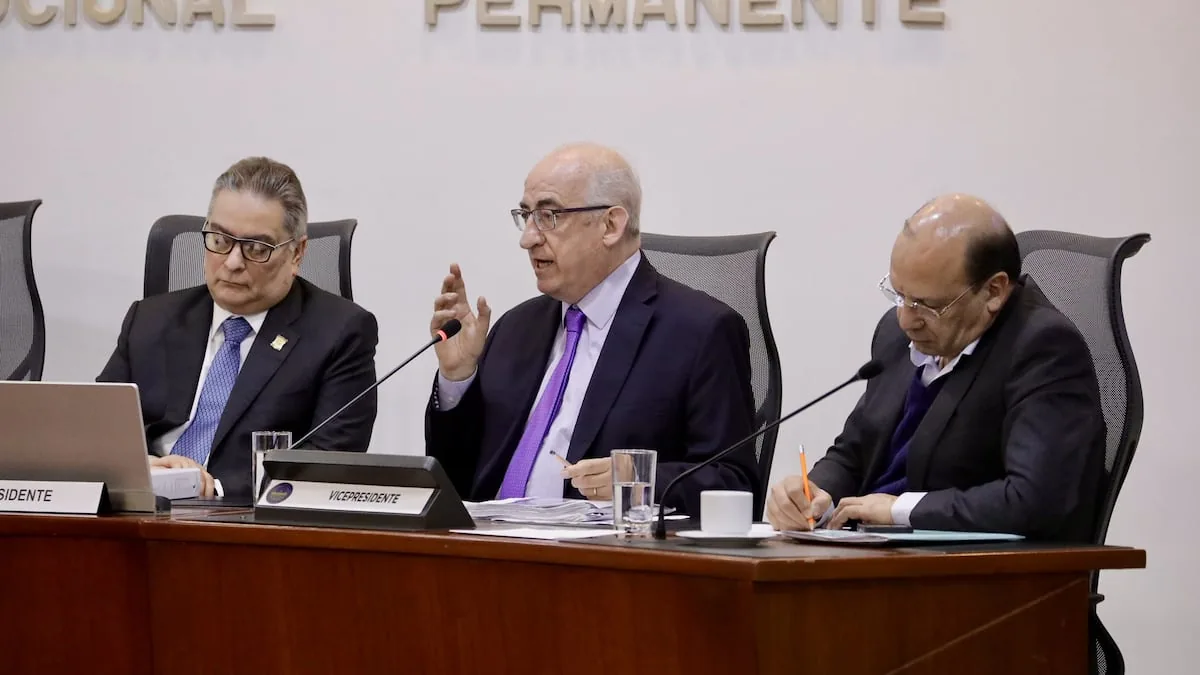







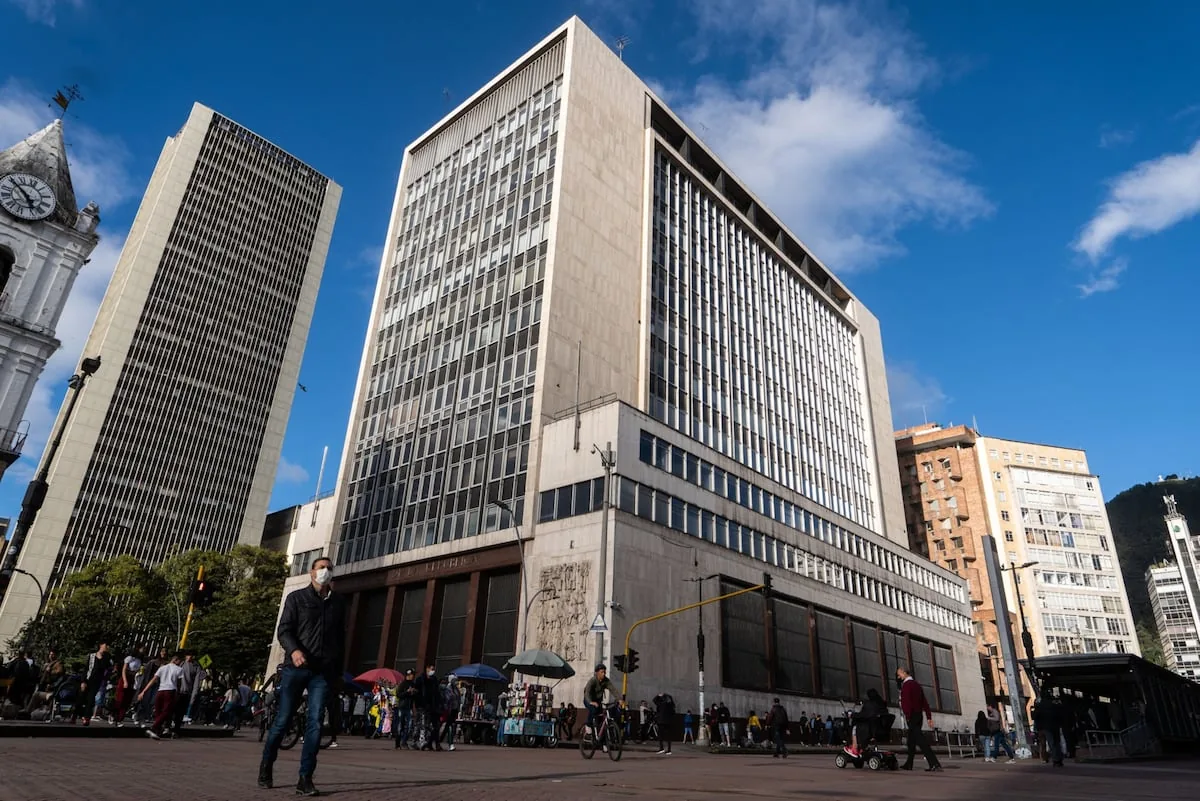
Leonardo Villar, general manager of the Banco de la República, has refused to attend this Tuesday’s forum, in which the Government of Gustavo Petro questions interest rate decision policies, which it considers “restrictive and orthodox”. In a letter made public this morning and addressed to the Minister of Finance, Germán Ávila, the general manager of the Central Bank highlighted that his absence is not an agenda problem: it is the “context in which it takes place”. The event, called “Monetary policy in a progressive context”, is held nine days before the next meeting of the Bank’s board of directors, where they must make a new decision on interest rates. That meeting, scheduled for next Thursday, April 30, is full of suspense given that it is unknown whether the Bank will be able to convene.
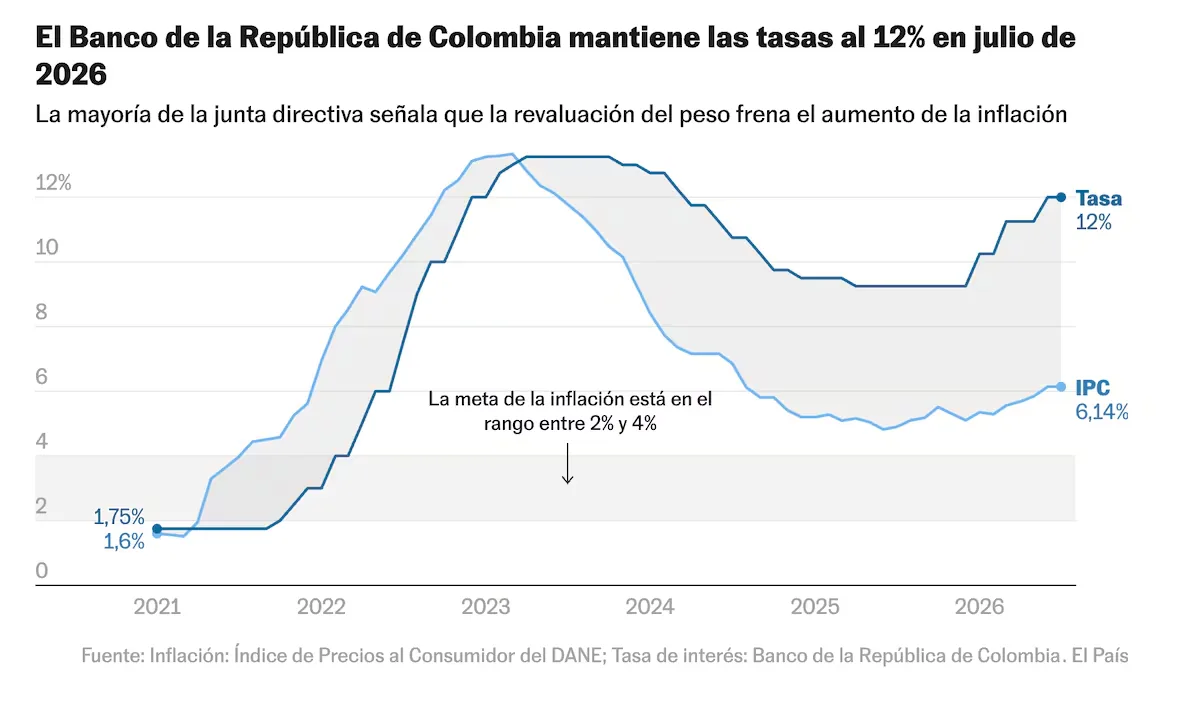
The tension between the Government and the Central Bank reached its climax on March 31. That day, the Board approved a 100 basis point increase in the interest rate —the second consecutive so far this year, which left the indicator at 11.25%— and Minister Ávila’s seat ended up empty. The head of the portfolio abandoned the meeting while it was still in progress, called his own press conference to make the announcement that the general manager always makes, and accused the central bank of making decisions “in favor of the financial system”, an argument shared by President Petro.
Since then, the Government has publicly questioned the legitimacy of the board, which has enjoyed independence since the 1991 Constitution. In his letter, Villar responded that these statements constitute “an unfounded accusation and openly contrary to the truth”, and that they make it difficult “to maintain fluid dialogue in the search for the most appropriate policies” to fulfill the constitutional mandate of the Central Bank, which is to maintain the purchasing power of the Colombian peso.
What the forum program reveals, however, is that the Bank’s position is not monolithic. While Villar rejected the invitation, two co-directors of the Central Bank —Laura Moisá and César Giraldo, appointed by President Petro at the beginning of 2025— appear as participants in the afternoon academic panel, titled “Monetary policy: between orthodoxy and heterodoxy”.
The rift is increasingly visible. Throughout this week, both Villar (in Bloomberg, somewhat atypical for him, rather reluctant to the media) and Mauricio Villamizar, co-director appointed by former president Iván Duque, who has defended the Board, the general manager, and the central bank, have spoken in the media. Thus, the debate is fueled by concrete intellectual efforts.
The forum’s international panel brings together Daniela Gabor, a professor at the University of London specializing in finance and development; Isabella Weber, from the University of Massachusetts Amherst, known for her work on cost inflation and the role of the State in prices; Matías Vernengo, director of the Bucknell Institute for Public Policy; and former Ecuadorian president Rafael Correa, a fugitive from justice in that country. That first panel is moderated by Simón Gómez Azza, director of the alternative Centro de Pensamiento Vida.
Read more Do you know the defendants? Would you like to meet them?
All share a premise: central banks should not limit themselves to controlling inflation, but rather assume an active role in employment, investment, and productive transformation. This is the heterodox current that the Ministry of Finance has embraced as a conceptual framework to question the Central Bank’s decisions. Thomas Piketty, Joseph Stiglitz, and Mariana Mazzucato, initially announced by Ávila and who are some of the best-known economists in the world, do not appear on the definitive agenda. “We will continue working towards a truly productive, not speculative, economy, and questioning what is done in monetary matters is the first step to making it a reality,” the minister emphasized when inaugurating the event, also questioning Villar’s refusal to attend the forum.
Villar does not share Ávila’s diagnosis, as he states in writing. He rejects the Ministry’s characterization that Latin American monetary policy has been dominated by a neoclassical and neoliberal approach: “I do not share that phrase,” he writes. He cites Venezuela and Argentina as counterexamples of what happens when price stability is neglected, and recalls the lost decade of the eighties, when several countries in the region ended up with hyperinflation, unpayable debt, and stagnation. For Villar, “macroeconomic stability and inflation control are prerequisites for economic development.” And he clarifies that those who suffer most when prices skyrocket are those who have the least, that is, the poor.
There is a paragraph in the letter that, read alongside the Colombian electoral calendar (the first round of presidential elections is in six weeks), is particularly tense. Villar writes that “it is understandable that governments seek looser monetary policies when their objectives are short-term, due, for example, to the proximity of elections.” Lowering rates activates the economy in the short term, but 12 or 18 months later inflation arrives and the effect is reversed, he argues. It was precisely to shield itself from that logic that “the 1991 Constitution created an autonomous central bank.” Therefore, he proposes that any future debate take place “after the elections.” Today’s forum closes at 5:30 with words from President Gustavo Petro.
The statutes of the Banco de la República require the presence of the Minister of Finance for the board to be able to convene. Ávila abandoned the March meeting and has left his attendance at the April 30 meeting up in the air. Without him, there is no quorum, and thus, there would be no rate decision. “The possibility that the members of the Board of Directors have to differ from the Government,” writes Villar, “is precisely what defines the autonomy enshrined in the 1991 Constitution.” The Council of State has already admitted a lawsuit seeking to overturn that attendance obligation, but it is unlikely that the ruling will arrive before Thursday. Thus, Colombia arrives at the next monetary policy meeting with the central bank paralyzed by a dispute between two institutions of the same State that see two parallel, diametrically opposed economies.
Read more Follow live María Guardiola’s speech