









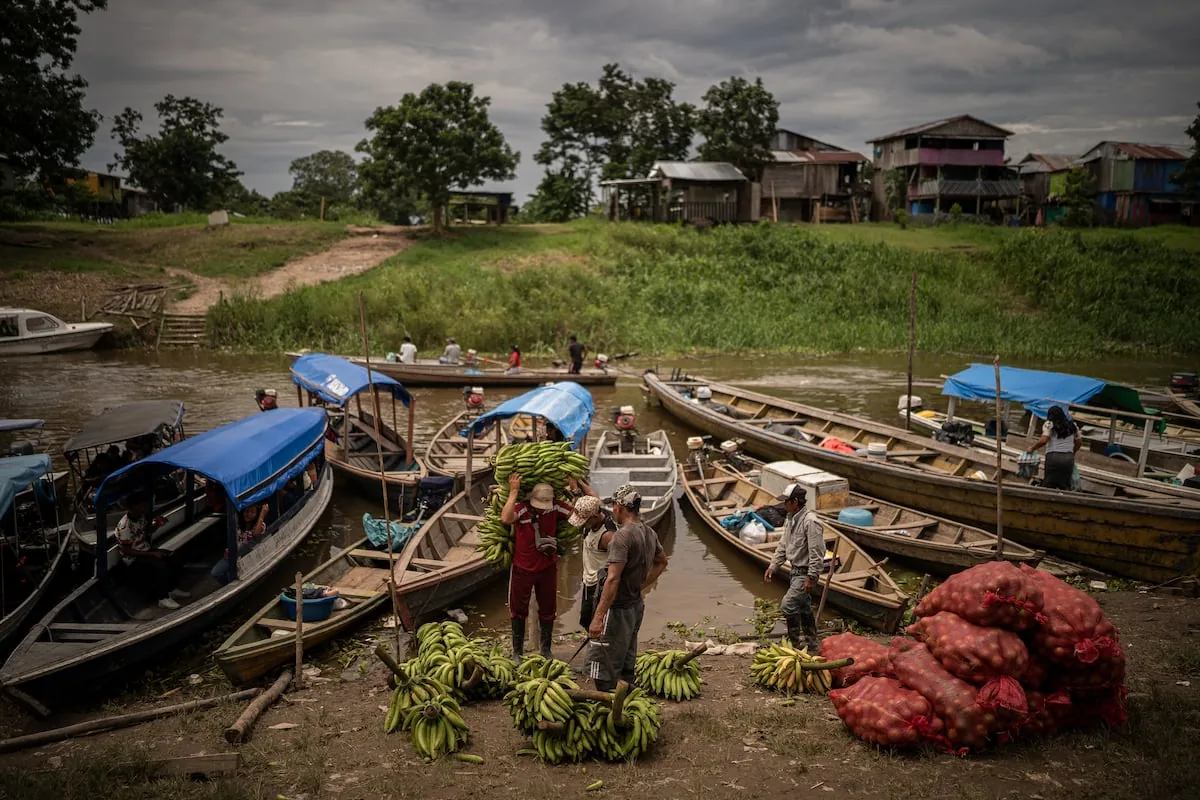
The rural territories of Latin America and the Caribbean are the engine of global development, especially in a scenario where food demand sets the agenda and where, since 2000, the region has been the main food exporter. These territories, described by the Development Bank of Latin America and the Caribbean (CAF) as “a solution region,” also require investment and participation from States, academia, and organizations to address the main deficiencies that historically persist.
Read more The Pope criticizes before Obiang “the will to dominate, arrogance and discrimination”
“It is a strategic opportunity that we cannot miss,” said Alicia Montalvo, CAF’s Climate Action and Positive Biodiversity Manager, this Tuesday in Mexico City, during the presentation of the report Roots of the Future: The New Rural World of Latin America and the Caribbean; a document that highlights the importance of the rural world and future challenges for it to remain a pillar in development and energy transition.
The report, produced in collaboration with El Colegio de México (Colmex) and the Ministry of Economy, also analyzes some historical gaps, such as agricultural productivity per worker being almost double in European and Asian countries, and up to 12 times higher in the United States and Canada. It also points out a low adoption of capital, technology, and more efficient productive practices.
Significant problems persist in the region. Access to basic services is 33% in rural populations, and many members of these communities do not have a bank account or use mobile money. “Only 55% have access to safely managed water; barely 11% of households have adequate sanitation connected to a network; and only 40% of the population lives less than two kilometers from a paved road,” the report says.

The exercise also delves into the transformation that rural populations have undergone, such as aging, falling fertility, and changes in migration patterns. In addition, emphasis is placed on the fact that many workers in the rural world are employed in the informal market, a growing sector. In this regard, the report states that 7 out of 10 rural workers operate there.
Extreme poverty, low productivity, informal employment, and gaps in infrastructure, connectivity, and access to basic services also continue to limit opportunities for millions of people. Women, as in almost all areas and territories, face “enormous” gender gaps. The report, for example, makes it clear that they bear “a very heavy burden.”
Read more Grupo Anderson’s and Fundación Unidos join forces for inclusion, creativity, and food
But the in-depth analysis carried out by CAF, together with Colmex, also includes the solutions that should be implemented to boost the rural sector. “These territories can contribute decisively to the region’s growth, food security, environmental sustainability, and social cohesion,” says Sergio Díaz-Granados, CAF’s Executive President. “To fully harness this potential, we must invest in infrastructure, services, technology, connectivity, and opportunities that improve the quality of life for millions of people in the rural world.”
The document then proposes a roadmap to transform the potential of the rural world from a vision of sustainable and inclusive development. “This agenda combines productive, social, and infrastructure policies,” it states. “In the productive sphere, it promotes technological adoption, digitalization, diversification, and value addition, along with strengthening the governance of natural resources. On the social level, it emphasizes the need to expand social protection and develop capacities to access higher quality jobs. In terms of services, it underscores the urgency of closing gaps in both access and quality.”
The case of Mexico
Mexico, according to the report, concentrates a quarter of the entire region’s rural population. But circumstances vary from the rest of the territory. José Alfonso Iracheta Carroll, Undersecretary of Territorial, Urban, and Housing Planning, stated that the country once had almost 70% of its territory owned by ejidos, and that it is now almost 62%.
Iracheta highlighted that one of the main problems in the country is the disinterest of young people and the lack of attachment to territories and land. He stressed, however, that there are two important programs in Mexico to boost the rural environment. One, through agrarian policy and economic support, seeks to generate legal certainty for workers and farmers, as well as ejido members. The second is related to access to better housing conditions. “The Ministry of Agrarian, Territorial, and Urban Development (SEDATU) has a program for self-production of rural housing in the countryside,” he noted.
Furthermore, Iracheta assured that in Mexico, people subject to agrarian rights are still mostly men. Until a few years ago, their percentage was 80%, and although women have gradually been integrated, there is still work to be done for equity. “The most relevant program in agrarian matters is to strengthen the gender focus,” he said.
Read more The UK Parliament approves law that will ban smoking for anyone born after 2008