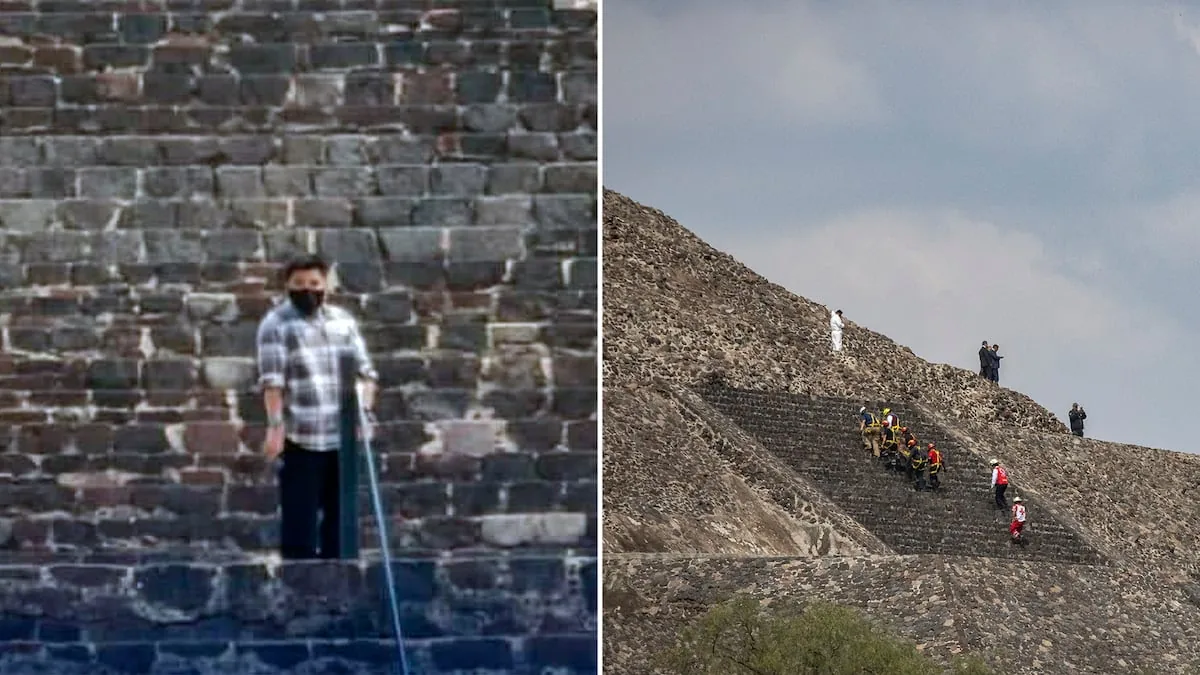








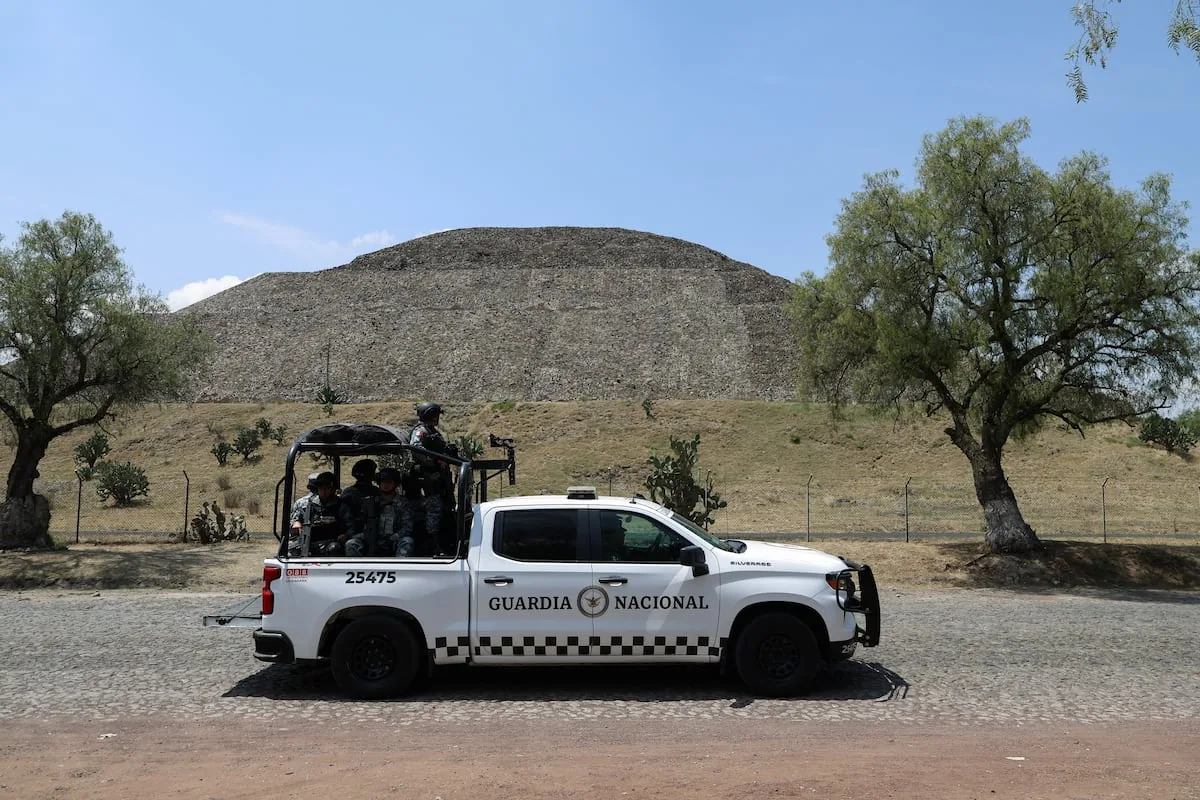
What recently happened in Teotihuacán —a shooting that left one tourist dead and more than a dozen people injured— cannot be read as just another episode of violence. Mexico has been dragging a persistent crisis of firearm homicides for years. But indiscriminate attacks, directed against random people in public spaces, respond to another logic: they are closer to the pattern of mass shootings that have marked the United States in recent decades.
Read more Bogotá tests its aqueduct improvements ahead of a new ‘El Niño’ phenomenon
Just a few weeks ago, we warned that the Columbine High School massacre could be “crossing the border,” following a school shooting in Michoacán at the end of March. What happened now in Teotihuacán —less than a month after that signal— suggests that the hypothesis was not rhetorical, but a looming possibility.
The distinction matters. While criminal violence in Mexico is usually rooted in illegal economies, territorial disputes, or organized structures, indiscriminate shootings respond to another logic: they are often fueled by imitation, the search for notoriety, and diffuse radicalization processes. In that sense, they are phenomena with their own dynamics, requiring equally specific responses.
For years, academic literature has documented the so-called “contagion effect.” A widely cited study by Sherry Towers, published in PLoS ONE, finds evidence that mass shootings are not completely independent events: each incident temporarily increases the probability of another occurring in the following days. The phenomenon has been described as a process of social diffusion, in which media exposure plays a central role.
Added to this is another line of research. Criminologist Adam Lankford has documented that a significant proportion of perpetrators seek public recognition. In this context, media coverage —when it emphasizes names, faces, or manifestos— can, even unintentionally, fuel imitation incentives.
This is not about suggesting a simple causality or shifting responsibility to the media, but about recognizing that these events are part of social ecosystems where information, notoriety, and repetition have effects.
Mexico still has time to prevent this phenomenon from consolidating. Unlike the United States, where mass shootings have unsettlingly become part of the social landscape, in Mexico, this cultural inertia has not yet settled. But the window of opportunity is narrow.
There are at least three immediate lines of action.
The first is communicational. Media and authorities should adopt clear guidelines for covering these events: avoid glorifying the perpetrator, limit the dissemination of their identity, and focus the narrative on the victims and the community. Organizations like the Global Center for Journalism and Trauma have developed concrete guides in this regard, supported by comparative evidence.
The second is analytical, methodological, and political. Mexico currently lacks a systematic effort to study this specific type of violence. It is not enough to dilute these cases in general homicide statistics. It is necessary to identify patterns, understand motivations, reconstruct individual trajectories, and explore possible links with online radicalization processes.
At this point, it would be pertinent for President Claudia Sheinbaum to promote the creation of an interdisciplinary national committee dedicated to the analysis of indiscriminate shootings. A group of this nature —comprising specialists in security, mental health, sociology, data analysis, and communication— could fulfill at least three specific functions.
- Generate systematic evidence on these events in Mexico,
- Design prevention and early intervention protocols, and
- Issue public recommendations on media coverage and crisis management.
The third line is structural. Avoiding the debate on firearms has been one of the most persistent errors in the United States. In Mexico, where a comparatively more restrictive legal framework already exists, the challenge is less normative than one of implementation. Effective access to weapons —legal and illegal— remains a decisive factor in the lethality of violence. Without firearms, there is no shooting; without availability, there is no mass lethality.
None of this implies ignoring the particularities of the Mexican context. It does, however, oblige us to recognize that certain phenomena —such as imitative shootings— can cross cultural borders more quickly than public policies.
Mexico is not condemned to reproduce the trajectory of the United States. Avoiding it, however, requires more than momentary indignation: it demands anticipation, evidence, and political decision.
The question is not whether these events can multiply. The question is whether the Mexican State will act before they start to.
Read more The dilemma of never returning: the situation of forced disappearance in Mexico