









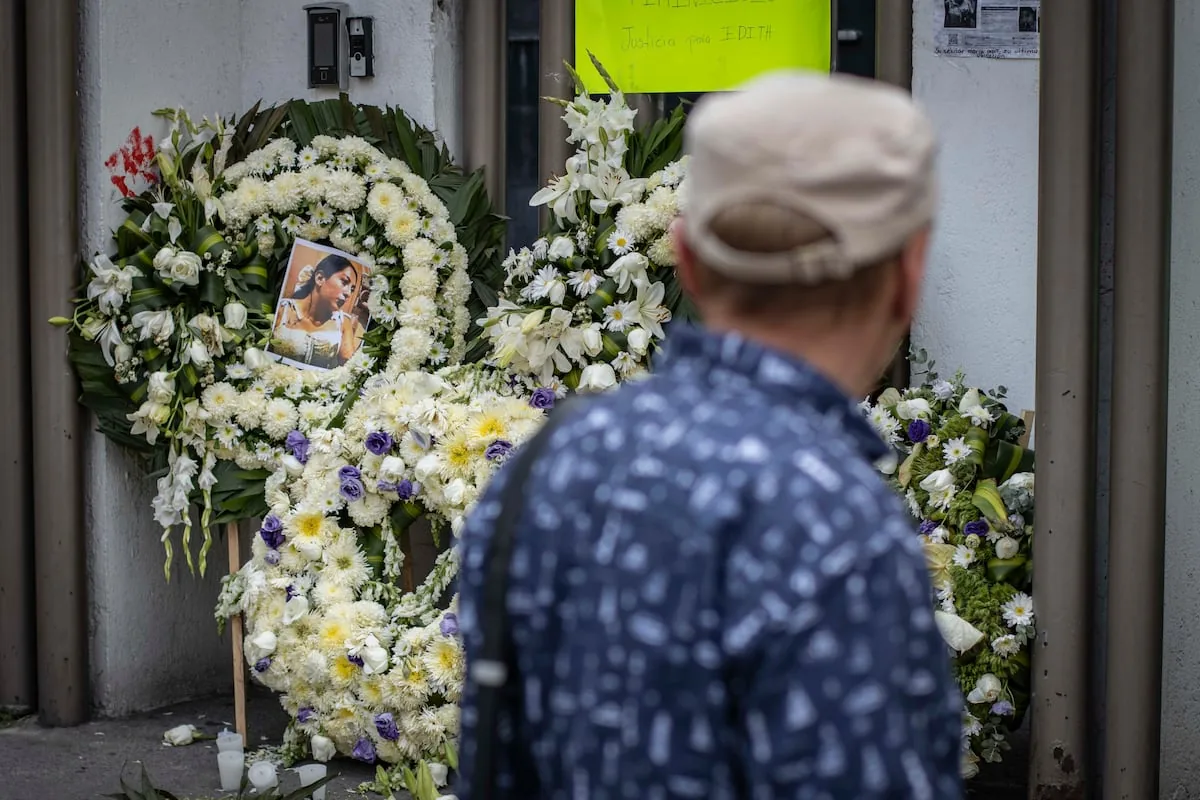
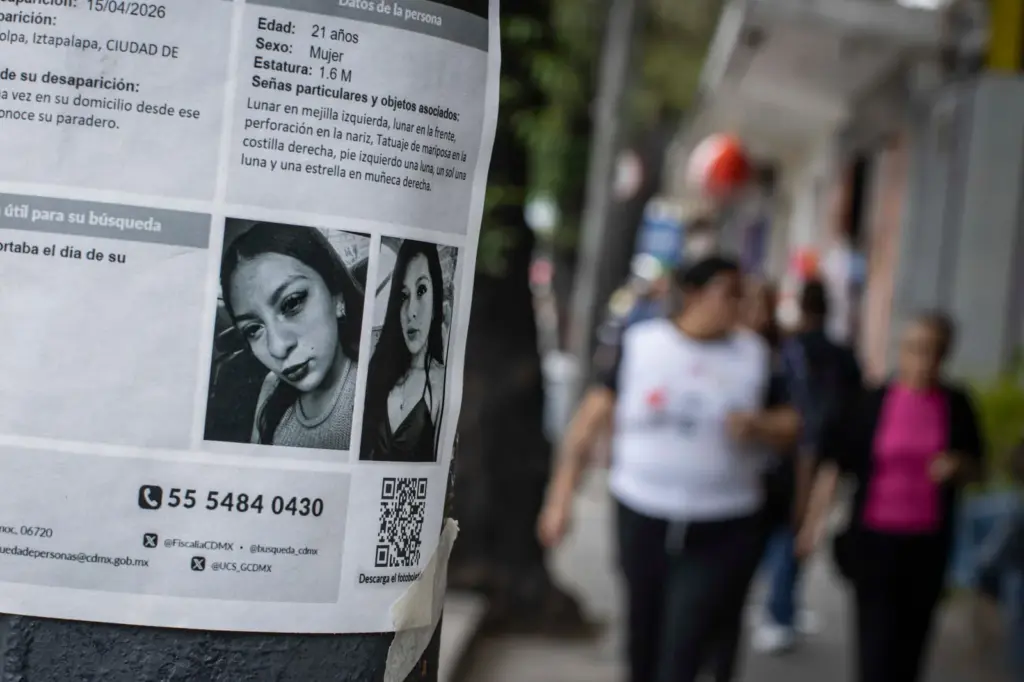
Eight enormous wreaths block the entrance to number 829 Revolución Avenue, in the heart of Mexico City. From the door, a fluorescent sign screams: “No one died here of natural causes. It was femicide. Justice for Edith.” Next to it is still pasted the search warrant showing Edith Guadalupe Valdés, 21, with a handwritten note added: “Her cell phone marks her last location here.” Everyone who passes by stops: the tamale vendor, the one carrying the trash cans, the neighbors walking up and down the street, those making copies next door, those going for the bus and to their office. They look, they read, some take photos, they also cross themselves, they say: “It’s terrible.” A young woman entered a building on one of the city’s main streets for a job interview and never came out again. The family notified the Prosecutor’s Office of her last known address, but the agency didn’t arrive to search for her until a day later. They found her, under a pile of sand, already dead. “It’s unbearable,” they murmur before moving on.
The case of Edith Guadalupe Valdés has highlighted the repeated, endlessly recurring failures of the country’s Prosecutor’s Offices. Agents took hours to interview her mother, then ignored for an entire day the location she shared about where her daughter was last seen, and when they arrived, they took another host of hours to enter the property. These are the errors acknowledged by the Mexico City Prosecutor’s Office itself; those reported by the Valdés family go further and include officials who asked them for money “to expedite the search for cameras,” who falsely told them they had to wait 72 hours before reporting, who paid no attention until they blocked Revolución day and night, who suggested — once again, for yet another woman — that she must be with her boyfriend.
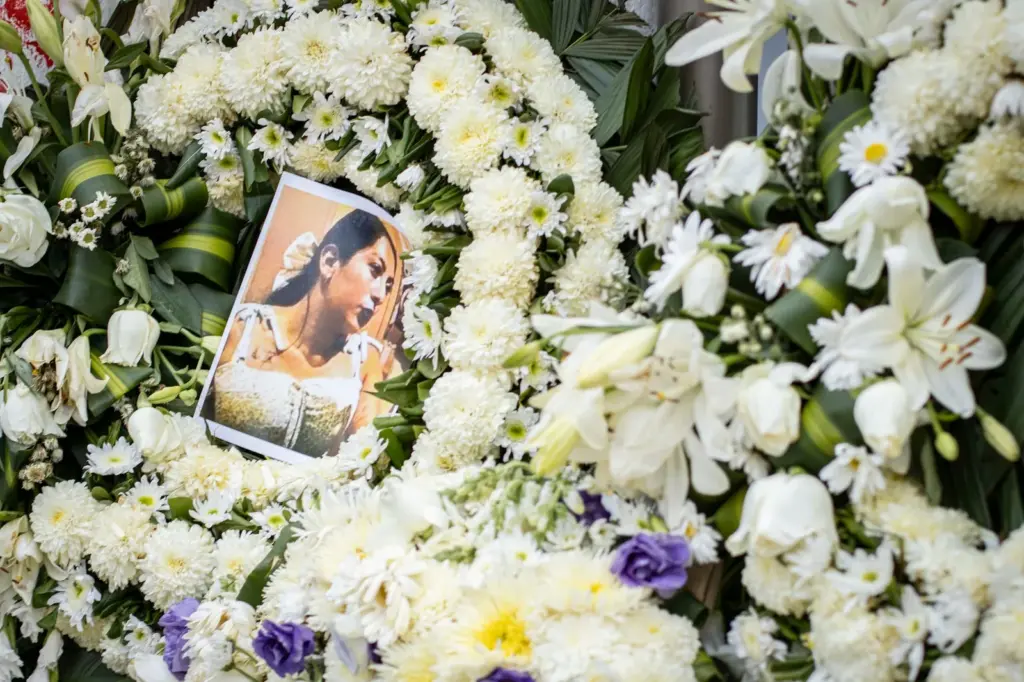
Edith Guadalupe’s story is not new in Mexico, a country where 2,800 women were killed last year alone, but it is equally outrageous. The family’s rage has been so widely shared that it has led prosecutor Bertha Alcalde to acknowledge that her agency’s omissions were “unjustifiable,” so “unacceptable” that the Head of Government, Clara Brugada, has announced that three officials have already been suspended while the Internal Affairs Unit investigates what happened, so “regrettable” that President Claudia Sheinbaum has asked to “clarify everything related to this young woman.” Edith Guadalupe’s murder has exploded directly in the face of the Fourth Transformation’s feminism.
The three female leaders promised justice for women upon their arrival to power, because the crimes affecting them reach 95% impunity; however, the officials under their charge continue to repeat old patterns, mishandled and criticized from previous governments. The paradox also seeps into the streets. In front of Edith’s memorial, three women gather; they don’t know each other, but they agree on the “painful” nature of the case, on the fear, on the risk Mexican women face even when taking precautions like sending their location and staying in permanent communication with their family. After lamenting, one of them points out: “And we have two female heads of government, Brugada and the president, and still they don’t act more.” The other woman, Edna, replies: “What do you mean by that? Running a country is very difficult, this is not the president’s fault, it’s about sick people.”
Just a week ago, Claudia Sheinbaum mentioned in her morning conference the Netflix series La Fiscal, in which journalists Paula Mónica and Miguel Tovar document the arrival and work of lawyer and activist Sayuri Herrera as the Femicide Prosecutor of Mexico City. The president said that this production shows “how Ernestina Godoy transformed the investigation into femicides to be able to detain those responsible” and how that experience from the city should be extended nationwide. It has been more than two years since Godoy left the capital’s Prosecutor’s Office — one year since Sayuri Herrera’s departure — and families continue to demand the same thing: that they stop being the ones who search, who find their daughters dead.
The chronology
So far, there is one detainee for the murder of Edith Guadalupe, Juan Jesús N, 21, a security guard at the building. What has been reconstructed from the recordings and the Prosecutor’s Office investigations indicates that the young woman left her home in the Iztapalapa borough on April 15 at 4:26 PM. She traveled by ride-sharing motorcycle to Torre Murano, arriving at 4:45 PM, because she had been called for a job interview 15 minutes later. That is the location her family has.
Read more Calling Pablo Escobar’s lethal control of hippos ‘murder’ is unfair
The cameras at number 829 Revolución stopped recording from 4:23 PM until 5:44 PM. This is the time window in which the Prosecutor’s Office believes the young woman was killed. At 11:00 PM, the family arrived at Torre Murano, spoke with the security guard, and showed him Edith’s photo; he denied that she had entered the building. From there, the Valdés family moved at 1:00 AM to the Search Center of the Mexico City Prosecutor’s Office. Her mother, Claudia Itzel Saldívar, was interviewed at 4:25 AM. She clearly indicated the Revolución address, but the agents changed shifts at 9:00 AM without communicating anything about this location.
On that day, April 16, the agents carried out procedures for things they already knew: they went to the young woman’s house, looked for camera footage of her leaving on the motorcycle, consulted the transport application to find out who the driver was, called hospitals and emergencies, disseminated the search warrant… Everything except going to number 829. The family insisted and insisted and ended up blocking Revolución Avenue. It was then, at 8:30 PM, when the Prosecutor’s Office agents appeared at Torre Murano.
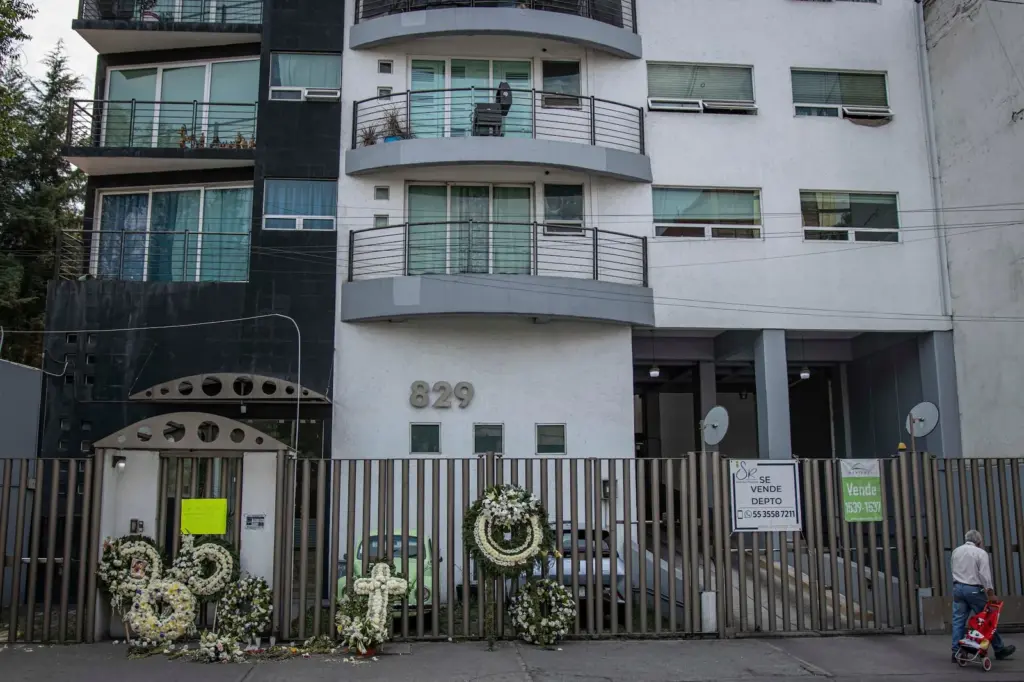
However, when they arrived, they also couldn’t enter, because procedures had to be done with the building administrator. These took more than four hours. The Prosecutor’s Office entered the place Edith never left in the early hours of Friday: they found her body in the basement, and from there, blood in the security guard’s booth and on the stairs, the victim’s cell phones in the electricity meters of Tower B of the building, Edith’s bag and a screwdriver in the drain, a long-sleeved men’s T-shirt with bloodstains, cleaning products in the basement. After interviewing him, they arrested the security guard.
“He had total control over access to the property, parking, and camera system. That disconnection of the cameras can only be done from the building’s security booth,” the prosecutor stated. “The guard had injuries on his hand and scratches on his abdomen, which are consistent with the injuries observed on Edith’s body. Her cause of death was from stab wounds to the chest, with a screwdriver-like object,” Alcalde continued. “His subsequent behavior is relevant: he denied the victim had been there, he was observed by the next shift’s guard performing unusual cleaning with buckets and mops. The cleaning employee located a wallet belonging to Edith in the trash can of the booth’s bathroom,” the official added.
In its line of investigation, the Prosecutor’s Office maintains that the security guard assaulted Edith after an “altercation” and dragged her body from the first floor to the basement. Afterwards, he cut the cameras on three other occasions, during the early morning, at 1 AM, 3 AM, and 5:10 AM, using those minutes to move her, clean, and hide evidence. “Today we have three clear things: first, a solid line of investigation with one person detained; second, a reconstruction of the facts that continues to advance,” concluded Bertha Alcalde: “And third, an internal review underway for failures that should not have occurred.”