








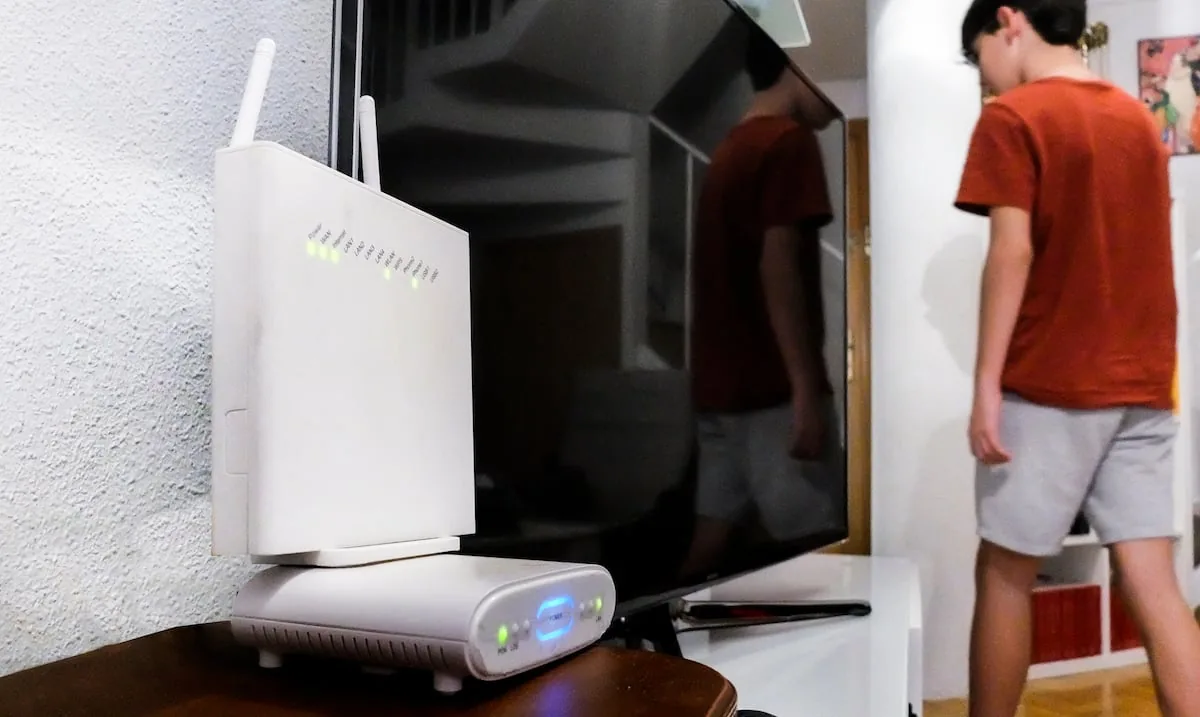
The Ministry for Digital Transformation and Public Function will establish a mandatory minimum bonus of 25% on telecommunications tariffs for low-income citizens within the new Universal Telecommunications Service that will come into force in 2027. According to the draft royal decree accessed by EL PAÍS / CincoDías, the measure will expand the umbrella of social protection to beneficiaries of the minimum vital income (IMV), which means extending these reduced tariffs to nearly 800,000 households nationwide.
Read more Riki Blanco: a family, an atomic bomb
The document, which will be released for public hearing this Wednesday, redefines the conditions of the universal telecommunications service to guarantee the affordability of fixed connection. The regulation imposes on all market operators the obligation to offer these discounts within their coverage area, eliminating the current model where responsibility fell exclusively on a designated operator. The Administration’s objective is that the cost of the service does not imply exclusion for groups with lower economic capacity.
However, and unlike what happens with the electricity bonus, which allows access to much more affordable prices than market prices, in the telecommunications sector there are reduced tariffs so aggressive that they can easily compete with standard prices despite these official discounts.
Minimum speed
Along with price measures, the regulation proposes an increase in the minimum quality of internet access. The speed of the fixed connection included in the universal service will increase from the current 10 megabits per second (Mbps) to a minimum of 100 Mbps. With this update, Spain will become the first country in the European Union to integrate this broadband capacity into the basic services guaranteed by law for the entire population, regardless of their geographical location.
The department headed by Óscar López bases this decision on the deployment of fiber optic infrastructures and 5G mobile networks, as well as on the improvement of satellite network performance. These technologies will allow reaching the 100 Mbps threshold in rural or remote areas where connectivity was previously limited. The regulation thus ensures that teleworking, e-government, and high-definition video call services are available to all users under the framework of the universal service.
End of Telefónica’s exclusivity
The new decree also introduces a structural change in the provision of the service. Telefónica, which until now acted as the sole operator responsible for ensuring the universal service, will cease to have that exclusivity. From the entry into force of the norm, all telecommunications operators will have the legal obligation to offer internet access and fixed telephone service with the quality and price conditions established in the regulation.
This modification allows users to freely choose among the companies operating in their area, always maintaining the right to request the subsidized tariff if they meet the income requirements. The National Commission for Markets and Competition (CNMC) will supervise that the commercial offers of the operators respect the minimum discount of 25% and that there are no technical barriers preventing vulnerable households from accessing these benefits.
Until now, the group entitled to discounts was limited to retirees and pensioners who received a remuneration of a maximum of 120% of the IPREM (Public Indicator of Multiple Effects Income). As the IPREM is set at 600 euros per month, recipients of up to 720 euros were included in the category entitled to social discounts in telecommunications.
Regarding inclusion, the project strengthens the obligations of operators towards people with functional diversity. Companies must maintain a sufficient offer of adapted terminals for users with motor, visual, or hearing disabilities. Furthermore, the text establishes a technical milestone for June 2027: both operators and 112 Platforms must have Real-Time Text (RTT) functionality operational.
This system guarantees fluid and simultaneous text communication for people with hearing or speech difficulties, integrating emergency services into modern digital accessibility standards. The cost of implementing these functionalities must be assumed by companies in the sector as part of their public service obligations, without implying an additional charge for the subscriber with special needs.
The calendar set by the Ministry for Digital Transformation foresees that this new legal regime will come into operation on January 1, 2027. This grace period allows operators to adapt their billing systems and commercial catalogs to the new discount structure and speed requirements. Likewise, the Administration will be able to coordinate with Social Security the necessary data cross-referencing to automatically identify IMV beneficiaries who are entitled to the tariff reduction.
The draft royal decree now begins its public exposure phase to receive contributions from the sector and consumer associations. Once this process is concluded and the mandatory reports have been collected, the text will be submitted to the Council of Ministers for final approval. The measure is part of the state strategy to close the digital divide and ensure that the development of new generation infrastructures translates into an improvement in social and territorial cohesion.
Until the norm is modified, Telefónica must provide the universal service until December 31, 2026, as no company submitted a bid in the last public tender to cover this service. This is already a common procedure, as all previous tenders since the liberalization of telecommunications have been deserted. The reason is that none of the network operators are interested in providing this service, considering it unprofitable, which is why the Government is obliged to designate Telefónica by decree to cover it year after year.
Read more El Roto: relaciones