





The European Union has begun the race against time to unblock the 90 billion euro loan essential to sustain Ukraine in its war against Russia, which had been stalled for months by Hungary. The electoral defeat of Prime Minister Viktor Orbán ten days ago has now allowed this step to be taken, with a preliminary approval at ambassadorial level that is expected to be definitive this Thursday. It would thus arrive in time for the Cyprus meeting, where European leaders are holding an informal summit to which Ukrainian President Volodymyr Zelensky is invited, and from which the outgoing Hungarian ruler has been absent.
At the meeting of EU ambassadors in Brussels, the procedure has also been launched to unblock the twentieth package of sanctions against Russia in the coming hours, which has been stalled since February by both Hungary and Slovakia.
In their meeting this Wednesday, prior to the Nicosia summit, European representatives to the EU have given provisional green light to the multi-billion euro loan that seeks to prevent Ukraine’s economic and military collapse. To speed up the procedures and ensure everything is approved for the Cypriot meeting, they have opted for the “written procedure” formula: delegations with any objection to the loan must express it in writing within approximately 24 hours, until Thursday “afternoon”, according to the Cypriot rotating presidency. A lack of response is considered an approval, so if no objections arrive by this Thursday, the loan will be considered unblocked and the Council (the States) will be able to give its definitive approval shortly before European leaders begin to arrive in Nicosia.
It is a way for Hungary, which is in the midst of a political transition process after 16 years of illiberal government, to show its true colors, as it was the only country vetoing the step, to the great frustration of Brussels, the other European capitals and, also, a Kyiv that has lost its temper several times in the long struggle with Orbán’s Budapest.
According to diplomatic sources, at the beginning of the closed-door meeting this Wednesday in Brussels, Hungary already indicated that it would not raise new objections, so the release of the loan is taken for granted, although no one dares to declare definitive victory until all deadlines are met. “We expect an agreement in 24 hours, but I don’t want to jinx it,” said the EU High Representative for Foreign Policy, Kaja Kallas, very cautiously, the day before at the end of the meeting of foreign ministers in Luxembourg.
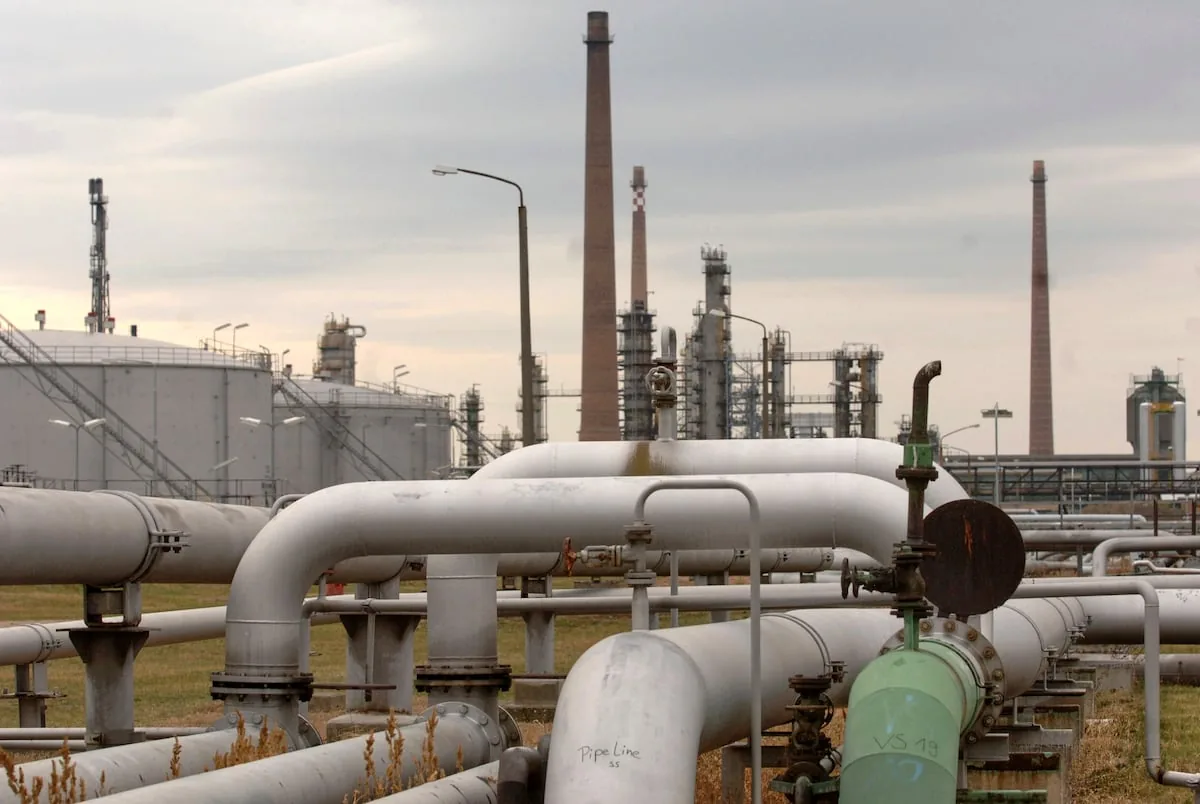
The 90 billion package was agreed at last December’s summit, after it was confirmed that it was impossible to convince Belgium to allow the use of frozen Russian assets for this purpose, which was the initial plan. But although it contained a clause by which the most pro-Russian countries reluctant to take this step —Hungary, Slovakia, and the Czech Republic— were exempt from participating in this loan that Kyiv would only have to repay when Russia pays for the damages caused in the war, Budapest has since vetoed the delivery of the money, initially planned for March. The government of ultranationalist Orbán, very close to Moscow, demanded to lift its blockade that Ukraine resume deliveries of Russian oil to Hungary and Slovakia through the Druzhba pipeline, damaged by a Russian attack. Ukraine raised the tone in recent months and, despite repeated mediation attempts by Brussels, reproaches between Kyiv and Budapest have been constant and have jeopardized the longed-for political solution.
After Péter Magyar’s victory on April 12, and although Orbán officially remains at the head of the Hungarian government, the path has quickly cleared.
However, the process, which cannot be considered concluded until it is confirmed that Budapest raises no last-minute objections, has been choreographed down to the smallest detail.
The first signs that Hungary would no longer obstruct the approval of the loan came this Monday, when the agenda for today’s ambassadors’ meeting was announced, and it included the adoption of the financial package. A step that would not have been taken if there were reasonable doubts that Budapest persisted in its veto. On Tuesday, while EU foreign ministers met in Luxembourg —without the presence of the still head of Hungarian diplomacy, Peter Szijjartó, who has been revealed to have regularly informed his Russian counterpart, Sergey Lavrov, of confidential discussions of the Twenty-Seven—, Zelensky announced, after a conversation with the President of the European Council, António Costa, that the repair work on the Druzhba pipeline had been completed. Finally, early this Wednesday, the Hungarian oil group MOL announced that the Ukrainian operator of Druzhba had officially informed it that it was ready to resume crude transit to Hungary and Slovakia, Reuters reports. European ambassadors decided to delay the loan issue until the last item on the day’s agenda to allow time to verify that, indeed, the pipeline was back in operation, according to sources familiar with the negotiations. The announcement came mid-morning, when MOL issued a statement saying that “the receipt of crude oil from Belarus through the Druzhba pipeline system” had begun this midday in Ukraine and that “the first shipments of crude oil after the reactivation of the Ukrainian section of the pipeline system are expected to arrive in Hungary and Slovakia no later than tomorrow” Thursday.
Read more Two dead after scaffolding collapses at a construction site on a street in Benidorm