



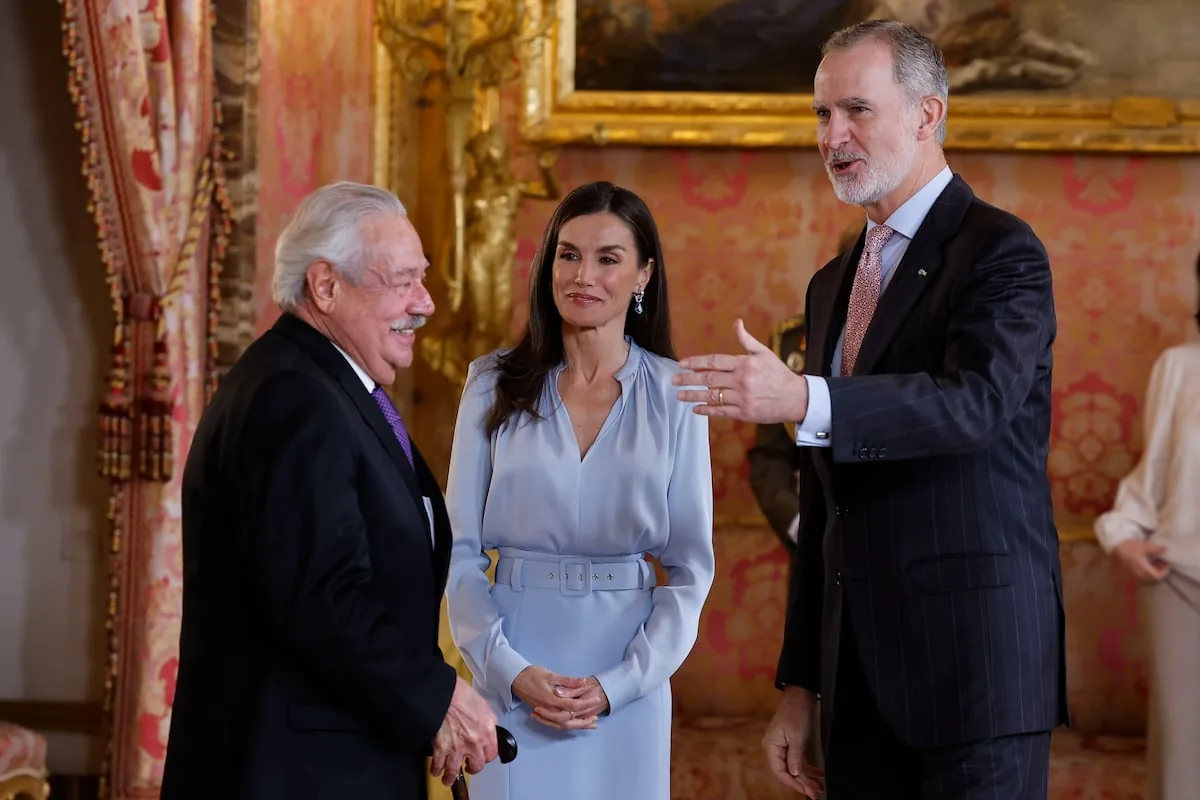
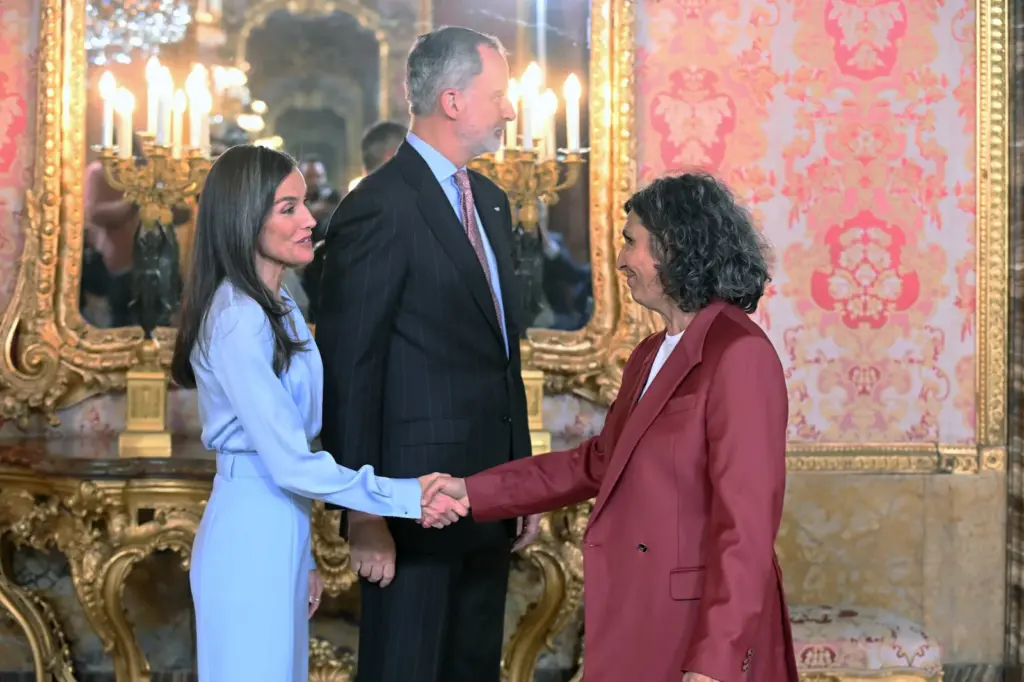
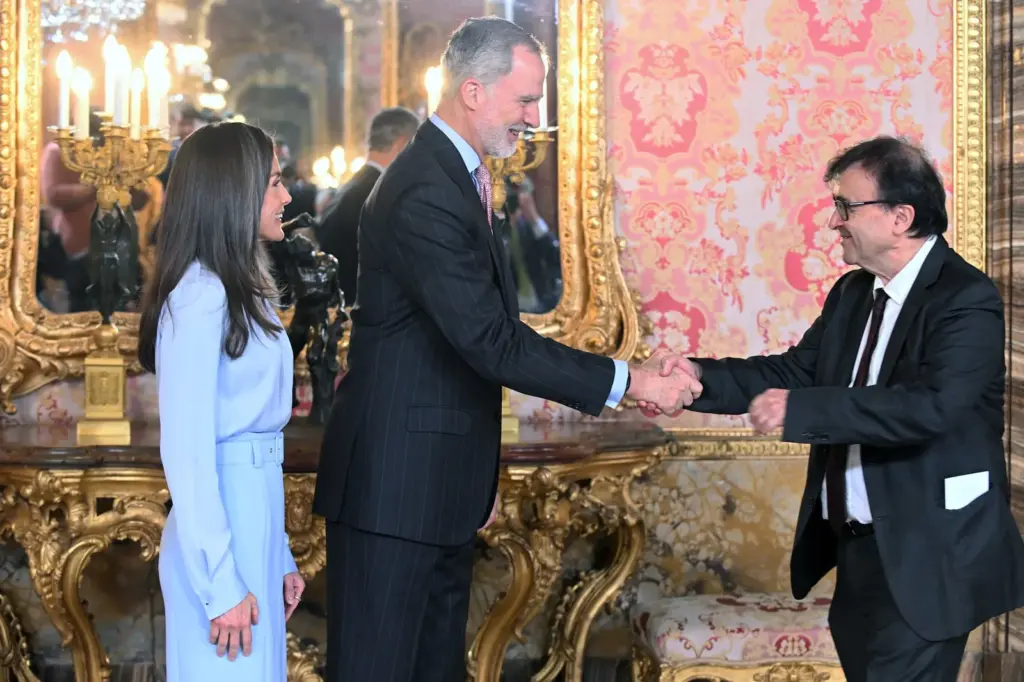
For a few months, when he went to Madrid, Paco Cerdà frequently visited the Royal Palace. He photographed every detail of the halls with his memory, snooped around the rooms as far as he was allowed, or went up and down the stairs, obsessively counting the number of steps. At coffee time, during the lunch that the Kings offered on Wednesday on the occasion of the Cervantes Prize award to the Mexican Gonzalo Celorio, various groups formed around King Felipe and Queen Letizia. Seen with a certain perspective, those minutes with authors, publishers, or journalists seem like a courtly waltz that repeats every year. The author of Presentes explained to the King that he visited the Palace because he was researching to write 14 de abril. The Valencian writer was there like other winners of the latest call for the National Prizes. Like the playwright Victoria Szpunberg or the historian Juan Francisco Fuentes or the poet Míriam Reyes. Cerdà told him an anecdote included in the book: that cigar that Alfonso XIII shared with some peasants when he embarked on the route of exile. These are things that can happen, Don Felipe seemed to answer with a gesture and a complicit smile.
Read more Bonoloto: check Wednesday, April 22 draw
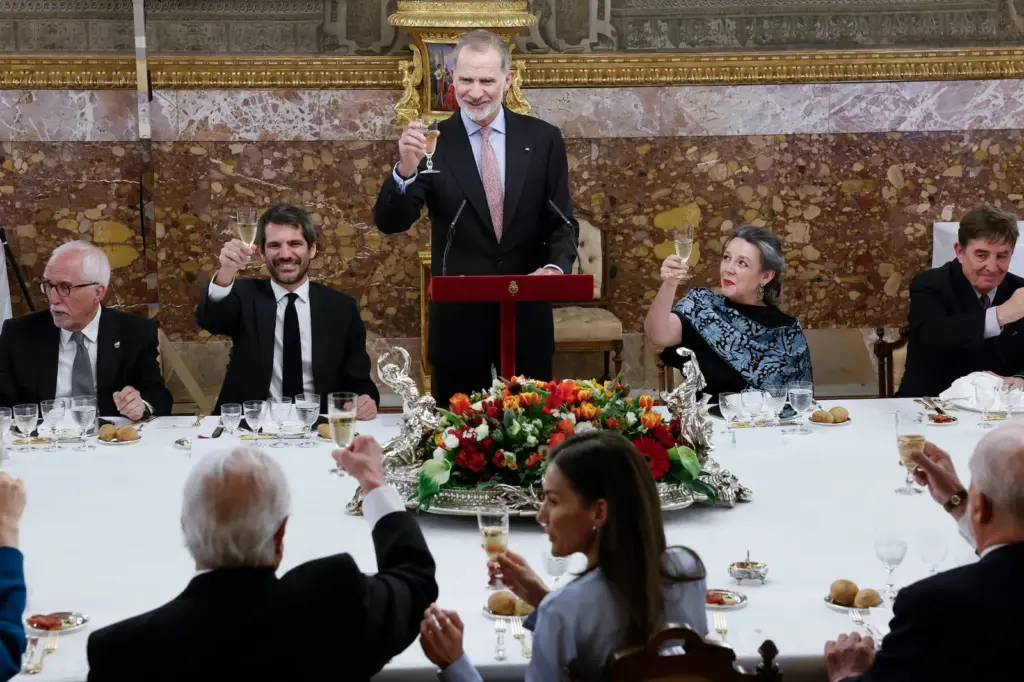
An hour earlier, after the glass of Gramona Imperial had been served and before the first course (marinated mackerel loin, then cuttlefish and dogfish meatballs), the King delivered the eulogy for the award winner. The table is infinite, the cutlery elegant, and there are five glasses in front of each plate. Listening are the president of the Community of Madrid and the Minister of Culture, the president of the Royal Spanish Academy and that of the Cervantes Institute, to randomly name two couples with, let’s say, differing points of view. Among others are Luis Mateo Díez or Soledad Puértolas, Javier Cercas, Najat El Hachmi or Juan del Val.
King Felipe begins by quoting verses from Jorge Luis Borges’ poem Cambridge: “We are our memory, we are that chimerical museum of inconstant forms, that pile of broken mirrors.” This year marks 40 years since Borges’ death in Switzerland, as he recalls, and Ese montón de espejos rotos (That pile of broken mirrors) is the title of the memoirs that Celorio published a few months ago. In addition to his praise as a professor, the King’s speech focuses on the significance of this autobiography and, in one passage of the speech, he thanks Celorio for having highlighted the contribution that republican exiles made to the strengthening of Mexican culture.
Read more ONCE Daily Coupon: check draw for Wednesday, April 22
Before the toast, after recalling a poem by Antonio Machado, Felipe speaks of the power of the Spanish language —630 million speakers—, of plural literatures that do not exclude, and closes by quoting words that concentrate the spirit of Don Quixote: literature as the great school of freedom.
Many writers leave quickly so as not to miss the train that will take them to Barcelona, where tomorrow, from early morning, they will sign books at the Sant Jordi festival. On the stairs down to the patio, which Paco Cerdà counts again, a journalist confessed to Marta Jiménez Serrano that he had checked his boiler after Oxígeno, the memoir in which she recounts that she was on the verge of dying from inhaling carbon monoxide. At the bottom of the stairs, Celorio’s family —some live in Mexico, others in Madrid, one in Copenhagen— take photos to remember some memorable days. The halberdiers, standing firm, bid farewell to the writers.
Read more The clash between court and defense explodes over PSOE’s cash payments