









Greece’s largest island and the fifth largest in the Mediterranean is the destination of a new trip, a new adventure that this time takes us through history and its scenic charms. Did you know that in 2025 UNESCO included six Minoan palatial centers of Crete on its World Heritage list? These were Knossos, Phaistos, Malia, Zakros, Zominthos, and Kydonia, all emblematic sites of the Minoan world of the Bronze Age. The island is, without a doubt, a small universe in the Mediterranean that many visitors explore in summer for its majestic beaches, but we discovered it in autumn, in a season that invites you to see everything more calmly and when temperatures have dropped to enjoy and visit it much better.
Read more Microsoft announces a record investment of 15 billion in Australia to boost AI
“Crete is one of those special places where time seems to have stood still and that offer an almost unreal atmosphere, and in autumn all that is wonderfully enhanced. Autumn is a gift for the senses, the climate is mild, the light is more golden, and the island returns to a much slower and more authentic pace. The sea is still warm, the island is much less crowded, and everything is enjoyed more calmly. It is therefore an ideal time for quality tourism, to truly savor the island,” emphasizes Carlos Romero, an expert from EL PAÍS Viajes.
This doctor in Humanities and Social Sciences, and university professor of History of the West and History of Western Thought will be the host accompanying a group of travelers this autumn to discover the island of Zeus. It will be on October 10, on an eight-day trip, aiming to discover essential enclaves such as Knossos, Phaistos, or ancient Spinalonga, as well as Byzantine churches, exceptional museums, and villages suspended between mountains and sea. Between visits, there will also be time to savor the most authentic Crete with lunches facing the Aegean, local wines with centuries of history, swims on legendary beaches, and encounters with Cretan hospitality that will turn each stop into an unforgettable experience.
It makes perfect sense that Carlos guides this experience, as he has been in love with Greece and its history since childhood. Particularly, regarding his relationship with Crete, he explained the following to EL PAÍS Viajes: “My relationship with Crete is very intimate. The first Greek myth that fascinated me as a child was that of Theseus and Ariadne, and that myth was born here, in the labyrinth of Knossos. Over time, that childhood fascination turned into a vocation. In Crete, I see Greece in its purest state, with all its essence concentrated: myth, landscape, history, and daily life coexisting in a small universe.” He adds: “On this trip, I will try to contribute two things above all: on the one hand, understanding, context, helping to connect the different layers of time that appear in each place and the stories that populate it. But as everyone knows, truly knowing a place goes far beyond the intellectual plane, which is why I will also try to transmit passion, creating spaces so that the traveler can truly feel the island and vibrate with its pulse.”
Obviously, it’s not the first time he has done this. He has visited the country on numerous occasions with his students and maintains an intense outreach effort through @aulamundo, his YouTube and Instagram channel, dedicated to humanistic dissemination that will transport you to ancient Greece in the blink of an eye. Perhaps that is the first step to begin this adventure.
The itinerary through the island of Crete with EL PAÍS Viajes
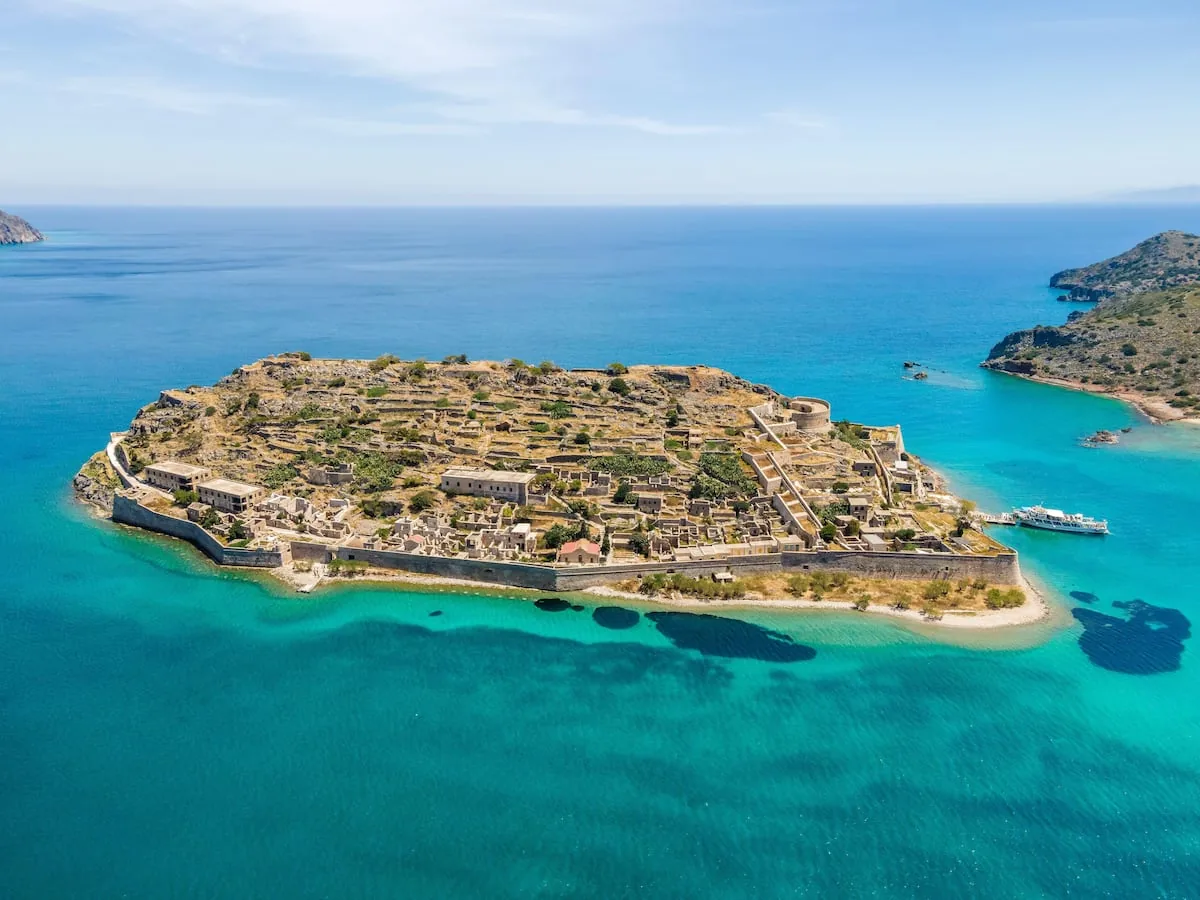
Why is this trip called The Soul of Crete? And what would be the soul of Crete if we had to name it? This is what Carlos himself answers: “The soul of Crete is that of a bridge because it is an island that connects two worlds, East and West, Asia and Europe, past and present, myth and history. Furthermore, in Crete we find the origin of what we would later call Europe. From the Minoan civilization to the Greek world, passing through Byzantines, Venetians, and Ottomans, Crete is like a continuous thread of European memory. Walking through the island is, in a way, walking through different superimposed ages of Europe.” For this reason, the first stop will be in the heart of the Aegean, on the island of Spinalonga, an ancient 16th-century Venetian defense later converted into a leper colony. Among bastions, walls, and abandoned alleys, this place preserves a unique atmosphere that summarizes the dramatic history of the Eastern Mediterranean. The church of Panagia Kera, in Krista, is also famous for its 13th-century frescoes, considered among the best examples of Byzantine painting in Crete: scenes of the Virgin, the Pantocrator, and narrative cycles that miraculously survived centuries of Ottoman domination.
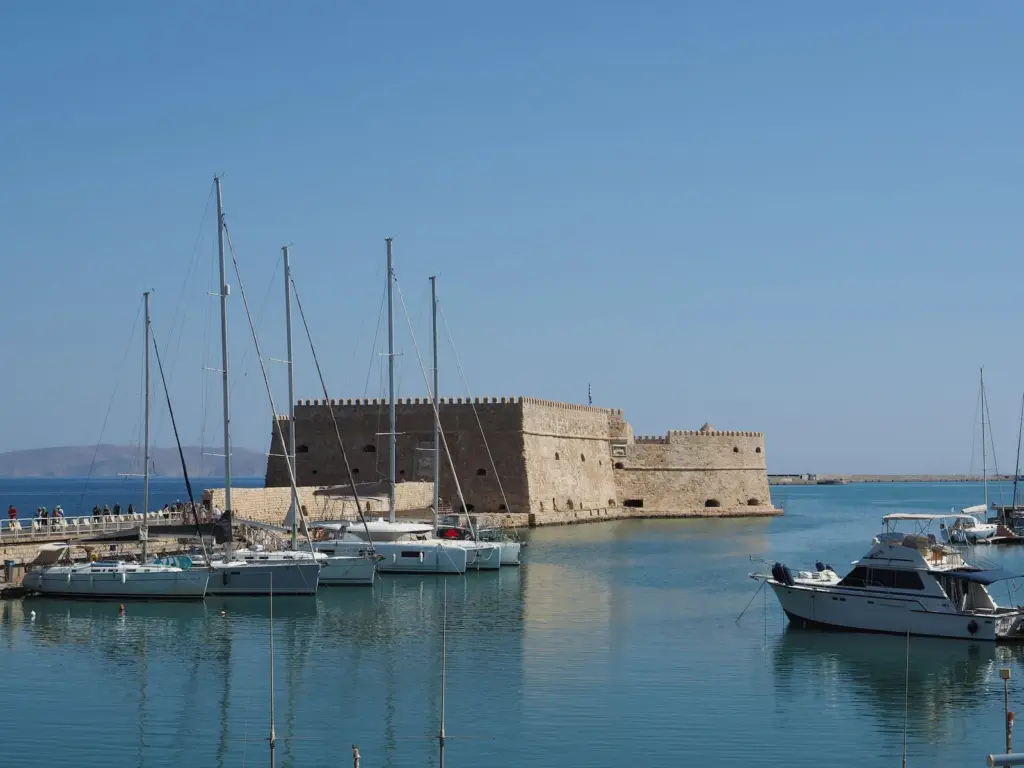
Heraklion, the capital of Crete, will be the base camp that will allow travelers to explore the different points of the island during the eight-day trip. There is much to see and visit here: the Archaeological Museum of Heraklion, essential for understanding the magnitude of the Minoan civilization with the Phaistos Disc, the original frescoes of Knossos, statuettes of snake goddesses, and Mycenaean jewelry form one of the most important archaeological collections in the Mediterranean.
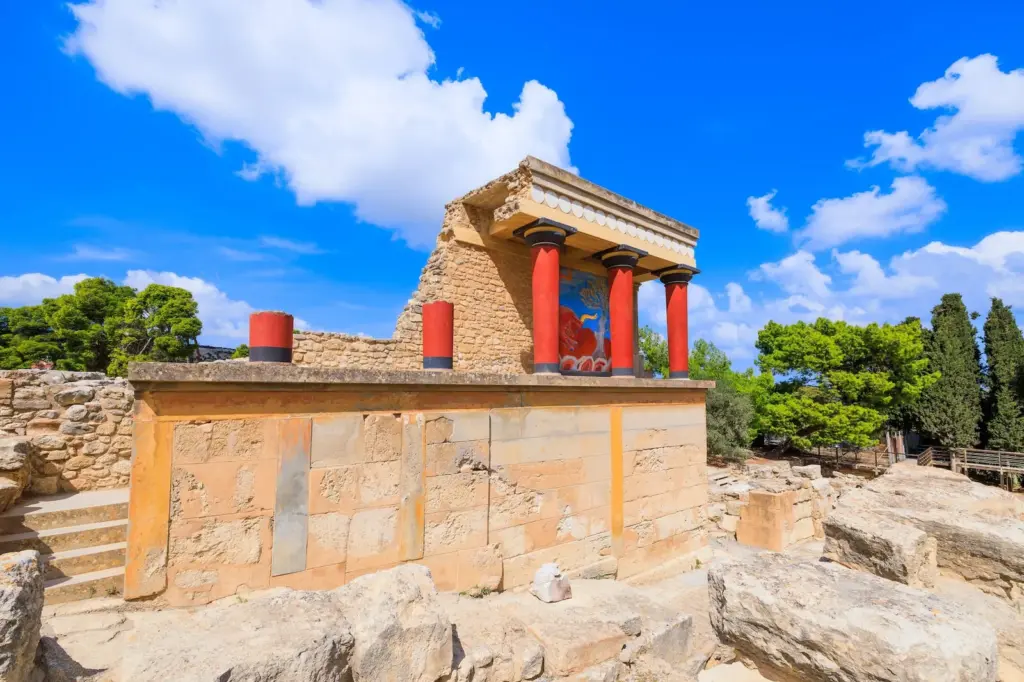
After exploring eastern Crete with its Byzantine treasures, it’s time to discover the Minoan palaces, the crown jewel of the trip. Specifically, Professor Carlos Romero highlights the Palace of Knossos which, for him, is undoubtedly one of those places where one feels they are at the origin of many things: of myth, of architecture, and of the very idea of Europe.
This political and ceremonial center of the Minoan civilization, associated with the myth of the Minotaur and the legendary King Minos, is a labyrinthine complex that allows one to understand the architectural sophistication, polychrome frescoes, and the most advanced palatial organization of the Bronze Age.
Read more Four seriously injured in the collision of two trains in Denmark
In southern Crete awaits Phaistos, the island’s second most important Minoan palace, whose terrace overlooks a fertile plain connected to ancient trade routes to the Eastern Mediterranean. From its monumental staircases and ceremonial courtyards, one can sense the economic power of the Minoan culture before its decline. To conclude the visit, a stop is made in the picturesque village of Matala, famous for its rock-cut caves that attracted hippie communities in the sixties.
The fourth day of the itinerary will be dedicated to exploring the Minoan necropolises and the Venetian heritage. For this, we will reach Armeni, where one of the most relevant necropolises of the Late Minoan and Mycenaean period is located. More than 200
rock-cut tombs show how funerary practices evolved in Crete between the 14th and 12th centuries BC, revealing links with the continental Greek world. Meanwhile, in Rethymno, a splendid historic center will be discovered, shaped by Venetian and Ottoman domination. The Rimondi Fountain, the Venetian loggia, with minarets of mosques now converted into cultural temples, and the picturesque Venetian harbor will bring the day to a close.
The next day, the heritage in Chania will continue to be discovered, where the Archaeological Museum and the historic center will be visited. The city’s old town, which includes the famous Venetian harbor, is one of the most beautiful in Greece. Its charm undoubtedly comes from the mix of influences from the different cultures that have passed through this city. On the cobblestone streets, wooden Ottoman houses, Venetian palaces, small craft shops, mosques with their minarets, sturdy fortifications, and also cafes and restaurants follow one another, making a stroll through Chania a true pleasure.
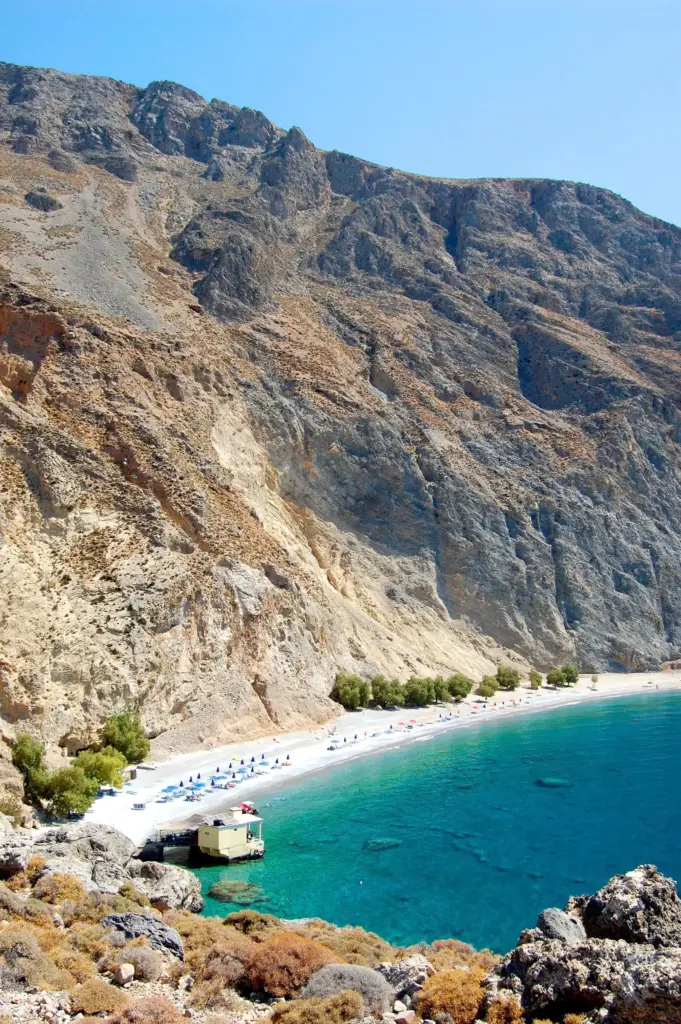
In the final stretch of the adventure through Crete, travelers will explore one of expert Carlos Romero’s favorite regions — who accompanies the group at all times. Why? The nature in this place speaks for itself, and its valley treasures the authentic Cretan spirit. The south of the island is essential, in the rugged region of Sfakia, where the mountain plunges steeply into the sea and rural life maintains centuries-old traditions. You can take a ferry to Loutro, a small white village accessible only by sea, an opportunity to admire the south coast.
After seeing Crete’s rugged coast, it’s time to relax on its shores, even in the autumn season. This is possible in Falassarna, an idyllic beach with transparent waters. This will be the golden finale to a simply perfect trip. “Our travelers will find a unique experience, characterized by a perfect balance between the different elements this experience offers: they will find culture and history, of course, but also beauty, hospitality, and the art of living. Crete offers a very complete trip. It is an experience that extraordinarily combines knowledge and emotion,” Carlos concludes.
*If you want more information about this and other similar trips, consult our EL PAÍS VIAJES website.
You can follow EL PAÍS VIAJES on Facebook and Instagram, or subscribe here to the EL PAÍS Viajes newsletter.