
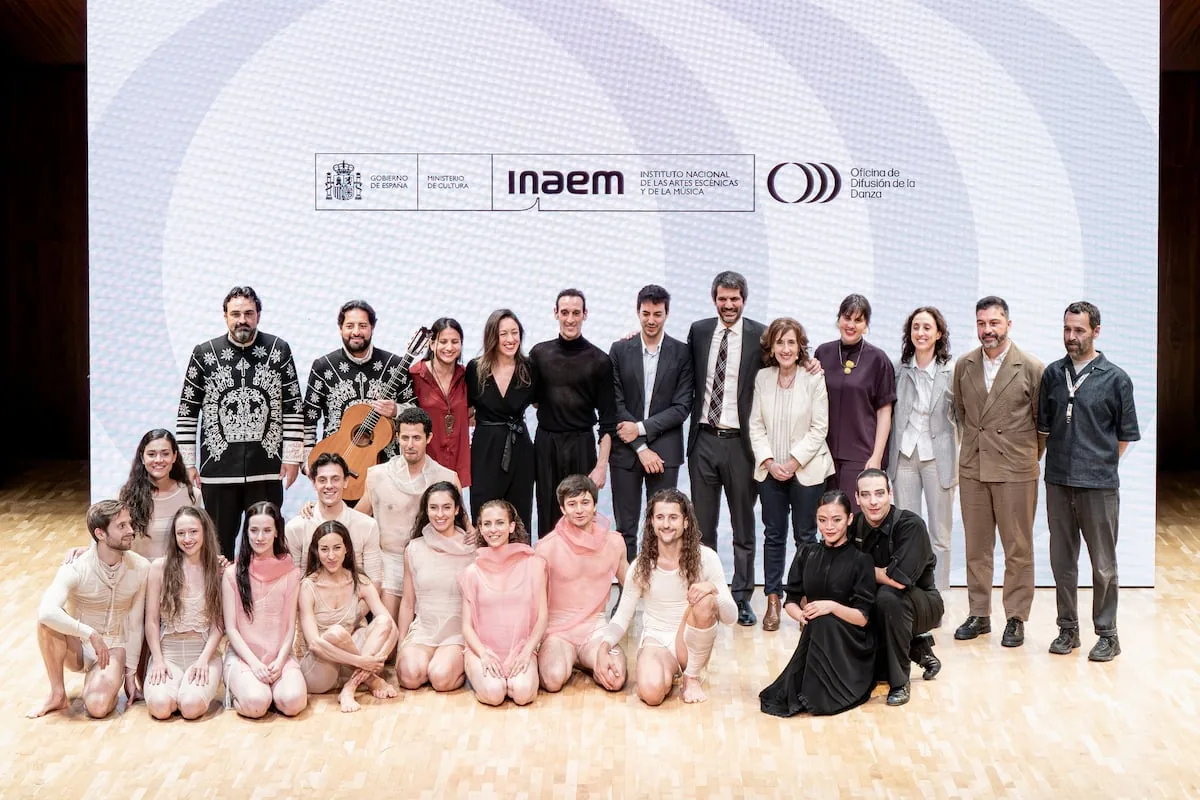
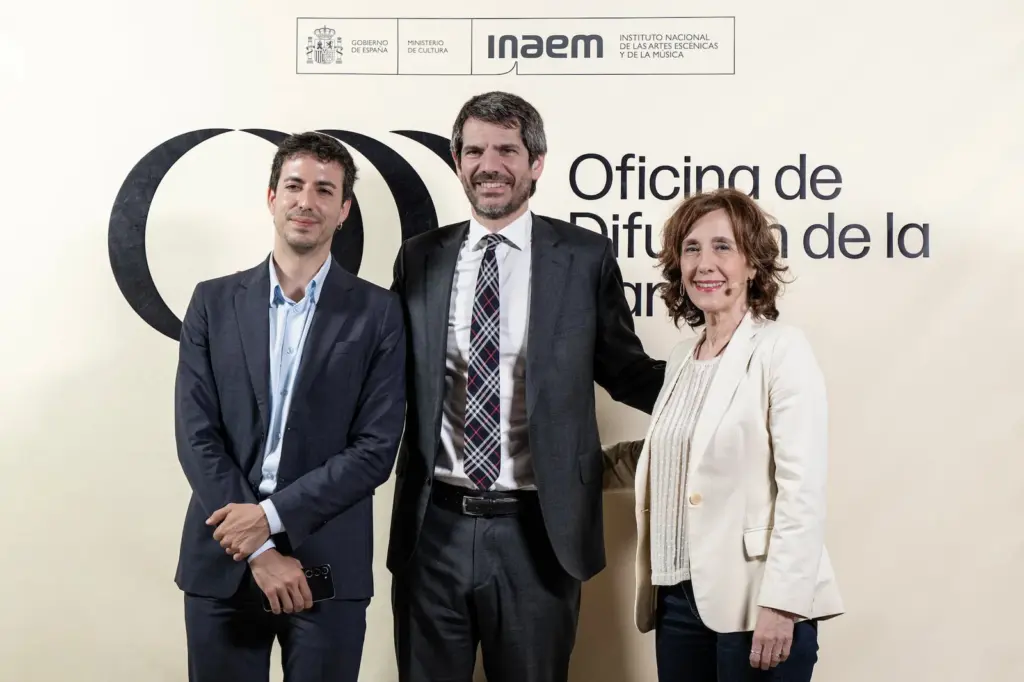
“Dance now has a room of its own within the Ministry of Culture,” declared Paz Santa Cecilia, director of the National Institute of Performing Arts and Music (INAEM), this morning. And thus officially presented the Dance Promotion Office (ODD), a new body created to support and promote dance. The statement reflected a visible joy in Santa Cecilia for fulfilling one of the objectives of the extensive INAEM reform, which, although officially announced in February 2025, has been brewing behind the scenes for decades. “Paz has reminded me from the beginning of the need for dance to stop being the poor sister of the arts. Also Getsemaní de San Marcos, who is part of my cabinet,” later noted the Minister of Culture, Ernest Urtasun, who was the last to speak and defined this presentation of the ODD as a “true milestone for dance, that’s how important it is.”
Read more Police in schools: from conflict to scandal
Held on the same day as the International Dance Day, today April 29, the event brought together hundreds of professionals including dancers and choreographers, programmers, directors of creation centers, festivals and residencies, and specialized press. Such a large ceremony around this discipline had not been remembered since the Dance Portal in Spain, danza.es, was presented twenty years ago, with Carmen Calvo as Minister of Culture and José Antonio Campos as general director of INAEM. If that event took place at the Reina Sofía Art Center Museum in 2006, today’s was held at the National Music Auditorium. Two venues that highlight the lack of a theater for dance, a need that the sector has also been demanding for decades, to begin normalizing the health of dance and equate its support to that of other European cities.
With guests such as the director of the Biennale de la Danse and the Maison de la Danse in Lyon, Tiago Guedes, and the director of the dance creation center La Caldera in Barcelona, Javier Cuevas, the stage revealed the line of action of the new ODD, which will focus on three main areas: internationalization, training and promotion, and dissemination. “It is about expanding and deepening resources for dance and understanding the challenges,” Cuevas declared.
Regarding the presence of dance in international forums, events and dates such as the Iberian Focus, a monographic section to showcase creations by artists from Spain and Portugal, planned for the Biennale de la Danse in Lyon in 2027, were announced. There will also be parallel activities and the presence of emerging choreographers who will be selected through a public call.
The ODD Classroom will hold the core of the training section of this office and starts next June with activities in professional conservatories in Cáceres, Puertollano, and Barcelona. In addition, teachers from international schools will be invited to provide training in Spain, such as the Royal Ballet School at the end of the year. With the idea of expanding the coverage and presence of dance, from training, activities will be developed together with the Higher Sports Council and the Spanish teams of Figure Skating and Artistic Swimming.
Read more The Aldama declaration, in 4 minutes
The promotion of creation, called ODD en Red, has begun with collaboration with the La Caldera Choreographic Center (Barcelona), through creation residencies at the Magalia Castle Palace (Ávila), recovered by INAEM last year. Also with this Catalan entity, international mentorships for dance distributors will be launched. The first will take place in Portugal for a week and will be led by Marta Oliveres, a cultural manager and curator with a long career. “Because Portugal is ahead of us in artistic residencies,” noted the director of INAEM.
The most social aspect of dance will be worked on in collaboration between the ODD and the La Gomera Choreographic Center through the DAD model (Expanded Dimensions of Dance), which the Canary Islands space has been developing for twenty-five years. Health and mediation will be the focus of this program.
For the communication of ODD activities and others related to the dance profession in general, the structure and information contained in danza.es have been recovered, now converted into the website of the Dance Promotion Office. Nothing has been said about how to solve or face one of the greatest ills of dance, that which involves insufficient programming, both in public and private theaters, which leaves a gap between creation and exhibition and many choreographers and performers in precarious situations. It was one of the topics of conversation after the event ended, which the profession has received with considerable joy and some skepticism.
The biggest ovations of this hybrid format between gala and official event, in which the ODD was presented, were for the dancers of the National Dance Company and the National Ballet of Spain, who opened and closed the event, respectively, with fragments of MASA, a choreography by Luz Arcas that will premiere at the end of May, and Afanador, a great success in the history of the BNE, with choreography by Marcos Morau / La Veronal and Miguel Ángel Corbacho. The directors of these two public companies, Muriel Romero and Rubén Olmo, also took the stage to read the manifesto for International Dance Day, which this year was written by Canadian choreographer Crystal Pite, in which she reminds: “In dance, and in the act of creating it, we find proof that humanity is more than its latest collective failure.”
Read more London rescues Zurbarán’s innovative mastery beyond religion