









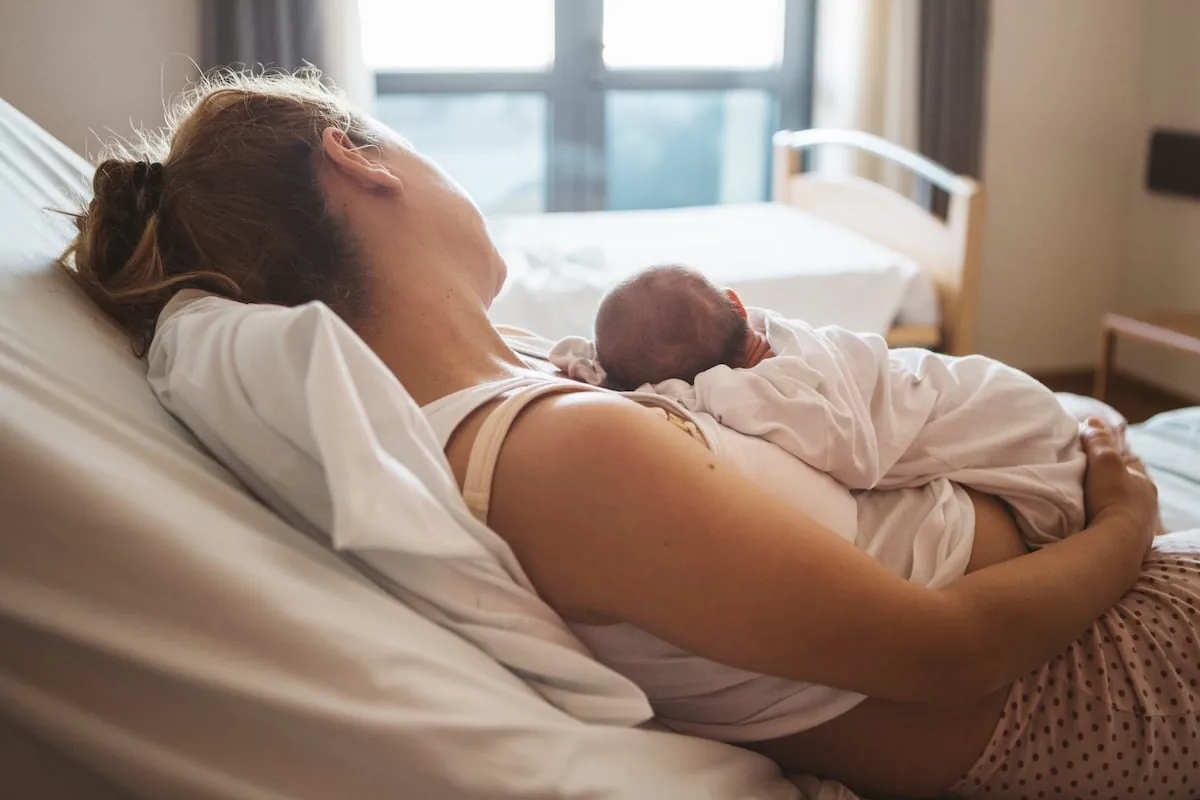
The collective imagination portrays the stage of pregnancy and postpartum as an idyllic moment, inevitably filled with joy in all circumstances. No other scenario is considered. But the reality, although often invisible, is more complex than that: there can be happiness and excitement, but also during these stages there are tears without apparent reason, sadness, anxiety, or a feeling of emptiness that, at times, can lead to serious mental health problems. A study published this Thursday in the journal The Lancet Psychiatry has quantified severe depression in the peripartum period — during pregnancy and up to a year after childbirth — and concluded that at least one in every 16 women suffers from major depressive disorder during these stages. The two weeks after birth are the most critical phase, where the risk of experiencing this mental disorder is highest.
Read more Valencia Basket sees the Final Four slip away after a cruel defeat against Panathinaikos: 105-107
Alize Ferrari, a researcher at the University of Queensland (Australia) and author of the study, explains that the scientific community knew that the prevalence of this disorder was higher among women during pregnancy and postpartum than in the general population, but they were unaware of the magnitude of that difference. The scientific evidence was limited. Some studies estimated the prevalence of this disorder to be between 14% and 17%, but the authors point out that the study methods were sometimes inconsistent, with lax criteria and measurement errors. The new research, arising from a scientific review that compiled data from two million women and girls from 90 countries, concludes that severe depression appears in 6.2% of women during pregnancy (that is, one in 16) and in 6.8% of mothers (one in 15) during the first year after childbirth.
The study reopens a topic that shakes the entire cultural narrative around birth as a bright stage. “For many women, it is not an idyllic postcard. And it is not about weakness or lack of love, but about biological processes and a heavy history,” explains psychiatrist Gemma Parramon in her book Será por las hormonas regarding postpartum depression.
After analyzing the study, in which she did not participate, the same doctor, who works at the Vall d’Hebron Hospital in Barcelona, assures that Ferrari’s research is “methodologically very strong and represents a solid contribution to prevalence because it helps organize heterogeneous studies.” However, the psychiatrist urges caution in interpreting the results so as “not to underestimate other disabling conditions.” “Here they evaluate major depressive disorder, but not other frequent and equally disabling disorders in the postpartum,” she emphasizes.
Parramon refers, for example, to baby blues, which presents with mild depressive symptoms, such as irritability or sadness. This condition may not meet the criteria for a diagnosis of severe depression, but if it becomes chronic and worsens, it can lead to that. “The takeaway should not be that there is less postpartum depression than we thought. There are other subdepressive cases [that do not meet all the technical criteria for that diagnosis] that can be very important and impact functioning and motherhood,” she stresses.
The psychiatrist suspects that the difference in prevalence between studies (some up to 17%, much higher than Ferrari’s results) is precisely because some research may mix clinical conditions of varying severity under the same heading of postpartum depression.
Ferrari’s research excludes those transient states of sadness and emotional lability and focuses on the more complex scenario of that web of poor mental health surrounding the peripartum. Major depression, unlike those mild and fleeting mood changes of postpartum sadness, involves severe and persistent symptoms: there is distress and despair, but also loss of interest and difficulty managing daily life.
The prevalence of severe depression remains higher than in the general population at all stages of the peripartum, but is especially high (8.3%) two weeks after birth. “Our findings emphasize the need for early identification and intervention for major depressive disorder throughout the peripartum period, but especially when women and girls approach the end of the first two weeks after childbirth,” reflects Ferrari.
Read more Iran does not participate in the FIFA Congress because one of its members was denied entry to Canada
Eduard Vieta, head of Psychiatry at the Clínic Hospital of Barcelona, recalls that “in Spain there are few specialized devices and programs for the mental health care of women during this period.” “In most cases, women with postpartum depression are not comprehensively cared for through centers that allow treatment of depression without neglecting the needs of the newborn and attachment, which is fundamental for a healthy emotional relationship between mother and baby, and its subsequent development. This work indicates that we need to promote mental health care during pregnancy and postpartum, and develop specialized programs and centers,” points out the expert in statements to the SMS portal.
Biology and biography
The reasons behind this greater vulnerability to poor mental health during pregnancy and childbirth are diverse. Biology and biography influence, the consulted experts point out. “It is likely that the increase in the prevalence of major depressive disorder in the peripartum period is due to a complex interaction between various stressors, such as abuse and violence, biological factors, poverty, growing inequality, differences in access to health services, barriers to medical care, and other factors that influence the support women and girls receive during the peripartum period in different countries,” notes Ferrari. According to her data, the prevalence of severe depression in these stages was higher in sub-Saharan southern Africa and southern Asia; and lower in the high-income Asia-Pacific region.
Parramon maintains that “major depression can arise from many areas.” Hormones influence, for example: after childbirth there is a sudden hormonal drop and women with high hormonal sensitivity in the brain may experience more severe symptoms after that decline, she points out. That would largely explain why Ferrari’s research finds a peak of severe depression at the start of postpartum, coinciding with that hormonal decline.
However, Parramon adds, there are also psychosocial factors. From socioeconomic living conditions to family relationships or the distribution of responsibilities in child-rearing. “Contextual aspects and also the expectations we have influence: motherhood is sometimes very demanding and is anything but self-care. There are depressions that stem from self-demand to fulfill what society has told them they must do to be good mothers.”
Invisible illness
Endocrinologist Carme Valls emphasizes in her book Invisible Women to Science that postpartum depression is recognized as an entity, but it is invisible. “It is not clear when it takes place due to life conditions and conflicting couple relationships, personal loneliness in the task, or endocrine disorders or deficiency states that have remained invisible because they have not been investigated either.”
This doctor highlights that such disparate circumstances as symptoms of anemia, combined with lack of domestic help or fatigue from the breastfeeding phase, especially if there is no shared responsibility in care and household tasks, “contribute to the feeling some women have that they will not be able to handle the task of raising their children, partly favoring the presence of postpartum depression.”
The layer of silence and ignorance surrounding these conditions, added to the weight of rigid social conventions that color these stages with obligatory joy, also do not help to dismantle myths and destigmatize very disabling symptoms.
Read more A judge halts the extradition to the United States of Audias Flores, alias El Jardinero