







EL PAÍS offers the América Futura section openly for its daily and global informative contribution on sustainable development. If you want to support our journalism, subscribe here.
Read more Sinaloa, under the shadow of narcopolitics: “This war will never end”
Yully Da Chaga Cabrera, a popular artist of Montevideo candombe, holds between her fingers the little chain hanging from her neck. She squeezes it carefully, as if protecting something fragile, and in that gesture appears a strength difficult to name. It is a sankofa, one of the Adinkra symbols of Ghana: a bird with its face turned backward guarding a small egg. In the Akan language of West Africa, that image condenses an idea that Cabrera explains with a broad and contagious smile: “The sankofa embraces both past and future at the same time and takes from the past what is necessary to build other futures.”
From that idea — looking back without stopping moving forward — Sankofa: Cimarroneando el Archivo is born, the project that Cabrera integrates together with Afro-Uruguayan artists Karen Antúnez, Mary Porto Casas, and the Argentine historical geographer Ana Laura Zavala Guillén, based in the United Kingdom. The initiative arose from searches in colonial archives and, since then, the group has worked on stories of enslaved women who managed to escape.
Before becoming a collective and artistic practice, Sankofa was conceived in investigative work. Between Uruguay and Spain, Zavala Guillén reviewed documents in the General Archive of the Nation in Montevideo and in the General Archive of the Indies in Seville, as part of her postdoctoral research, supported by the British Academy. It was there that she began to identify, like someone finding scattered pearls, cases of fugitive women from the slave era that the collective would later take up to reinterpret through art. That way of reading the archives brings to the surface her trajectory in human rights, marked by work with victims of war crimes and crimes against humanity. “It was like intervening to re-signify them. There are many emotions when seeing how those women were objectified, violently dispossessed, described from the perspective of others,” says the geographer. And she adds: “The archive is a starting point, but not a destination.”
María Genoveva, Juana Morena and her daughter Encarnación, Benita Tabeira, and María de la Puente: their stories appear in files written by white men, crossed by silences and abrupt endings. Today they are reopened from another perspective: that of four Rio de la Plata women who seek to restore those invisibilized lives. In the rereading of pages stained by time with a yellow as valuable as gold, the records cease to be fragments to come back to life.
These archives are inscribed in a larger history: between the 16th and 19th centuries, about 12.5 million Africans were forced to cross the Atlantic as part of the slave trade. The Río de la Plata was a central space of the slave system. Montevideo, in particular, functioned as one of the main entry ports: between the late 18th and early 19th centuries, about 70,000 enslaved African people arrived in the region. “Reviving these archives is a real possibility to recognize and repair ourselves by knowing where we come from. Reparations can be symbolic, but they place us in another position. We are in the Second International Decade of Afro-descendants (UN), whose backbone is reparation. This experience of accessing the archives is knowing our history and a way to repair: it was a half-open door and now we enter through it,” says Vicenta Camusso Pintos, president of the Afro-descendant Institute and collaborator of Sankofa.
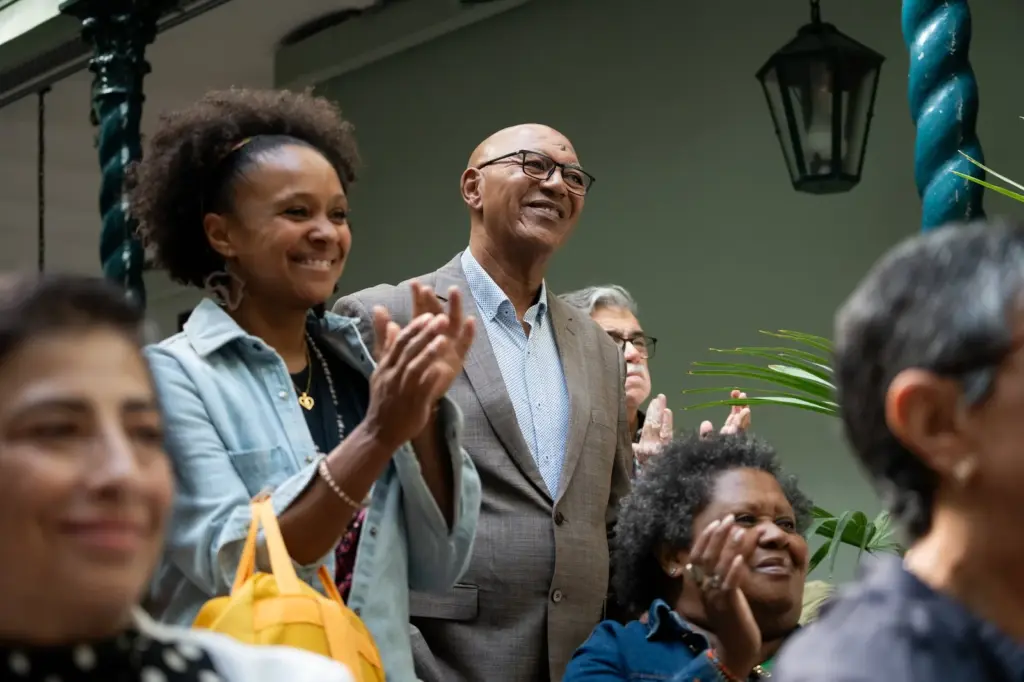
And the recovery of stories of fugitive enslaved women promoted by this collective introduces a less explored dimension. “We work from a gender perspective: those women deployed multiple strategies to achieve their autonomy and that of their children,” explains Zavala Guillén.
The group worked on four files. One records the story of María Genoveva. Her escape begins in Rio de Janeiro. On the way to the Río de la Plata, she receives help and, in a territory where freedom of wombs already prevailed — unlike the Empire of Brazil — she marries in search of that condition. Shortly after, she is captured. The file ends there: in a letter in which she requests her freedom. “It is not known what happened afterward. Archives are not books, but fragments, scraps of a barely sketched life,” explains artist Cabrera, recalling when she first touched those documents. “It was like meeting life.” And that story also links to hers. “It is understanding what could have happened to my mother, to my ancestors. I do not put it in a distant place: it touches me.” Although there is no direct link, reconstructing those lives of enslaved black women leads her to a close memory: “At the moment I embrace her as part of my family, it is bringing María from a place where she was hidden.”
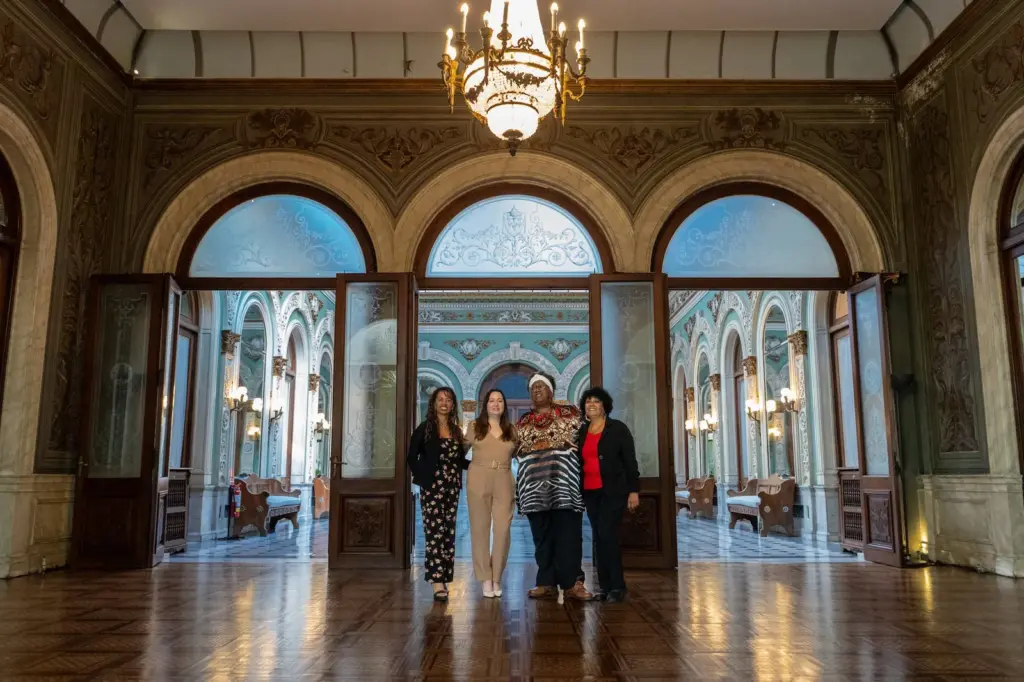
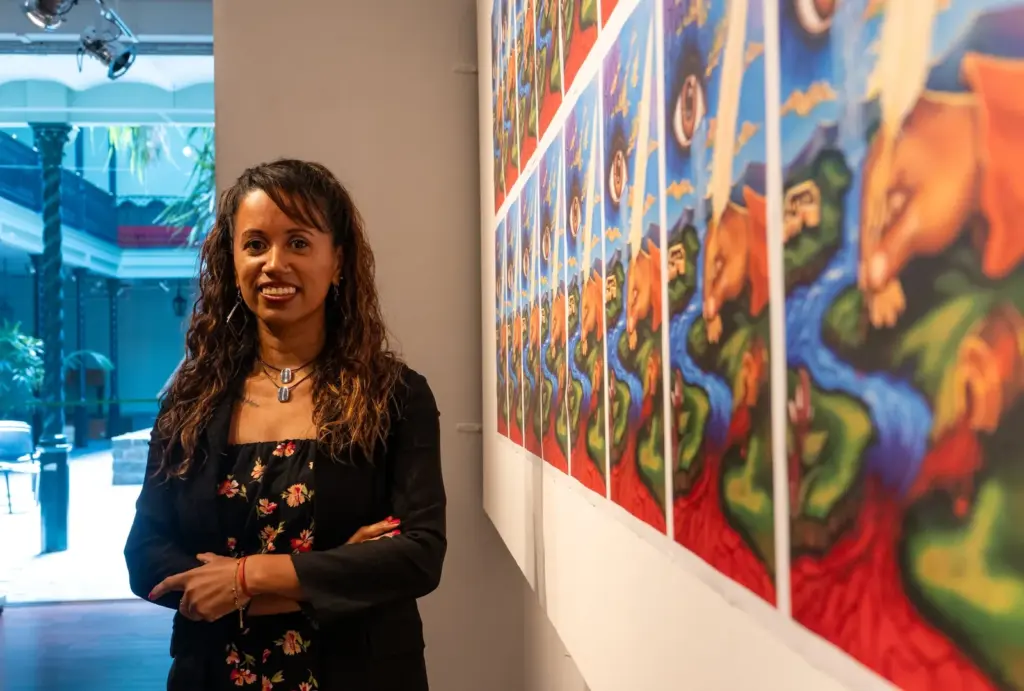
Another of the stories that Sankofa takes up is that of Benita Tabeira, worked on by Afro-Uruguayan Karen Antúnez. Benita flees from southern Brazil and crosses multiple geographies until reaching the Río de la Plata. On that journey, she wove bonds and strategies: first accompanied by an indigenous man, then in alliance with others — also white men — to support her claim for freedom. She even manages to gather witnesses who declared in her favor. Antúnez translates the story into a series of posters: through paper, she imagines and grants the letter of freedom that Benita sought. “The clear sky conveys hope; the eye, with tears that become a river, is the origin of transformation. The green is the territory traveled and the hand that writes, freedom,” says the artist.
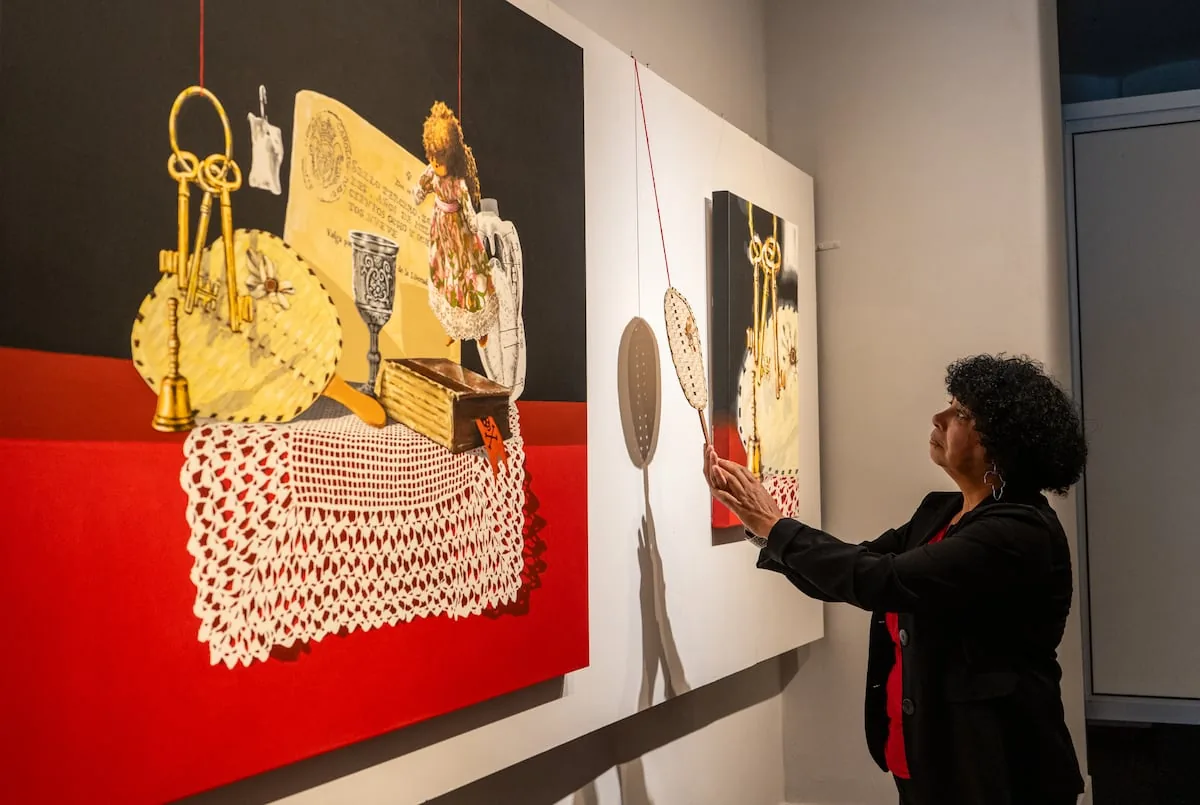
In that same framework appears the record of Juana Morena and her daughter Encarnación. To protect herself from the harassment of the girl’s father — and her enslaver — Juana returns to her first enslaver and negotiates her freedom in exchange for leaving the girl. In the files, the versions confront each other: he claims her return as property and assures he bought her; Juana, on the other hand, demands her letter of freedom, asks the judge to forbid him from following her, and requests that her daughter receive good treatment and education. Juana obtains freedom and Encarnación stays with the father. In Mary Porto Casas’s painting, that scene becomes an object: on a table, an open document, a glass, a book, and some keys. Standing, a figure of a girl seems suspended among those elements.
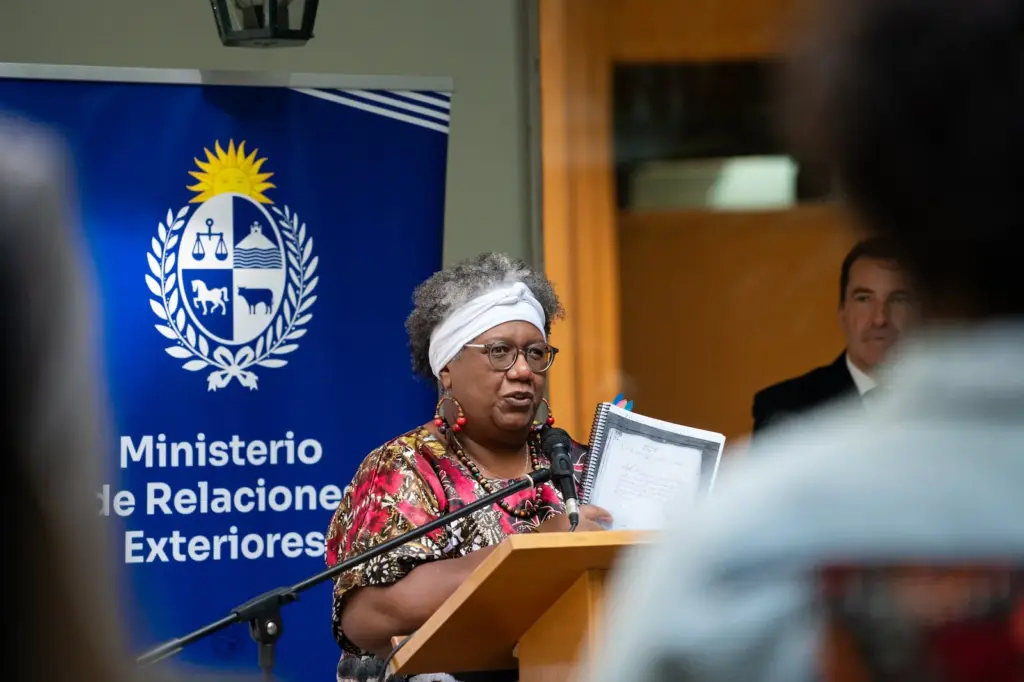
Far from the archive and closer to the body, Zavala Guillén cradles her little son. From that intimate gesture, another piece of Sankofa is created: a sound object in which she imagines a possible destiny for María de la Puente, who managed to negotiate with her enslaver an unusual margin of autonomy: in exchange for a payment, she rented a room of her own in 19th-century Montevideo. “In a slave system, a black woman negotiated her living space, managed to cimarronearse in that room and in plain sight,” she says. From those fragments, Ana Laura writes a poem that she recites in a lullaby: “It was never well known how or when María crossed the Atlantic again, she intertwined the green, marked a route for others to arrive centuries later.”
The stories rewritten by the members of Sankofa are condensed in an artistic video performance by Yully Cabrera in front of the Legislative Palace of Uruguay, full of emotion. Standing with her back to the steps, Cabrera is wrapped in a scene where white smoke surrounds her without hiding her; her figure remains firm and upright. This time Yully does not dance. “All my corporeality and energy are there,” she says. There is no musicality or movement, but a presence that challenges and evokes María Genoveva and the fugitive women, with the gaze backward without stopping moving forward, like the sankofa. “When I dance, I stand with those ancestral women, with that same strength.” They all live in her.