








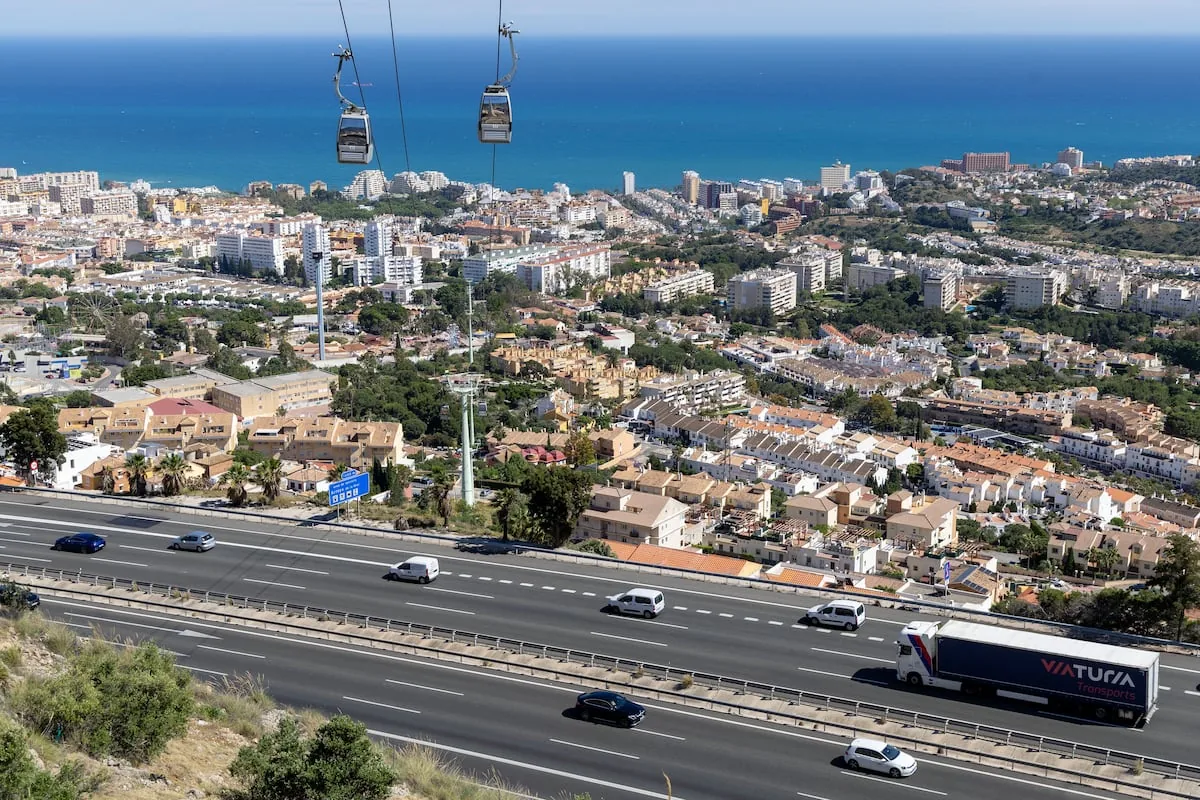
Twenty years ago Marbella exploded. Since then, nothing has been the same on the Costa del Sol. Operation Malaya against urban corruption ended a system of systematic legal violations that began with Jesús Gil’s arrival at the mayor’s office and ended with the arrest of about a hundred people. That police work led to the dissolution of the city council, the first and only time this has happened in democracy. It was also a before and after for the entire Málaga coastline, which two decades later has managed to free itself from the image of corruption but faces new challenges amid seemingly endless growth. Among them, the scarcity of natural resources, mobility problems, and organized crime. Underlying all this are the lack of housing and tourist overcrowding, which now goes far beyond summer in these nearly 150 kilometers of continuous urbanization where 1.3 million people live. And whose new center of gravity has shifted towards Málaga, the paradigm of this coastline.
Read more Isabel Díaz Ayuso’s tribute to Hernán Cortés shakes Mexico City’s politics
Today at the Andalusian Advisory Council, lawyer Diego Martín Reyes was the one chosen two decades ago to chair the managing commission that put order — as much as possible — in the Marbella city council. “Malaya corrected Marbella and caused similar actions in nearby municipalities to be uncovered and prosecuted,” he recalls. Cities like Estepona, Manilva, or Ronda were implicated in large corrupt schemes, which over the years have faded from the headlines. “The operation was a catharsis for public powers, a turning point; but I have doubts that irregularities no longer occur,” warns Diego Vera, director of the Institute of Legal Research in Government and Territory (I-INGOT) at the University of Málaga (UMA), who is actually working on analyzing whether today there are other forms of urban corruption that go unnoticed. “Back then it was all very crude, with flamenco singers, footballers, and garbage bags full of money. Now we don’t know if more subtle corruptions are happening,” he points out. “Or maybe everything is working well, that’s what we want to know,” says one of the drafters of the Territorial Planning Plan for the Western Costa del Sol, which aimed to bring order to urban planning in the area but was overturned by the Supreme Court because the Andalusian Government did not issue the gender impact report.
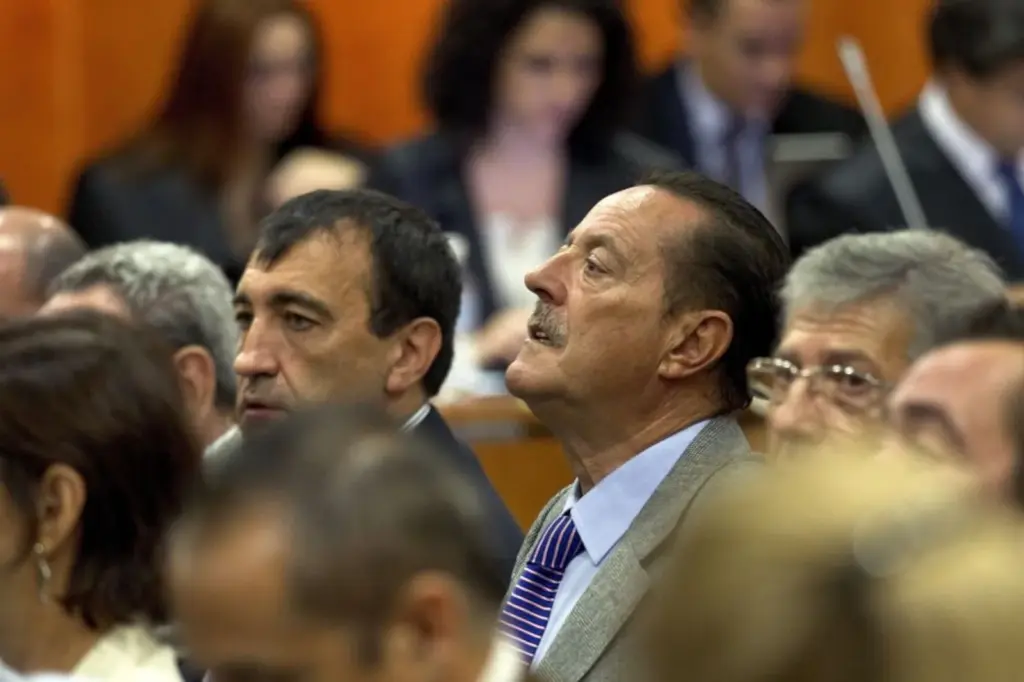
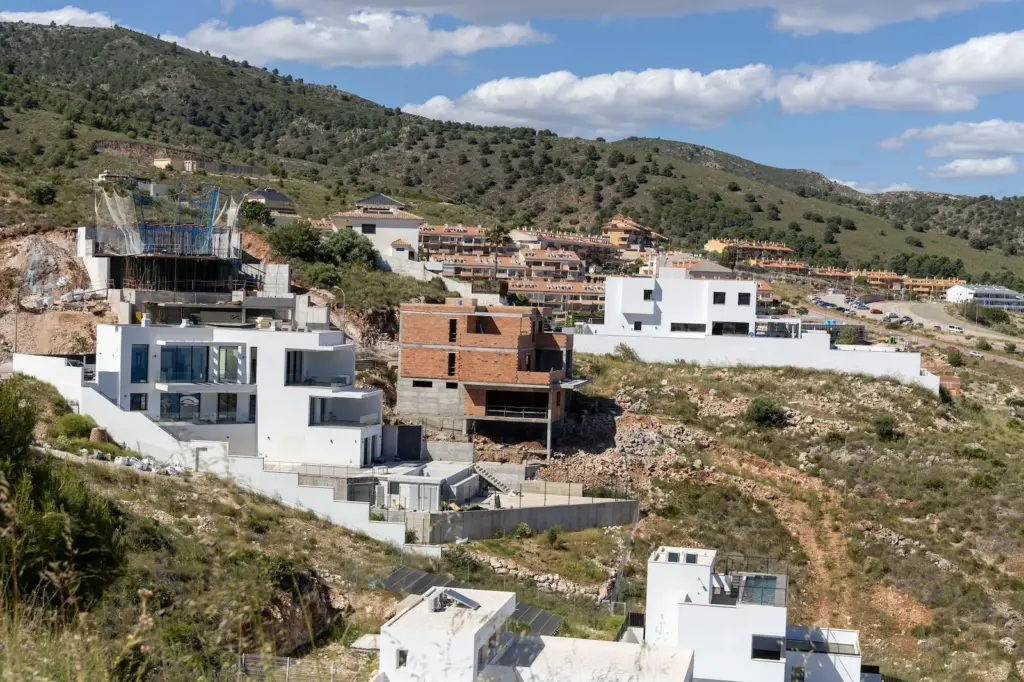
The document was started again and still has not been approved today. “We had a moment when territorial planning criteria sharpened, but now they are dormant again. If you look at the coastline, it’s a complete disaster, with very serious problems,” warns Vera, who believes the disruption occurs because each municipality goes its own way and because the private sector advances at full speed seeking profitability, while the public sector follows trying to provide services, but more slowly — to comply with the law — and with fewer resources. “Devouring urbanism is what has most marked the Costa del Sol in its recent history,” emphasizes Librada Moreno, spokesperson for Ecologists in Action in Mijas, who at 56 has been involved in environmental defense since she was 16. “Everything has been overexploited,” laments the activist, who also highlights the climate crisis and scarcity of natural resources in this territory, as demonstrated by the recent drought, which put tourism in check and kept much of its population under water restrictions and cuts for two years.
From housing to drug trafficking
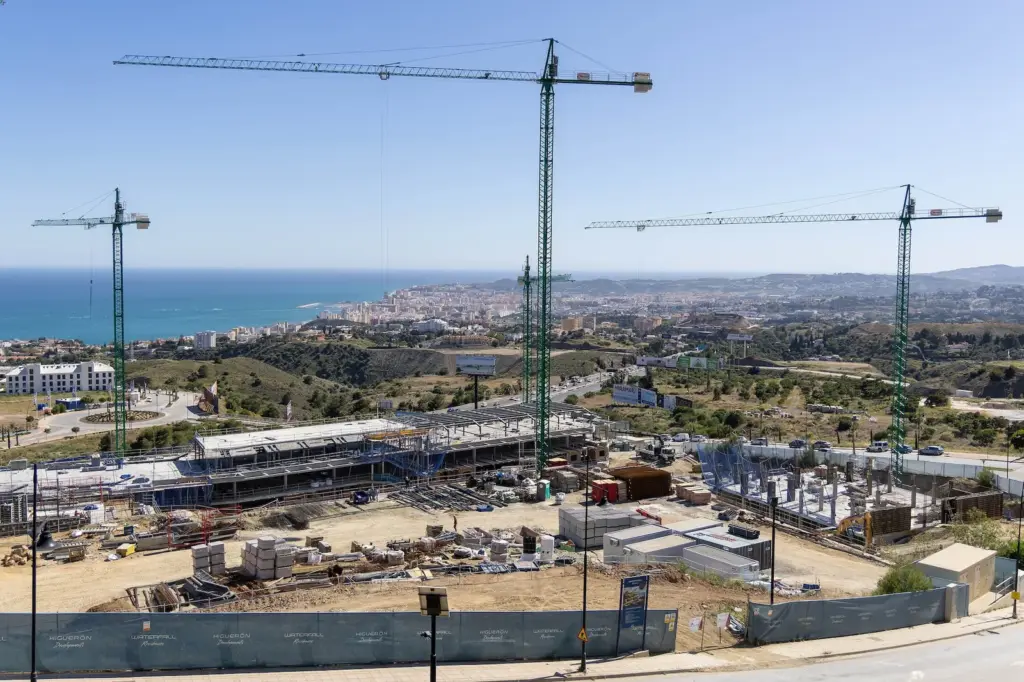
Beyond the environmental damage, the consequences of endless concrete growth are evident, especially in summer. On one side, mobility. Just get in the car to find the A-7 congested and a toll AP-7 that no one sees as a solution, not even if tolls were removed. The Cercanías — saturated, although in the process of doubling — only reaches Fuengirola, leaving Marbella as the only large city without a railway and the ambitious coastal train that has barely advanced in 20 years despite changes in state and regional governments. On the other side, the housing shortage, a paradox because at first glance it is easy to see dozens of large cranes building thousands of apartments along the coast year after year. “But most are for tourism, second homes, and especially investment,” assures Fernando Almeida, Geography professor at the UMA Faculty of Tourism, who explains how urbanism and tourism “go hand in hand” on the Málaga coast. “Investor confidence is higher today precisely because Marbella was forced to clean up its house publicly and exemplarily,” highlights Christopher Glover, head of Panorama Properties. As a result, the Marbella market is out of control, a situation that has spread to nearby municipalities like Estepona and Benahavís.
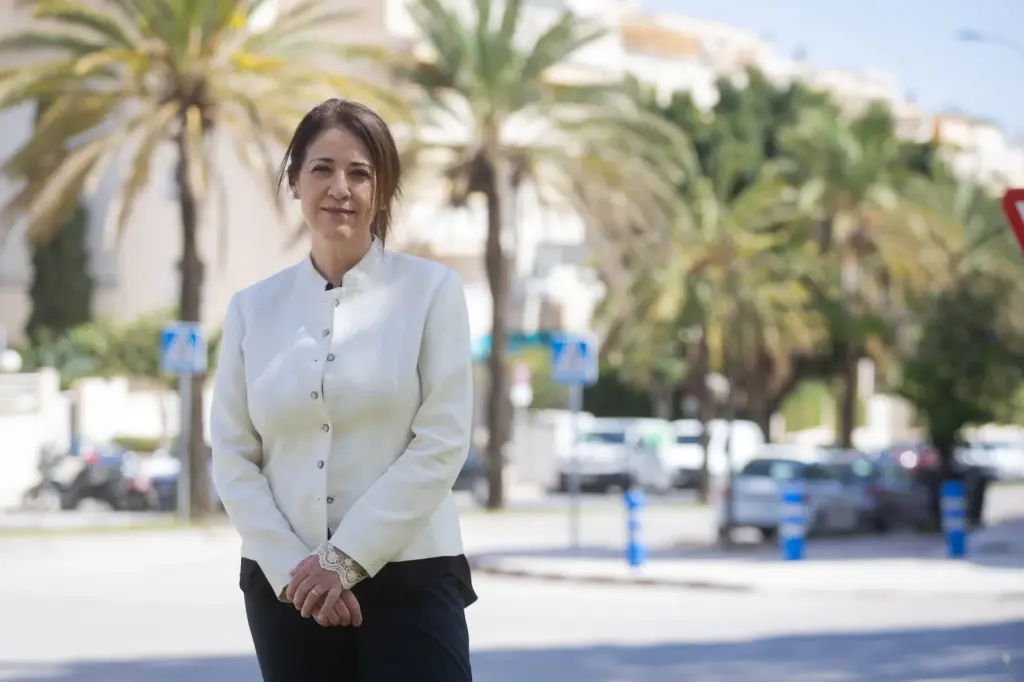
It is worth noting here that in those localities what already seems a systemic problem has also spread: organized crime. The number of organized gangs has multiplied in a territory that can no longer sustain more. That competition is the origin of the multiple shootings that occur each year. “It comes from the 70s and 80s, long before Malaya, but now it has become more complicated. It is a serious economic and social problem that is not being decisively addressed: only the police do their job and that is not enough,” says Alejandra Gómez-Céspedes, criminologist who coordinated the UN Office against Drugs and Organized Crime, warning of what many researchers say: the possibility that one day the bullets go astray and there are collateral victims. “There are war weapons everywhere. When was all this allowed to prosper?” she asks.
Read more Carmen Romero: “The right uses Felipe González and Alfonso Guerra”
Tourism without limits
Score-settling barely influences that great transversal activity and origin of the Costa del Sol, tourism, which generated 21.811 billion euros in 2025, according to data from the Provincial Council, which says there are 650,000 beds in 87,500 accommodations on this coast, 84,000 of them tourist apartments, worsening the housing crisis. “The destination is indestructible, but it no longer has much room to grow. Or it shouldn’t if it doesn’t want to end up destroying the territory,” warns Germán Ortega, professor at the Faculty of Economics and Business and member of the Andalusian Institute of Research and Innovation in Tourism (IATUR), who points to the capital as the main protagonist of touristification, the one that currently suffers its consequences the most. “Twenty years ago the city was a void, but tourism has entered disruptively, turning everything upside down and changing the city for better and worse,” he states.
His colleague Alfonso Cerezo, also from IATUR, emphasizes how Málaga politics increasingly focus on prioritizing the quality of tourism over quantity — mainly translated into higher spending and fewer travelers — but then celebrate the Costa del Sol breaking records year after year. Last year alone it recorded its best historical figure with 14.6 million visitors and Málaga airport also surpassed itself reaching 26.7 million travelers. “And we can’t keep growing forever,” he insists. Cerezo does celebrate, however, that more and more city councils are knocking on IATUR’s door seeking research and knowledge generation to serve as a basis for developing strategic tourism plans, also consulting citizens, in search of solutions and balance. Marbella, Mijas, and Torremolinos have already done so. “That never used to happen before and it’s good news,” adds the researcher. “The problem is that no matter how many rules you put in place, the economy, the market, always finds ways to overcome them,” warns Fernando Almeida, as evidenced by the growing touristification and gentrification of the capital and many other coastal areas.
Those three mentioned municipalities also have another point in common: they are governed by the Popular Party and the same happens in all those that make up the western and eastern Costa del Sol — except Manilva, where the local party Compromiso Manilva governs — in many cases with solid majorities. “After Malaya there was a clear shift to the right on the coast for several reasons. The main one being that the PSOE was already worn out in the Andalusian Government and the right gained positions in municipalities from a calm stance, without radicalism, as preached by Juan Manuel Moreno Bonilla. That way of doing things convinces, beyond the results of their policies,” explains Ángel Valencia, professor of Political Science at UMA.
Valencia also points out how many of these city councils are in robust health with mayors who seem untouchable. No matter what happens. He talks about José María García Urbano (PP) involved in several legal cases that do not wear down his leadership in Estepona; or Ángeles Muñoz (PP) in Marbella, with her stepson and her husband — now deceased — involved in a money laundering and drug trafficking case without diminishing her popularity since she took office, after Malaya, in 2007, except for a two-year hiatus. He also highlights a left “that shows some inability to regain political initiative.” “It does not generate convincing leaders, nor inspiring speeches or programs,” he indicates. A clear case, in his opinion, is Daniel Pérez in the capital, who has not been able to connect with citizens despite Málaga’s serious housing problem or touristification, which could have shaken the mayor, Francisco de la Torre. “The middle class has progressed and believes that the right protects its economic interests better than the left, although that may not be true,” concludes Diego Martín Reyes with the memory of Malaya still very present.