
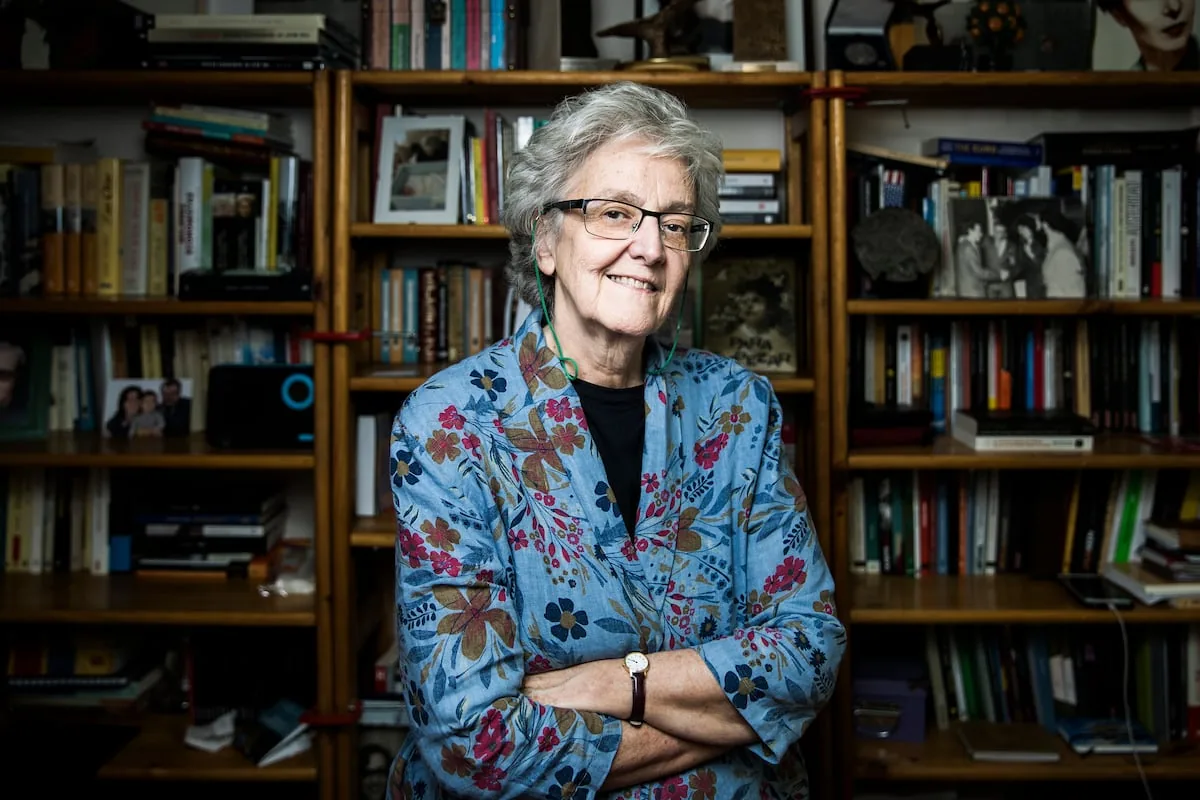
Soledad Gallego-Díaz, who passed away this Tuesday in Madrid at the age of 75, achieved the great journalistic exclusive of the Spanish Transition at just 26 years old: the publication in the magazine Cuadernos para el diálogo of the draft of the 1978 Constitution which, for reasons that today seem incomprehensible, was kept under strict secrecy. Since then, Sol was everything in Spanish journalism: the first female director of EL PAÍS —from June 8, 2018, to June 15, 2020—; deputy director under three different directors (Juan Luis Cebrián, Joaquín Estefanía, and Jesús Ceberio); correspondent in Brussels, London, Paris, New York, and Buenos Aires; sent to numerous international events such as the end of the USSR; political reporter; delegate in Seville; reader advocate; editorialist; professor at the School of Journalism.
In recent years, she published a weekly column in the supplement Ideas under the heading Punto de observación, as well as a collaboration with Cadena SER. These were texts where information prevailed over opinion, often with surprising titles, written in a direct and effective language, with which many readers started their Sunday newspaper. They were always governed by a rule that marked her entire career: Sol never told anyone what to think, nor did she try to impose her opinion amid a flood of words and adjectives. On the contrary: she forced us to think, sometimes against ourselves, with arguments and data.
Above all, Sol was one of the ethical and professional pillars, inside and outside EL PAÍS, for several generations of journalists who found in this woman, warm and tough at the same time, a reference in the confusing and exciting times that this profession has lived through in recent decades. She received every imaginable award; but no recognition or position in the newsroom made her stray an inch from the reporter she always was: a brave journalist who believed in free information, in the search for truth, and in the importance of journalism to improve society.
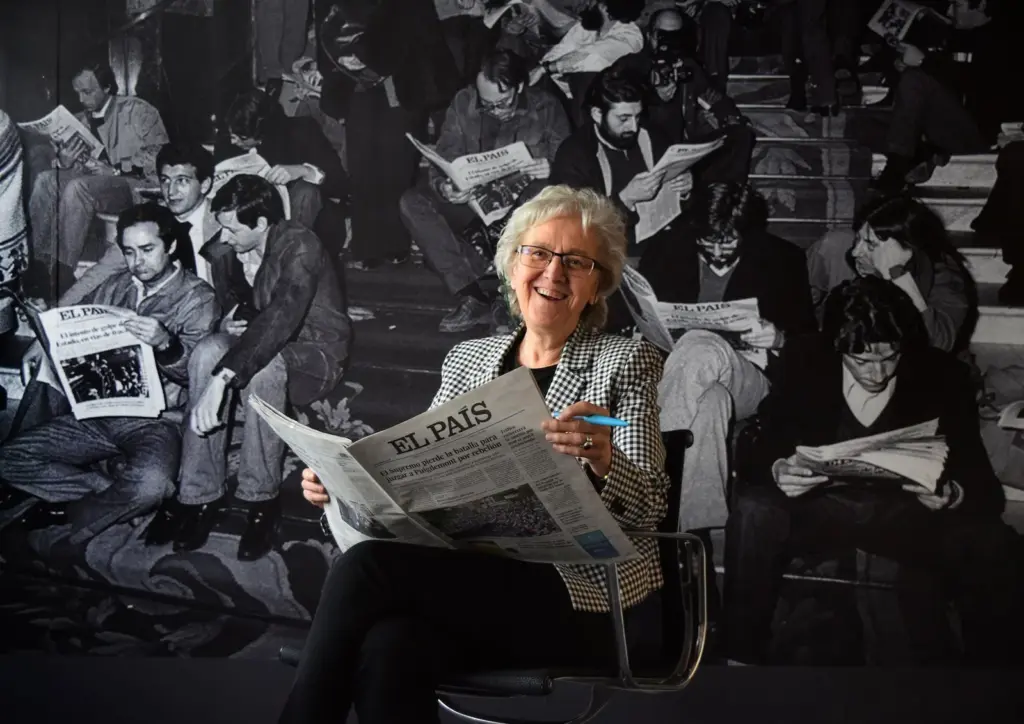
Sol was a newsroom journalist —one of the reasons she rejected Juan Luis Cebrián’s first offer to become director of EL PAÍS in 1988 was to not move away from what she considered the vital center of journalism—, who knew how to work in a team and was always willing to share her vast knowledge. The speech she gave in 2018 when she received the Ortega y Gasset award for her entire career, shortly before being appointed director, summarized her professional principles: “It is the newsrooms that make the media great. The rarest and most magnificent thing about newsrooms is that they do everything better because they do it together, because they respect the same professional procedures, because we learn from each other and because we collaborate with each other. Because, thanks to that shared culture, we know how to identify good and bad journalism.”
The last public event she participated in was the awarding, in April, of the Aurelio Martín Prize for Journalistic Ethics, granted for the first time by the Federation of Journalists’ Associations of Spain (FAPE). The jury’s decision was unanimous. She was surrounded by journalists from many generations. She was already very affected by cancer, but she went up to the stage to deliver a speech in which she launched an idea that has been fundamental in her life and career: the inalienable capacity to say no. She argued that for a journalist doing what they want is very difficult because they are subject to the (almost military) discipline of a newsroom, but they can always refuse to act against the fundamental principles of the profession. In fact, one of Sol’s iconic phrases when she was against something was: “Well, no.”
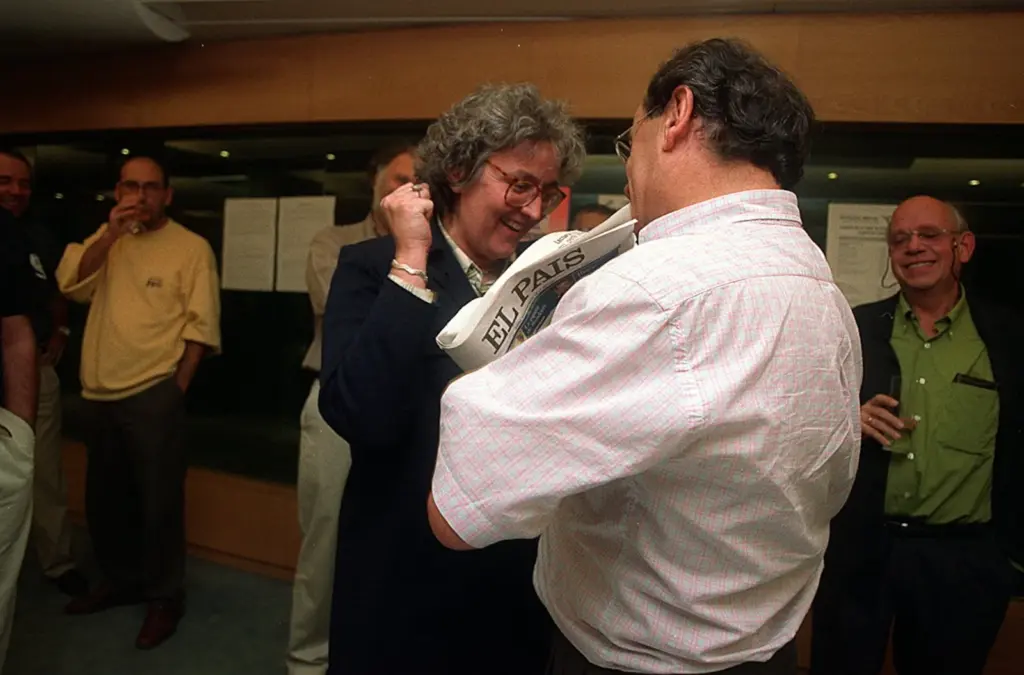
The first time Sol got into serious professional trouble was precisely for saying no. She worked at the Pyresa agency, which was part of the Movimiento press chain, and was fired in May 1975 for striking alongside Bonifacio de la Cuadra, one of her great life and professional companions. She was one of the few women in that newsroom, and her dismissal also had that dimension: standing firm in a profession and a country that barely made room for them. That agency was her first job, when she was still at the Official School of Journalism.
Her political commitment came from her family. She was born in Madrid on April 21, 1951: her mother, Cuban, met her father on a trip to Spain. Her father was José Gallego-Díaz Moreno, a mathematician, communist, and republican who was persecuted. He had to give private lessons at home attended by a then young engineering student named Juan Benet. In Otoño en Madrid hacia 1950 the novelist wrote about Sol’s father: “An hour of mathematics with him provided work for 12 or 15 hours of study during the seven days of the week.”
However, as the exclusive that marked her career would demonstrate, that commitment never interfered with her work as a reporter: she was always where the facts took her and always believed in the need for citizens to be informed, without any tutelage from power over what they should or should not know. Sol also did not accept any paternalism for being a woman, quite the opposite. And it was not exactly easy to be a journalist in Spain in the early years of the Transition. “Being a woman and young awakened paternal instincts that professionally were terrible for you because you didn’t need a father, what you needed was to be left to work in peace,” she said in a podcast of the Madrid Press Association. Her feminism always had that mark: it was less a banner than a way of being in the profession. She did not ask for permission, did not ask for protection, and did not ask to be reminded that she was the first or the only one: she asked to be left to work, and from there she paved the way.
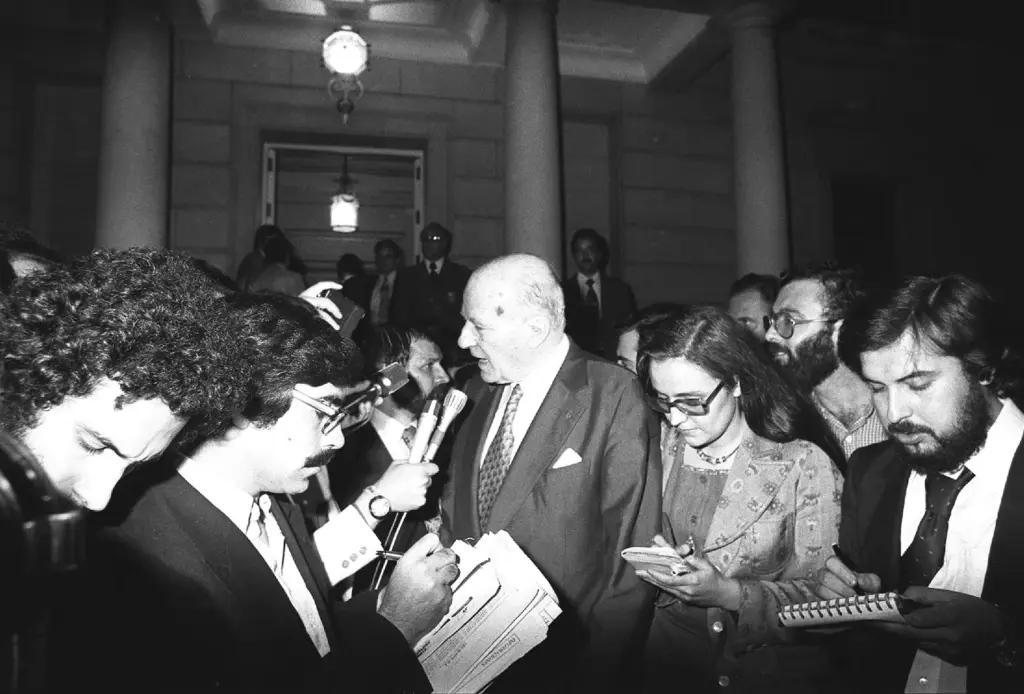
The constitutional exclusive summarizes the concept she always had of the profession. I must confess that I am not unaware of that story: when it was published, my father, Pedro Altares, was the director of Cuadernos, one of the magazines that grouped the opposition to Francoism, and it fills me with immense professional pride for the civic courage shown by the protagonists of that news. As Gallego-Díaz explained in the documentary of the series En primicia dedicated to her figure, the draft circulated among Spain’s centers of power but remained secret. It was held by the unions, the episcopal conference, the parties, the Crown… but not the citizens, who were the ones who would live under that new law.
Three journalists from that newsroom on Jarama Street in Madrid, Gallego-Díaz, José Luis Martínez —another of Sol’s life companions— and the late Federico Abascal, convinced that there was no reason to keep that text in the dark, set out to find it until they did and published it in November 1977. They were accused of irresponsibility and endangering the constitutional project. But nothing happened, quite the opposite: its publication improved the text, opened a public debate on some crucial aspects of the draft.
The three reporters published the following week a delightful account of that exclusive in which they showed it was not a stroke of luck but a thorough and exhausting job. That text, like some of the titles of her Ideas articles —Drinking poison and hoping your enemies die was one of them—, reflects another trait of Sol: she was a woman with a great sense of humor, with a frank and sincere laugh —although when she got angry it was better to be several kilometers away—. The authors of the leak also explained something that was true then and has only worsened: “The Spanish political class of one and the other sign feels a special devotion for mystery and is decidedly effective at covering their most innocent tasks under seven veils.” And they confessed that while waiting for the source —whose name has never been revealed— they consumed two bottles of a “very good” red wine. Wine was one of the hobbies that accompanied Sol all her life, along with reading, conversation, friendship, and travel.
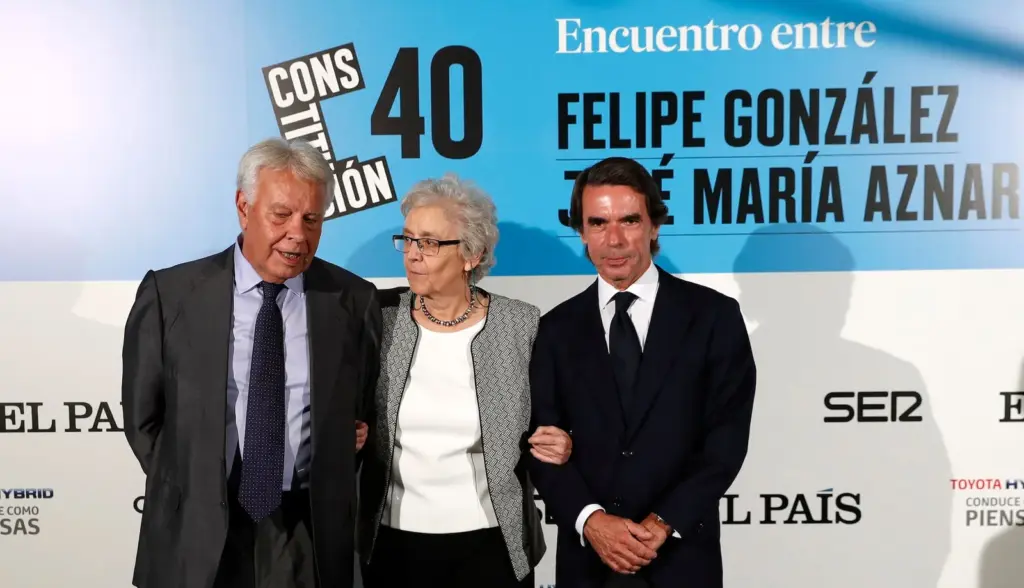
Cuadernos para el diálogo closed in 1978 and, although she collaborated almost from the launch of the newspaper, she was hired by the first director of EL PAÍS, Juan Luis Cebrián, himself a former cuadernícola. Cebrián has always considered Sol the best journalist of this newspaper, as he emphasized when she received the Ortega y Gasset award for her entire career. It is not only about the number of news stories she covered for EL PAÍS, but how she transmitted to the entire newsroom, from the different positions she held, inside and outside the organizational chart, a way of understanding journalism and practicing the profession, as an open and constant debate, but with red lines that must not be crossed.
Many EL PAÍS editors have some of her phrases engraved: “The profession of journalist demands an immediate commitment, from the moment you start”; “In a newsroom, a boss can make mistakes, but what they cannot do is not make decisions”; “In my youth, I would have been very angry if someone had told me that journalists want to have a brand, because I would have thought they took me for a detergent. Back then we wanted to have a signature”; “Journalists must believe that truth exists”; “The goal of journalism is to turn a multitude of news into information”…
From EL PAÍS, she covered the early years of the Transition, the beginning of negotiations for Spain’s entry into the then European Economic Community —which left her with a deep pro-European feeling throughout her life—, the ruthless Thatcherism in the United Kingdom, the birth of the Le Pen phenomenon in France, 9/11 in New York, the presidency of Cristina Fernández de Kirchner in Buenos Aires… She touched all genres and when she had been too long in offices, she ran out to the street to write and report. As deputy director, her role was fundamental in establishing the common professional culture that still governs this newspaper and also, in 1998, she was crucial in launching several supplements that equated EL PAÍS, in quality and volume, with those Sunday editions of the Anglo-Saxon press that had to be taken away from the kiosk with a wheelbarrow.
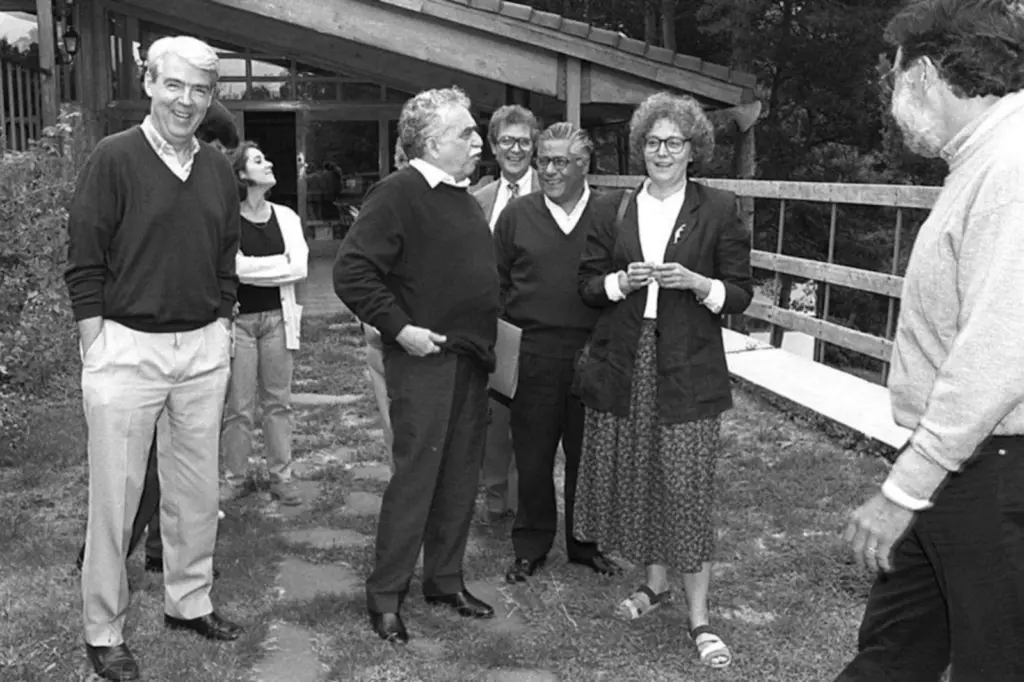
Reviewing the hundreds of articles she signed in almost five decades is a feast of the best journalism. The title of one of her columns as a reader advocate quite sums up her creed: “Is there anything worse than a boring lead?”. Sol’s correspondences were important not only for the big stories but also for the small ones. It is moving to read the chronicles she wrote about the sadness and loneliness of the great Hispanist Gerald Brenan in an English nursing home and his desire to return to the town of Alhaurín el Grande in Málaga. Xavier Vidal-Folch, who shared deputy direction with Sol and many other adventures, recalled when she received the Aurelio Martín award another quality that marked her long career: her instinct. “She was always the first to know what was cooking and where things were going,” he explained.
She rejected Cebrián’s first offer to head the masthead, although the person who took the direction was another of her soul friends, a companion since the Cuadernos days, Joaquín Estefanía. Many years later, in 2018, at a delicate moment in EL PAÍS’s history, she accepted the direction and left a peaceful partial retirement to lead the newspaper. She was the first woman to direct EL PAÍS in its more than 40 years of history, but Sol did not want to make it an event. She did not give speeches about glass ceilings nor turned her appointment into a personal matter: she assumed it with the same naturalness with which she had entered every newsroom since Pyresa, as someone who accepts a task that must be done well. Her feminism was always like that: she did not declare it, she exercised it. And by exercising it, she opened doors that were previously closed.
She immediately appointed Joaquín deputy director, a position of utmost trust. Supported by a very capable team that brought together journalists from several generations, with the enthusiasm of the newsroom —in the consultative vote she obtained 97% support, with only six votes against and two blank—, and Joaquín’s wisdom, Sol had the trust and complicity of the readers.
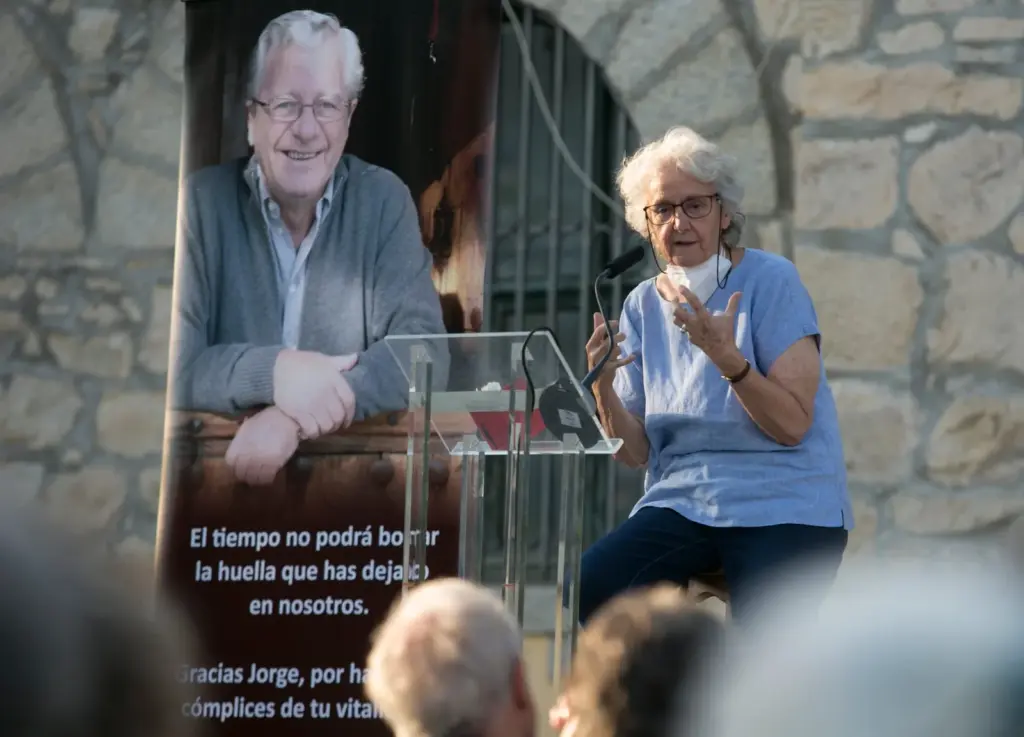
She also led one of the most difficult coverages in the newspaper’s history: the pandemic, with all journalists at home. She always thought technology was a tool that helped journalism without changing its essence, and she demonstrated it with that feat, which had the push of the entire newsroom, which she described as “formidable and powerful” when she left the direction two years later. Also under her leadership, in May 2020, the payment system was established to guarantee the newspaper’s survival. It was a huge milestone in EL PAÍS’s history, which Sol decided to delay three months due to the pandemic so as not to deprive readers of essential information.
During the two years she was at the helm of the newspaper, she demonstrated an unusual capacity for work. She undertook an intense reform of the newsroom and, in addition, the change to the payment system forced many internal dynamics to be modified. Shortly after arriving, she made another decision that marked her mandate: launching the investigation of pedophilia in the Catholic Church in Spain, which expanded to America, a colossal work that is still ongoing and has triggered profound changes and compensation for the victims. It is a project that reflects two other professional creeds of Sol: journalism has the power to influence reality much more through information than opinion, and it has the duty to give a voice to those who do not have one. In June 2020, with a sense of mission accomplished, she left the direction of the newspaper to return to writing —and reading—.
“If I have to be remembered for something, let it be for the honesty and independence of my work. I believe in my profession,” she said in an interview. All of us who had the luck to know and love Sol can say about her what Javier Pradera, EL PAÍS’s great editorialist, who she deeply admired, wrote when he passed away: “He was an ironic and affectionate friend, willing to lift your spirits in the worst moments and not let you get too carried away in the best.” The best tribute we can pay her —apart from having a glass of good wine— is to apply her advice and never give in to the intolerable. “We cannot prevent what happens, but we must not accept it” was another of her great phrases. And we should remember that we always have the right and duty to say “well, no” when they try to impose something on us against the principles she conveyed to us.
Read more Goodbye to stains on car upholstery with this biodegradable cleaner that will leave it like new