








“Hunting stopped being a sporting and leisure activity a long time ago and became a large-scale business.” This is how Miguel Ángel Hernández, spokesperson for Ecologistas en Acción of Castilla-La Mancha, summarizes the proliferation of private aerodromes linked to hunting in this region. The province of Ciudad Real alone has at least five airstrips of this type, some only 30 kilometers apart. And there will be another if the regional government authorizes the one that the company Nortia plans to build on the El Molinillo estate, in Retuerta del Bullaque, next to the Cabañeros National Park.
The project, which has been made public for consultation, includes a runway almost two kilometers long and 30 meters wide, a parking platform, a hangar, and a reception building for passengers. It will host about 100 operations per year, two per week. The runway does not touch the national park, but the takeoff and landing maneuvers will affect, Hernández denounces, several areas of the Natura 2000 Network where protected species such as the black stork, imperial eagle, black vulture, or lynx live. “The list is endless,” says the spokesperson of this organization, which is already preparing objections to the project.
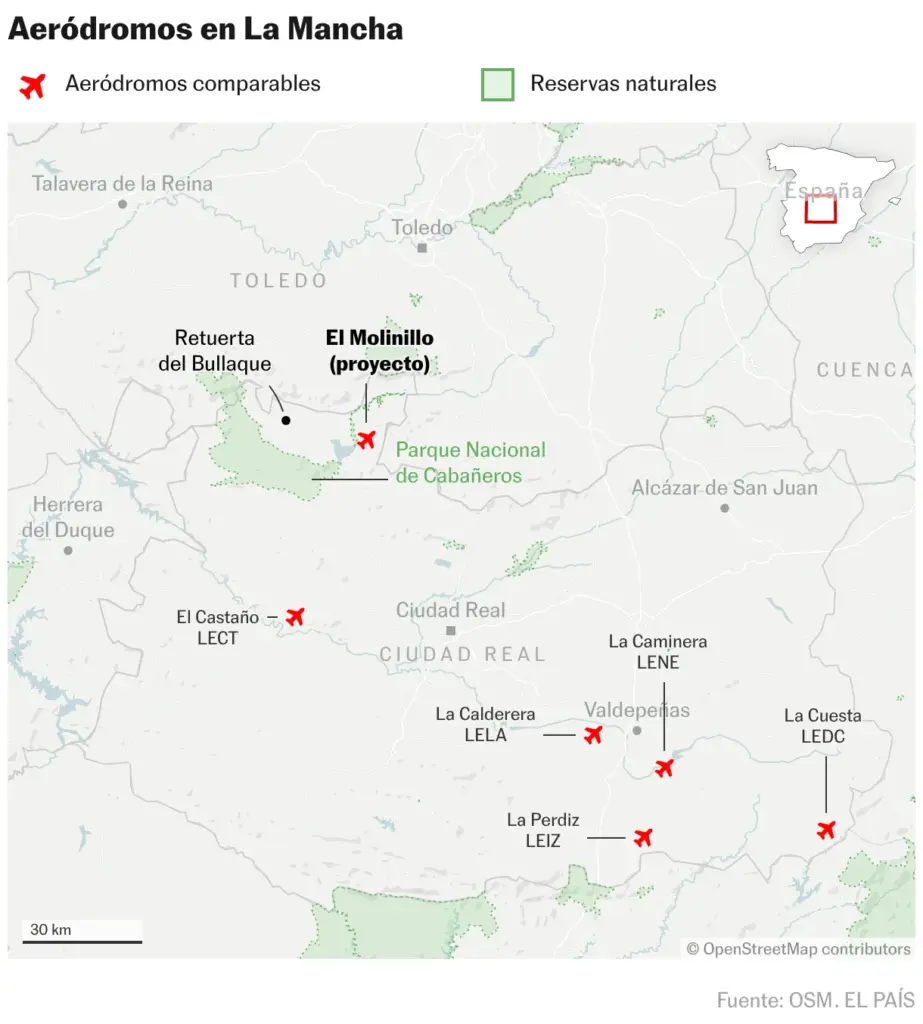
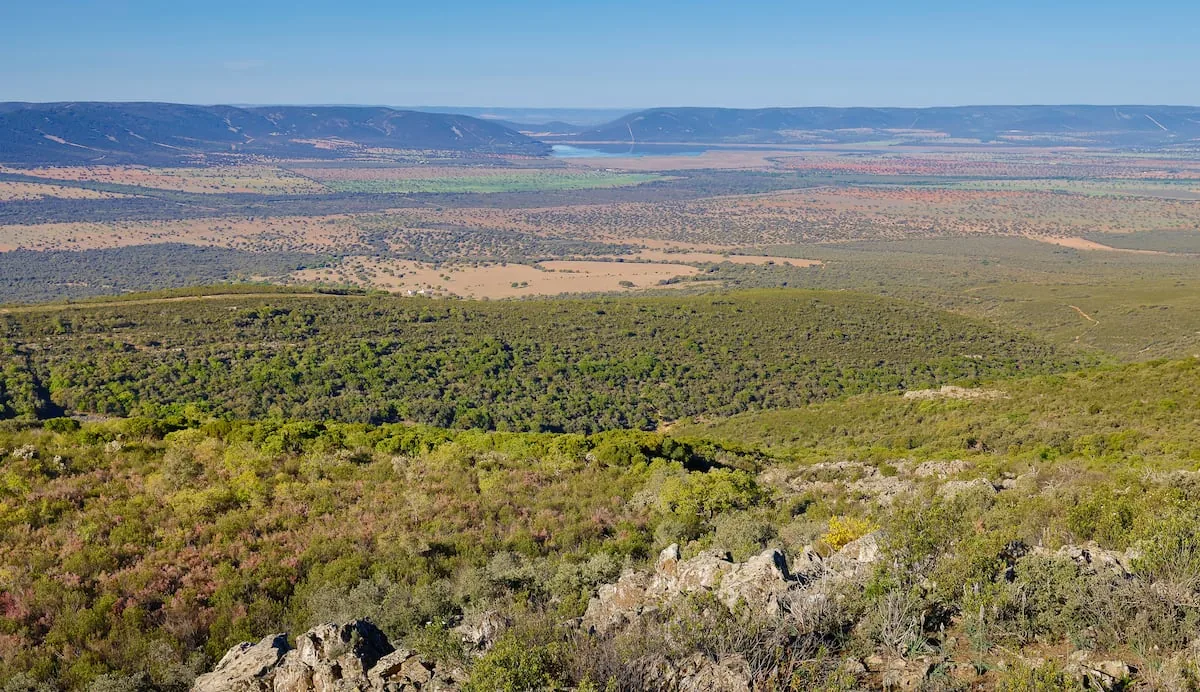
The Ministry of Sustainable Development of the regional government maintains that it is “too early” to assess the feasibility of the installation, “still in a very preliminary phase.” The aerodrome is planned about 9 kilometers from Cabañeros and 4 kilometers from the Quintos de Mora estate, also belonging to the Autonomous National Parks Organization, but Ecologistas en Acción recalls that the management plans for the affected Natura 2000 Network areas, among which this runway “fits,” only allow aircraft passage “in emergency situations.” “We can think of few less suitable places to install a private airport for hunting purposes like this one,” Hernández says, breaking down the natural jewels of the Montes de Toledo and the risk that the presence of numerous soaring birds poses to low-altitude civil aviation.
The installation promoted by businessman Manuel Lao, one of the richest in Spain according to Forbes magazine, will compete with other hunting-oriented aerodromes in municipalities such as Torrenueva, Torre de Juan Abad, Luciana, Castellar de Santiago, or Puebla del Príncipe. Also with the Ciudad Real airport, privately owned, which this year has resumed its activity as a hub for this high-flying hunting tourism, traveling from other communities and European countries, even from the United States, and aiming to reach, if possible, the hunting reserve itself by private jet.
“These types of infrastructures allow saving time and not having to arrive in Madrid and take a vehicle to drive two and a half hours to reach the hunting reserve,” Luis Fernando Villanueva, president of the Association of Hunting Property Owners and Holders of Castilla-La Mancha (Aproca), tells EL PAÍS, highlighting the “specific” weight of this activity in the region and its contribution to rural areas, with an annual economic impact of 1.141 billion euros and about 21,000 jobs, almost 9,000 of them direct, in 2023.
However, Ecologistas en Acción criticizes this “intensive” hunting model, with hunters paying thousands of euros for a complete package on these estates that, in addition to lodging and meals, offer deer, wild boar, or mountain goat hunts and red partridge drives. “Full-on luxury,” says Hernández, in which “the maximum possible captures are guaranteed, over-sizing the populations.” Villanueva denies this and assures that the volume of captures is “hyperregulated” in hunting management plans, hunting bans, hunting regulations, and nature conservation laws. Intensive reserves, now called “commercial hunting quarters,” represent barely 2% in Spain and 7% in Castilla-La Mancha. “It is the basis of the economy of many towns and in many cases accounts for more than 50% of employment,” he states. He also adds the importance of drives to reduce the “overpopulation” of species such as deer or wild boar and the risk of zoonoses or transmission of wildlife diseases.
34 estates in a single town
But these types of projects, sold to towns as a lever to pull them out of economic obscurity, also generate doubts and rejection among some inhabitants of these areas. “Hunting, along with agriculture, is an important and necessary resource, but this practice must be done in a balanced way and that is often difficult to control on these private estates,” says Adrián Navas, a resident of Pueblonuevo del Bullaque, a hamlet of Retuerta, who points to the “lack of knowledge” many neighbors have about this activity and the fear that “rumors or false promises” will spread. Hunting, he notes, “generates wealth and employment, but it is temporary employment and often precarious.” The mayor of Retuerta del Bullaque, Miguel Ángel Villa (PSOE), defends the aerodrome that will be built 20 kilometers from his town. “Let the environmentalists come and take away the vultures that kill the sheep,” Villa complains, who also criticizes the lack of measures to prevent the “overpopulation” of ungulates in Cabañeros. “There are things that were being done well and now we are ruining them.”
There are 34 private estates dedicated to hunting in Retuerta del Bullaque alone, according to its mayor, who is blunt when talking about the benefits this hunting tourism brings to the municipality. The El Molinillo estate, which now aims to have a runway, covers 4,200 hectares and provides work, he assures, to more than 20 locals. Many of these estates, owned by the wealthiest families in the country, also have wineries and restaurants accessible to few pockets. “They bring chauffeurs, bodyguards, those who come with the hunting dogs… All those people stay in the town. It’s not just the hunt, it’s everything they move together,” Villa highlights, who does not foresee setbacks with the building permit that the Town Hall would have to grant to this new aerodrome once it receives approval from other authorities: “When it reaches us, we’ll see what we do, but for now, I don’t see any problem.” Meanwhile, Ecologistas en Acción insists: “If we go overboard with this, we will have as many planes or more as when they wanted to turn Cabañeros into a shooting range for the Air Force.”