








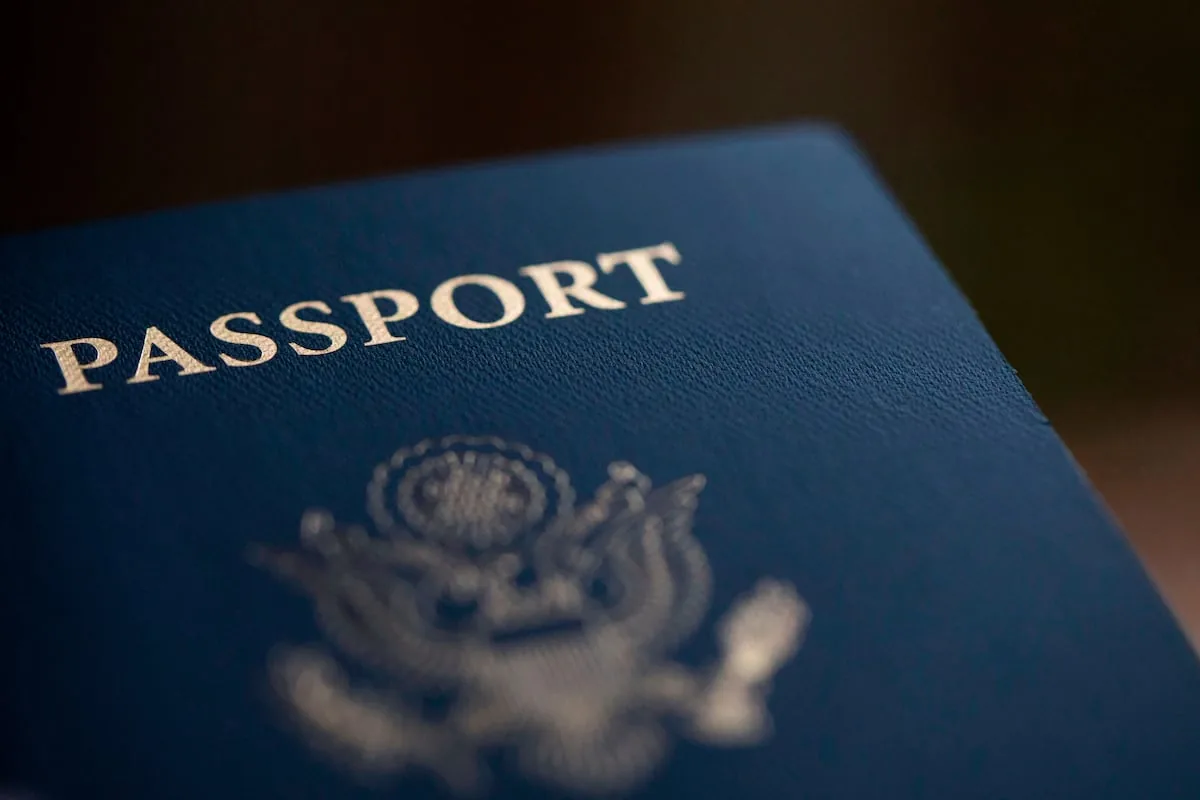
Parents who do not pay child support will face significant punishment. The United States Department of State will begin revoking passports of citizens who have substantial child support arrears, as part of a policy that the Trump Administration presented as an effort to strengthen enforcement of federal laws and compel those with overdue payments to get current.
Read more The Trump Administration begins declassification of documents on UFOs and “extraterrestrial life”
The measure will start to be applied this Friday and, in an initial phase, will target people who owe $100,000 or more in overdue child support payments, according to information published by the Department of Health and Human Services (HHS). According to figures cited by the Associated Press agency, around 2,700 passport holders would initially fall into that category.
However, the federal government confirmed that the program will be expanded to include any citizen with debts exceeding $2,500, the threshold established by a federal law passed in 1996. Until now, that provision had been applied in a limited way and mainly affected people trying to apply for or renew a passport.
“Under the Trump presidency, the Department of State is using sensible measures to support American families and strengthen compliance with U.S. laws,” the Department of State said in a statement issued this Thursday. The agency added that the policy seeks to prevent those who owe significant amounts of child support from “failing their legal and moral obligations to their children.”
The legislation that allows these sanctions was included in the Personal Responsibility and Work Opportunity Act, signed by then-President Bill Clinton in 1996. The law authorizes the Secretary of State to “revoke, restrict, or limit a passport” of people identified by the federal government as delinquent in child support payments.
Although laws vary by state, deliberate non-payment of child support can carry criminal consequences in certain cases, along with sanctions such as wage garnishment, license suspension, or restrictions on obtaining a passport. In countries like Spain and Colombia, repeated failure to pay child support can constitute a crime and lead to criminal penalties, in addition to civil measures such as liens.
In 2005, another law lowered the application threshold from $5,000 to $2,500. Despite this, the provision had rarely been used to revoke already issued passports. Generally, the penalty consisted of blocking new applications or renewals.
Under the new scheme, the Department of Health and Human Services will notify the Department of State about all people with arrears exceeding $2,500. Those who already have a passport could lose it even if they are not undergoing any immigration or consular process.
The government states that the program has already proven to be an effective tool for recovering overdue payments. According to data from the Department of State, since the policy began to be applied more systematically in 1998, states have recovered around $657 million in outstanding payments. More than $156 million would have been collected in the last five years through more than 24,000 single payments.
Authorities also noted that, since the AP reported in February the plans to expand the program, “hundreds of parents took action and settled their arrears with state authorities once it became known that the Department of State would proactively begin revoking passports.”
“Although we cannot confirm a causal relationship in all those cases, we are taking this measure precisely to urge these parents to do the right thing for their children and for U.S. law,” the Department of State added.
The Trump Administration urged anyone with child support debts to regularize their situation as soon as possible to avoid losing access to their passport. “Any American who has a considerable child support debt should agree on payment with the relevant state or states right now to avoid having their passport revoked,” the agency said.
Once revoked, the document will no longer be valid for travel and the affected person will not be able to obtain a new one until the outstanding payment is covered and the corresponding state authorities report that there is no longer a debt registered with HHS.
The Department of State also indicated that those who are outside the United States at the time of revocation must go to a U.S. embassy or consulate to request an emergency document that allows them to return to the country.
So far, the Department of State has not detailed how many people could be affected when the policy is expanded to the general $2,500 threshold, although officials acknowledged that the number could rise to several thousand more.