
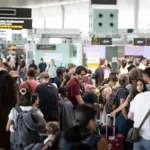


The Venice Biennale experienced a day shaken by the strike called against Israel’s participation in the major contemporary art event, which forced the total or partial closure of about twenty national pavilions. Among them was Spain’s, which suspended its official opening and ended up closing in a climate of confusion due to the clash between the artistic team, who supported joining the protest, and the institutional managers of the space, dependent on the Ministry of Foreign Affairs.
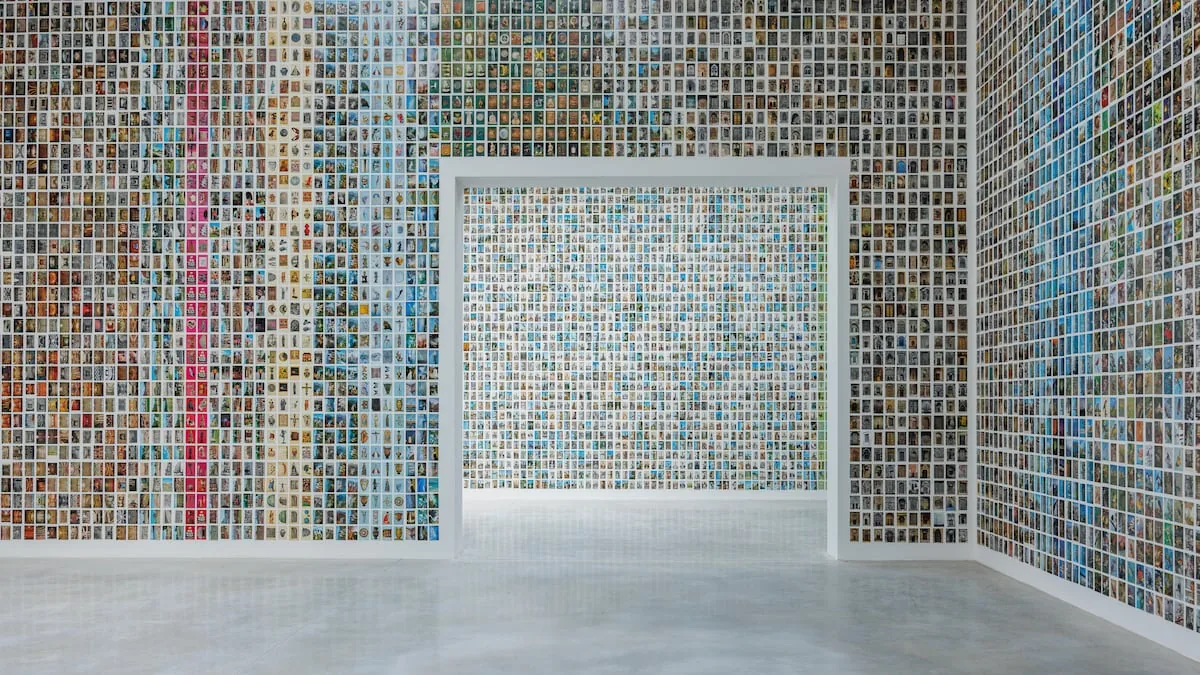
The pavilion, which exhibits a celebrated installation of the immense postcard collection by artist Oriol Vilanova, opened normally early in the day but suspended the speeches and the official opening cocktail, scheduled for noon. During the morning, the pressure to join the strike through a total closure grew as neighboring pavilions closed or suspended part of their activity.
After one in the afternoon, the artistic team decided to close the pavilion. A sign was placed on the door informing visitors: “Due to the artistic team’s strike, the pavilion will remain closed all day.” Shortly after, a coordinator linked to the Spanish Agency for International Development Cooperation (Aecid), in charge of managing the pavilion, reopened the door, removed the notice, and reproached the team for not having the right to close unilaterally, according to several attendees. The scene led to a chain of calls and hierarchical consultations among institutional officials.
First, a temporary closure until 3 p.m. was authorized by the Ministry of Culture, despite the pavilion being under the jurisdiction of Foreign Affairs. Later, after further consultations with government officials and in view of the growing inactivity in the venue, it was decided to definitively close the space for the rest of the day. The pavilion’s commissioner, Carles Guerra, states that the team’s position had been clear for days. “Both the artist and I were in favor of closing. The artistic team wanted to join the strike, although it was made clear to us that the decision about the closure did not depend on us. Today was the opening day, so the outcome was very eventful,” Guerra summarized.
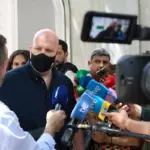
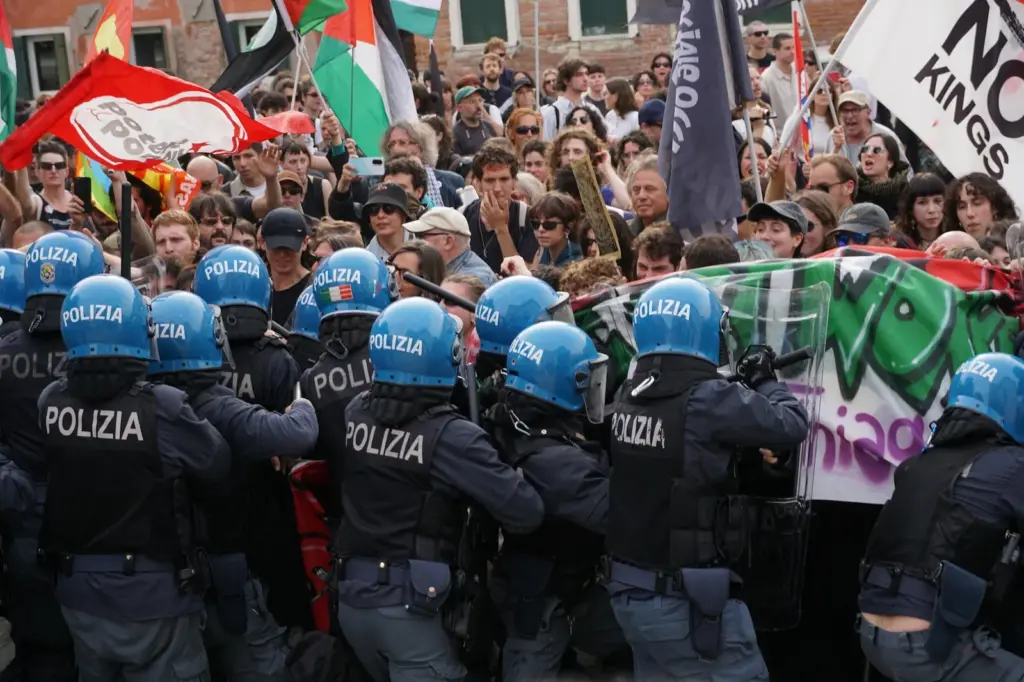
The strike, called by Art Not Genocide Alliance (ANGA)—the most active group against Israel’s presence in cultural events—along with local associations and cultural unions, disrupted the usual operation of the two Biennale venues at the Giardini and the Arsenale, turning the last day of the pre-opening reserved for press, curators, and professionals into an international protest, just before the event opens its doors to the public tomorrow, Saturday. The strike had two main focuses: denouncing the presence of the Israeli pavilion and what activists consider a cultural legitimization operation of Israel amid the offensive on Gaza, but also protesting against the precariousness of many cultural workers who support major events like the Venice Biennale.
Read more The ABC network accuses the Trump Government of attacking its right to freedom of expression
The protest affected pavilions such as Austria, Belgium, Egypt, Japan, the Netherlands, South Korea, France, Finland, Luxembourg, Poland, Slovenia, Turkey, Malta, Cyprus, Ecuador, Ireland, Portugal, Lebanon, the United Kingdom, Switzerland, Lithuania, and Qatar, although with varying degrees of participation. Some closed all day, while others did so only for a few hours or suspended specific activities. Within the main exhibition, some works were covered, intervened with Palestinian flags, or accompanied by support signs, such as those by artists Tabita Rezaire or Alfredo Jaar, who incorporated signs of solidarity.
The mobilization culminated with a demonstration of about 2,000 participants, which started from the nearby Via Garibaldi heading towards the Israeli pavilion, located in the Arsenale.
The protest is part of a Biennale marked by controversy. In addition to the rejection of Israel’s participation, there is the return of Russia to the event for the first time since the invasion of Ukraine in 2022, as well as the last-minute collective resignation of the international jury responsible for awarding prizes, which were also suspended and replaced by an award for the best pavilion and best artist to be granted by the public at the end of this edition, in November. The Venice Biennale, for its part, has defended its commitment to freedom of expression and pluralism, and has reiterated its opposition to banning countries from participating in the event.
Read more Euromillions: check Friday, May 8 draw