







Archaeologists Ernesto Toboso Suárez and Josefa Martí Solano, from Gerión Archaeology and the Underwater Archaeology Center of the Andalusian Institute of Historical Heritage, have made public in their study Extraction and documentation of the artillery from the Delta I shipwreck that 27 cannons from a 17th-century French ship and 18 silver ingots, weighing approximately half a ton, have been found in the Bay of Cádiz. [This text is an excerpt from the weekly archaeology bulletin of EL PAÍS, ‘Cuatro piedras’.To receive the newsletter, you can sign up here].
The discovery —reported in the now published Proceedings of the I Ibero-American Congress of Nautical and Underwater Archaeology (2021)— is a result of “the dredging carried out for the construction of the new container terminal in Cádiz.” Thanks to these works, three shipwrecks (Delta I, II and III) were found. The studied pieces belong to Delta I, whose name at launch is currently unknown.
The archaeologists acknowledge that the find is “decontextualized from the shipwreck.” It is unknown whether the cannons were distributed around the ship after its sinking or moved due to dredging operations. Three of the pieces show damage: one is missing the muzzle and the third, a trunnion. “These cannons, unusable for firing, could be part of the ballast, or perhaps the damage occurred from use on board shortly before the shipwreck. It is noteworthy that no carriage remains have been found.”
Read more Goodbye to falls in the shower thanks to the ultra-strong grip of this non-slip mat
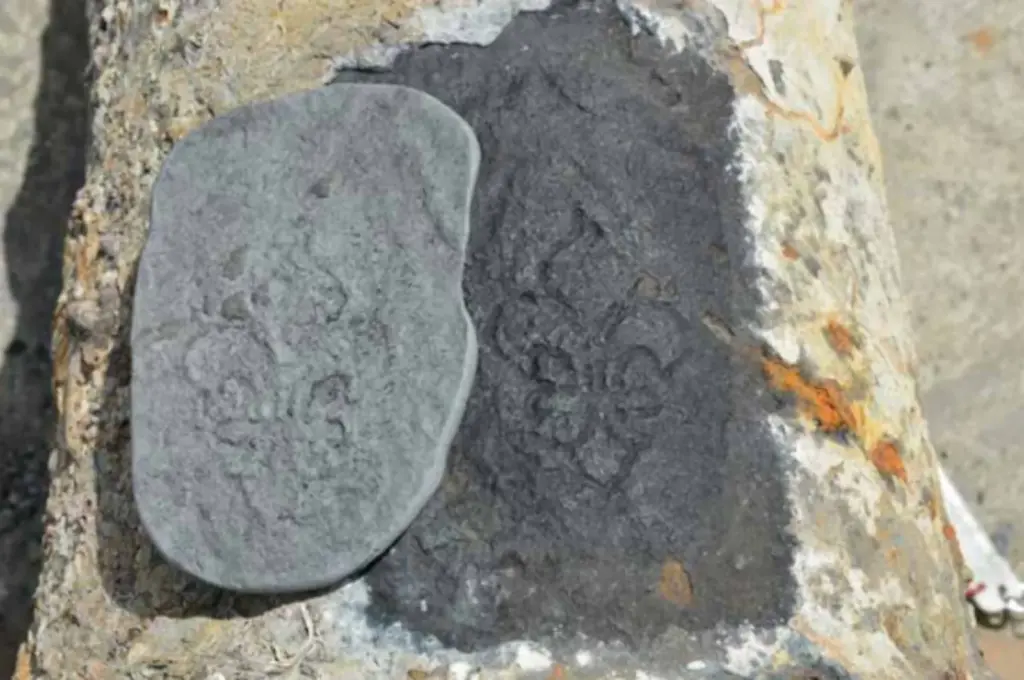
Toboso and Martí conclude that “it is a ship of Ibero-Atlantic construction.” From the artillery analysis, they deduce it was a vessel “in the service of France.” Specifically, it would be a French ship carrying Swedish artillery pieces (finbankers), traded through Dutch merchants, who were intermediaries in this type of product. In total, they have documented five different calibers from the third quarter of the 17th century.
The archaeologists also found 18 silver ingots “that were smuggled on board, weighing approximately half a ton.” One of the ingots bore the minting date: 1667. “The trade of precious metals was heavily regulated by the Spanish Administration and, although Seville held the monopoly, Cádiz, due to its excellent natural conditions, was also used for loading and unloading galleons coming from America.”