




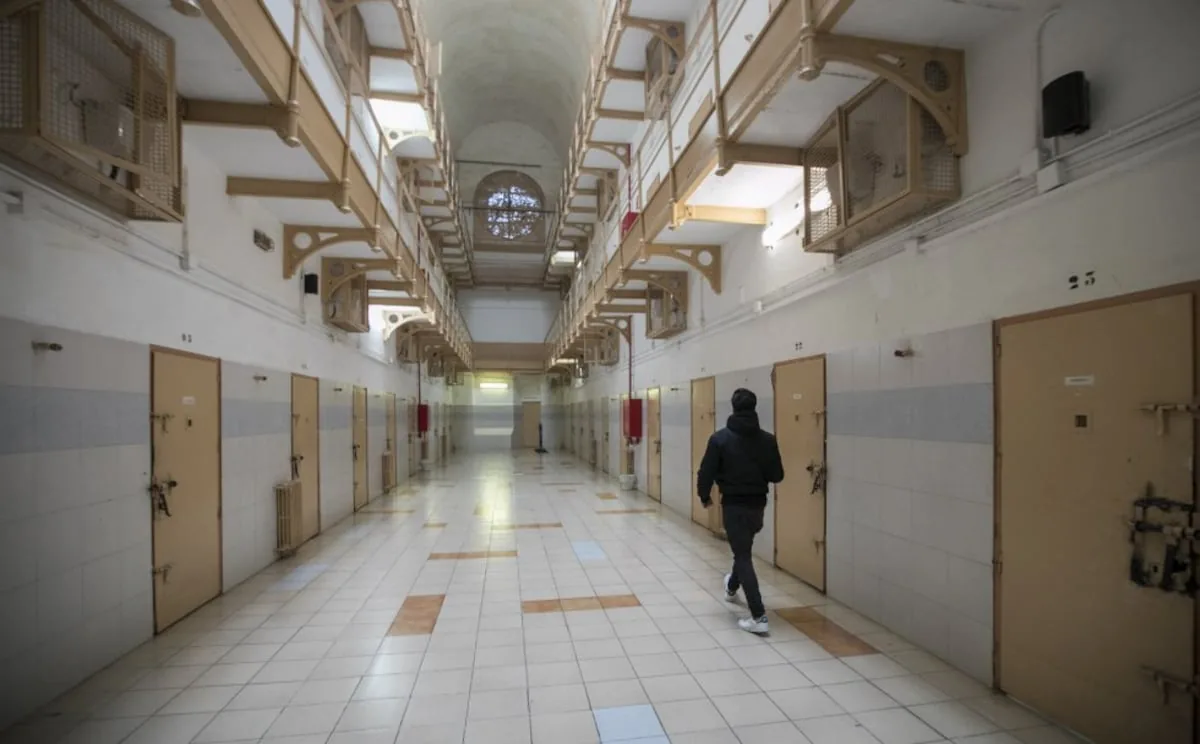
Barcelona has presented the Strategic Plan for Memory Policies of the City Council 2026-2030, a roadmap that seeks to strengthen a plural, inclusive, and transformative historical memory in the city and in centers such as La Modelo and the Montjuïc Castle. The plan, presented this Thursday by the Deputy Mayor for Social Rights and Democratic Memory, Raquel Gil, at La Modelo, emphasizes that in the face of the increase in hate speech and misinformation, the text advocates for a memory aimed at defending human rights and preventing democratic regressions. “Democratic values cannot be defended without looking at memory,” Gil stated.
Read more The Valencia Court confirms the indictment of Ximo Puig’s brother
With this document, Barcelona aims to become a European benchmark in public policies of democratic memory through a transversal model capable of integrating heritage, education, public space, culture, technology, and community participation. The plan, which has an initial investment of 6.7 million euros, is structured around three main axes: the preservation of heritage and reparation, the dissemination of historical knowledge, and the construction of a plural and inclusive memory.
Among the main actions is the creation of the La Modelo Memorial Center, which will turn Gallery 4 of the former prison into a reference space on historical memory and human rights. A Terrorism Interpretation Center will also be launched at Montjuïc Castle, a memorial space dedicated to recognizing victims of terrorism and combining a permanent exhibition with research, outreach, and educational programs. Likewise, the street name directory will be updated with criteria of democratic memory, historical rigor, and gender perspective.
In the second axis of the plan, education, research, and dissemination are promoted as the main tools for transmitting democratic memory. This includes exhibitions, educational programs with participatory methodologies, and school visits to spaces such as La Modelo to bring history closer to all citizens.
Read more AI sneaks into the war narrative: memes, wordplay, and fake images
As the final area, a choral and inclusive democratic memory is built through collaboration with other administrations and entities.
The plan incorporates a gender, anti-racist, and human rights perspective in all projects, as well as in the creation of an interactive website called “Barcelona slaveholder: cartography of a silenced memory” or the dissemination of LGTBI memories, among others.
The text has been developed thanks to a collective and participatory process, with different memorial entities, research centers, citizen groups, and municipal facilities that have contributed their experience, knowledge, and sensitivity.