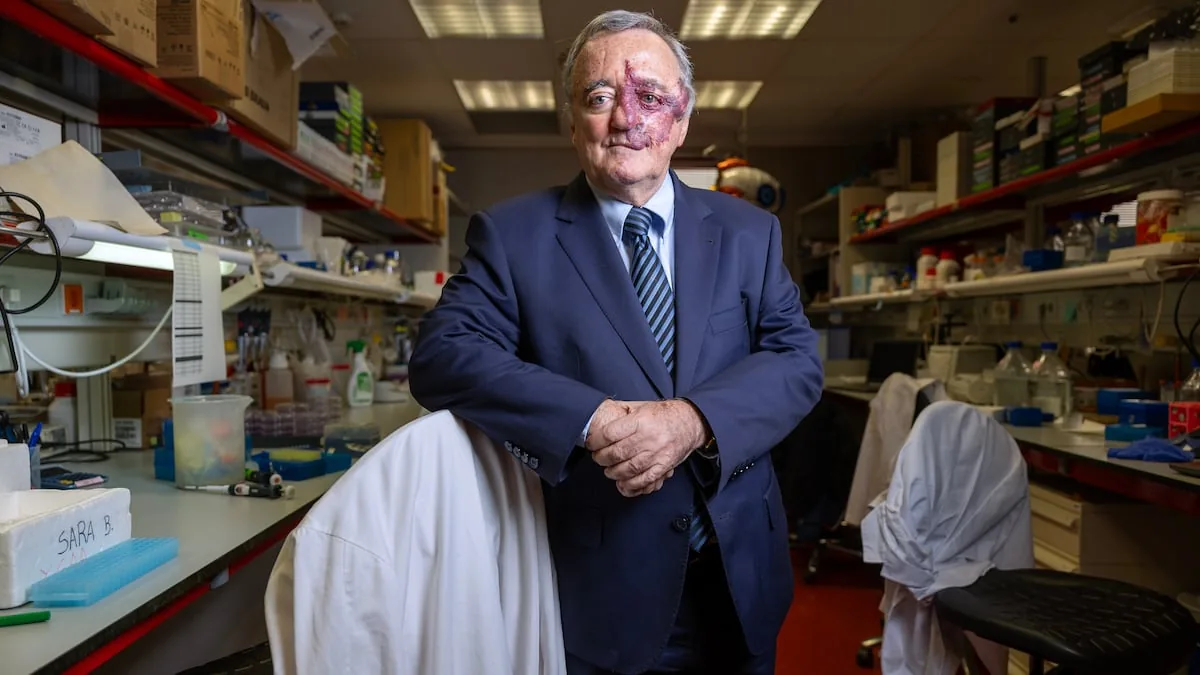








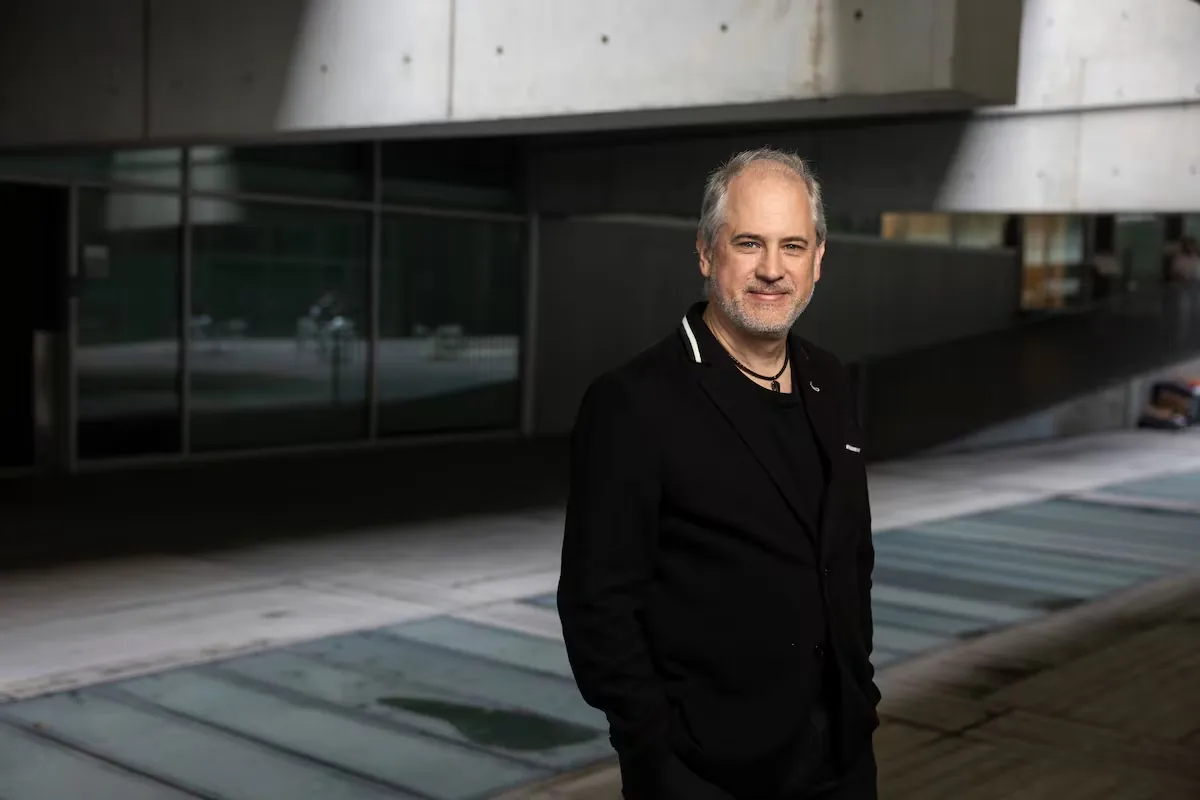
Carlo Maley (New Hartford, USA, 57 years old) looks a lot to nature for answers. This scientist, trained in evolutionary biology and computer science and director of the Arizona Cancer Evolution Center, investigates how tumors progress and how they can be stopped, but he does so from a very particular perspective: observing and analyzing how cancer suppression mechanisms have evolved in large and long-lived animals, such as elephants and whales.
Read more The lack of enforcement of protocols against sexist violence extends the silence in the culture
“We believe that nature has found ways to prevent cancer on multiple occasions in animals,” he says. And perhaps we can learn from it: “The question is what all the innovations evolution has discovered are and if we can find them and try to use them in humans.”
Observing elephants and whales is no coincidence. In these animals, a curious biological contradiction arises that has sparked the interest—and debate—of the scientific community: Peto’s paradox. This theory suggests that if tumors originate from a single cell that goes rogue and starts reproducing uncontrollably, it would be logical that the more cells there are in a body, the higher the chances of having cancer; and also, since cancers occur due to the accumulation of mutations, the more times a cell divides, the higher the chances it will suffer a mutation. According to this premise, animals with larger bodies and longer lifespans should have more cancer than smaller animals with short lives. But this is not always the case.
Here is the paradox: elephants, for example, despite being larger and having many more cells, have less cancer than a human or a mouse. And that is, Maley says, because “evolution has given whales and elephants better ways to prevent cancer than humans.” The scientist visited Barcelona to participate in the annual Biomedical Research Conference organized by Pompeu Fabra University and to visit the Barcelona Beta Brain Research Center. He speaks to EL PAÍS shortly after the scientific presentation, in which he presented a suggestive approach to combat cancer resistance.
Question. How does nature suppress cancer in elephants and whales?
Answer. We are beginning to study it. In elephants, we discovered that they are very sensitive to detecting damage in their DNA and then kill the cell that has the damage: they have 20 copies of p53, which is the most important tumor suppressor gene we know; this gene detects DNA damage and triggers cell death. Regarding whales, we do not have such a developed story: it seems they repair their DNA better than humans, but they do not do so with additional copies of the p53 gene.
Q. How can nature help us understand cancer?
A. If we look at the history of elephants, nature is teaching us to use DNA damage detection as a very important way to prevent cancer. So, we can start asking how we can do that. Joshua Schiffman, who worked with us on the elephant story, has created a biotechnology company to try to use the p53 protein to see if we can use it as a drug to eliminate damaged cells.
Q. Why don’t humans have mechanisms as sophisticated as elephants to protect ourselves?
A. Natural selection only improves what is causing us death or what helps us reproduce more. If a mouse has 1,000 times fewer cells than us and lives only two years, it does not need much protection against cancer, so natural selection has not incorporated it. However, if many started dying of cancer in nature, there would be natural selection for new mutations and variants that would prevent it. Essentially, there has been more selection to prevent cancer in elephants and whales than in humans, which is why we do not have those additional protections.
Q. As a society, we have the goal and desire to cure cancer. Is it more realistic to make it chronic than to eliminate it?
A. I think we have been carried away by our obsession with curing cancer. The goal of medicine in general, and oncology in particular, should not be the cure, but to prolong life and improve its quality. The cure is one way to achieve this, but we have become so obsessed with it that we have not thought about how to prolong life and improve its quality without a cure. So yes, we aspire to turn cancer into a chronic disease that is controlled, like diabetes or HIV infection, which we do not cure, but we control. We are exploring these ideas on how to control cancer so we can live with it, but not die from it.
Read more Contentar a Junts y Podemos: the Government’s puzzle to approve the major housing decree
Q. In some tumors, even if you make it chronic, the person ends up dying from cancer.
A. Not necessarily. Of course, controlling it indefinitely would be the best scenario. But I would already be happy just to add decades of life and a good quality of life. That would be a great victory. Currently, in practice, if life is prolonged a few months, it is considered a great success. And I find that pathetic. A few months… We should be talking about years or decades!
Q. In precision oncology, the goal is to understand the biology of cancer, and to look, for example, for treatments for tumor-driving mutations. What do you think of that approach?
A. I think the idea of analyzing the biology of the tumor if it has a particular mutation and we have a drug for that mutation is reasonable. But it does not solve the problem because, even if all cells have that mutation, they will develop resistance to the drug quite quickly.
Q. In the end, is the problem resistance?
A. There are actually two big problems. One is simply getting some response: that is why, often, we take a drug and it does nothing to the tumor. That precision oncology I mentioned is a way to find a drug that gives some response, but the next big problem is that, even after getting the response, resistance to the drug will develop.
Q. You propose using the lowest possible dose. Can you explain it?
A. The observation is that the greater the selective pressure, the more cells are eliminated, the faster resistance develops. One way to understand this is that all tumor cells compete for resources like oxygen, glucose, amino acids, and so on. If 99% of sensitive cells are eliminated and the remaining 1% are resistant, they are freed from all competition. They no longer have competitors. They have much more space and resources, and tend to proliferate quickly and aggressively. If a lower dose is used, so that only some cells are eliminated, many competitors remain and resistant cells find it harder to expand quickly. That is the fundamental idea: the less drug, the less pressure for resistance development. Therefore, it takes longer to develop.
Q. What is the level of evidence for this approach?
A. In cancer, there have been six experiments with mice that have shown this is an effective way to delay resistance or even prevent it. And a clinical trial has been conducted in which the time before resistance occurred was doubled, and there are several clinical trials underway, but no results yet. Therefore, it is still very early. It is not clear if it will work, but we have high hopes.
Q. Is this strategy valid for all stages of cancer?
A. This is only for types of cancer that you think you cannot cure. If a cancer has not metastasized, if it is still contained in the organ where it originated, we can usually cure it with surgery. One vision of the future is that we develop measures to estimate the probability that we can achieve a cure. And if we believe it is unlikely, we resort to this type of adaptive therapy procedures.
Read more The ‘Cerdán case’ is revived with new investigations