






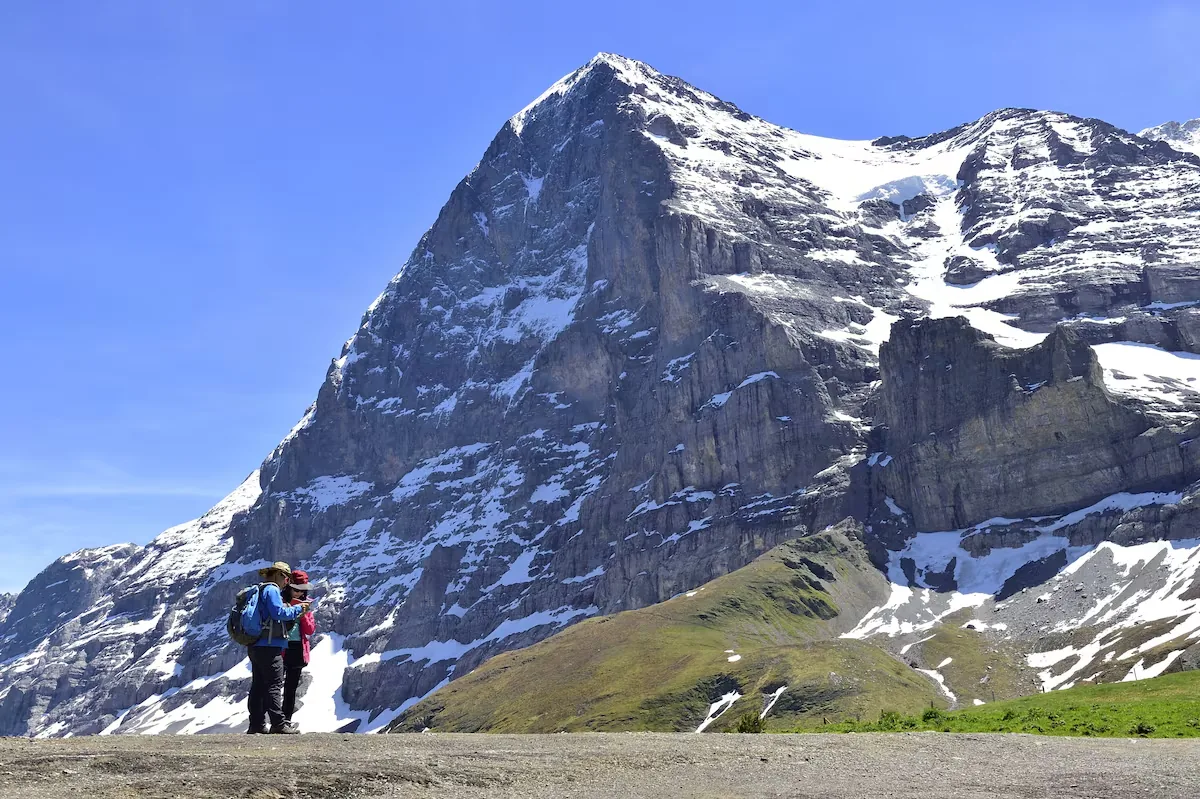
The north face of the Eiger, an intimidating endless wall of rock, ice, and snow with a vertical drop of 1,800 meters belonging to the Swiss Bernese Alps, had not yet been climbed in 1936, a ‘problem’ to solve, also a matter of propaganda for the Nazi regime. The events that took place that July, which this week mark their 90th anniversary, shaped for decades the way mountaineering was narrated, as if this activity had to be eternally linked to dramas, epic situations, pain, and loss. The weight of the tragic history of the conquest of the Eiger’s north face has only been alleviated in recent years by the emergence of a new way of understanding mountaineering and managing the inherent risk. Great feats have ceased to be a matter of heads or tails, giving way to scientific training supported by a deep knowledge of the environment, materials infinitely more suitable than those used nine decades ago, precise weather forecasts, or the absence of inappropriate extrinsic motivations such as nationalism.
In July 1936, Toni Kurz and Andreas Hinterstoisser were Germans but not necessarily aligned with Adolf Hitler’s regime. Their propaganda minister, Joseph Goebbels, decided to use the excessive passion of both young men for high mountains to exalt the Aryan race and celebrate the values of the Third Reich within the framework of the Berlin Olympic Games. In the Nazi ideology, Kurz and Hinterstoisser could only succeed and become patriotic heroes or die and be remembered as martyrs. The latter happened.
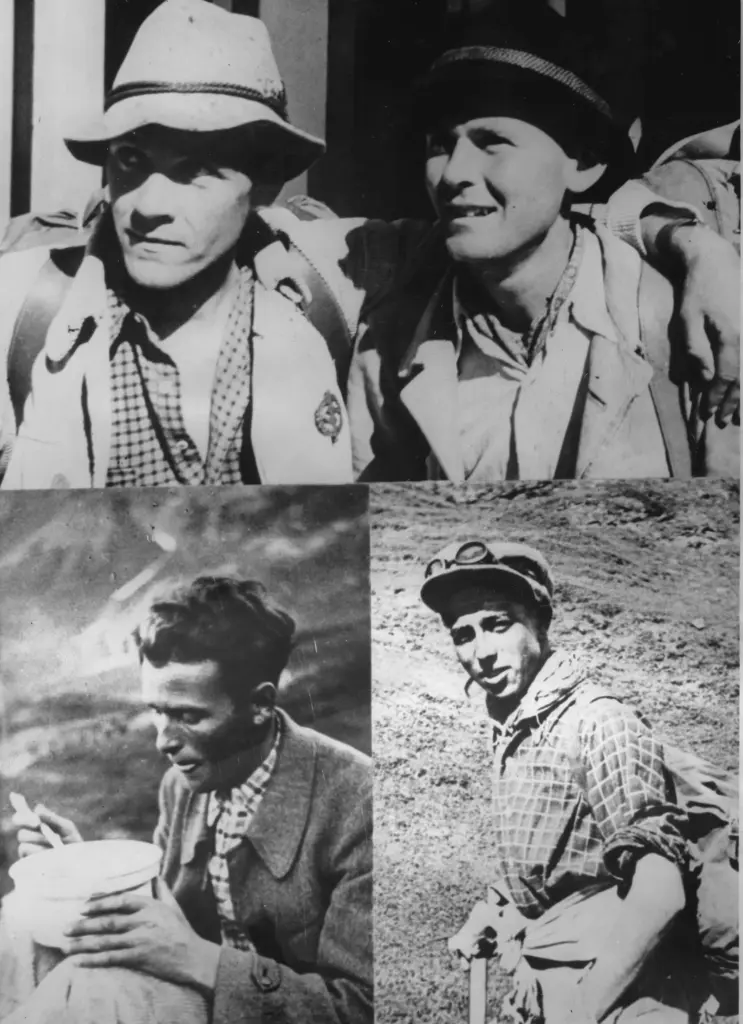
On July 18, the same day the Spanish Civil War began, Kurz and Hinterstoisser chose the trench of the Eiger, their own war, with uncertainty as the enemy: was it even possible to climb the north face, the Nordwand that the Germans already knew as the Mordwand or death face? To their surprise, they were not alone, which was curious in itself: local authorities had repeatedly banned any incursion on the face, tired of seeing how all who tried never returned. The terrace of the Kleine Scheidegg train station and its panoramic binoculars had become the biggest local summer attraction, with all tourists eager to see a climber fall. That day, Austrians Willy Angerer and Eduard Rainer had also started climbing the face, and when the four met at the foot of a delicate traverse, they decided to join forces and work as a team. The most skilled climber of the group, Hinterstoisser, led the traverse over vertical rock slabs, moving from left to right over a breathtaking void. His great mastery allowed him to overcome the difficulty and fix the rope for the others to pass. But after finishing the traverse, the group decided to remove the rope, a gesture that condemned them to death. At the height of the first large snowfield on the face, a rockfall injured Angerer, but they decided to keep moving and bivouac. The next morning, visibly slowed by the injured man, they reached the second snowfield and a small hollow known as the “death bivouac” to spend the night. The following day, near reaching the last third of the face, the Austrian pair lowered themselves and called for help. The Germans were advancing with real chances of successfully completing their endeavor but finally decided to come to Angerer and Reiner’s aid.
Then began a retreat threatened by the arrival of bad weather, slow, delicate, and with an injured man worsening rapidly. When they reached the traverse from the first day, Hinterstoisser realized they had made a major mistake: the rock face was now impassable, covered in ice. They should have left a fixed rope to ensure their retreat but did not. Their only option was to perform several rappels over the overhanging rock section. If all went well, they would reach a ledge that would lead them to one of the windows of the railway crossing the mountain (today, the train that runs inside the mountain remains a major tourist attraction). While placing pitons in the rock to make the anchor for the last rappel, an avalanche dragged Hinterstoisser. Not being tied, he died instantly. Angerer and Kurz also fell, but being tied by the rope to Reiner, he acted as a brake, becoming horribly wedged against the rappel anchor and dying of asphyxiation under the weight of the two bodies. Angerer also died at that moment, hitting his head. Only Kurz remained alive. A handful of seconds had been enough to cut short three lives. But Kurz’s situation was dramatic: shouting for help, he managed to get a railway worker to hear him and raise the alarm. Swiss guides came to his aid, but night was falling, the storm was intensifying, and they promised to return the next morning with a plan to reach him: he was hanging 40 meters above them.
Read more The lack of enforcement of protocols against sexist violence extends the silence in the culture
Dawn returned Kurz alive but with a severely frostbitten hand. The guides asked him to release Angerer’s corpse from the rope. He did. Then, with one hand, he managed to climb up the rope to the belay where Reiner acted as a counterweight. There he untied the rope and spliced several sections before throwing it down within reach of the guides, who tied a new rope so he could rappel safely. But this new rope was barely 30 meters long, so another had to be passed to him, which he knotted to get an adequate length. That knot proved fatal. Kurz began to rappel with the help of a carabiner and a dynamic knot (which allows controlled descent on the rope), but upon reaching the knot joining the ropes, the carabiner got stuck. Kurz had no strength to solve the problem. He said “I can’t go on” and died just three meters from his rescuers. It was July 22.
Two years and two days later, the north face of the Eiger was finally climbed by Germans Anderl Heckmair and Ludwig Vörg and Austrians Heinrich Harrer and Fritz Kasparek. This event was indeed exploited by the Third Reich and its propaganda apparatus. Hitler himself, along with the Interior Minister Wilhelm Frick and the German sports leader and SA chief Hans von Tschammer und Osten, received them on August 1, 1938. Heckmair never joined the National Socialist party and rejected the publicity. On the other hand, Vörg died in the Nazi operation against the Soviet Union in June 1941; Kasparek was imprisoned by the Allies after the war due to his rank as SS sergeant major, and Heinrich Harrer, due to his links with the SA and SS, was captured by the British in Tibet from where he managed to escape and returned to Austria in 1952, where he wrote the famous book Seven Years in Tibet.
In 2007, Swiss Ueli Steck starred in one of the most amazing episodes in mountaineering history: he solo climbed the original route of the Eiger’s north face in 3 hours and 54 minutes. A year later, even without a rope, he lowered his record to 2 hours and 47 minutes. For many, this was the gesture that forever broke the old alpine narrative, its dark literary history. On the most tragic mountain stage that exists, Steck decided to break with the anguishes of the past and declare that physical and technical excellence, strategy, and meticulous planning might not prevent deaths in the mountains but would reduce them to a minimum among the discipline’s vanguard. The future would go that way. Others came later to confirm it.
Read more Contentar a Junts y Podemos: the Government’s puzzle to approve the major housing decree