







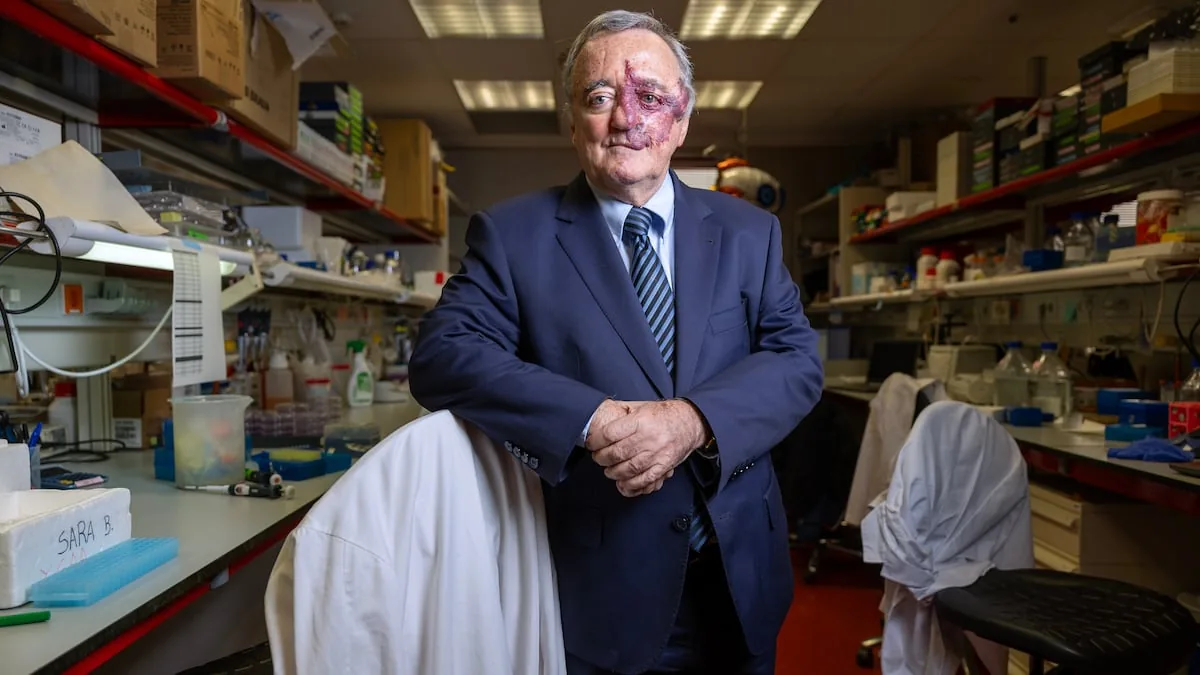
The study led by chemist Mariano Barbacid, in which he announced an effective experimental treatment against pancreatic cancer in mice, has been retracted by the journal of the National Academy of Sciences of the United States. The publication’s editors had been analyzing the case since February and decided to retract the complete study because neither Barbacid nor his colleagues Carmen Guerra and Vasiliki Liaki disclosed that they are co-owners with other partners of the company Vega Oncotargets, founded to develop new therapies against pancreatic cancer. This constitutes “a relevant conflict of interest not declared at the time of submission,” the journal’s editors state.
Read more At least 14 women die in two-train collision in Indonesia
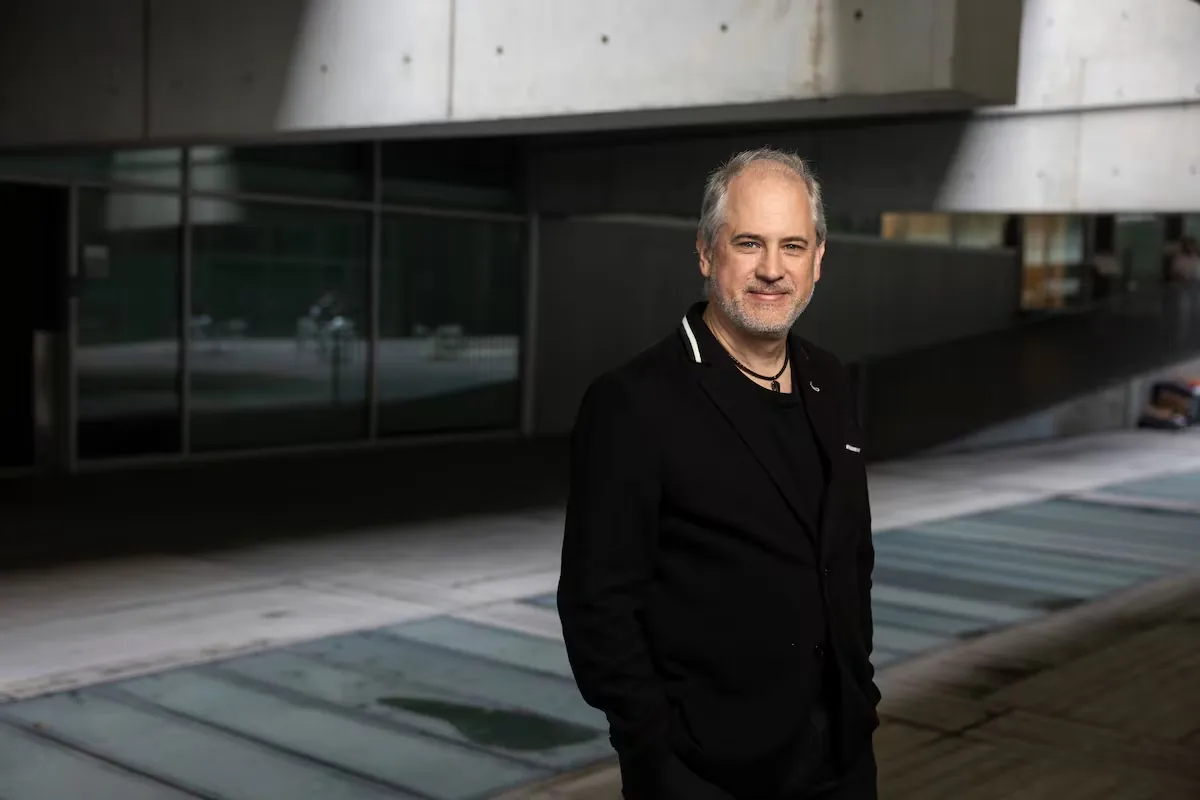
Barbacid leads the Experimental Oncology group at the Spanish National Cancer Research Centre (CNIO). Carmen Guerra is one of the prominent researchers in his group, and Vasiliki Liaki, a postdoctoral researcher on the same team.
The retracted work was published on December 2, 2025, in the journal of the National Academy of Sciences of the United States (PNAS), after the prestigious journal Nature rejected it. As Barbacid is a member of this American Academy, he had the right to publish his work via a fast track, with a more lenient review.
Barbacid has not yet responded to this newspaper’s attempts to contact him by phone and email. His collaborator Carmen Guerra has admitted by phone that they “messed up” by submitting their work through the indicated channel and not declaring the conflicts of interest. The CNIO scientist assures that they have resubmitted the study, this time acknowledging the business connection, to the same journal, to try to publish it again.
That study, with 45 mice cured of pancreatic cancer, one of the cancers with the worst prognosis, went unnoticed for almost two months, until the scientist organized a crowded press conference on January 27 in collaboration with the private CRIS against cancer foundation, where a patient with this type of tumor also participated.
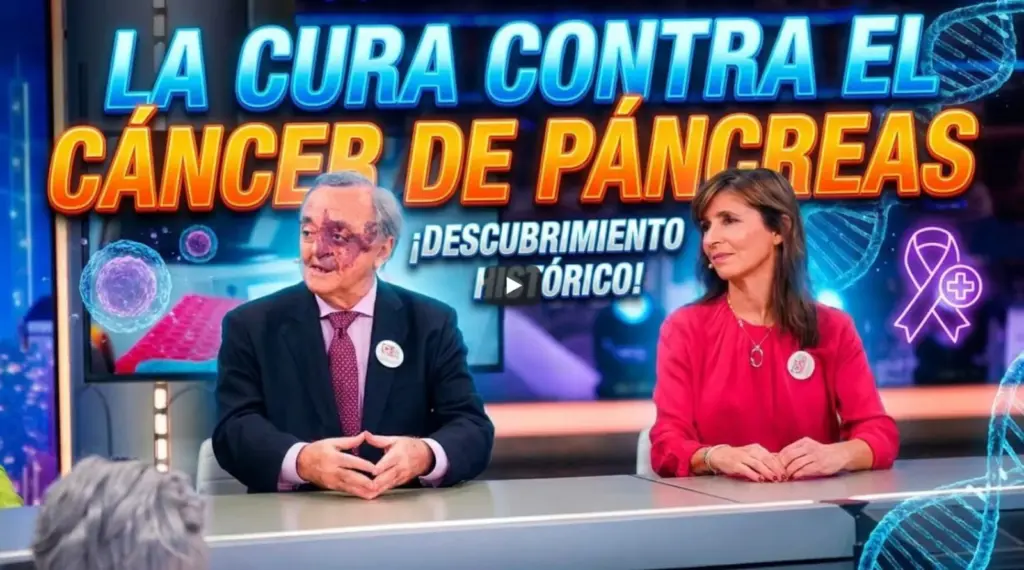
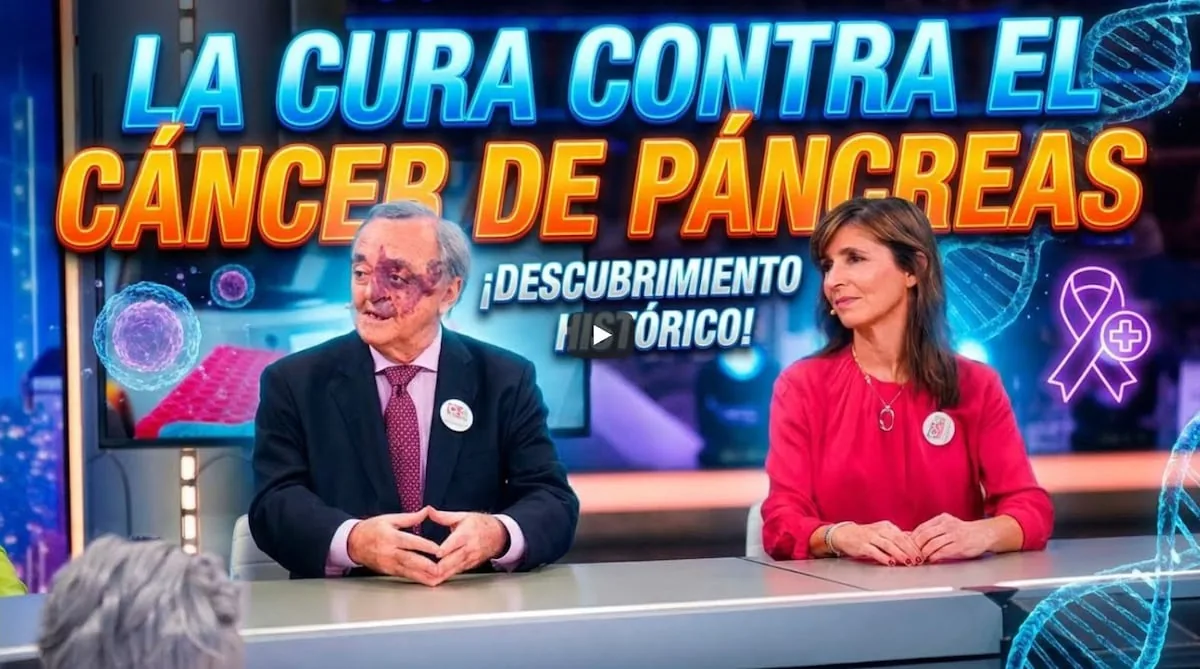
Despite being a preclinical discovery in mice, the news spread like wildfire around the world, in some cases distorted. One of the most widely read newspapers on the planet, The Times of India, headlined: “Spanish scientist discovers cure for pancreatic cancer.” Barbacid’s interview on one of the most-watched television programs, El Hormiguero, presented by Pablo Motos, was titled on its YouTube channel: “The cure for pancreatic cancer. Historic discovery!”
Barbacid, Guerra, and Liaki did not inform the Academy that they, along with other partners, own part of the company Vega Oncotargets. Barbacid and Guerra co-founded this company in 2024 for the possible commercial exploitation of the group’s research results. Furthermore, Barbacid and his colleagues have applied for a patent for the commercial exploitation of their experimental therapy, should it ever become a reality. The company, based in Salamanca, even proclaimed on its website that they had achieved the “first effective therapy against pancreatic cancer,” something far from reality.
The three scientists own 25% of the company. Chemist and businessman Gerardo Gutiérrez and his two sons, through the company 3-Gutinver, own another 25%. The investment company of the Junta de Castilla y León, Sodical, holds another 25%. The CRIS against cancer foundation owns 5.2%, and the CNIO, 5%. The Hermanos Álvarez Quirós Foundation owns 7.5%. According to the document for the creation of this foundation with a capital of 1.5 million from a family inheritance, Mariano Barbacid and José Ignacio Fernández Vera are trustees of this entity. The latter was dismissed from his management position at the CNIO for his possible involvement in the corruption scheme being investigated by the Anti-Corruption Prosecutor’s Office, which allegedly had former manager Juan Arroyo as its ringleader. The scheme may have defrauded around 30 million euros, the largest case of science corruption in Spain. Mariano Barbacid, who was the first director of the CNIO and worked closely with Arroyo for years, continues to defend the former manager’s actions.
A third co-founder of Vega Oncotargets, astronaut and biotechnologist Sara García, was also listed, but her name disappeared on February 5. García, who works in Barbacid’s group at the CNIO, told this newspaper in February that it was a mistake and that she is not linked to the company.
The U.S. National Academy of Sciences is clear in its ruling. It could have decided that the authors publish an attached note declaring their conflict of interest, which would have allowed the study to remain valid. But the final decision is emphatic, partly due to Barbacid’s role as an academic — an exceptional recognition that only seven other living Spanish scientists possess. “The editorial policy of PNAS for Contributed submissions states that: ‘Academy members who have a conflict of interest, financial or otherwise, that could be considered to significantly influence their objectivity, or that creates an unfair competitive advantage for any person or organization linked to the research, must submit their work as a Direct Submission [direct submission].’” Consequently, “the editors retract this article due to a relevant conflict of interest not declared at the time of submission. The contributing author and NAS [National Academy of Sciences] member, Mariano Barbacid, and two co-authors, Vasiliki Liaki and Carmen Guerra, have financial interests in Vega Oncotargets.”
The three scientists could also have violated the ethical code of the Spanish National Cancer Research Centre, a public entity dependent on the Ministry of Science, Innovation and Universities, led by Diana Morant. This text clearly highlights that its researchers must declare their conflicts of interest. “All perceived conflicts of interest must be disclosed prior to or at the time of submission of a publication. Necessary measures may involve consulting a funding body, journal editors or other publishers, those responsible for the administration of the Centre’s intellectual property, or third parties, in order to ensure that the conflict of interest does not compromise the research or the interests of the CNIO,” the text states.
On February 6, EL PAÍS published an article titled: The true story behind Mariano Barbacid’s “first effective therapy against pancreatic cancer.” In it, global experts in the field were already warning of the possible conflicts of interest of chemist Barbacid and his two colleagues.
The now-retracted study presented the results of a “triple therapy,” which attacks the KRAS protein, which causes a cell to divide, from three flanks. These were three experimental drugs: daraxonrasib, from the American company Revolution Medicines; afatinib, from the German Boehringer Ingelheim; and SD-36, developed by chemist Shaomeng Wang at the University of Michigan (USA). According to the work, this cocktail achieved complete and lasting cancer regression in 45 mice, including rodents with their own genetically engineered tumors, as well as specimens with grafted human tumor cells. The three products used belong to other laboratories, but Barbacid’s team created the company Vega Oncotargets to try to invent and patent alternatives similar to SD-36 and afatinib, which is very toxic to the skin.
Several global experts in pancreatic cancer explained to EL PAÍS that the study was promising but reminded that these were preliminary results that need to be replicated in humans, which will take time and significant investment.
In his appearance on El Hormiguero, Pablo Motos celebrated the results as “a miracle.” After two ovations, Barbacid acknowledged: “At least in experimental tumors. It must be made very clear that to reach patients, we still have at least two or three years.” In statements to another program on the same channel, Antena 3, Barbacid said that about 30 million euros would be needed to make this new therapy a reality.
The CRIS Foundation launched a private fundraising campaign to finance Barbacid’s research. The campaign has already raised almost 3.7 million euros (above the set target of 3.5 million) and remains open. The dissemination of the now-retracted results prompted another spontaneous campaign to nominate Mariano Barbacid for the Nobel Prize in Medicine.
Following the original announcement, Barbacid’s team received over a hundred emails from patients who wanted to receive the experimental treatment. Several of them went in person to the CNIO headquarters, near Plaza de Castilla in Madrid, to try to speak with the chemist. Carmen Guerra herself had to attend to many of these requests. The scientist was forced to admit that they are not doctors and could not evaluate their clinical cases. She also acknowledged that their results were experimental, only in mice, and that there are no open clinical trials with patients, nor are any expected.