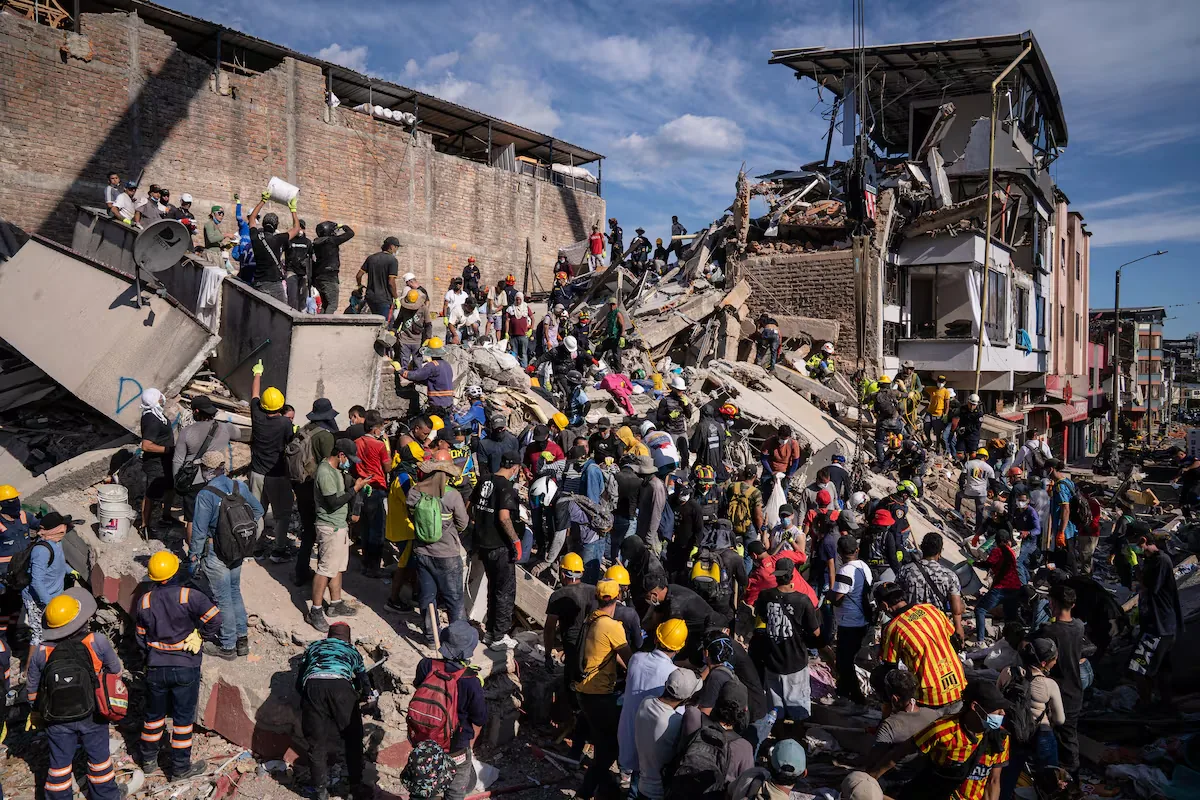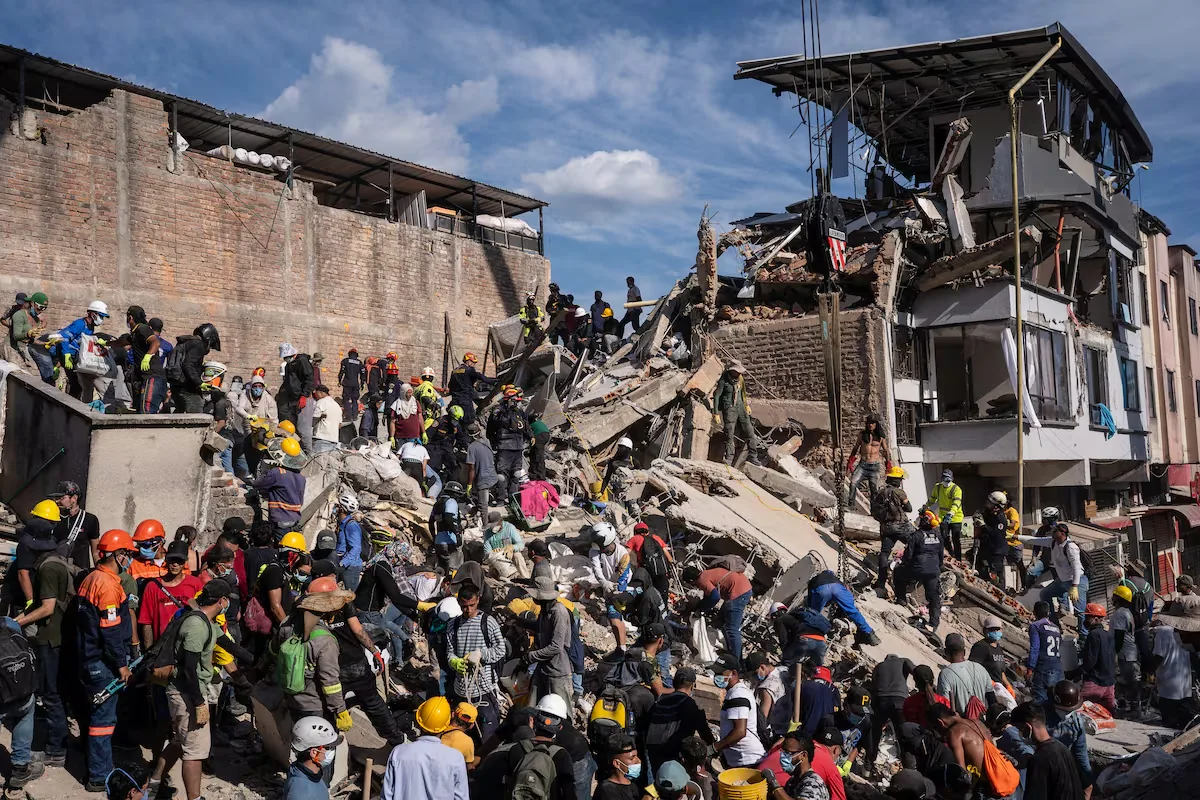
On the night of Wednesday, September 9, hours before a month passed since the earthquake in Colombia, President Abelardo de la Espriella announced a package of 11 decrees aimed at responding to the crisis caused by the earthquake. In addition to the creation of the Miracle Fund, which will channel resources from public and private sources through a trust, mechanisms are defined to manage the funds, access reserved statistical information, guarantee the continuity of public services, or adjust school calendars in the affected areas.
The decrees have the force of law, supported by the declaration of the State of Economic, Social and Ecological Emergency made by the Government on August 19, 2026. Below is a brief summary of what is established in each decree:
Decree The creation of the Miracle Fund
One month after the tragedy, the Executive creates the fund that will manage public and private resources, whether they come as donations or international cooperation. For this, it is ordered to form a trust supervised by the Financial Superintendency, which will manage the money and make payments under traceability and audit mechanisms. “We need execution capacity, resources, and speed. This fund will be one of the instruments, perhaps the most important, to achieve this,” said the president when making the announcement.
The resources will be mainly intended to “develop plans, programs, and projects of humanitarian assistance, recovery, rehabilitation, reconstruction, economic reactivation, and risk reduction.” Its manager will be the Antioquian businessman Jaime Andrés Uribe Tamayo, as De la Espriella announced days ago, and its duration is indefinite: “It will last as long as necessary to complete the plans, programs, and projects aimed at attending to, recovering, rehabilitating, and rebuilding the territories affected by the emergency,” the text reads.
Decree : The money to ensure electric power
The second decree adopts temporary measures so that resources from the National Fund for Infrastructure Development (FONDES) can be directed to guarantee the continuity of the electric power service in the areas affected by the earthquake, where approximately 1.5 million users have experienced supply failures. This enables resources for public service companies to restore electrical networks, provided they present a plan justifying the contribution. The Government plans to make a single payment in the short term; the decree specifies that “under no circumstances may disbursements be made once the disaster situation validity ends, including its legally decreed extensions.” The Constitution provides that these extensions can total a maximum of 90 days, expiring on November 17.
Decree : Solidarity among territorial entities
The third decree allows departments, municipalities, or districts to finance projects outside their territory, something usually prohibited. The idea is that, until December 31, 2027, they can obtain permits from their assemblies or councils to address damages in the territories defined by the emergency, that is, in the departments of Antioquia, Caldas, Cauca, Chocó, Quindío, Cundinamarca, Risaralda, Huila, Valle del Cauca, Tolima, Norte de Santander, Bolívar, Nariño, Sucre, Santander, and Caquetá. This would allow areas exempt from problems and with their own resources to support the recovery of the affected ones.
Decree : Governors and mayors of affected areas will have alternatives to obtain resources
Governors or mayors of the areas affected by the earthquake may request, respectively, from departmental assemblies or councils permits to seek new sources of money to attend reconstruction. Among the legal mechanisms proposed by the decree are securitizing up to 10% of their future collection flows, taking loans when the debt balance is not greater than 100% of their current income, or allocating revenues from the years 2026 and 2027. The powers have a deadline: December 31, 2027, and the condition is that the enabled resources are not used to address problems prior to the earthquake.
Decree : Access to pension surplus resources
One of the pools of money available to entities is the National Pension Fund of Territorial Entities (FONPET), intended to pay pensions under their responsibility. The fifth decree allows them, “one time only,” to use it to attend the emergency. The regulation also authorizes them to use health sector surpluses for the recovery of public clinics and hospitals.
Read more De la Espriella closes the protected area for Petro’s only total peace disarmament
Decree : Ease of carrying out procedures
The sixth decree seeks to make it easier for citizens to interact with the State. Therefore, it allows entities to “simplify the content of requests, minimize requirements and documents, reduce response times for procedures, decrease and even eliminate their costs, through the implementation of technological means that allow access to information without the need for users’ physical presence.” This means that government offices may temporarily modify public service hours and schedules, relocate their offices, enable citizen service points, or allow work from home.
Decree : Access to reserved statistical information
The Government has argued that attending the emergency requires “having statistical, census, geospatial, economic, demographic, and social information that allows identifying and characterizing people, households, homes, establishments, economic units, and affected territories.” Therefore, it lifts the statistical confidentiality of the required information held by the National Administrative Department of Statistics (DANE), which this national entity usually cannot provide. The delivery is limited to purposes directly linked to attending the emergency.
Decree : Alternative spaces for educational classes
In the eighth decree, the Government states that 5,309 educational sites were affected by the earthquake and “present impossibility or restriction for in-person attendance and for the students enrolled in them.” To avoid greater interruption, it allows schools to temporarily use alternative physical spaces or other education modalities, “upon duly motivated request” to the education secretariats.
Decree : Suspension of enrollment audits for affected schools
This decree suspends an obligation of public schools, which must provide information proving the care given to their students. It is a complex bureaucratic process that the Government understands affected schools cannot carry out until they overcome their emergency.
Decree : Flexibility of the academic calendar
The tenth decree allows the Ministry of Education to “authorize the reorganization, redistribution, or rescheduling of the academic work weeks planned in the school calendars corresponding to the academic year” in the affected areas, if so requested and justified by the education secretariats. In this way, they can reorganize the academic calendar so that students catch up, although it sets a deadline for closing each year as “December 31 of each validity period.”
Decree : Works for taxes for reconstruction
The last decree may be one of the most impactful. In it, the Government expands works for taxes, a mechanism by which private entities can reduce the money they pay to the State in exchange for carrying out investment projects in the regions most affected by the armed conflict. With this decree, the areas affected by the earthquake are also included. This allows execution to be faster and respond to social needs, although it must be ensured that each project is relevant and well implemented.