









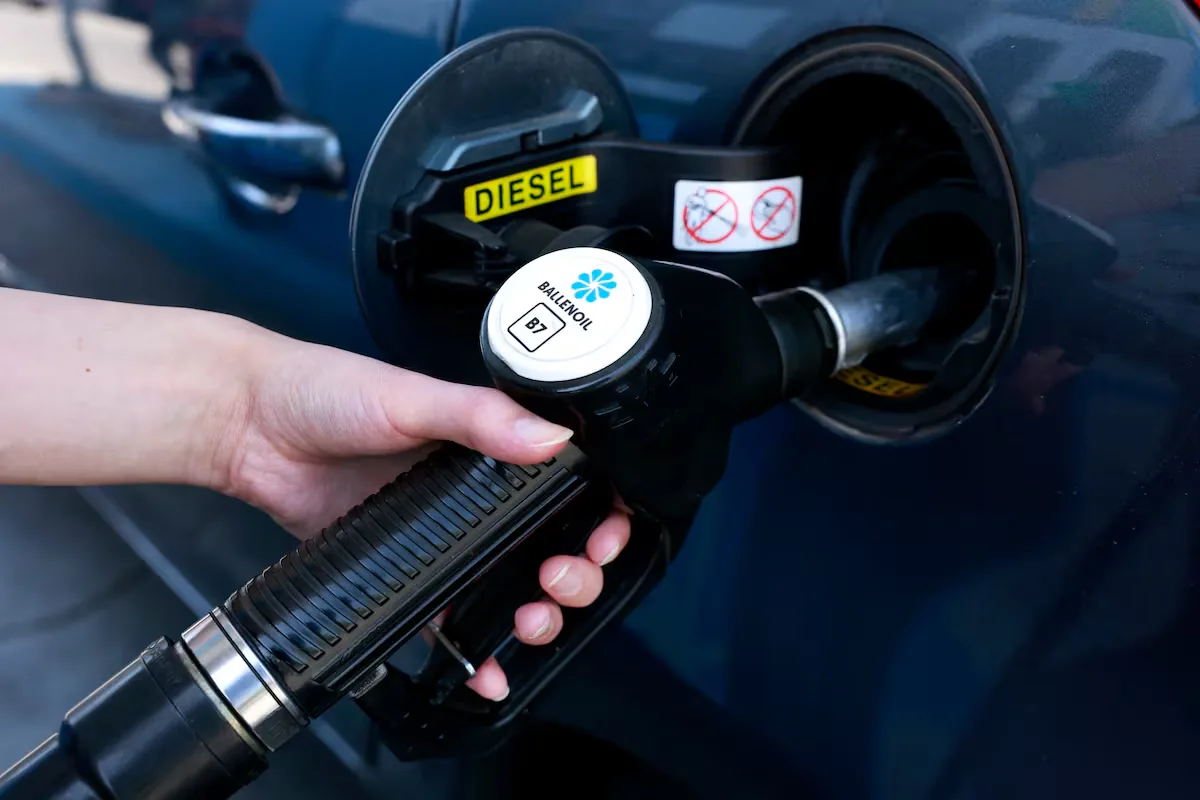
After several weeks on its heels, the price of gasoline has reached its annual high and has surpassed that of diesel for the first time since early March, shortly after the outbreak of the armed conflict in the Middle East and with it a new inflationary flare-up. The difference is minimal, about 20 cents per liter, according to the latest EU Petroleum Bulletin, hovering around 1.8 euros on average in both cases, which can vary depending on the pump. “The key factor that has turned things around is the tax,” summarizes Manuel Alejandro Hidalgo, professor at Pablo de Olavide University and researcher at EsadeEcPol.
Read more The 2026 Emmys surprise with the win of ‘The Curse of Widow’s Bay’
The professor refers to the more generous discount on the hydrocarbon tax that diesel has been benefiting from since early September compared to gasoline, a possibility contemplated in the latest anti-crisis shield approved in summer. The package of new measures, which began to be applied in July and ends this month, establishes a decreasing tax relief on fuels, provided their prices do not show a monthly increase of more than 15% compared to the same period of the previous year. A circumstance that has occurred with diesel, triggering the activation of this safeguard clause, but not with gasoline.
In July, diesel rose 15.7% year-on-year, a percentage that justified the automatic activation, applicable in September, of the safeguard mechanism that extends the tax discount on fuel. The price of gasoline also rose, but not enough (7.3%), so the tax relief it is entitled to was cut instead of being extended.
“Basically, the blame lies with the fine print of the current aid: diesel has been given the maximum discount of 20 cents per liter because its year-on-year price had soared more than 15%,” Hidalgo elaborates. “On the other hand, gasoline’s aid has been cut to only 5 cents. That 15-cent difference in favor of diesel in taxes is what makes gasoline cost us more at the pump now.” That diesel was more expensive was an abnormal situation that in the past only occurred occasionally in 2022, after the Russian invasion of Ukraine, and at the end of 2011, in the midst of an economic recession, since diesel normally enjoys a tax bonus that gives it an advantage over gasoline and contains its price.
Diego Rodríguez, professor of Economics at Complutense University of Madrid, agrees with the diagnosis: “This tax asymmetry is what is causing relative changes in one price over the other, although not very significant.” The data confirm the thesis. The 20-cent price difference mentioned at the beginning is extrapolated from fuel prices including taxes: 1.81 euros per liter of gasoline and 1.79 euros for diesel. The snapshot is reversed, however, if these amounts are reduced by taxes: gasoline, removing the weight of tax burdens, would cost 1.07 euros per liter on average, almost 30 cents less than the 1.30 euros for diesel.
Read more Sánchez cheers himself up on the set of Gran Wyoming
Supply and demand
Before the 20-cent per liter discount was reactivated in early September, diesel had been rising faster than gasoline. An escalation influenced by the additional tensions it is subject to. Both the war in Ukraine and the conflict in the Middle East are disrupting the refining capacities of this fuel. Russia is one of the largest suppliers of diesel in the world, but its supply is being reduced. Attacks on critical infrastructure by Kiev are causing interruptions in the refining system, compounded by export restrictions both due to international sanctions and internal bans imposed by Moscow. Likewise, diesel exports from Gulf countries fell in August to a quarter of what they were before the war began, only partially compensated by other regions.
This is reflected in the latest report on the oil market published last week by the International Energy Agency (IEA), which warns that global refining is operating at its limit and focuses precisely on diesel. Specifically, it estimates that net diesel exports from the Persian Gulf and Russia were 1.6 million barrels per day lower than in February, when they accounted for almost 45% of global maritime trade.
All this puts pressure on prices worldwide. Diesel accounts for almost 30% of global demand, and at the beginning of September the barrel reached 200 dollars in the United States, 94% above pre-conflict levels, with Europe and Asia not far from those figures. “Sharp declines in the supply of petrochemical raw materials and refined products, combined with higher fuel prices — especially diesel — will continue to weigh on consumption,” notes the IEA.
In fact, prices in Spain remain sky-high despite tax cuts, with both fuels 20% more expensive than before the start of the conflict in the Middle East. Gasoline is already at its highest level since October 2022; diesel, if it were not for the extension of the tax relief, would mark its most expensive price since April. All these elements will have to be on the Government’s table when deciding which aid to extend at the end of September, when the current anti-crisis shield will cease to be in effect.