










In the Middle Ages, doctors, who then worked with their potions and theories of humors, understood that their profession should only aspire to restore the lost health of a patient by rebalancing deregulated balances: restitutio ad integrum (return to integrity), because any other claim clashed with the principle that God had made things well, and they could not be improved. Over the centuries, human beings moved towards the center of the entire worldview, and this principle evolved into a conception of medicine that no longer sought only to cure, but to improve and perfect: transformatio ad optimum (transformation to better). This principle, which has allowed the most spectacular scientific and medical advances in the last two centuries, has only extended and imposed itself, in an incessant search for formulas to combat diseases, limitations, and ultimately, aging. Behind this obsession with stopping the years, there is not only a scientific or humanistic interest but also a lucrative business that is transforming pharmaceutical companies and the aesthetic medicine sector.
Read more Remco Evenepoel wins his fourth San Sebastián Classic and breaks Marino Lejarreta’s record
Among all the formulas that try to combat aging, there is a series of products that in the last decade have made a qualitative leap. There is a mix of solutions over which there is some confusion, because they are offered both by solvent and regulated companies and by influencers on social networks, and they can be found both at the doctor or pharmacy and directly available in e-commerce. Some of these solutions have a greater scientific vocation and are more regulated by authorities, while others have fewer restrictions.
In this universe, we find collagen peptides or magnesium, dietary supplements, creams, drops, or injections of products such as collagen, magnesium, hyaluronic acid, but also compounds like melatonin, ashwagandha, or other concentrates of various herbs.
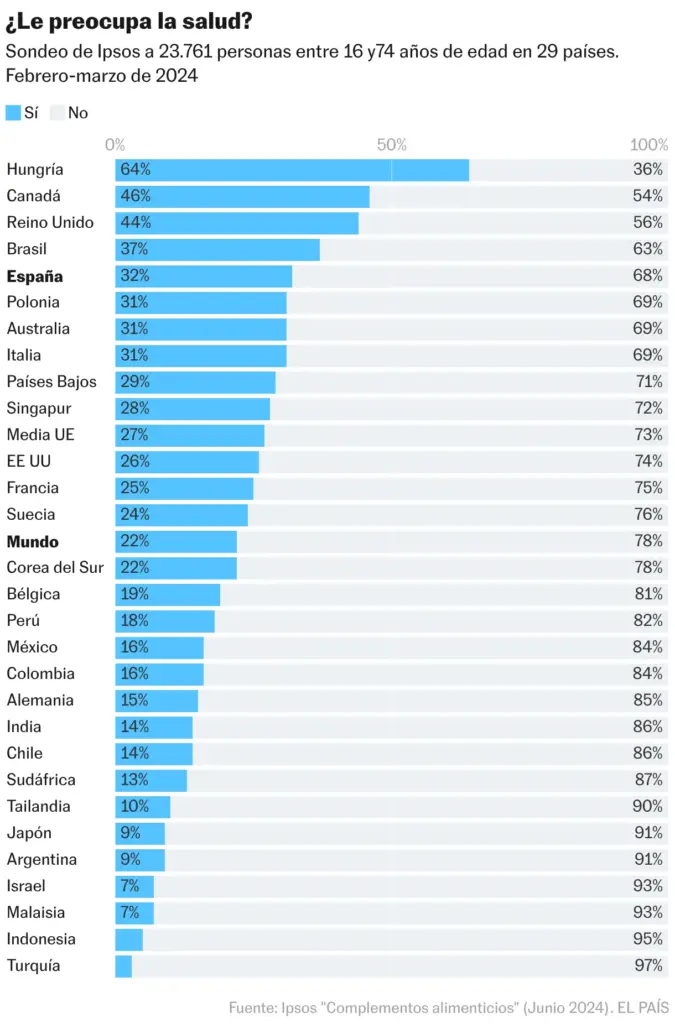
Often, all these solutions interact, and those who consume some products are also prone to buy others of this type, because what it is about, as Mònica Gispert, president of the Spanish Association of Dietary Supplements (Afepadi), reminds us, is to understand health not only as curing something that is wrong but as a holistic conception, of taking care of oneself, preventing, and improving all aspects of life. “The association has existed since 1943, and there are very well-known products from the seventies. What has changed is not so much the remedies but the perception people have about how important quality of life is. This has coincided with the rise of gyms, the nutritionist profession, and the internet, which makes the message reach more people,” Gispert points out.
According to the data managed by the association, the dietary supplements sector earned about 2.1 billion euros in Spain last year, with an average annual growth of 5% in recent years, while the market in Europe is estimated to amount to 33.42 billion euros, including vitamins and dietary supplements, nutritional supports for sports, weight control supplements, herbs and traditional products, pediatric supplements, and tonics. Spain, according to Afepadi, is the fourth market in the European Union in this sector, behind Italy, Germany, and France. “The national market has great potential; it is a business that has grown a lot but is still very unknown. It is very important to ensure that everyone complies with the rules and that there are good practices. In this regard, the European market is the safest in the world; there is no need to be afraid,” Gispert says.
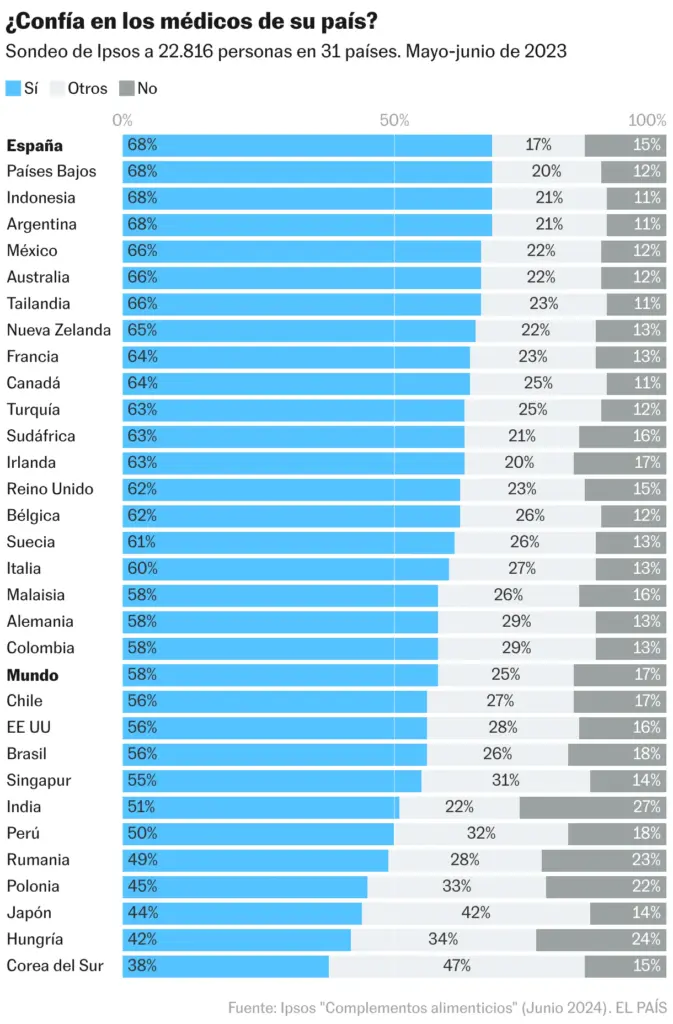
Barcelona hosted a business fair dedicated to the sector, Vitafoods, in early May, with 1,600 companies and more than 25,000 attendees. According to Afepadi, there are about 230 companies in Spain dedicated to this sector, generating more than 15,000 direct jobs. Approximately 20% of these companies’ turnover goes to exports, according to the employers’ association.
The rise in the trend to consume more and more products of this type has led companies to adapt to take advantage of opportunities, both in the world of food companies and in pharmaceuticals. There have been significant operations, such as the one led by Unilever, the British multinational in food, ice cream, personal care, and home care, when it bought the American vitamin and mineral supplement company Gruns for about 1.2 billion dollars (1.038 billion euros), which, with only three years of life — founded in 2023 by Chad Janis — has revolutionized the market with its gummies. Food giants like Swiss Nestlé or Danone have also entered this segment, with lines such as Nestlé Health Science or Danone Nutricia. And products like Meritene, Peptamen, Vitaflo, or Resource, in the case of the Swiss multinational, or products related to the “nutritional management of diseases and medical conditions” that are only used under medical supervision, in the case of the French firm.
Profile
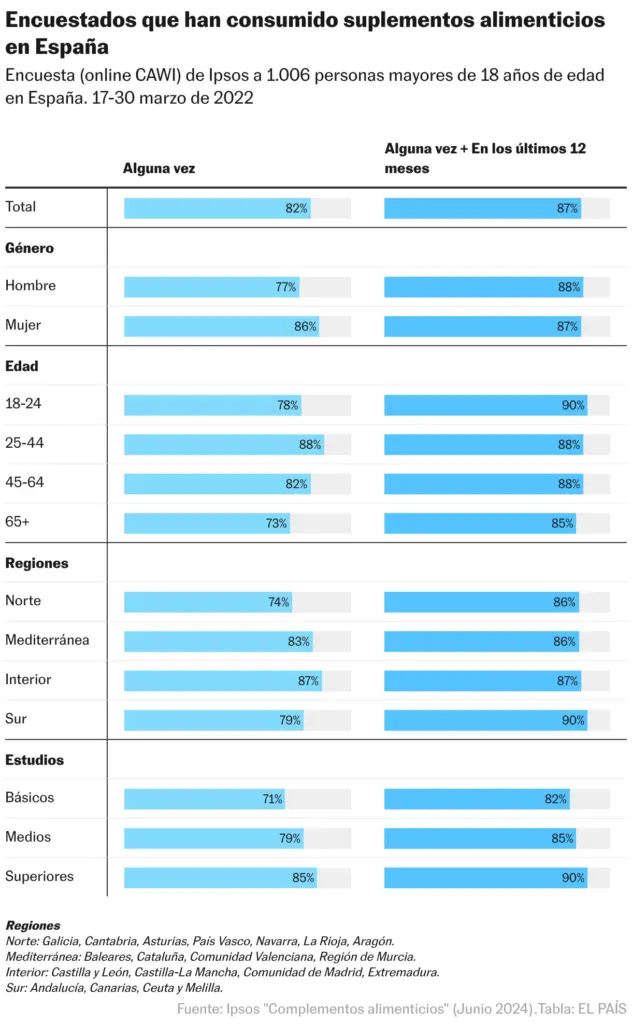
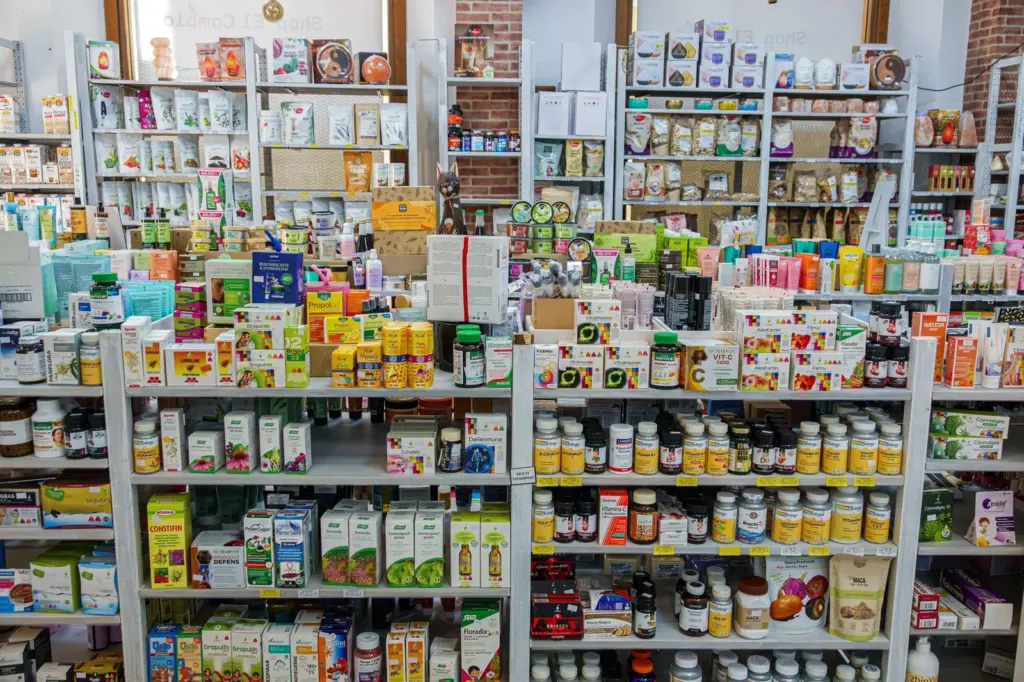
Afepadi explains that 82% of Spaniards have consumed a dietary supplement at some point, and the predominant consumer profile is women between 25 and 44 years old. For now, most products are sold in pharmacies or herbal shops, but the online channel is the fastest growing, explains the association.
Precisely, online sales have caught the attention of regulatory entities the most, because it is increasingly common for influencers on various social networks — especially Facebook, Instagram, and TikTok — to sell products of this type through contradictory or false messages, without guaranteeing the application of minimal regulation. The latest report from the Spanish Agency for Food Safety (Aesan), corresponding to 2024, indicates that six out of 10 dietary supplements sold online do not comply with regulations, especially regarding the information provided to consumers. Aesan is responsible for setting limits and establishing controls in the field of food health, but the National Commission on Markets and Competition (CNMC) is also on top of the matter: in early June, this body approved five requirements directed at influencers for not correctly identifying advertising in their videos, and in one of them, it warns about the application of regulations on health claims in food products.
“In all sectors, the world of influencers is very disruptive. We work a lot with Autocontrol [the advertising regulation body] to create a code of good practices and control advertising on social networks and in the media,” explains Gispert. The European Commission is already working on a plan to harmonize the maximum levels of vitamins and minerals in dietary supplements, and the draft is expected to be ready during the third quarter of this year.
Jordi Xiol, partner at the Spanish venture capital manager Ysios Capital, explains that indeed, there has been a rise in recent years in products related to self-care and aging, but he asks not to confuse the sectors. On one hand, there is the world of peptides, and on the other, dietary supplements. A peptide is nothing more than a small molecule formed by the union of a short chain of amino acids that acts as a messenger in the body to accelerate or block biological processes. There are pharmacological and highly regulated types, such as the already famous GLP-1 for obesity treatment — like those marketed by the brand Ozempic — and then there are experimental peptides, “which are in a gray area of regulation,” Xiol points out. “They have little control, are often bought in China, and are very trendy in gym subculture as muscle boosters,” he explains. In these environments, consumers inject themselves with certain risky doses; a lifestyle associated with the Make America Healthy Again culture and defended by the US Secretary of Health, Robert Kennedy Jr.
“You have to be careful not to confuse, but the regulated peptides world is very interesting in terms of business investment,” Xiol points out. “In 2025, regulated peptides against obesity represented a market of more than 70 billion dollars, and the new pill version from Novo Nordisk is the best launch ever made in this sector in terms of sales, already counting more than two million patients,” he adds.
Read more María Casado signs with Canal Sur one week after leaving Telecinco News
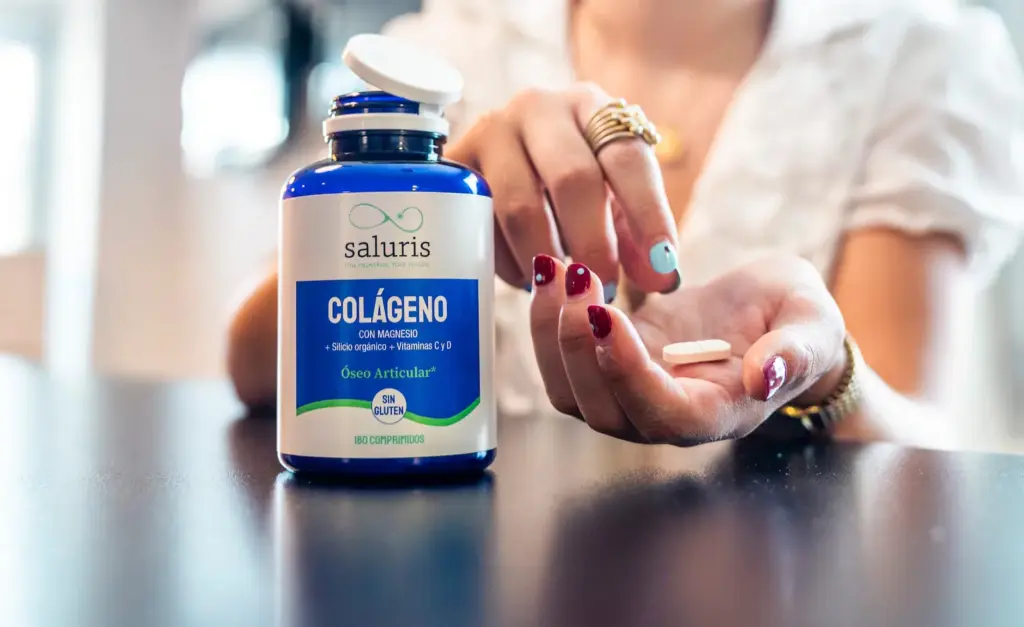
Regarding the impact that the rise in demand for personal care products has had on the pharmaceutical industry, the Ysios Capital partner explains that the move made by large pharmaceutical companies has been to separate their purely pharmaceutical business from the consumer products business. He cites the case of J&J, which in 2023 split its businesses and created Kenvue, which with 15.124 billion dollars in revenue in the 2025 fiscal year is the largest consumer health company in the world and has very well-known brands such as Neutrogena, Listerine, Tylenol, Aveeno, and Johnson’s.
The pharmaceutical company Sanofi did the same in 2025, creating the company Opella, where consumer and self-care products are concentrated. “Pharmaceutical companies separate to specialize. Medicine is a product with a lot of added value and very high margins but with very strict regulation. Regulated peptides are also in this area. But dietary supplements are in a more lax regulatory area, and experimental peptides are in a gray area,” Xiol explains. For example, companies like Eden Health or Hims and Hers, dedicated to telemedicine, are expanding into the peptide market in this gray area, with prescription and non-prescription offerings.
In Spain, there is another example of how high demand, in this case for dietary supplements, can transform pharmaceutical companies. One of the oldest in Spanish pharmacy, Uriach, founded in a drugstore in the Born neighborhood of Barcelona in 1838, has shifted from pharmacy to parapharmacy in about two decades. Uriach, dedicated to research and production of prescription drugs — with famous brands like Biodramina and Fosfatina — decided years ago, with the purchase of the Aquilea brand in 2007, to start focusing on natural health products, without prescription, without such strict regulation, with faster times, and most importantly: with a huge market to win. The transformation process culminated in 2021 when Uriach sold its generic drug business and two factories and decided to focus exclusively on its Natural
Health Care line. The strategy bore fruit, as in November 2023 the British fund ICG bet on this shift by entering the shareholding of the Catalan company with 30% of the shares through a capital increase. In these years, Uriach has embarked on a race to acquire brands and products in this natural health segment to position itself as one of the references in Europe. Last year, it closed the fiscal year with a turnover of 492 million euros.
Uriach’s CEO, Oriol Segarra, explains what moved them to make the change. “We saw the opportunity. In the natural health world, there are a series of levers that made it clear it would grow. One is the paradigm shift in how health is understood, now as something more holistic and preventive, not just curing diseases; the other is people’s growing willingness to live more years and better; and finally, we realized that in traditional medicine, only the largest companies can now grow, due to the costs, time, and effort required for research,” Segarra explains.
Uriach’s executive highlights that, despite being a more agile sector, rigorous scientific criteria are still applied. “We have a scientific legacy, and we know how to leverage it. We have many competitors who trivialize the product, but we strengthen it with science,” he points out. He cites the sleep field, with the star product melatonin. “Before, if you didn’t sleep, you were either given a sleeping pill or practically nothing. We saw that there could be room for a natural product based on science, we did many clinical trials. Traditional medicine is absolutely necessary, but sometimes the industry has killed flies with cannons,” he says to illustrate what he understands as products that, from the natural side, allow more refinement and provide solutions to “real problems” without having to resort to chemical medicines. The company has solutions to treat colds, digestive problems, sleep problems, stress and anxiety, or muscle issues. Also collagen products. “This business is potentially very broad. People’s interest in longevity is not only about living more years but adding life to those years. Much of healthy longevity will depend on the prevention done beforehand,” he concludes.
Aesthetic clinics
The rise of collagen and other products to combat aging has also transformed another industry: aesthetic medicine. In early March, the Cosmetics & Aesthetics Forum was held at Clínica Planas in Barcelona, and from the first intervention, it was clear how aesthetic medicine habits have changed and what role supplements play in them. “The best patient is not the one who comes one day and spends 2,000 euros, but the one who comes every two weeks, during the coffee break at the office, spends 200 euros each time, and brings their friends. This is the most profitable client, whom we must retain with self-care therapies beyond the clinic,” said Dr. Eva Álvarez in the presentation.
The different companies participating in the day highlighted “the explosion of opportunities in clinical cosmetics” through products and treatments, many of them non-medical, that accompany surgery. “An alternative must be launched through natural cosmetics,” said Dr. Clara Vigo. Collagen, “the protein of youth,” as defined by Dr. María Costa from the company Bloome by Egos, is one of the main ingredients. “It is abundant in the body; it gives firmness and turgor, but it decreases with age, so it must be administered. Modern aesthetic medicine is regenerative, not just corrective,” she concluded.
A solution not suitable for everyone
Beyond the business opportunities this sector represents, nutrition and health experts warn that there are risks, especially for people with complicated health conditions or pregnant women. “Supplements are not subject to drug law but are in the catch-all drawer of food. Nothing has to happen, but there are risks, sometimes due to the dose, sometimes because they interact with other medications the person is taking, or sometimes because they are adulterated,” explains Jordi Salas, professor of Nutrition at the Universitat Rovira i Virgili. He cites the case of a natural supplement for sexuality called Bichota, which the Spanish Agency for Medicines and Health Products withdrew last March for being adulterated with Viagra; or natural products against inflammations made with St. John’s wort, which have contraindications with antidepressant or anticoagulant drugs; or the withdrawal of vitamin D or Omega 3 products with excessively high doses; or caffeine capsules that teenagers use to better tolerate alcohol. “There are companies that do explain the risks and act responsibly, but others do not, because they are not obliged to include certain things, like contraindications,” Salas explains. The key, according to him, is that most substances are already present in a balanced diet, and a supplement would only be really necessary for a person with a specific and assessable deficiency. “But consumption has spread without reason and without considering safety risks,” he concludes.
Regarding collagen, the consulted experts warn that it is not that it has unwanted effects, but the problem is misleading advertising, since effectiveness is not proven. “There are many articles about collagen, but if you filter them by funding sources, you see that they are part of the promotional strategy,” warns Juan Revenga, director of the Human Nutrition and Dietetics degree at the University of Valencia. This professor points out that if the business has grown so much, it is due to a combination of consumers’ desire to “believe in miracles,” the lack of strict regulation, and the rise of internet sales: “Many companies launch their supplement lines and offer their products to influencers. To market many of them, you need the same regulation as for jam.”
Both experts point out that authorities are concerned about the spread of consumption, but the variety is so high, and products are renewed so often, that regulation cannot keep up: “Specific regulation and training for doctors are needed. This industry has grown a lot, but there have always been these types of products. It is not about raising alarm but about pointing out the lack of efficacy and risks for vulnerable people,” Salas points out.