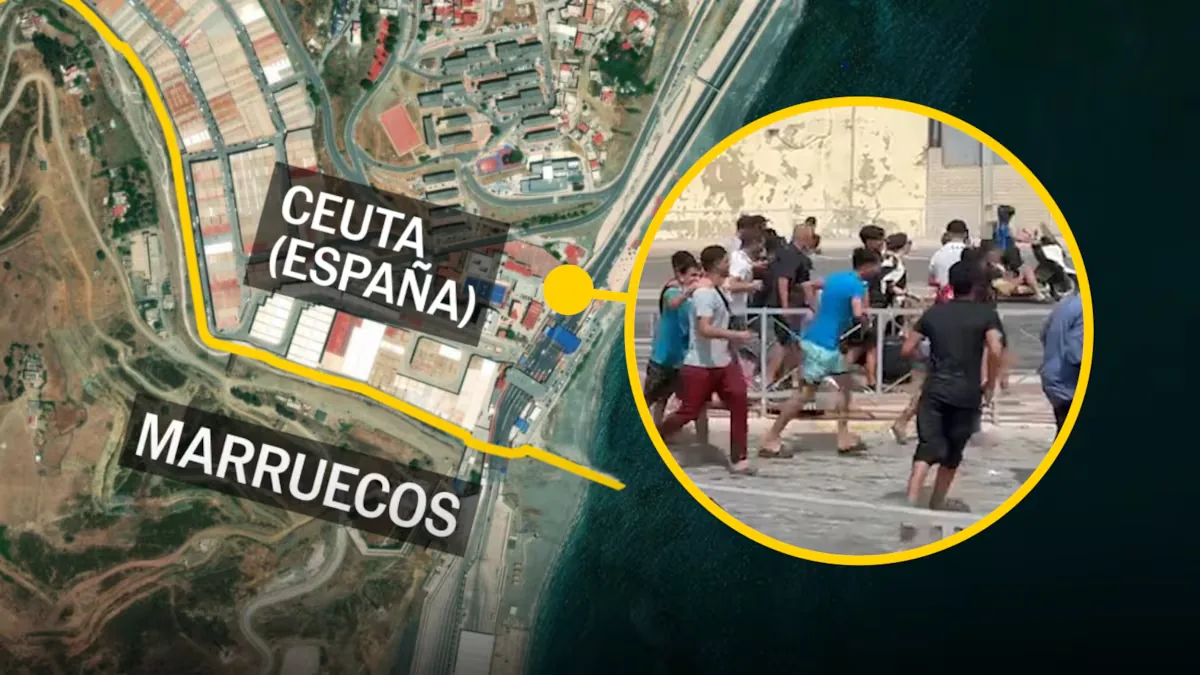
Irregular migrant entries to the European Union are decreasing overall, but arrivals via the Western Mediterranean route to Spain are increasing. The latest data from Frontex, the European border agency, show a 35% drop in irregular entries to the EU in the first eight months of 2026, to just over 74,000. However, while arrivals plummeted in the Central Mediterranean and the West African route, known as the Canary route, they increased sharply via the Western Mediterranean towards Spain, according to Frontex figures. The data do not take into account the Ceuta crisis, when tens of thousands of people irregularly entered the Spanish autonomous city from Morocco at the end of July.
Read more Paiporta begins the demolition of its Pont Vell, damaged by the DANA, to build a safer one
The Western Mediterranean is the only major entry route to the EU that recorded an increase, of 34%, with about 15,900 detections between January and August. This increase contrasts with a 55% drop in the Central Mediterranean, to about 19,400 detections, and a 25% decrease in the Eastern Mediterranean, to about 24,200. Notable is the 58% collapse (to around 5,100) on the West African route, the Canary route. Spain has agreements with nearby African countries, such as Mauritania and Senegal. Although that route saw a peak in July, when more departures were detected from Gambia, Senegal, and even Guinea-Bissau.
The data, released this Friday, show a substantial reduction in flows in aggregate terms, but also a growing concentration of pressure in certain areas. The increase on the Western route, which mainly connects North Africa with Spain, occurs while European authorities have expanded and strengthened their policy of pacts and migration agreements with countries of origin and transit, following the philosophy of paying them to contain departures and thus curb irregular arrivals.
Algeria has become the main departure point on the Western route, according to Frontex. The Balearic Islands and the Spanish coast concentrate part of the arrivals, as the data show. The Central Mediterranean, by contrast, now records one of the largest declines. Libya remains an important departure point, but the number of detections has been reduced to less than half compared to the same period in 2025.
Frontex has not included the Ceuta migration episode in its report, as explained in a statement. The agency indicates that most of the people who crossed later returned to Morocco without having been registered.
The decline in 2026 continues a trend started in 2025. In the first months of last year, Frontex recorded 112,375 irregular crossings, 21% less than a year earlier. However, these drops in arrivals have not removed the migration issue from the European political agenda. On the contrary. The EU maintains increasingly strict positions on migration.
Following the entry into force of the migration and asylum pact, which tightens rules for control, registration, and processing of applications from people arriving at external borders, several states are negotiating agreements with countries outside the Union to open deportation centers there for asylum seekers. The group, led by Denmark, governed by a coalition headed by the Social Democratic party, wants to open the first center next year.