







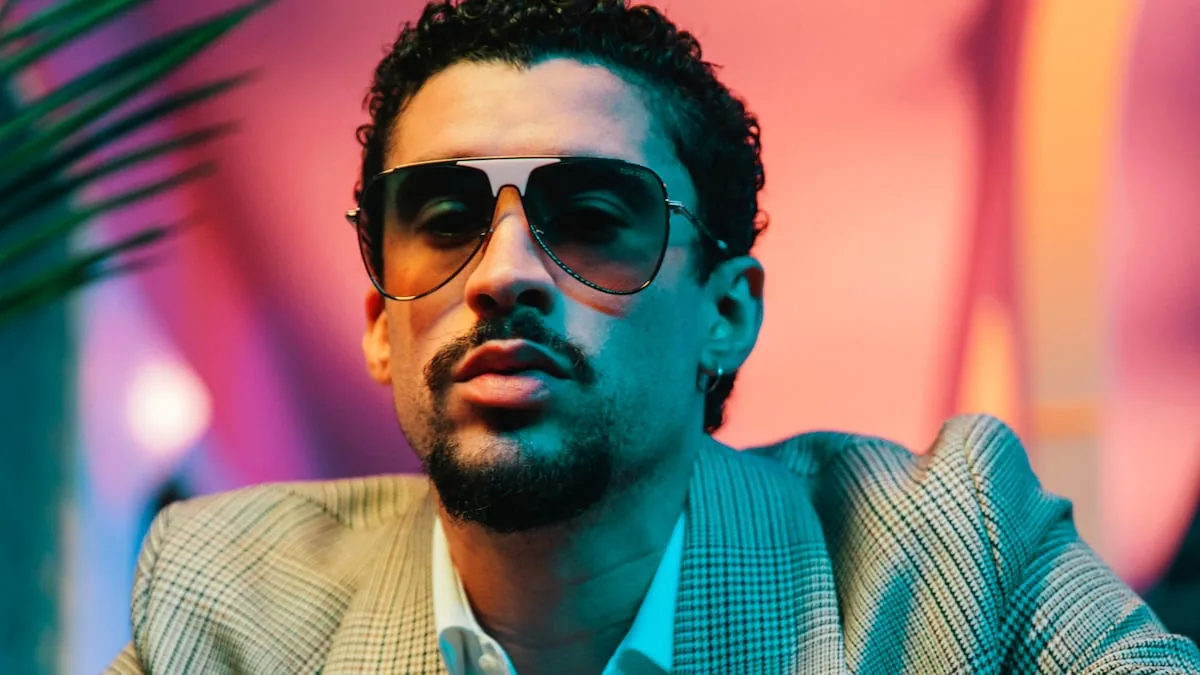
At first, there was the rabbit. Legend has it that he was inspired by a childhood photo of himself dressed as a white rabbit with a mischievous face, and from there came Bad Bunny, in English, bad rabbit, a name that refers to an icon from the dawn of mass culture, Bugs Bunny, perhaps the greatest cartoon of all time alongside Mickey Mouse, mocking and defiant.
Read more WHO declares the Ebola outbreak in Congo and Uganda a global emergency
Then, progressively over his 10-year career, Bad Bunny has been changing, maturing, and the pseudonym has increasingly given way to his real name, Benito, which by now has almost swallowed the stage name and acquired a sense of a nom de guerre.
But what war?
Vanessa Díaz calls it “his mission.”
—What mission?
—To show the reality of his country.
The professor answers the call from her office at Loyola Marymount University in Los Angeles, where she teaches a course on Bad Bunny. “I have studied him from the beginning and he has been consistent in his political awareness, only that over the years he has learned and refined his discourse,” she says.
—And does that awareness come from his family?
—I think it’s generational, coming from the specific colonial experience of his generation, from the nineties until now.
Co-author with Petra R. Rivera-Rideau of PFKNR. Bad Bunny and music as an act of resistance (Libros Cúpula), Díaz summarizes three decades of debt crisis, cuts in public services, loss of fiscal sovereignty at the hands of Washington, a shabby electrical infrastructure, unemployment, a strong new wave of migration, and the final blow of Hurricane María in 2017, which devastated the island and left thousands dead and a country in shock at the lack of response from the local administration and the abandonment by the United States. Right then Bad Bunny had been emerging for a year and Trump had been in power for a year.
Trump & Bad Bunny, Bad Bunny & Trump.
Two synchronous and complementary events: destruction and love, the defender of popular dignity and the Great Humiliator, the universal bully.
From Miami, Jesús López picks up the phone, a discreet name for a power player who rules music from a sunny office, and blurts out: “He has hired the best marketing director in the world, Donald Trump.”
Trump got angry when it was announced that Bad Bunny would star in the 2026 Super Bowl, and after the show, in which he deployed his full symbolic arsenal of Latino pride, he declared: “It’s an offense to the greatness of the US.”
The CEO of Universal Music Latin America calls him “the king of the genre,” and by genre here is meant urban music, which nowadays is basically pop, as Bad Bunny himself demonstrates in a song proclaiming himself “king of pop.”
López calls him king and says it is Trump who put the crown on him.
In his opinion, his confrontation with Trump was the second key moment of his career. The first, he says, was a decade ago, when he was starting out, “how well he read the nationalization of the charts,” that is, the trend toward local music that was beginning to take over the hit lists at that time.
“He was one of the first to catch that wave and did the exact opposite of the American dream: he claimed what was his, Puerto Rico. And right there,” adds López, “his masterstroke was making the album Oasis with Balvin, who was number one.”
Writing about Bad Bunny is a continuous and arbitrary narrative decision-making process, because his work has such symbolic density, is so overflowing, that at every step it offers various thematic branches equally relevant.
For example, following López we could choose between two broad paths, geopolitics — or Bad Bunny and the vernacular reaction to globalization — or the business side, Bad Bunny as oracle of the music industry, shrewd in his alliances and capable of breaking the dominance of record labels. He has never been with a major and has promoted an independent label, Rimas, which he founded with Noah Assad and has grown so fast and furious that it ended up partnering with Sony for distribution.
On the vernacular path we can — and should — take the detour to what is the crux of the matter: our language or, more precisely, the mother tongue of Benito Antonio Martínez Ocasio, Vega Baja, PR, 32 years old.
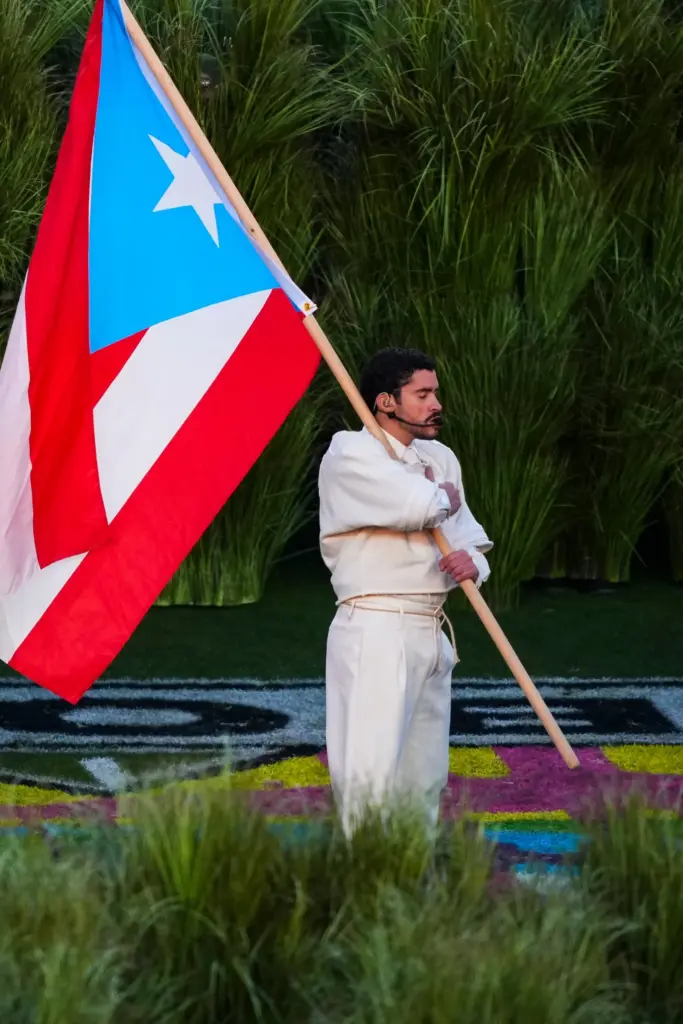
His language: Boricua, Puerto Rican.
Benito is the engine of a brutal phenomenon of linguistic pride. Puerto Rican Spanish has stood up to English, the language of the empire.
“He has introduced a disruption in the English-speaking hegemony,” says lexicographer Maia Sherwood from her home in San Juan, author of The ABC of DtMF, a dictionary of DeBÍ TiRAR MáS FOToS, his latest and apotheotic album.
“He arrives and occupies the major English media spaces, occupies his territory in Spanish, plants his linguistic and cultural flag, and positions himself as an equal with interviewers, who even end up speaking some Spanish. He normalizes the interlinguistic space typical of Boricuas, between Spanish and English. And the market adapts to him to such an extent that even a space as emblematic and Anglo as the Super Bowl opens up to a Spanish-speaking artist, and not just any Spanish but Puerto Rican Spanish: it is the Spanish of the colony penetrating the empire; not the Spanish of Spain with its cultural and historical baggage nor that of Mexico with all its demographic power, it is Puerto Rican Spanish that has altered the order. And he did it cleverly, calling the Super Bowl Supertazón. No one here would say Supertazón!”
The political-linguistic impact was enormous, even institutional. A few days after the performance, the Puerto Rican Academy of the Spanish Language issued a resolution officially recognizing “the outstanding work of Bad Bunny for his contribution to the global dissemination of the Spanish language.”
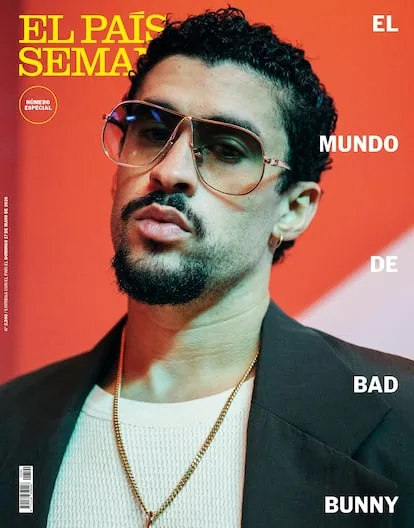
In a 2021 interview with El País Semanal, on the subject the singer said: “We have to break the idea that gringos are gods… No, papi.”
From Madrid, Amanda Mars, who did that interview in Los Angeles, remembers him as “a smart kid, very self-confident, cheerful and carefree.” She saw him in shape. The artist told her he was careful not to eat too much pizza, his weakness. He also told her about his 2018 slump. After two years of artistic explosion that alienated him from ordinary life, he stopped and said:
Who am I?
What is happening?
Mars wrote: “In the midst of a wave of racial protests, some reproached him for being silent.” Benito replied: “I was horrible in my personal life.”
By then, at 26, he was already breaking records.
He had become the most listened-to artist on Spotify and was winning awards for his album YHLQMDLG, acronym for Yo hago lo que me da la gana (I do whatever I want). However, he warned: “I’m not a musician. A musician is someone who plays a musical instrument.”
—If you’re not a musician — the journalist interjected — how do you define yourself?
—As an artist who sees things differently.
There lies Benito’s essence: difference.
From New York, the historic capital of the Boricua diaspora, his compatriot Ana Macho maintains that “his rise” had much to do with being different.
“He was always said to be different. He dressed differently, wrote differently, and his music wasn’t so vulgar. He was seen as connected to the divine feminity, starting from an alternative masculinity. At first, people mocked his style.”
Difference is the general characteristic of his person and his work, it’s in all of him, in all his things, for example in his slow and nasal voice, quite peculiar; but nothing has distinguished him as much from the grey of urban music as his affinity with the queer, even at the start, when his typical late-teen bad boy vibe had a romantic, melancholic hint, and he wore painted nails.
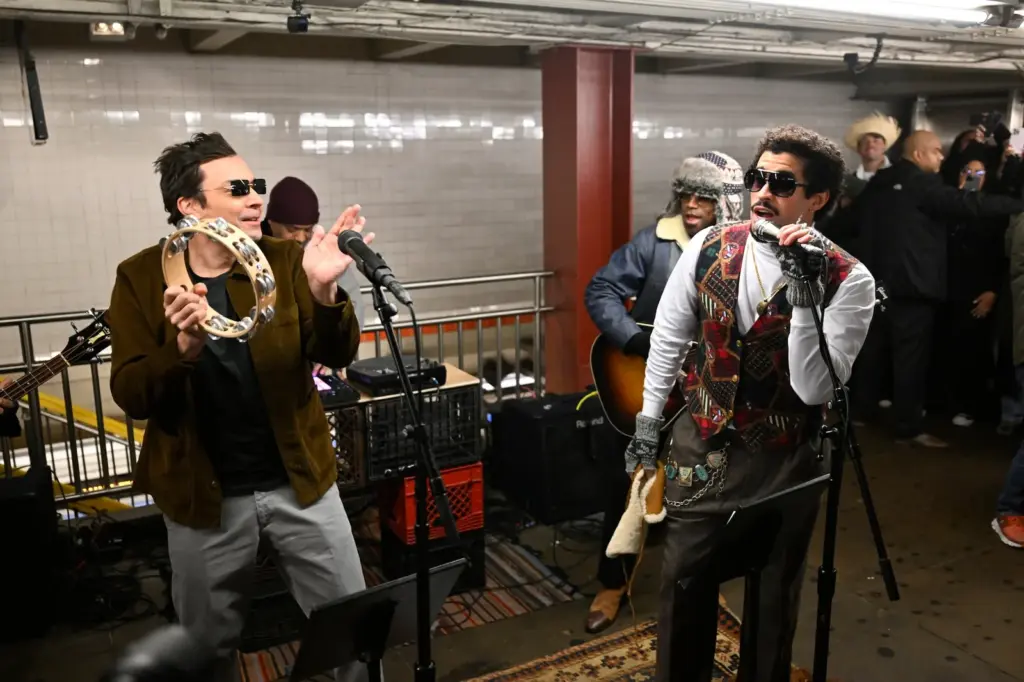
Then came a greater openness, present in details like the anonymous billboard that appeared in Puerto Rico with Bad Bunny kissing himself, or his kiss with Gael García Bernal in the film Cassandro, about the wrestling champion who came out of the closet. And above all, his positioning on the side of the LGTBIQ+ community, like when dressed in a skirt he denounced on Jimmy Fallon’s show the murder in Puerto Rico of Neulisa Luciano Ruiz, Alexa, a trans woman, or in his drag performance in the video for ‘Yo perreo sola’.
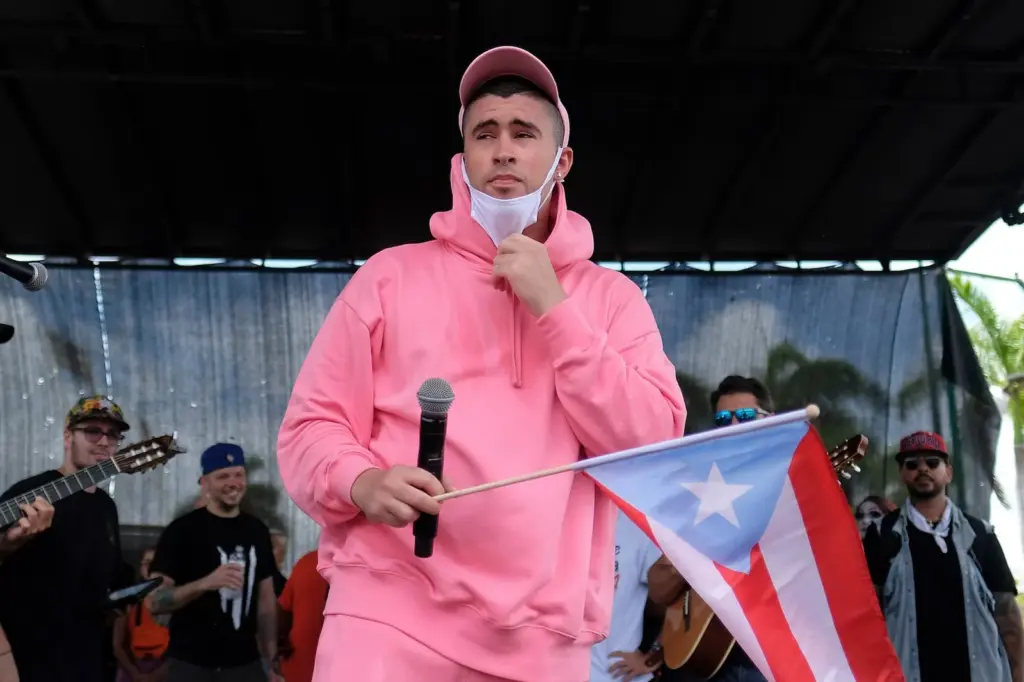
Ana Macho, author of the queer anthem Cuerpa, says about her compatriot: “It’s clear he’s not afraid to challenge heteronormativity, although it should be noted that he presents himself in society as a heteroromantic person.”
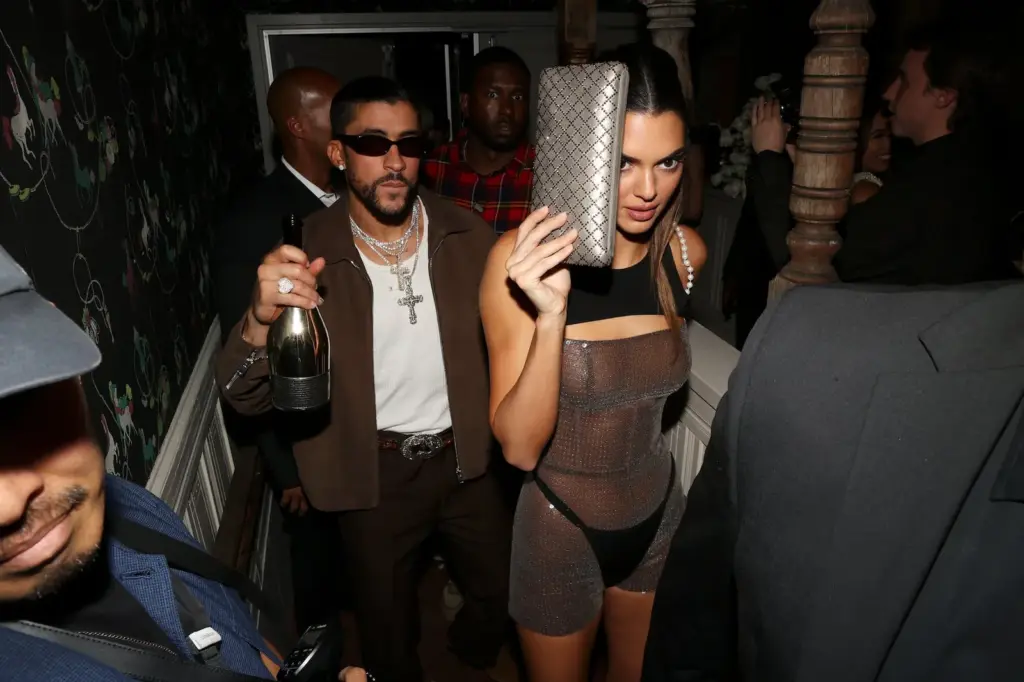
His romance with celebrity Kendall Jenner was widely reported, and recently the presence of his Puerto Rican ex-girlfriend on his world tour made news. ¡Hola! headlined “Alongside Bad Bunny, Gabriela Berlingeri shows off her great body in a bikini on the beaches of Sydney,” and accompanied the candid photos with their proverbial captions: “Bad Bunny preferred not to go into the sea and just enjoy the views,” “Gabriela couldn’t resist taking a swim,” and “Bad Bunny showed complicity with Gabriela.”
Still, his relationship with women is the weakest flank of his immaculate figure.
He seems like a sensible and sensitive young man, feminist and woke, and his lyrics are leaving behind the crude machismo of his early years, but even so he hasn’t quite let go of the objectification of women, a keystone of the reggaeton era, even if, as in DeBÍ TiRAR MáS FOToS, it’s a romanticized objectification with a will for reciprocity. Although cultural and political themes dominate this album, a misogynistic shadow remains, albeit playful and self-aware, inevitably bordering on the derogatory.
Benito still sins of being a jerk.
And the fact is, on top of the phallocentric mischief being liked and selling everywhere, being a man has shielded him, unlike his interstellar peers Rosalía and Taylor Swift, who have not come out unscathed from cosmic fame. The Catalan has been heavily criticized for hanging out with Picasso and the Pennsylvanian was almost taken to The Hague for the environmental impact of her private jets. He, however, beyond feminist criticism of his lyrics, which has little echo, and staying on the sidelines with Palestine, has not faced a more delicate situation than when, in 2020, he was reproached for throwing a fan’s phone into the sea who was bothering him. He did not apologize but justified himself with a tweet he later deleted: “Anyone who approaches me to greet me, to say something, or just to meet me, will always receive my attention and respect. Those who come to put a phone in my face I will consider what it is, a lack of respect, and I will treat it as such.”
Other sins.
Cibrán García has stayed up late. He DJed yesterday.
In a bar in Santiago de Compostela, he says that one of Benito’s songs that most excites young people is ‘NUEVAYol’. A pioneer of Galician trap with the duo Boyanka Kostova, he pays his respects to the Boricua and exposes one of the harmful effects of his “overwhelming fever.”
“In my circle, the issue of artist overexploitation and the uncontrolled growth of mega-events is very present, which means an abuse of the industry towards the user. Paying 300 euros to see anyone is surreal, and it makes people have to choose how to spend their money on music. So whether it’s Bad Bunny or any other mega format, it affects the base of the pyramid. The venue structure is dying. More attention is paid to immediate return formats and less to fostering the musical fabric. The mega is a bubble that will end up bursting, because people can’t afford so many super events, and those who will pay are the artists at the bottom. This is a bottleneck and he, paradoxically at the moment he is going more local, is the spearhead of the latest mega movement. It would be interesting to see how he handles it from a human point of view.”
Being king of pop has side effects.
Another would be his unwanted contribution to the gentrification of Puerto Rico. His famous Residence on the island in the summer of 2025, titled No me quiero ir de aquí, the patriotic launch of DeBÍ TiRAR MáS FOToS, was a boost of self-esteem for the Boricua and left a multimillion-dollar spillover, but it also put even more focus on the island’s real estate and tourist appeal and fueled the bubble that is pushing Boricuas out of their homes and raising the cost of living to the point of making them emigrate.
“I think he’s doing the right thing,” says Eduardo Cabra, known as Visitante in his Calle 13 days, the biggest youth influence on Bad Bunny alongside Tego Calderón, and co-producer of ‘WELTiTA,’ a track from DtMF that is an ode to Puerto Rican sensuality, with the beautiful voice of Lorén Aldarondo from the group Chuwi.
“The most he can do,” continues the musician, “and I think it’s pretty badass, pretty dignified, is to draw attention, keep talking about this. He’s doing what he has to do. What he has given PR seems super important to me. He can’t do anything else.”
Cabra was in Galicia. He had come to attend a Rodrigo Cuevas concert, whose recent album Manual de belleza he produced in his San Juan studio. There the Asturian singer had the pleasure of meeting Benito, for whom he prepared some frixuelos, a typical sweet dessert from his land. “I filled them with honey, rolled them up and fed them to him, dripping,” he said upon returning on a Europa FM program.
—What’s Bad Bunny like? —the host asked.
—Sexy, blushing —replied the brilliant Cuevas.
I asked Cabra the same question. He pointed out another of his virtues, one more special than his blush: his respect for teamwork.
—What caught my attention is that he is aware of everything happening in the space, he is a present person. I have worked with people who don’t reach Bad Bunny’s level and don’t even come to the damn studio.
And he adds another trait of excellence: “He has given opportunities to a lot of people in Puerto Rico.”
His generosity and consideration towards others, whether his people or his colleagues, both the pioneers he pays homage to and the contemporaries he boosts in their careers, is attested by Glorimar Montalvo Castro, the voice that made reggaeton explode with Daddy Yankee, Don Omar, and Héctor el Father. If there are three unforgettable words in reggaeton history, they are “dame-más-gasolina,” and the one who sang them, in the foundational hit ‘Gasolina,’ was herself, Glory.
“I met him in a bar after a baseball game,” she recalls from her apartment in San Juan. She had been out of the spotlight for years, overshadowed by the fortune and success of her early colleagues. When greeting the star of the new generation, she introduced herself. He said: “I know who you are. You are a legend.”
—Damn… —the singer is still moved.
They only exchanged a few words. “He seemed like a very down to earth guy to me.”
To gauge what this guy has meant, where he has arrived, she conjures a metaphor reminiscent of Descartes. If the philosopher imagined an evil genius who could deceive him in all his thoughts except one incontrovertible (I think, therefore I am), this genre pioneer also imagines a goblin who traveled back in time to the nineties, when in Puerto Rico the elites denounced the nascent reggaeton and the police seized its tapes.
“If that goblin had told us that all this would happen in the future, we would have said ‘Nah!, dude, this is a hoax, that won’t happen…’. Our minds would never have been able to conceive it, because what this guy is doing is crazy.”
Two weeks before arriving in Spain, the guy attended the Met Gala dressed and made up as an old man. “I always try to do something different and this is a perfect day to explode and be creative,” he said.
A couple of days earlier I had asked another old man about him.
—Dad, what do you know about Bad Bunny?
—Nothing, what everyone knows.
—Well, tell me, what do you know?
—That he’s a Puerto Rican singer who supports the independence movement and that he’s gay. Basically, that he’s homosexual.
Read more Video analysis | It’s time to make the best decision in the elections
My father was born in 1947 and grew up with Bugs Bunny.