









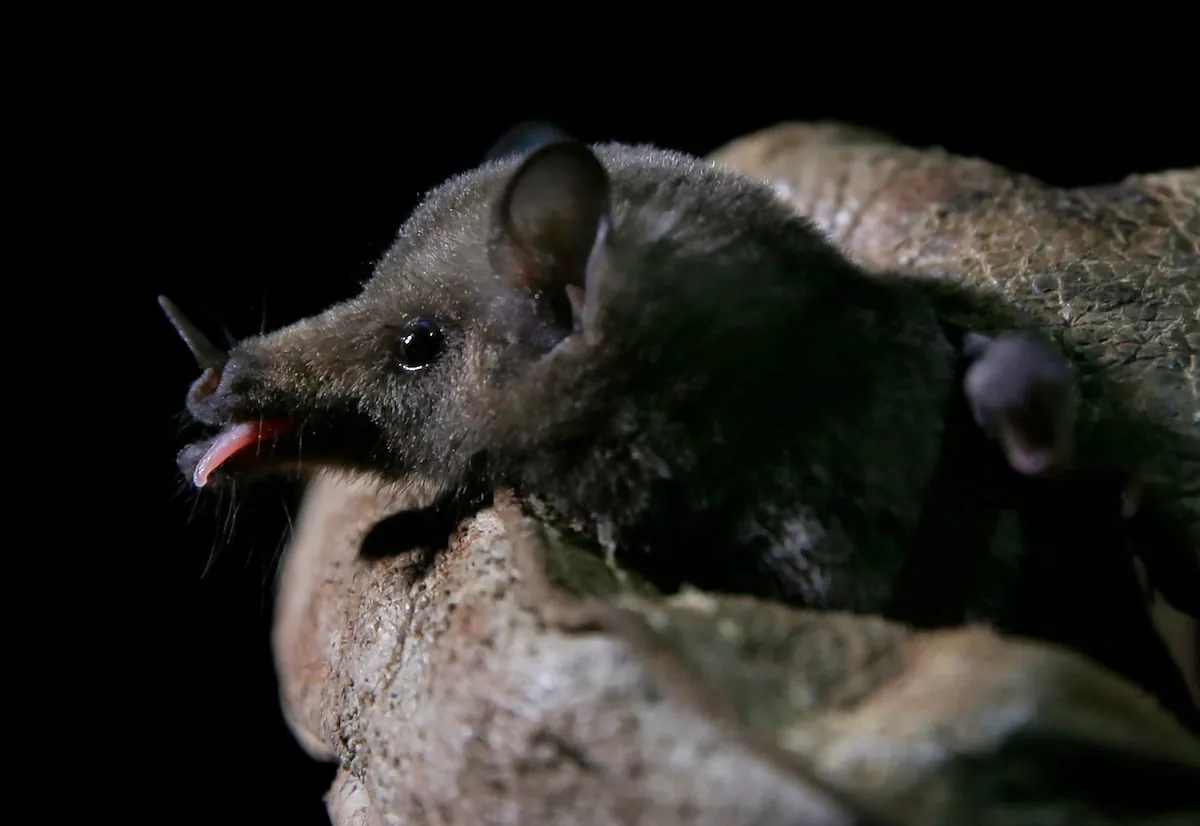
The hantavirus outbreak that has kept the world on edge in recent days is just a warning. A reminder of the growing global threat looming over humanity: zoonotic infectious diseases, which are transmitted from animals to people, have surged in recent decades, largely driven by climate change and human pressure on animal ecosystems.
Read more Bad Bunny establishes the new order in global music
The scientific community estimates that, like hantavirus, there are 10,000 viruses, the vast majority still unknown and silently circulating among wild mammals, that have the capacity to infect humans. Not all will have pandemic potential, but just one minimally efficient, as happened with SARS-CoV-2, the cause of covid, is enough to put the entire planet in check.
This is explained by Elisa Pérez Ramírez, veterinary virologist at the Animal Health Research Center (CISA-INIA-CSIC): “Hantavirus has been the latest in a long list of zoonotic viruses that have been complicating our lives in recent years. This alert highlights a global problem.” Before this hantavirus outbreak, the scientific community already experienced the worst-case scenario with the emergence of SARS-CoV-2. And it also held its breath with the monkeypox virus, Crimean-Congo hemorrhagic fever, West Nile virus, successive Ebola outbreaks, and the epidemics in the early 2000s of flu A, MERS, or the first SARS. Not to mention HIV in the eighties.
Epidemiological surveillance systems are increasingly robust, but the threat of pathogens capable of becoming high-risk international epidemics has not stopped growing. A 2023 analysis focused only on a handful of viruses with high public health risk — Ebola virus, Marburg virus, SARS type 1 coronavirus, Nipah virus, and Machupo virus — concluded that outbreaks and deaths linked to these microorganisms increased exponentially between 1963 and 2019 and became increasingly severe. “If the trend observed in this study continues, these pathogens are expected to cause four times more cases of transmission to other species and 12 times more deaths in 2050 compared to 2020,” the authors warned.
And the human hand on the planet, its ways of life and leisure, as well as the economic model, have a lot to do with all this. “In recent years, there has been an accumulation of zoonotic events related to increased interactions with wild animals, ecosystem disruption, climate change, globalization, and tourism to remote places,” lists Pérez Ramírez.
Everything adds up: global warming alters ecosystems, increases and expands vector populations (such as mosquitoes, which act as bridges to transmit the virus to humans), displaces wildlife; deforestation, fires, and droughts also change the dynamics of reservoirs and pathogens; urbanization occupies isolated ecological niches and pushes wild animals closer to humanized areas; and globalization and mass tourism, even to remote places, increase the human risk of coming into contact with potentially dangerous microbes and transmitting them.
An example: the Nipah virus, which has a high lethality, moved from its usual reservoirs (bats) to domestic animals (pigs) and from these to humans due to ecological changes caused by human action: “Because we thought of putting pig farms in the jungle,” summarizes the CSIC researcher. Deforestation and the expansion of human settlements in traditionally wild areas facilitate contact between species and the jump of viruses between animals or to people.
All these global changes, from land use alteration to unstoppable climate change, through massive logging that destroys entire habitats and the intensive livestock economic model, are putting biodiversity in check and transforming the epidemiology of infectious diseases. In a recent article, three Spanish researchers bluntly warned: “Massive logging destroys the habitat of numerous animal and plant species, and mega-farms eliminate the protective factor of genetic diversity against new pathogens. All this constitutes the ideal breeding ground to favor the interspecies jump of microorganisms, increasing the risk of new epidemics and pandemics.”
Another key factor driving emerging infectious diseases is hypermobility. “Nowadays it is possible to travel from one end of the planet to the other in less than 24 hours, a period shorter than the incubation period of many infectious diseases. And not only do people travel, but also animals that can be reservoirs of pathogens, and insects that can be vectors of infectious diseases,” the same authors explain.
Read more WHO declares the Ebola outbreak in Congo and Uganda a global emergency
Zika in the Mediterranean and Crimean-Congo fever in Castilla
In Latin America, researcher Álex Almuedo says, hantaviruses and arboviruses (causing dengue, zika, and chikungunya) are the most frequent, but the Oropouche virus, similar to dengue, is also emerging. In the EU, however, the most common zoonotic diseases are caused by bacteria and transmitted by contaminated food (listeriosis, salmonellosis), but new microorganisms are making their way. “Outbreaks of diseases we did not know before are being seen, such as West Nile virus in Andalusia or Crimean-Congo hemorrhagic fever in Castilla. And in the Mediterranean, Zika, dengue, and chikungunya are seen,” says this ISGlobal scientist and International Health doctor at Hospital Clínic de Barcelona.
María Paz Sánchez Seco, researcher at Ciberinfec in the National Microbiology Center of the Carlos III Health Institute, confirms this higher frequency of exotic viruses and autochthonous cases in Europe. Among other things, because vector mosquitoes are settling and colonizing new territories. “More and more viruses are circulating and there are more infected patients. It is practically unstoppable,” says the expert.
Not all microorganisms have pandemic potential. Pérez Ramírez is particularly concerned about two: the flu virus and coronaviruses. “Influenza viruses, specifically avian flu, worry us because of their ability to vary their genetic material and jump to other hosts. It used to be seen only in birds and now it is also in mammals, such as minks, cats, or cows. We have it very closely monitored internationally, but these sudden changes in its behavior worry us,” she explains. Fortunately, the avian flu virus has not managed to adapt to transmit sustainably to humans (there are only sporadic cases), but the jump to dairy cows in the United States has alarmed experts.
“It is probably the zoonotic virus that worries the scientific community the most,” agrees Sánchez Seco. This microorganism also fits the description of the most worrying ones in the eyes of the Clínic doctor: “The greatest risk lies in viruses that are transmitted through the air, due to their transmission and mutation capacity, and that are capable of adapting to different environments.”
The scientific community paints a future scenario of increasingly frequent zoonotic outbreaks. “The key will be how easy it is to identify the outbreak at a given moment: if transmissibility is high and you don’t know what is happening, the ability to mitigate that will be more difficult. That’s what happened with covid,” Almuedo says.
In the background, however, there is an explosive cocktail underway: on the one hand, the forecast is that climate change and other human interventions in the environment will increase the frequency of zoonotic transmission episodes; but, in addition, the increase in population density and connectivity will facilitate the spread of outbreaks that occur.
Epidemiological surveillance, preparedness, and response to possible health crises from a One Health approach, which recognizes that environmental, animal, and human health are interconnected, is key to overcoming the threat posed by emerging zoonotic diseases. “We are increasingly controlling to mitigate the effect of virus expansion, but the forecast is that these diseases will increase. And we cannot start worrying only when it reaches us. More investment is needed in surveillance, response, and control of emerging zoonotic diseases,” Sánchez Seco suggests.
Experts also add the need for greater awareness of the origin of all this and how current ways of life impact the rise of these diseases. “Perhaps certain ecotourism activities should be reconsidered because we invade wild territories and put ourselves at risk,” exemplifies Pérez Ramírez.