



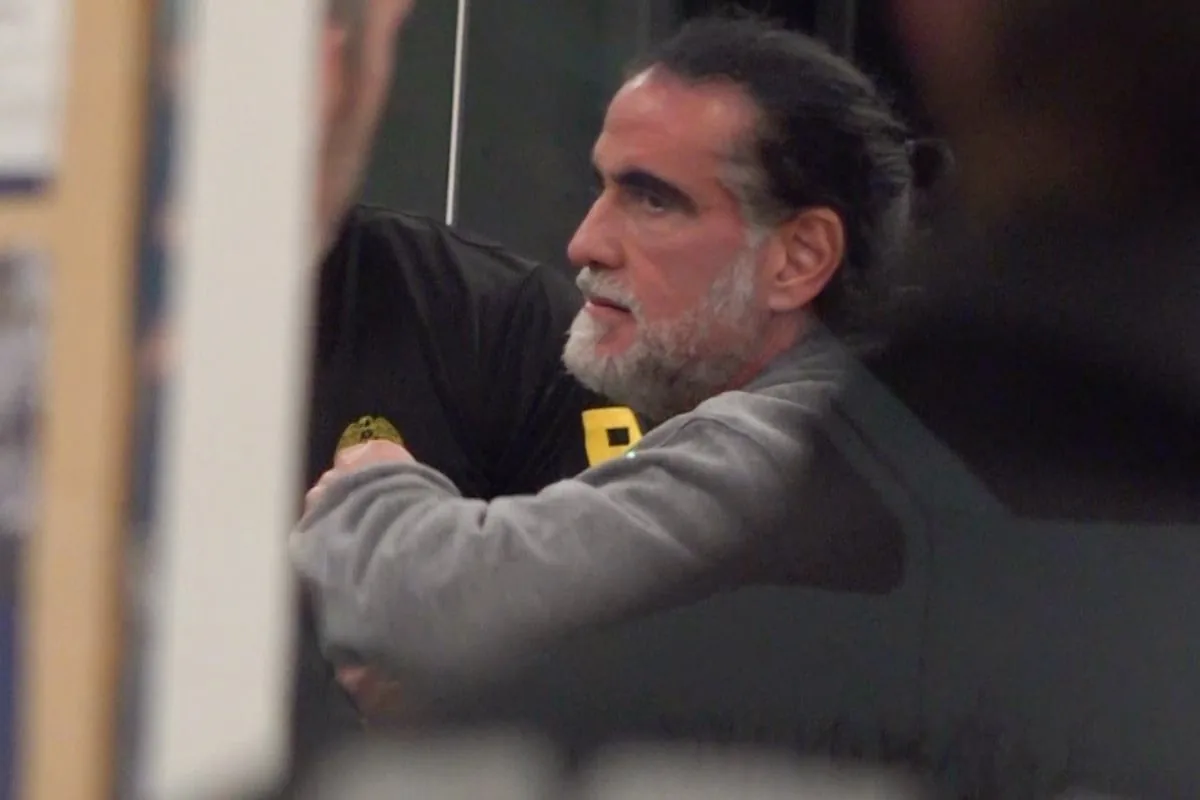
Venezuela’s Interior Minister, Diosdado Cabello, stated this Monday that businessman Alex Saab, deported to the United States on Saturday, “is not Venezuelan.” In an unusual explanation during a press conference, the third most powerful man in Chavismo explained that Saab, identified as a frontman for Nicolás Maduro, had a “fraudulent” ID card with which he allegedly had “access to some things.” By some things, the minister refers to the Venezuelan nationality with which Saab traveled for years as a diplomat, with which he was appointed minister, and with which he voted in elections like any other citizen.
Read more United States expands its sanctions against Cuba
Cabello seeks to clear up the controversy sparked by Saab’s handover to the United States. Among the ranks of Chavismo, because it has been seen as a betrayal, and in the opposition, because it has been questioned that the businessman is now treated as a “Colombian citizen” when until now his Venezuelan identity had been claimed without reservations. That now there is talk of deportation of a foreign citizen and not extradition of a Venezuelan, a supposed prohibition by the Constitution.
The minister assured that after “a detailed investigation” it was discovered that Saab had a Venezuelan document issued in 2004. “To make it more or less clear, calculate when Alex Saab’s presence here in Venezuela began,” said Cabello, referring to the fact that this documentation predates any — at least known — link of the Colombian with Chavismo. “He had a false ID issued when Chávez was still alive and had never come to Venezuela,” added a source familiar with the case.
The file of his nationality — the registry, the fingerprints, the procedure itself — according to Cabello, does not exist. For that reason, another source adds, they could not even annul the nationality because, legally, he never had it. “That is why we made the decision to deport him from Venezuela. Because he is not a Venezuelan citizen,” said Cabello before reciting Article 271 of the Constitution: “Under no circumstances may the extradition of foreigners responsible for crimes of money laundering, drugs, international organized crime, acts against the public patrimony of other States, and against human rights be denied.”
Cabello’s explanations, in any case, do not clear up a question that remains in the air: how did Saab manage to bypass controls and become one of the most Venezuelan powerful men in the country with a false document?
The interest of the Chavista leadership to clear — in their own way — the questions about Saab’s handover has become even more evident when acting president Delcy Rodríguez was asked about the matter at a public event. “Any decision we make going forward and that we have made since January 3 has been in defense of Venezuela,” she stated. Rodríguez referred to Saab as a citizen of Colombian origin “who fulfilled functions” in the country and that these are “matters” between him and the United States. “We took an administrative measure justified by national interests,” she added.
Read more Mexico demands Israel ensure the safety of nationals aboard the intercepted pro-Palestinian flotilla
Saab, considered one of Maduro’s strongmen, had already undergone a first extradition, from which he was released in 2023 after an expensive national and international campaign led by the then president. That is why it has not ceased to cause surprise that Delcy Rodríguez’s government now sends him back to Miami. “We cannot refuse the issue of extradition of a foreign citizen who is under investigation for those crimes,” justified Cabello. And he invited “some opposition sectors that strangely today defend Alex Saab” to review the decision, “strictly according to the law.”
The businessman, who had been detained under strange circumstances since February, appeared this Monday before a federal court in Miami to hear the charge against him: bribing high officials to profit from large government contracts.
Born in Barranquilla, Saab began working in the shadows for Chavismo more than a decade ago. His role was to channel the underground economy that allowed the regime to stay afloat despite the international sanctions siege: food importation, housing construction, oil, gold, coal. He was Minister of National Production and one of Delcy Rodríguez’s main interlocutors in the economic area. When the U.S. justice investigated him, he himself denied any link with the government. It was the journalists of Armando.info who documented his business with Chavismo, which earned the outlet a defamation lawsuit that forced several of its reporters into exile.
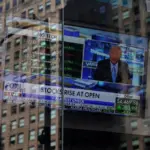
Maduro’s government was slow to publicly acknowledge that relationship, but when in 2020 he was detained at Cape Verde airport during a trip to Tehran to negotiate fuel, they did not hesitate to make him a political symbol. They labeled him “kidnapped,” deployed lawyers and resources to defend him, and presented him as a diplomat with a Venezuelan passport and immunity. His face and the demand for his release reached Times Square in New York. Finally, it was Jorge Rodríguez himself, current president of the National Assembly and brother of the president, who managed to include him as a non-negotiable condition in negotiations with Washington, until in December 2023 Biden granted him a presidential pardon and Venezuela handed over ten U.S. citizens. Maduro received him with a hug in Miraflores.
Read more The Russian ship sunk in 2024 off Cartagena was carrying components for a nuclear icebreaker